
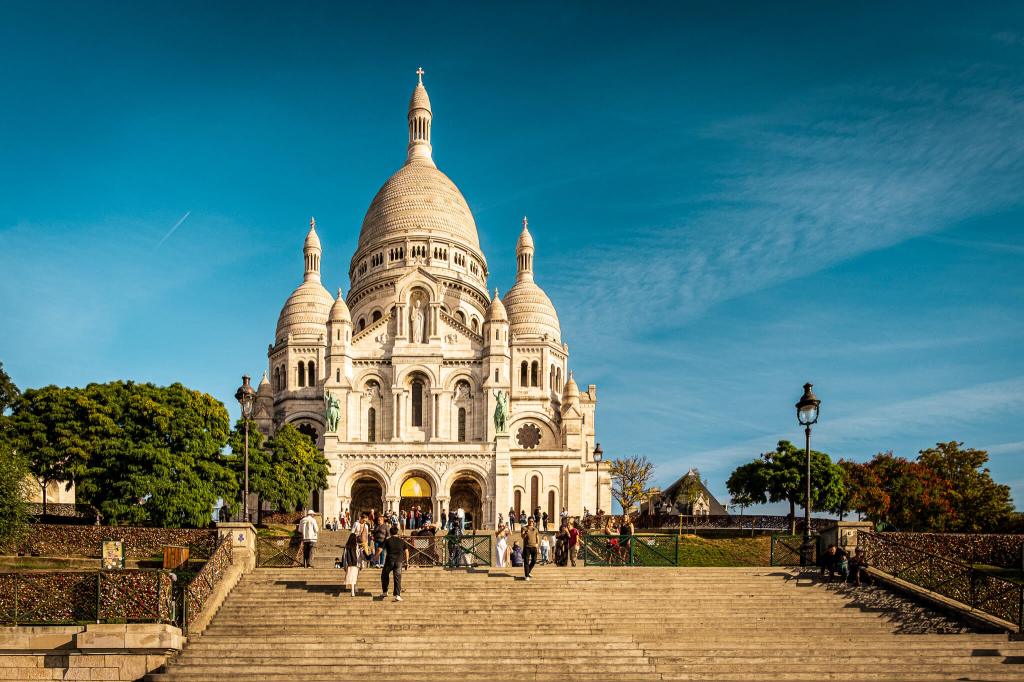
The 18e arrondissement of Paris is centred around and named after Montmartre, the historic artist enclave where Monet, Renoir, Degas, Picasso, Van Gogh and Toulouse-Lautrec either lived or had studios. In the early 20th century, Montmartre started getting expensive, commercialized and crowded with tourists, so the artist community relocated to Montparnasse. Despite being on the northern edge of the city, it’s one of the most visited areas of Paris.
From fields and windmills to staircases and a funicular
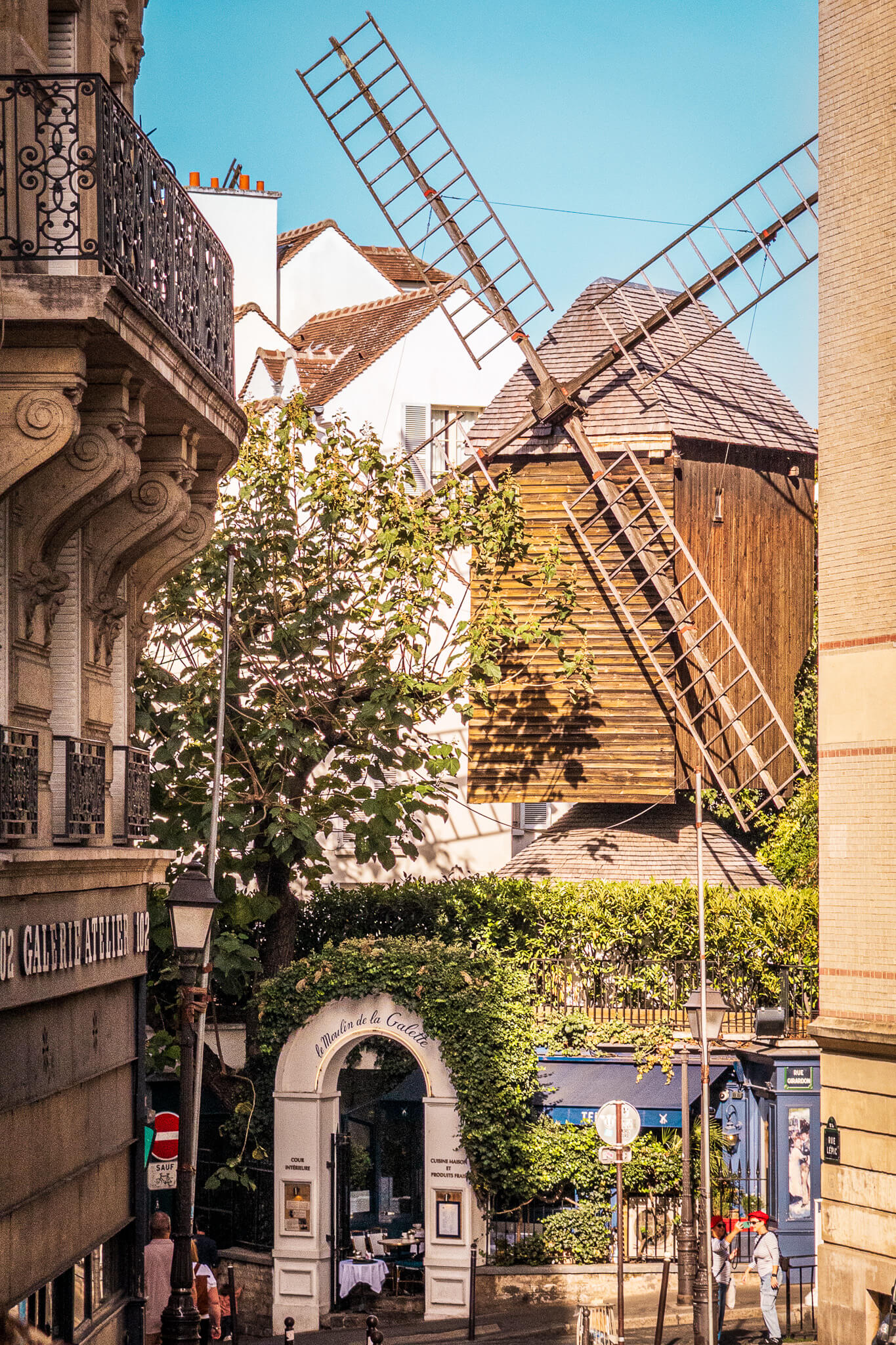
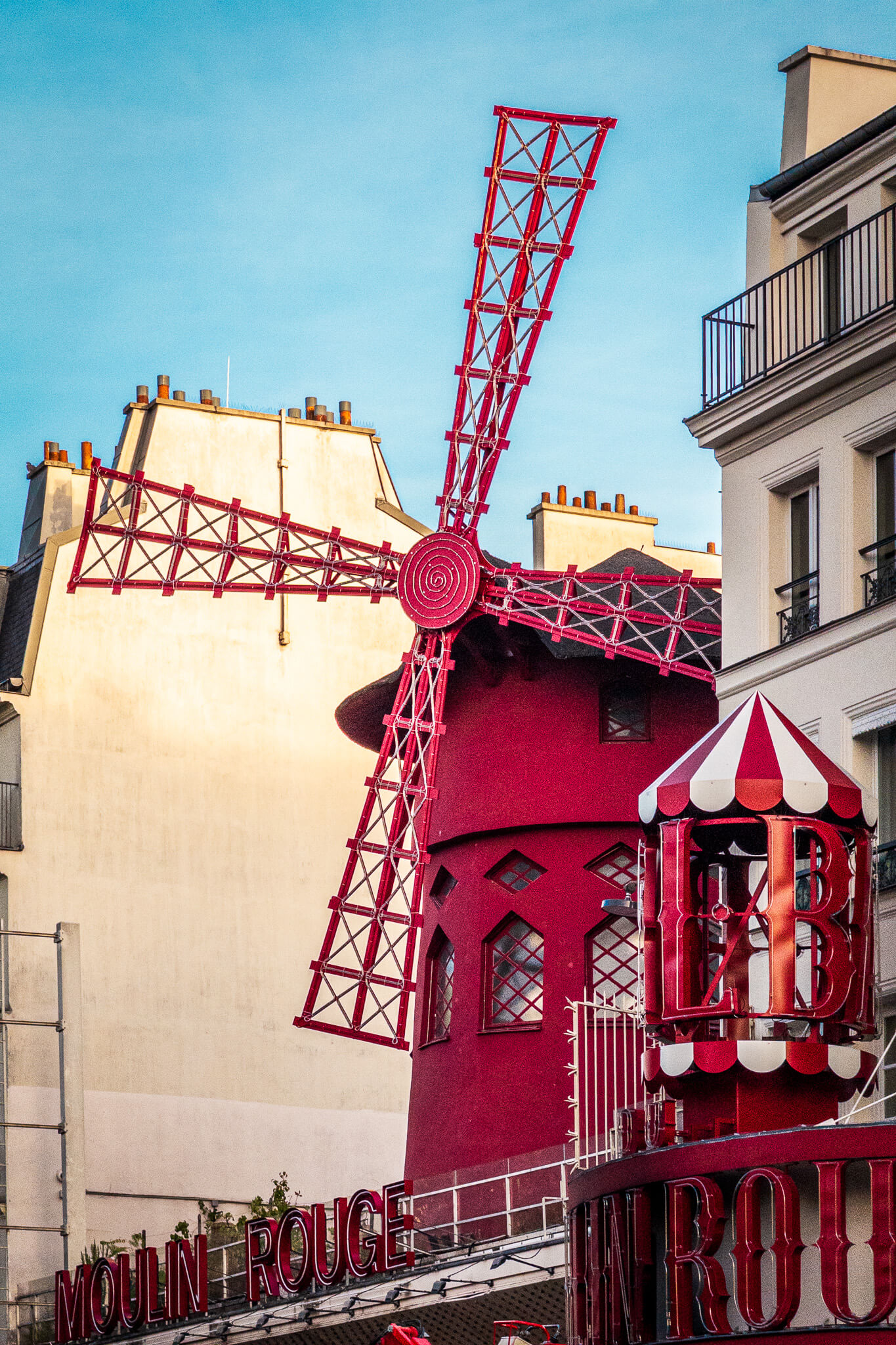
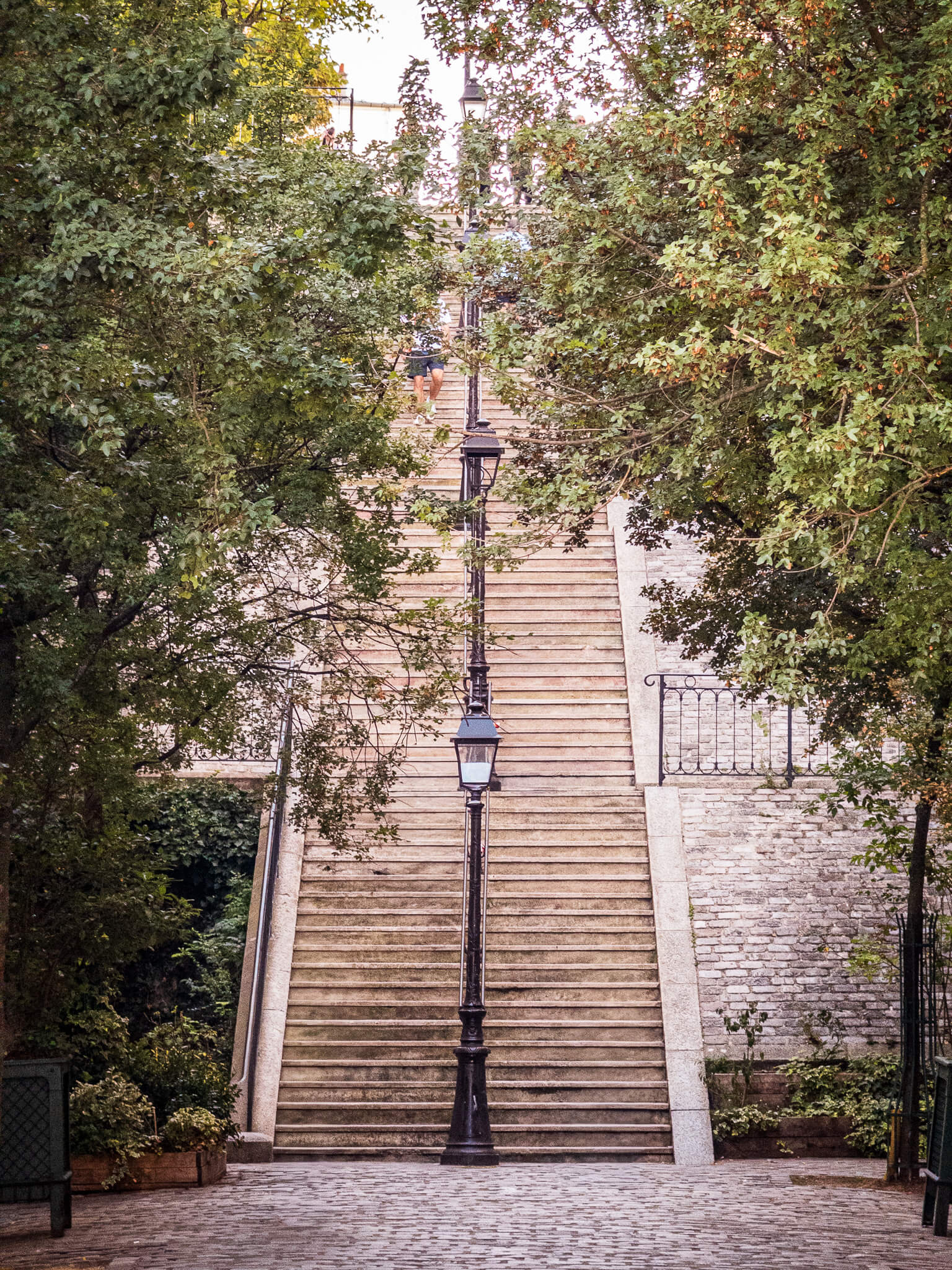
The Montmartre area is centred around the Butte Montmartre, a 130-metre high hill. Before being annexed into Paris in 1860, Montmartre was a productive agricultural area with farms growing wine grapes, wheat and other grains, fruits and vegetables. The landscape was dotted with dozens of windmills that were used for grinding grain, pressing grapes and crushing spices. Only two historic windmills remain, collectively known as Moulin de la Galette. One has been preserved and is on full display on a street corner above the restaurant Moulin de la Galette. The other is tucked away nearby on private property. They are immortalized in paintings by Van Gogh and other artists who inhabited Montmartre.
The famous Moulin Rouge cabaret pays homage to the windmills of Montmartre, but its red windmill was purely decorative when it was built in 1889.
Because of the steepness of the hill, there are some 38 staircases scattered throughout Montmartre to make it easier to get around without circling around winding roads. Most of these were built between 1880 and 1910 after it was annexed into Paris. The longest staircase is Rue Foyatier with 220 steps leading up to Sacré-Cœur.
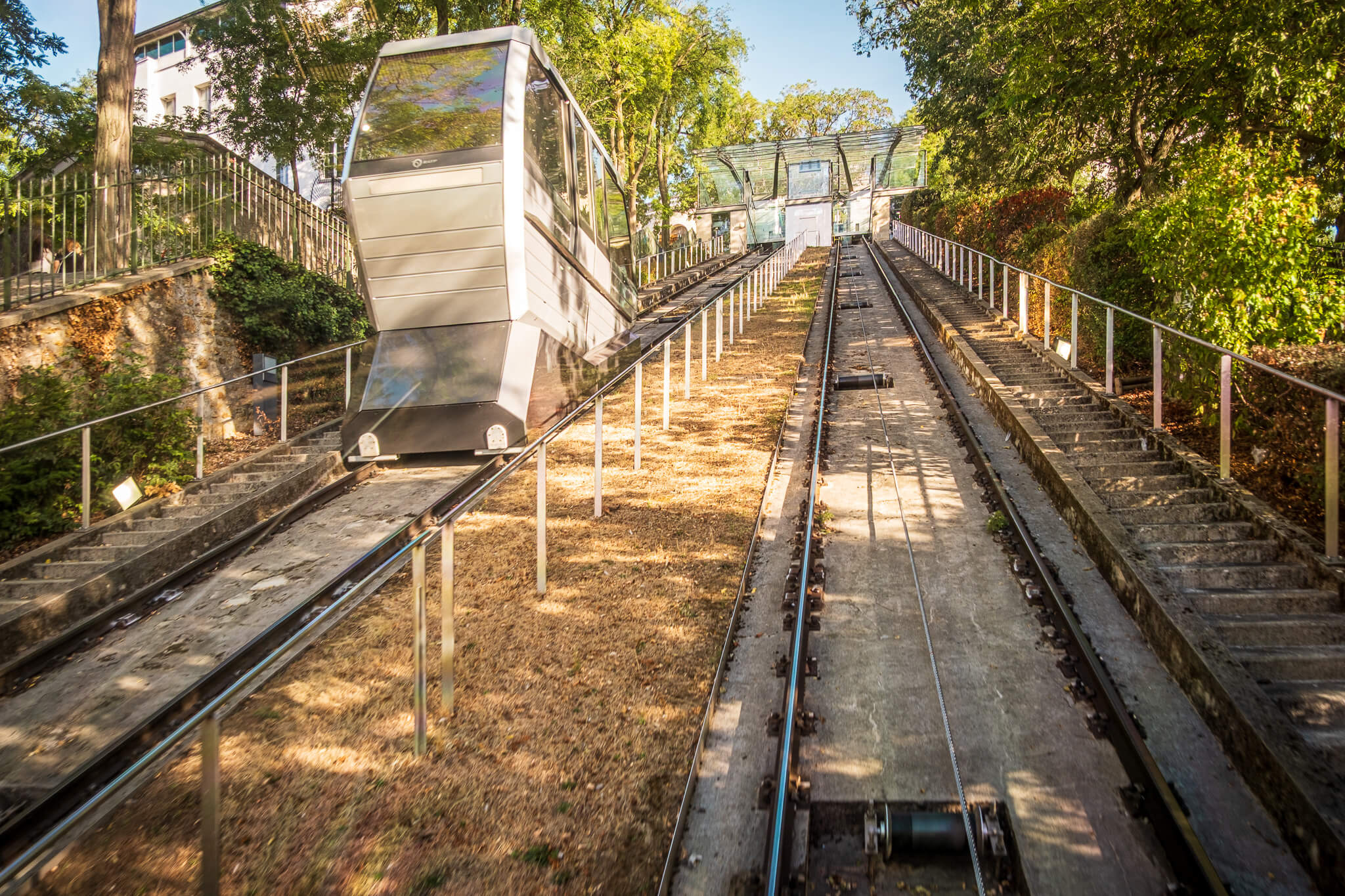
If climbing steps aren’t your thing, the Montmartre Funicular runs alongside the steps of Rue Foyatier. First opened in 1900, it was rebuilt in 1935 and again in 1991. It costs a standard metro ticket to ride (or free with a metro pass).
A little homage to Amélie to start the day
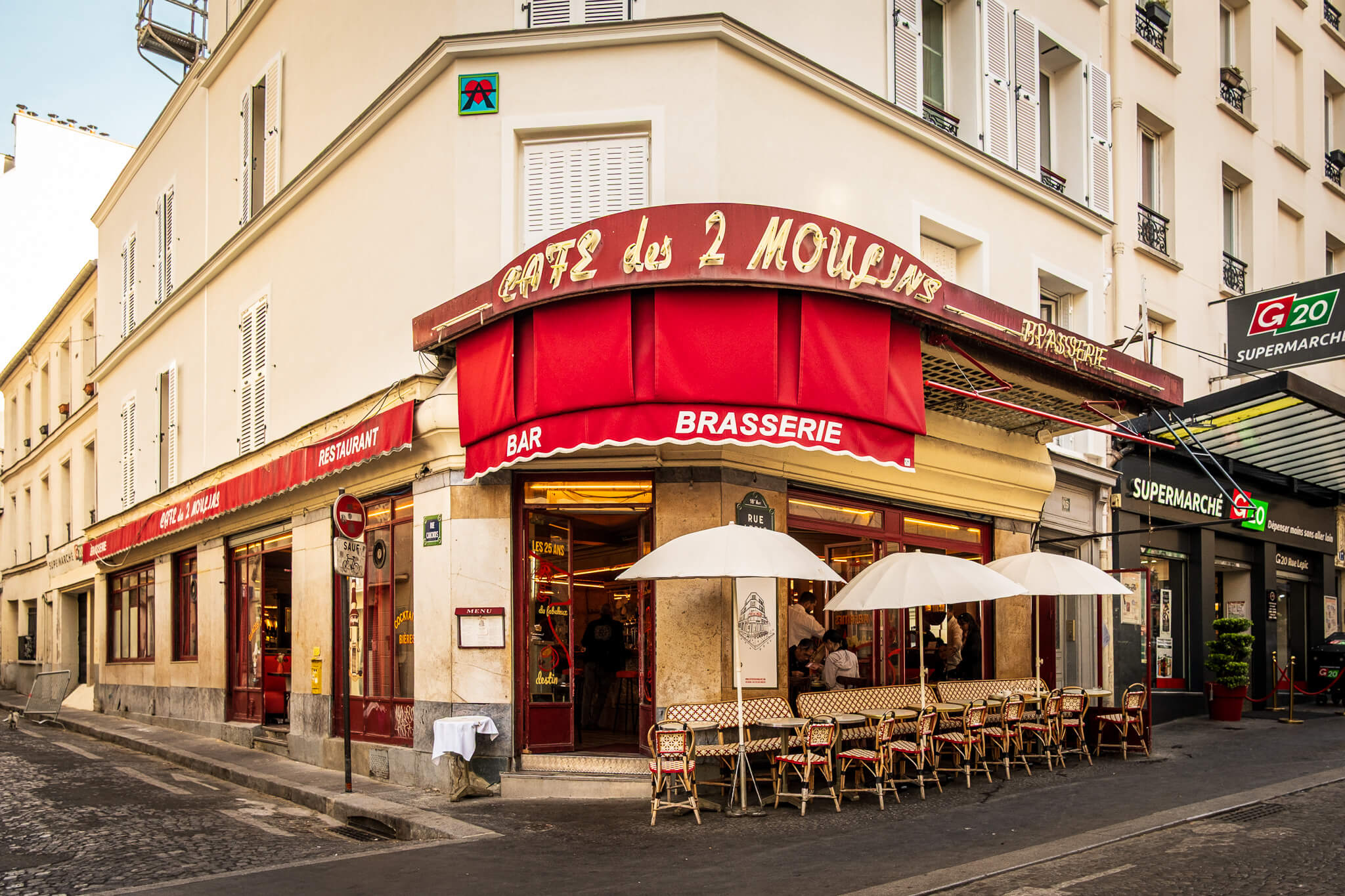
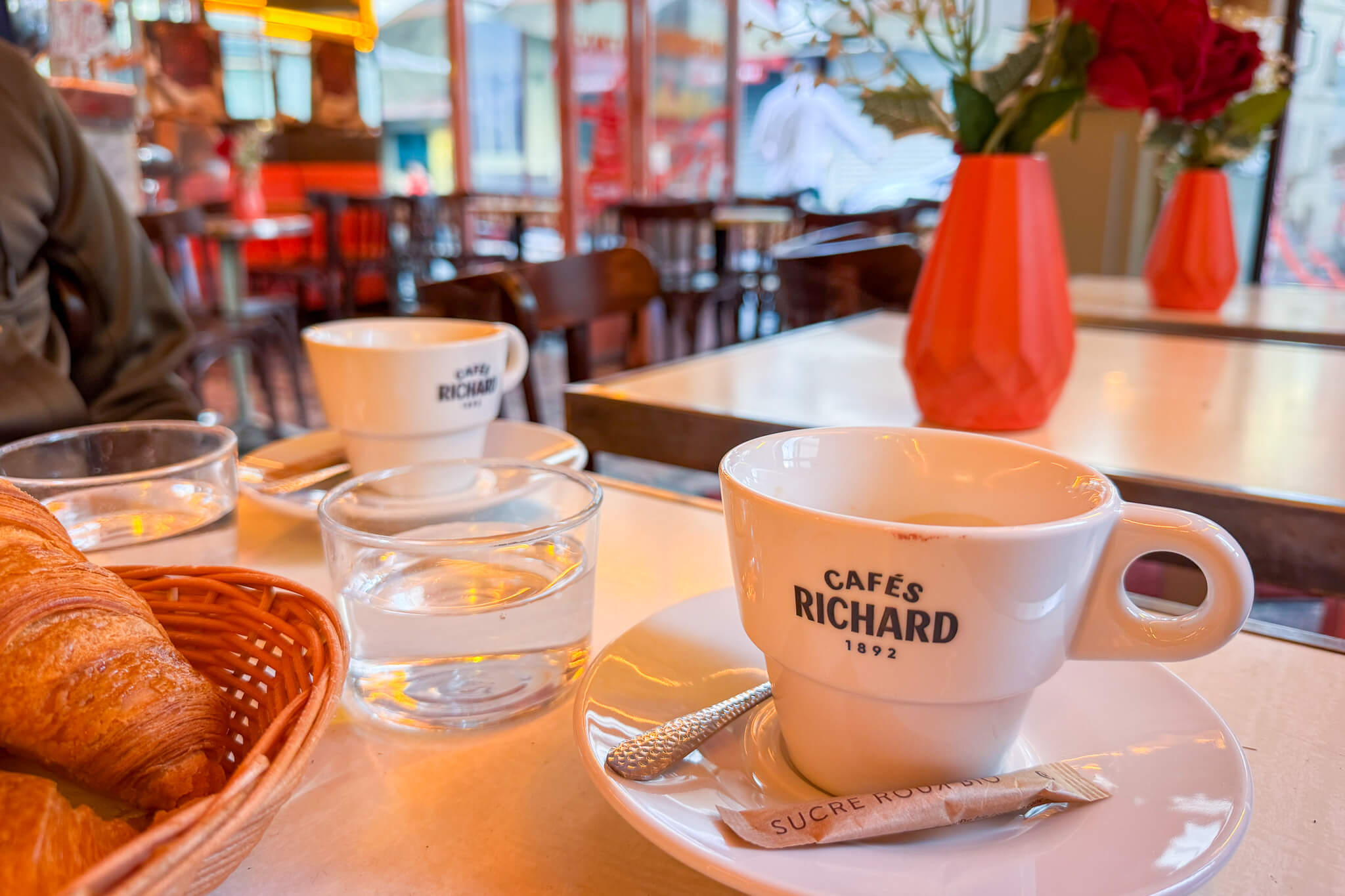
To get the energy to brave the tourists in Montmartre, we started the day at Café des Deux Moulins, named for the two remaining historic windmills of Montmartre. It was also featured in the film Amélie. We were worried it would be a tourist trap now and were prepared to continue walking if it felt off. Instead, we saw lots of locals coming and going, drinking a quick coffee at the bar (many being served their usual, without ordering). Even a group of staff from the Moulin Rouge stopped by to get their coffee.
We were warmly greeted by the two employees running the bar. You could tell they enjoyed working there. The café interior preserves the same diner décor depicted in the film, although the cigarette counter has been removed. A few tourists did stop by, but it seemed like they were staying at a hotel in the area, grabbing a quick breakfast before starting their day. We reminded ourselves that Amélie came out 25 years ago and likely wasn’t attracting droves of tourists anymore.
The other Art Nouveau metro entrance
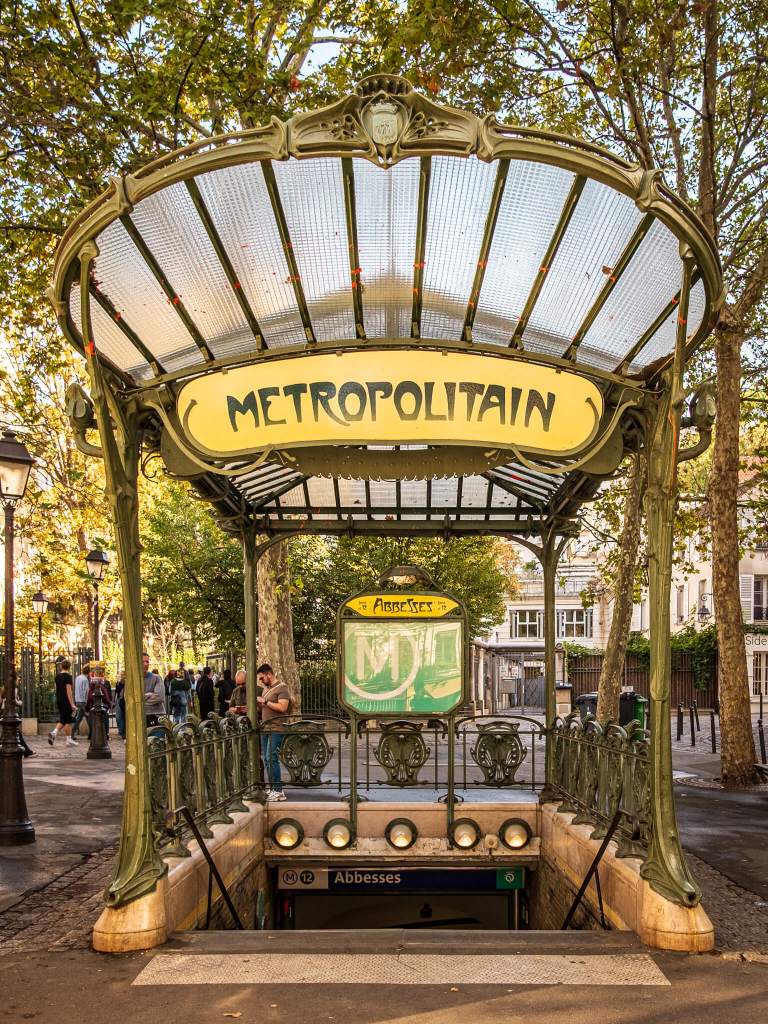
Many tourists start their visit of Montmartre at Place des Abbesses, home to a metro stop with a glass-covered Hector Guimard entrance. It was also the deepest station in the Paris Metro at 36 metres deep, before being surpassed in 2025 by a newer, deeper station.
When we visited the 16e arrondissement, we saw the original Édicule B “dragonfly” entrance at Porte Dauphine.
Abbesses metro features a somewhat simpler Édicule A or Type A dragonfly entrance. While it’s an original Hector Guimard entrance, it was not originally installed here. It was originally located at Hôtel de Ville and transferred to Abbesses in 1974.
The Basilique du Sacré-Cœur de Montmartre
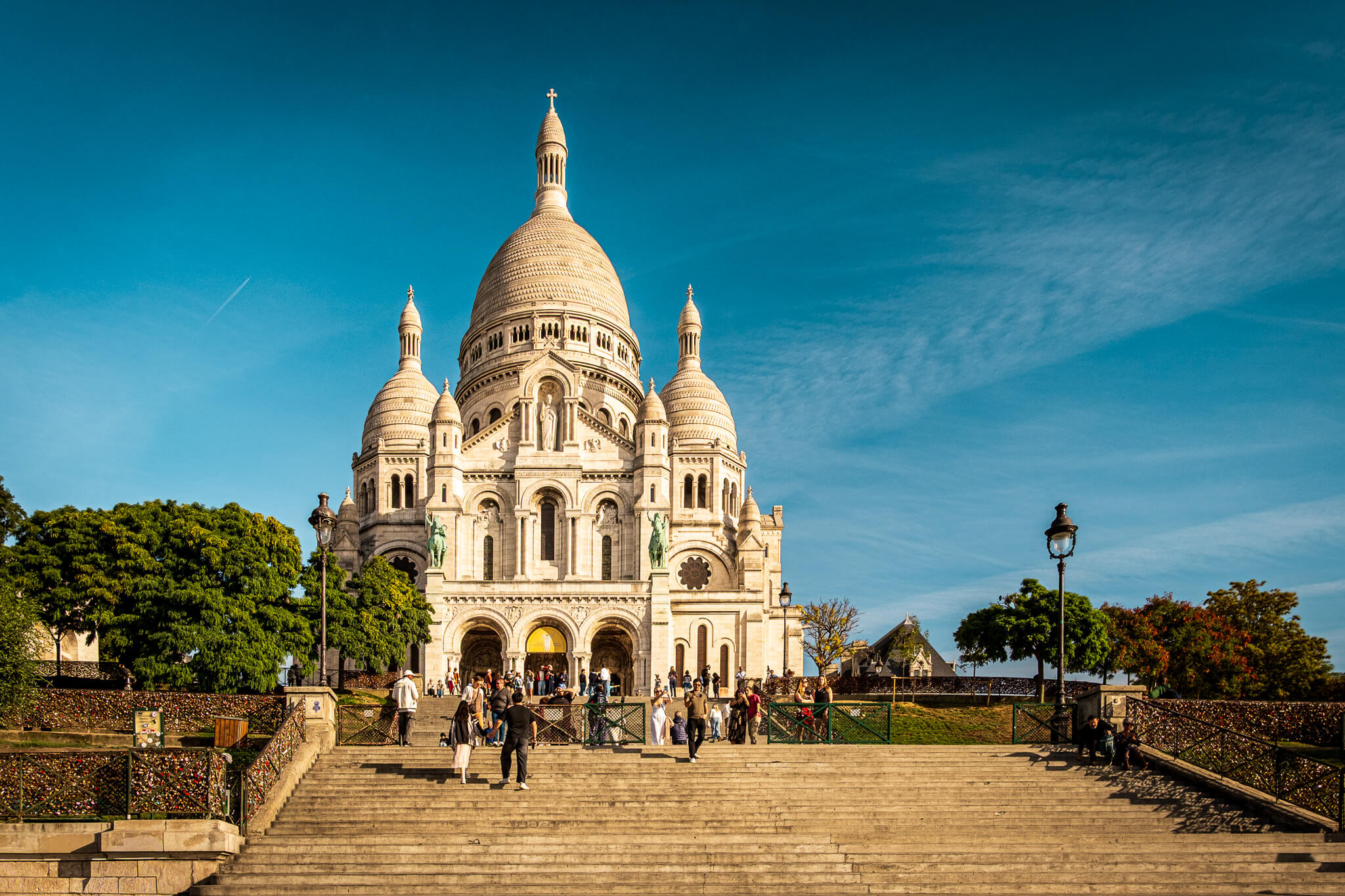
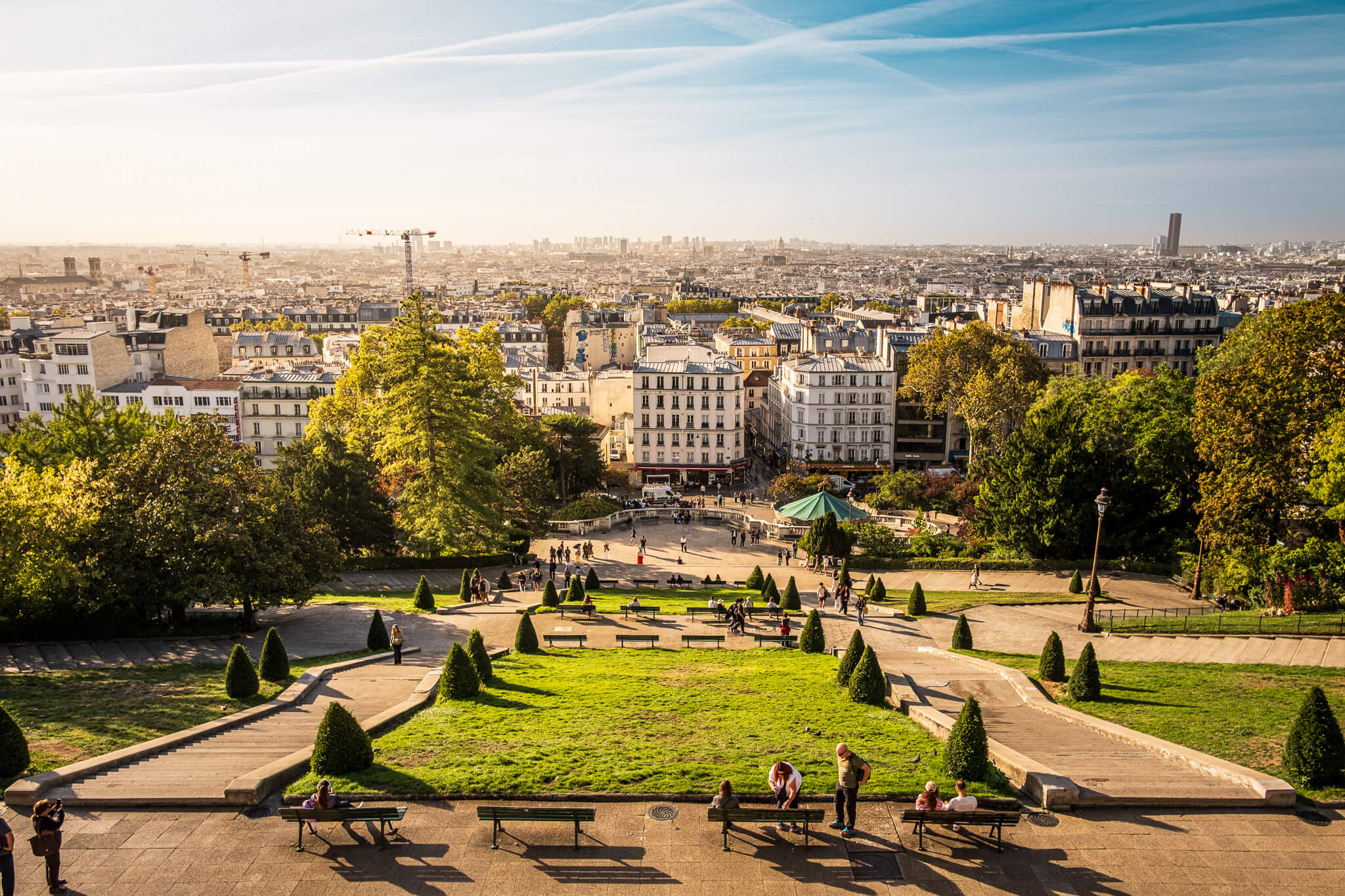
The Basilique du Sacré-Cœur de Montmartre or simply Sacré-Cœur is a Neo-Byzantine church at the very top of Montmartre, incorporating some Romanesque and neo-classical elements. Constructed between 1875 and 1914, the architecture was a reaction against the opulent buildings of the Napoleon III style (such as Palais Garnier). Between its prominent placement atop Montmartre and its stark-white travertine construction, Sacre-Cœur is visible from almost everywhere in Paris. It’s one of the most visited sites in Paris, and it’s possible to climb the dome (if you hadn’t climbed enough stairs already) for an impressive view of Paris.
Artists then and now
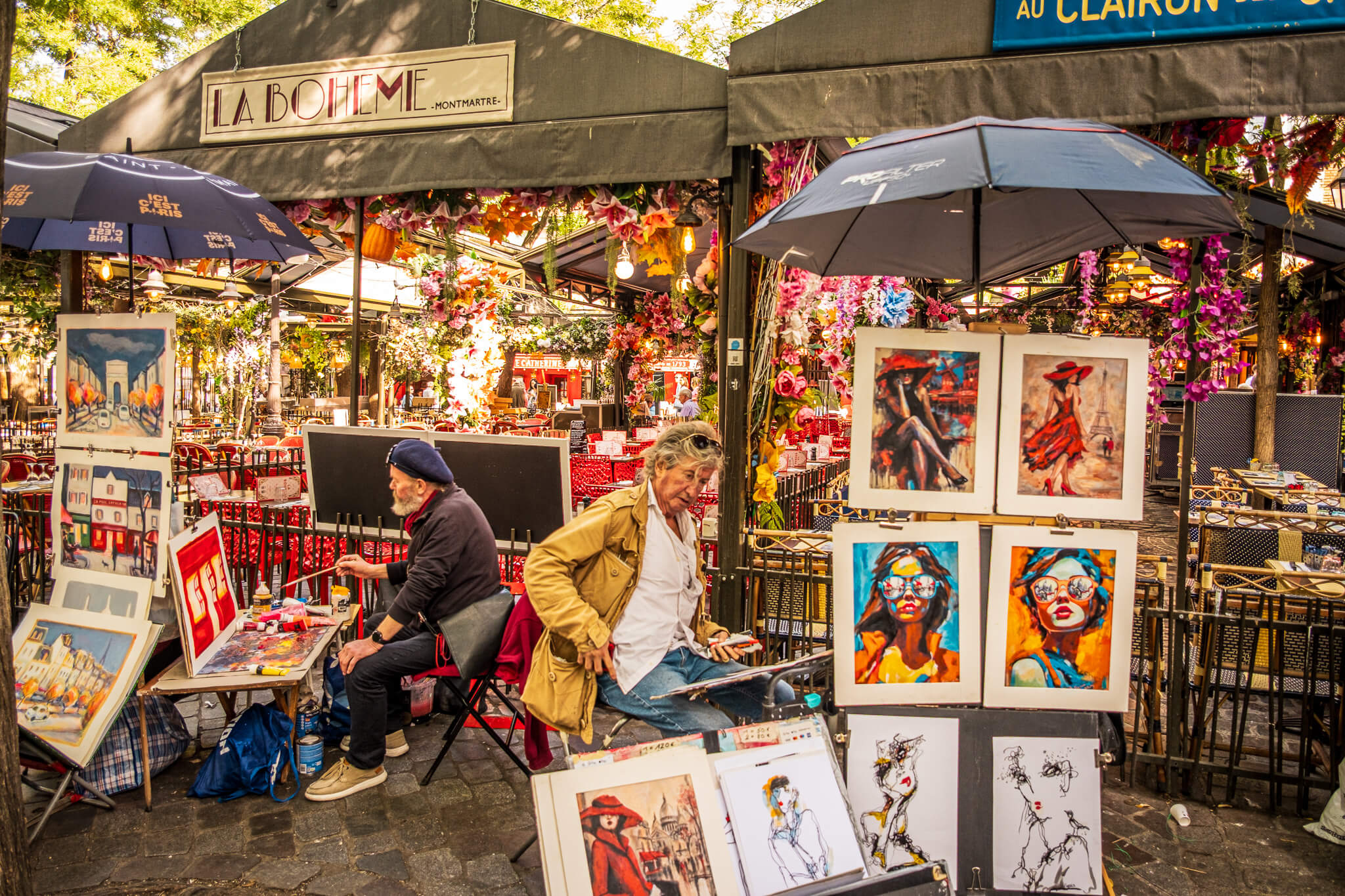
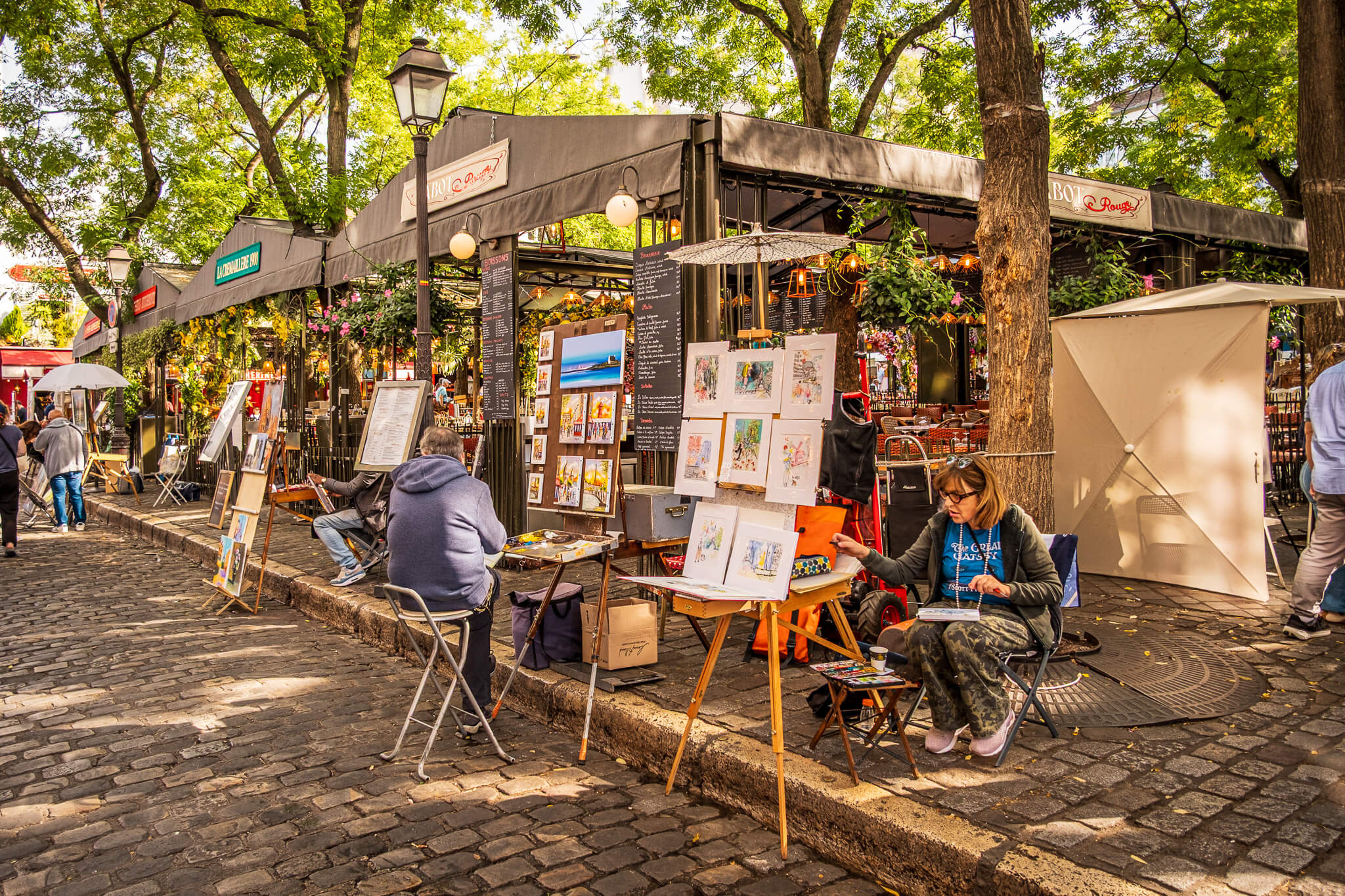
Place du Tertre is a hopping square near Sacré-Cœur close to the summit of Montmartre. Originally nestled inside a Benedictine abbey, it became the main public square of Montmartre in the 17th century. It would have been frequented regularly by the artists of Montmartre. Today, the square is bordered by restaurants, many with terraces set up in the square surrounded by artists offering tourist portraits and souvenir paintings.
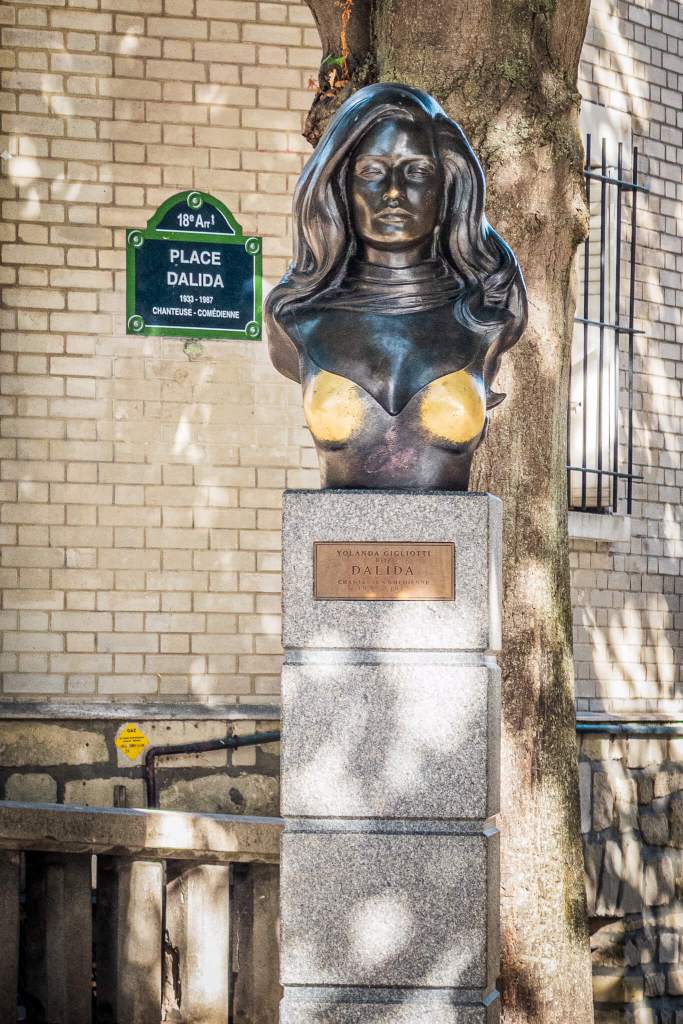
Finding luck (and a mouse) at Place Dalida
Place Dalida is a small square dedicated to international pop superstar Dalida, who sold over 150 million albums and earned more than 70 gold records (despite being relatively unknown in North America). She is widely credited for introducing disco to France. Even without knowing of Dalida, tourists visit the square to see her bronze bust and rub her breasts for luck.
While we were in the square, a local resident started calling to us from her doorway. She had a mouse trap that had caught a mouse, and she needed help disposing of the (still living) mouse. So we found ourselves inside the first-floor apartment on Place Dalida to help rid the place of the mouse.
Lunch at a modern bouillon
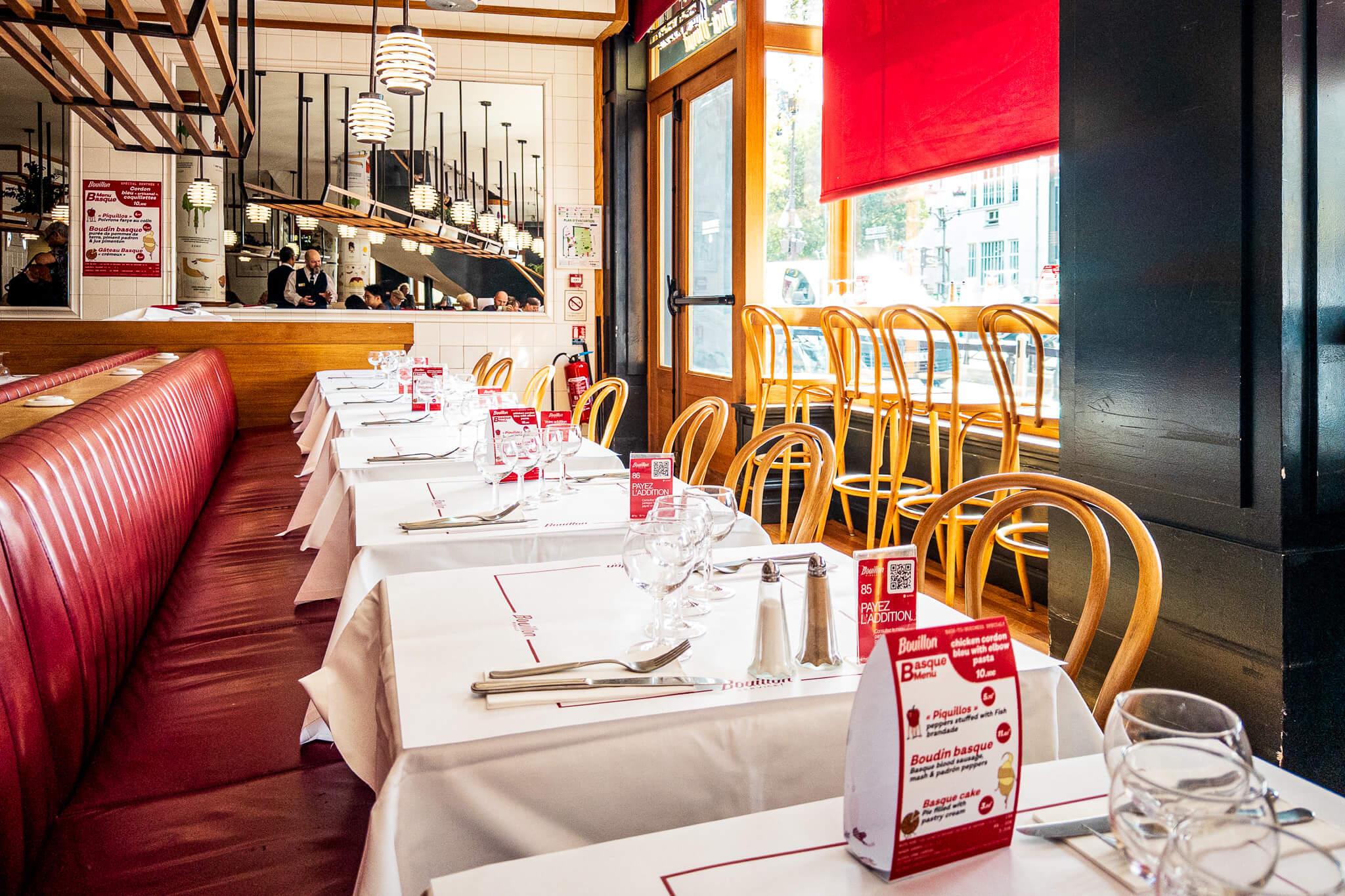
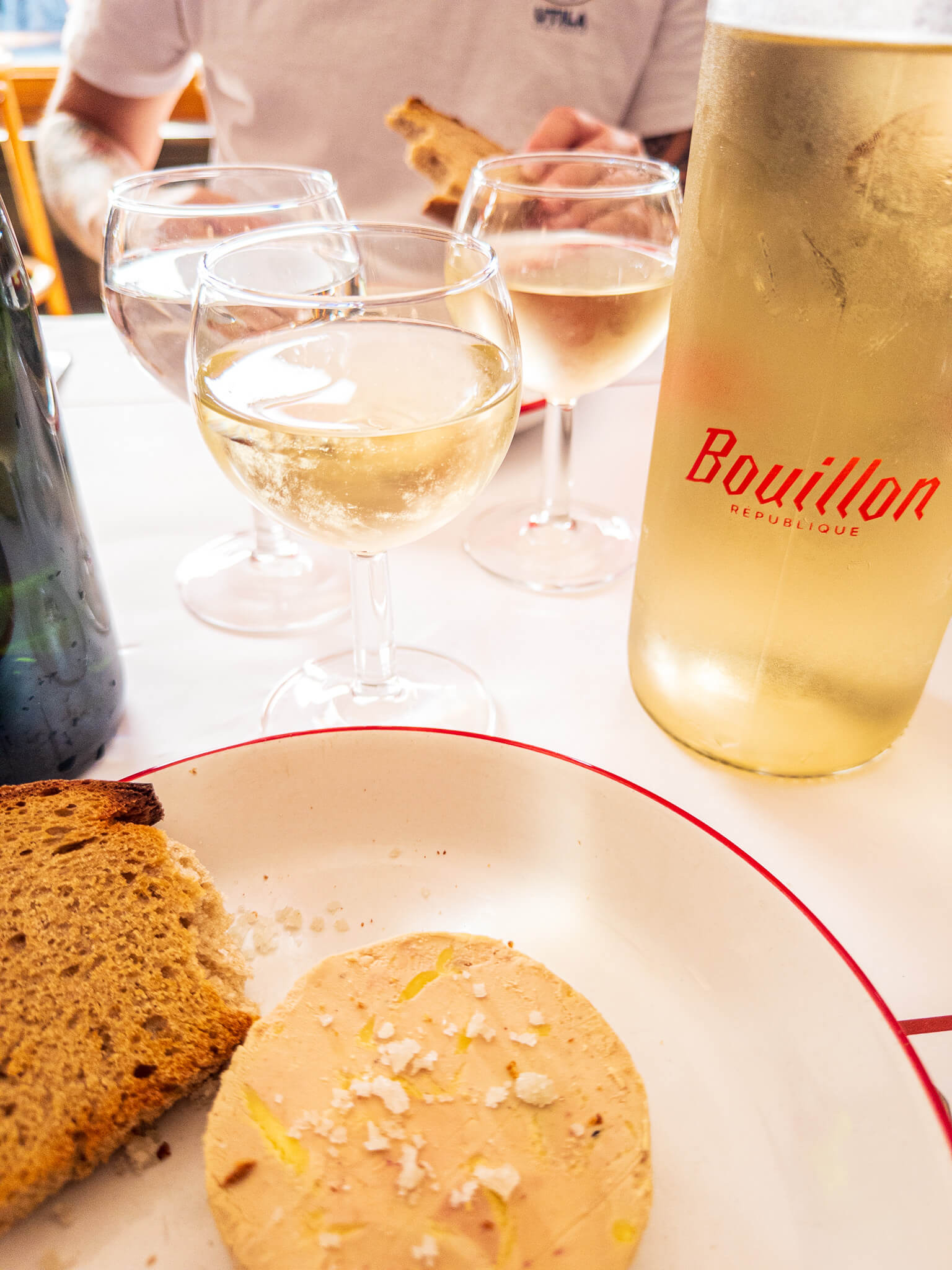
Since we’ve been testing our bouillon restaurants on this visit, we thought we’d try a modern take on the concept. Bouillon Pigalle opened in 2017 on the southern edge of Montmartre and the 18e arrondissement, just steps away from the Moulin Rouge. It’s a massive establishment squeezing in 300 people over two levels. Bouillon Pigalle offers classic bouillon fare at reasonable prices, similar to Bouillon Chartier or Bouillon Julien, in busy Montmartre. Luckily, they take reservations (which are easy to secure, even a day before); without reservations, you’ll find yourself in a long lineup.
We enjoyed a generous serving of foie gras (although the French onion soup was tempting), duck confit (absolutely delicious) and crème brûlée. Carafes of soda, juice and wine are available in sizes ranging from 250 ml to 3 litres.
The food was great with generous serving sizes, everybody is seated at their own table (albeit closely spaced). But compared to Bouillon Chartier, we felt Bouillon Pigalle had less personality. More of a high-volume commercial venture than a friendly neighbourhood joint. We’d happily return, but given the choice, we’d go to Bouillon Chartier.
Capping the night with a classic cabaret
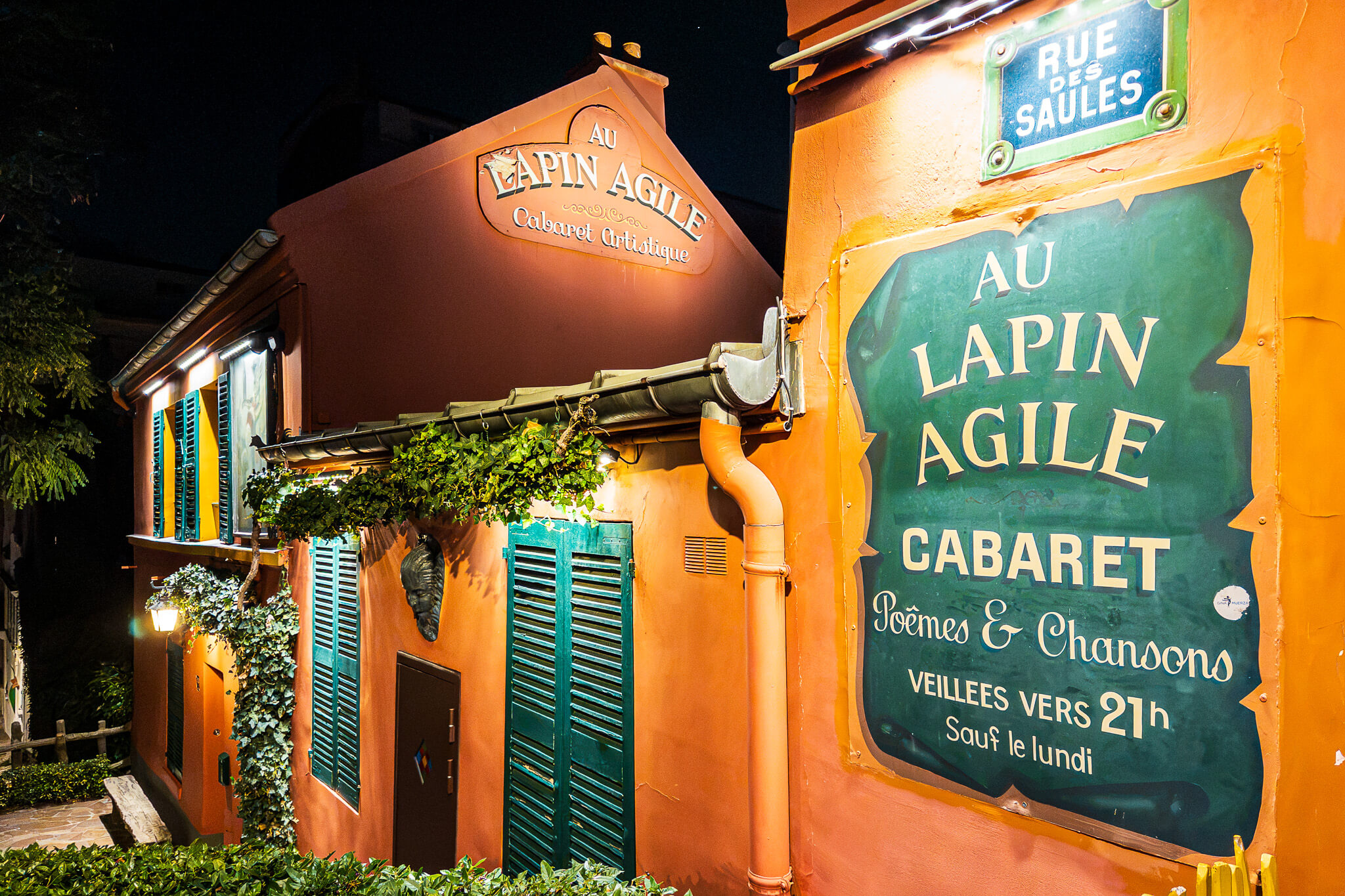
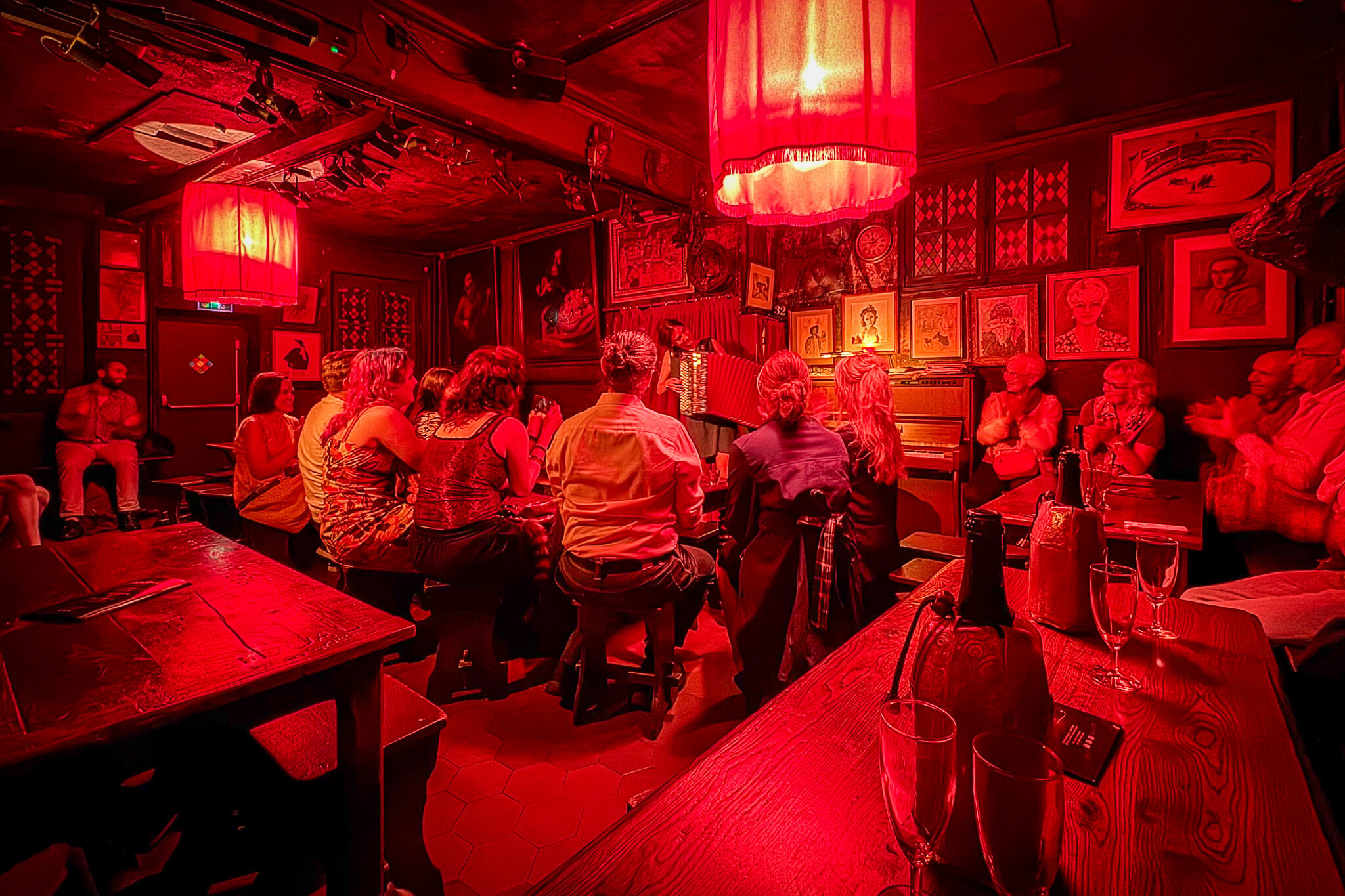
It wouldn’t be a visit to Montmartre without an evening cabaret. We didn’t want the high-production (and high ticket price) show offered by the Moulin Rouge, but rather something small and intimate revolving around live music. That’s the brief that led us to Au Lapin Agile, the oldest cabaret in Montmartre and all of Paris, which opened in 1860.
Picasso was a regular at the cabaret, along with his friend Casagemas who figured into the blue period painting Evocation that we saw at the Musée d’Art Moderne. In exchange for food and drink, he produced the painting Au Lapin Agile for the owner of the cabaret. Having moved from his blue period to his rose period, the painting is a self-portrait of Picasso in the foreground, his love interest in the middle ground, and the owner of the cabaret on the guitar in the background. It was on display at the Lapin Agile from 1905 until 1912 when it was sold to a German collector. It traded hands a few times before it was purchased for $40 million in 1989 and donated to the Metropolitan Museum of Art.
The cabaret is housed in a small cottage in Montmartre and houses about 40 guests in a single room dimly lit with red light. You can show up anytime after it opens at 9pm. On the night we attended, there were six musicians who performed a repertoire of classic French songs. Some songs were group numbers, while each musician had a solo section either accompanied by piano, or self-accompanied on accordion, guitar or barrel organ. We stayed until the end of the show around 1am. It was a thoroughly enjoyable evening with amazing musicians (and a bottle of champagne).
After visiting a few quieter arrondissements, we were back into the thick of tourist Paris in the 18e arrondissement. In some ways, Montmartre attracts the worst of Parisian tourists who are visiting because a guide book or TikTok says they should, rather than having a genuine interest in the artistic or cultural history of the area. However, Montmartre is a large area and it’s possible to visit quaint streets, staircases and cafés off the beaten track and have a very enjoyable time. I’m definitely compelled to return.


Leave a comment