
The 16e arrondissement of Paris sits on the westernmost side of the city and contains the massive wooded area Bois de Boulogne, making it the largest arrondissement. When the current arrondissement numbers were being defined this arrondissement was supposed to be number 13, but the wealthy population of the area didn’t like the unlucky number and had the numbering system shifted.
Museums galore
In addition to the classic Haussmannian architecture throughout the arrondissement, the area is home to countless specialty museums. Musée Marmottan Monet is dedicated to the impressionist and post-impressionist works of Monet, housed in the former hunting lodge of the Duke of Valmy at the edge of the Bois de Boulogne. Musée nationale de la Marine is a maritime museum with ship models owned by Louis XV. Musée de l’Homme is a prehistory and anthropology museum. Cité de l’Architecture et du Patrimoine focuses on architecture and monumental sculpture. Musée Guimet houses one of the largest collections of Asian art outside Asia. For anybody into fashion, there’s Palais Galliera, formerly the City of Parish Fashion Museum, as well as the Musée Yves Saint Laurent. There’s even a niche museum of dental history, Musée d’Art Dentaire Pierre Fauchard.
From modern art to “is it art?”
The Musée d’Art Moderne de Paris offers free access to its permanent collection of modern and contemporary art from the 20th and 21st centuries. We chose to focus our energy here to continue the progression of art museums we’ve seen to date on this visit.
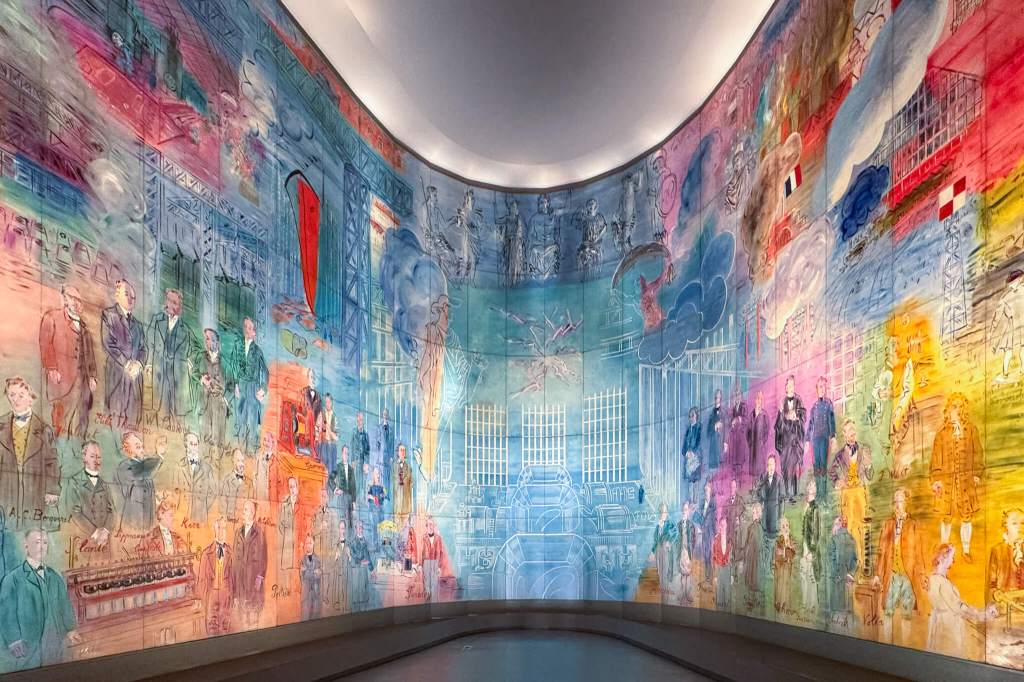
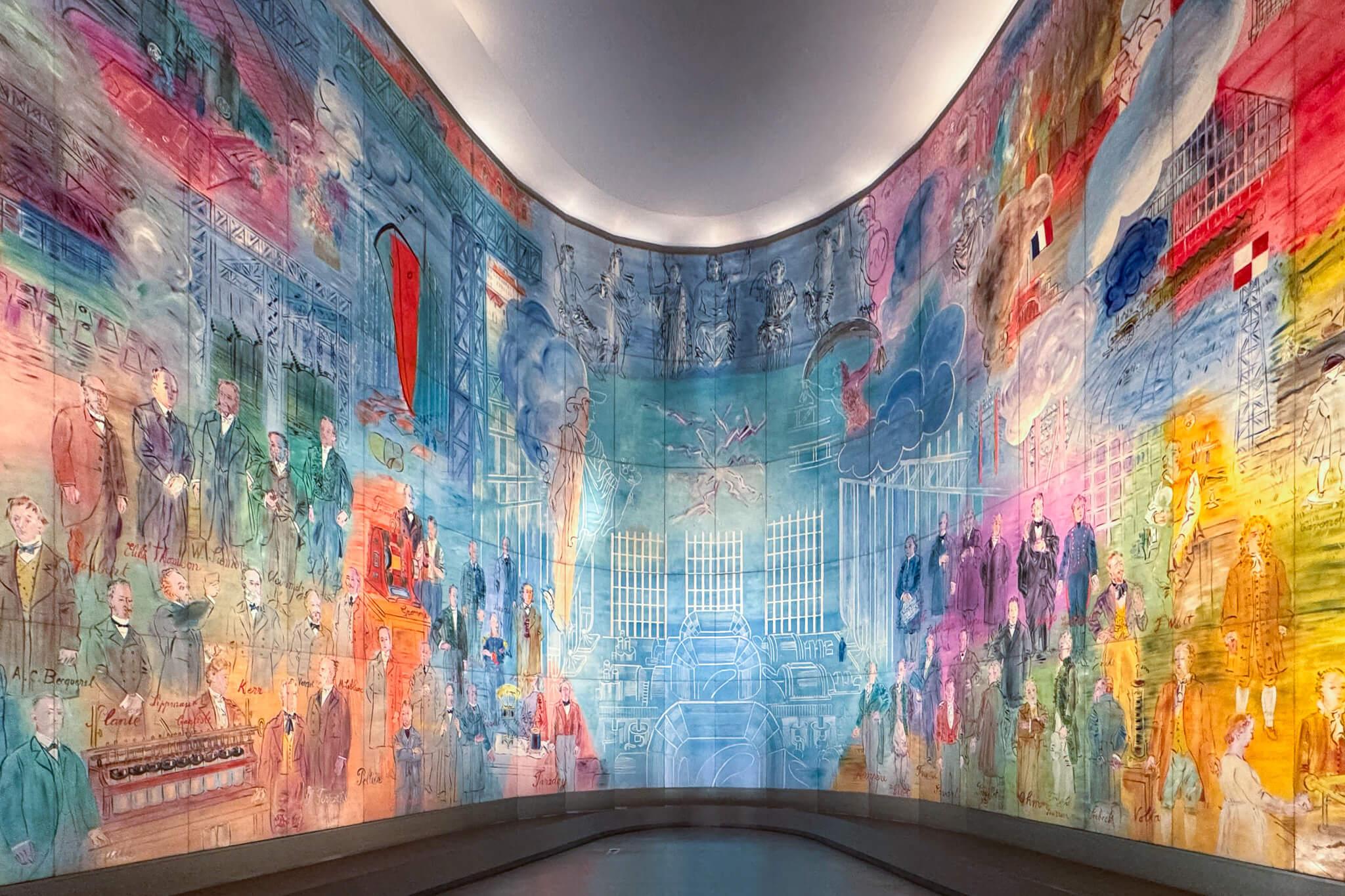
One of the showstopper pieces of the museum is a monumental piece by Raoul Dufy entitled La Fée Électricité measuring 10×60 metres. It was commissioned for the 1937 International Exposition in Paris and portrays over 100 scientists, philosophers and inventors who contributed to electrical science.
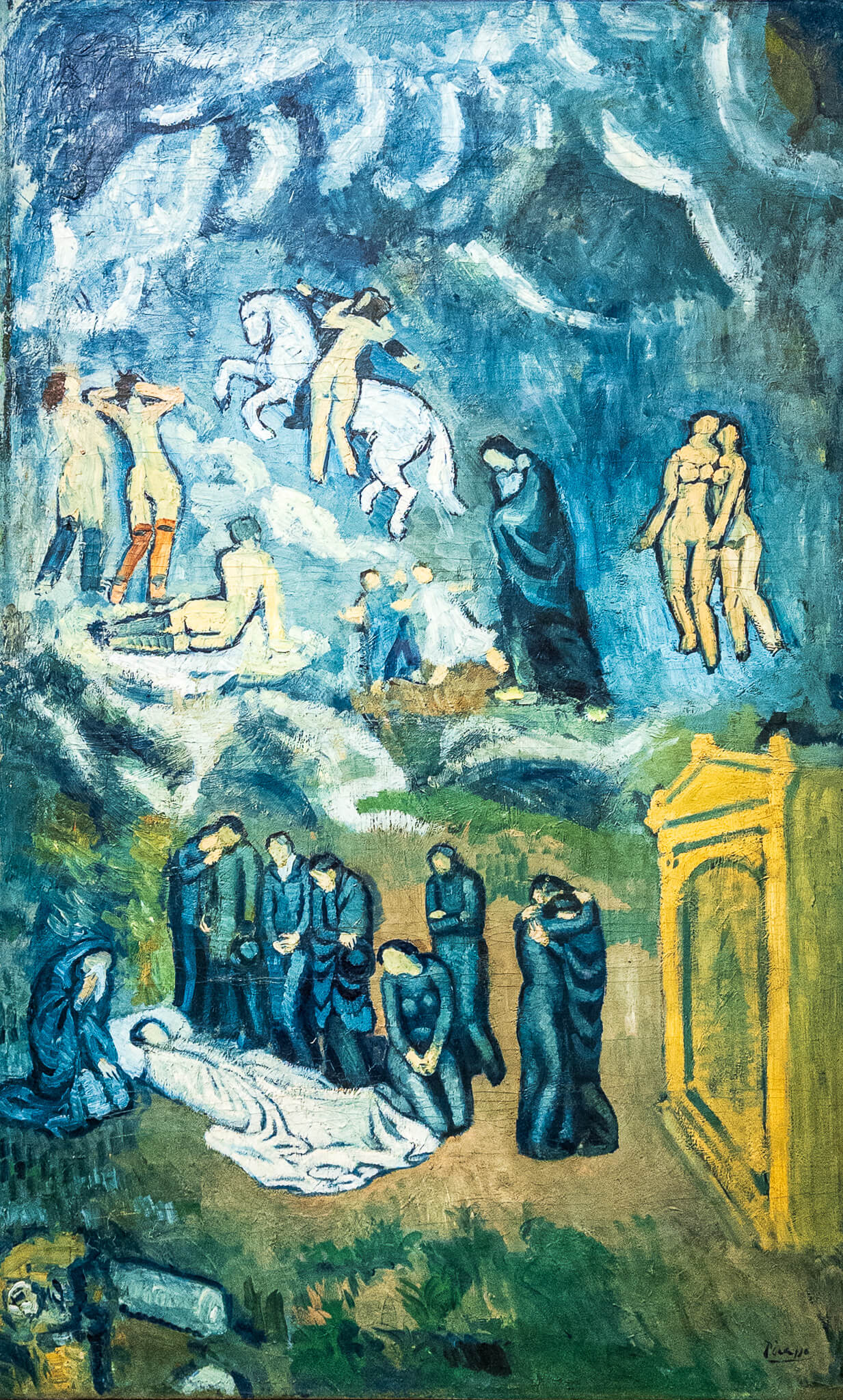
The museum has a Picasso painting from 1901 named Evocation or The Burial of Casagemas, one of Picasso’s close friends who died by suicide. The death was a major catalyst for Picasso’s blue period, and this is considered the first painting of that period.
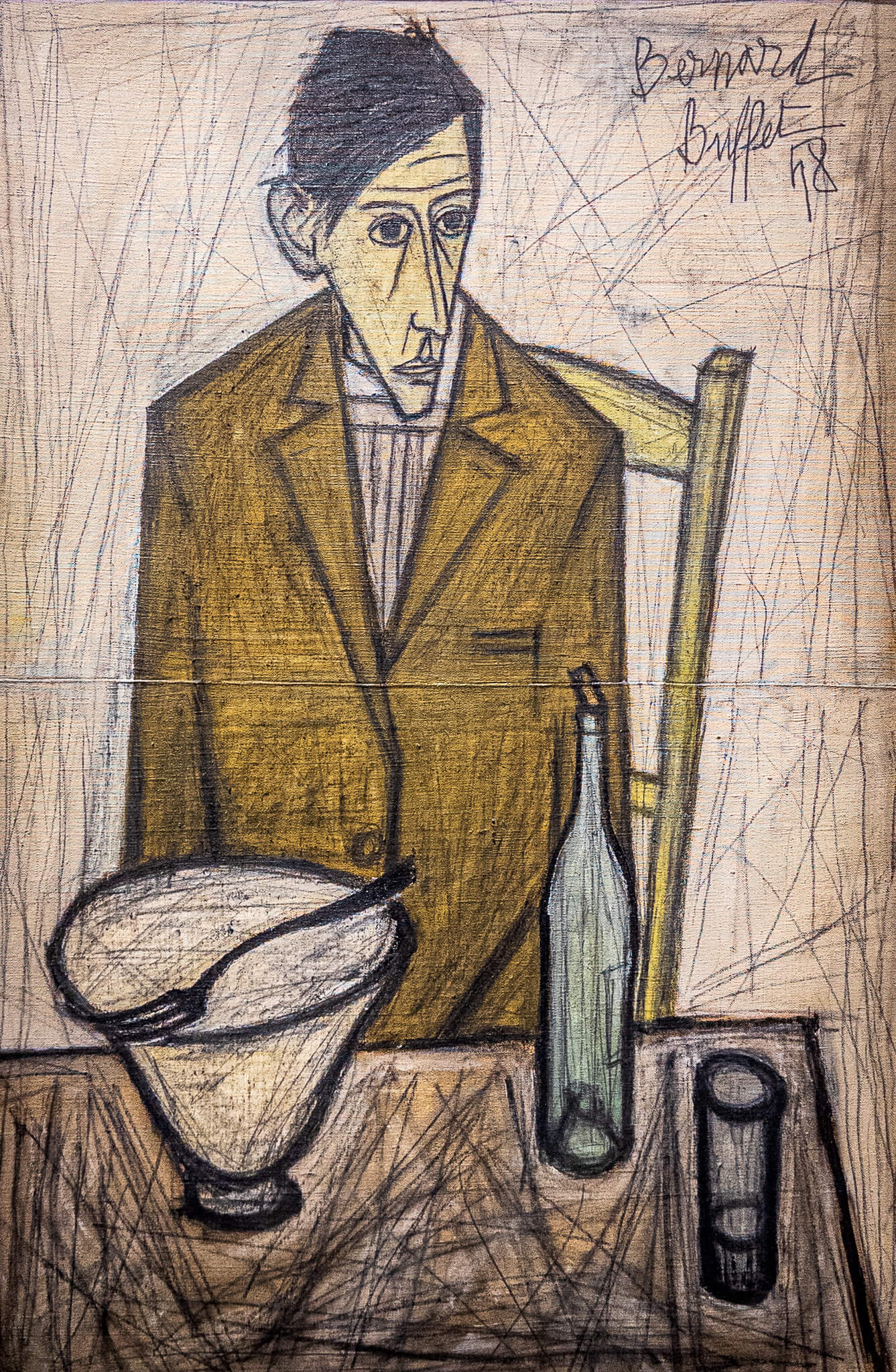
The collection of expressionist art by Bernard Buffet was particularly compelling.
As we got into the 21st-century work things started to fall apart for us. There was a room with equally-spaced dots on the walls touted as an “interactive experience”. There were canvases painted with a single colour of paint. There were ironing boards draped with fabric. There was a sculpture that looked like discarded clay. Happy we didn’t pay for that section of the museum.
The view of the Eiffel Tower from the Trocadéro
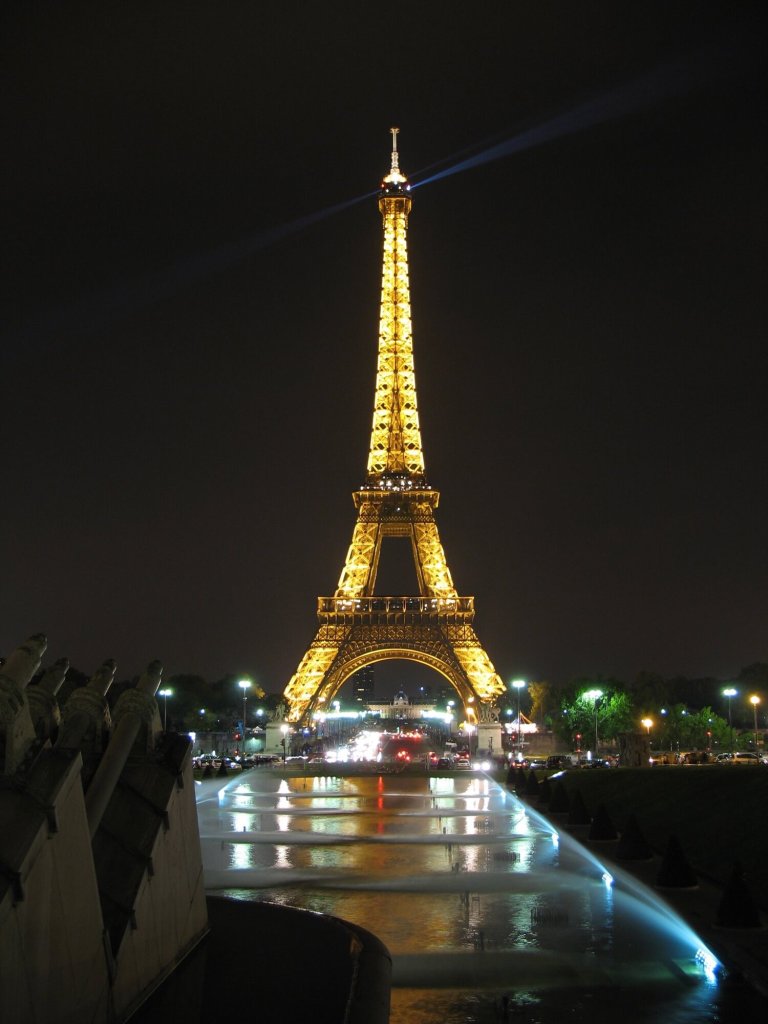
Probably the most popular spot in the arrondissement is the Place du Trocadéro and the Palais de Chaillot. The Palais de Chaillot was built for the World’s Fair of 1937, partly demolishing and replacing the Palais du Trocadéro from the World’s Fair of 1879. Today it houses the Musée national de la Marine and Cité de l’Architecture et du Patrimoine mentioned earlier.
Place du Trocadéro gets filled up with visitors as we approach sunset and nightfall because it’s an iconic spot to view the nightly Eiffel Tower light show. (If you want to avoid the crowds, gather on the lawn of the Champ-de-Mars which still gets busy but can accommodate the crowds.)
A unique Art Nouveau metro entrance
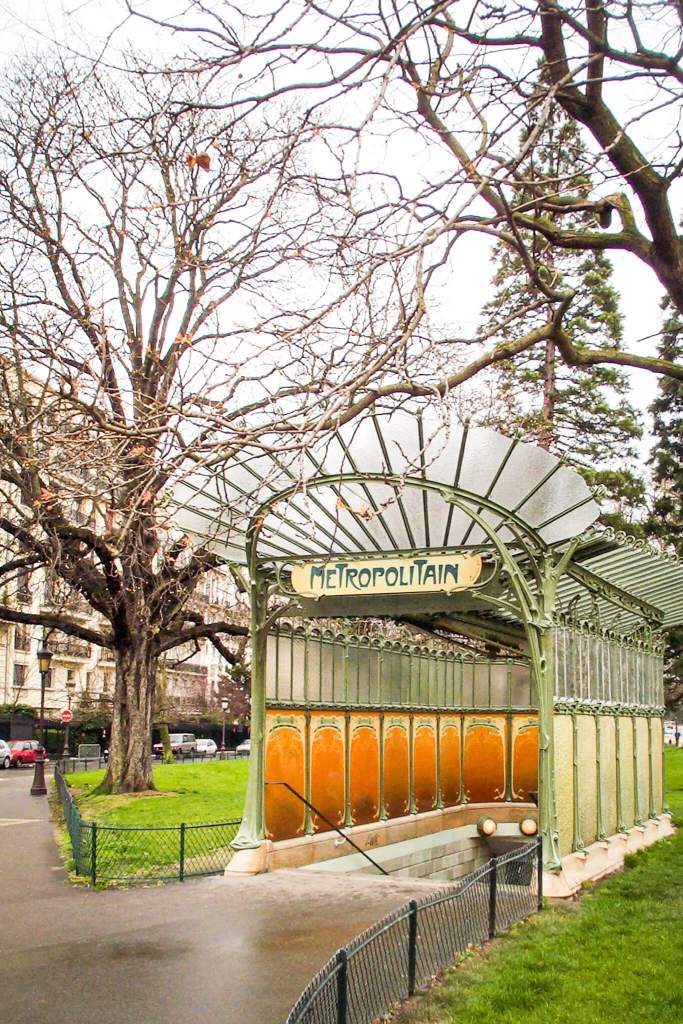
The Porte Dauphine metro station is a terminus for line 2 and features the only remaining original Art Nouveau glass canopy known as the “dragonfly” entrance designed by Hector Guimard (technically called Édicule B or Type B). It features a dramatic flared glass roof structure. Only 8 of these were ever constructed.
Most of the Guimard entrances we see on a regular basis are the open-air styles, of which 86 survive.
The Porte Dauphine entrance is the only original dragonfly entrance remaining, and the only glass-covered Guimard station that hasn’t been moved or reconstructed (albeit restored in 1999). There’s a Type B replica at Chatelet station created from original molds in 2000 to celebrate the 100th anniversary of the Paris Metro. There’s one other remaining glass-roofed entrance that we’ll see in a couple of days, but it’s a different style (Édicule A) and was moved to its current location from a different station.
The 16e arrondissement of Paris is so large and offers so much that it can be overwhelming. Pick one museum that speaks to your interests and focus on that. Or skip the museums entirely, and enjoy the view of the Eiffel Tower from the Trocadéro.


Leave a comment