
The 17e arrondissement of Paris is a diverse residential area, with a mix of working-class housing, luxury residences and modern eco-friendly developments. There’s easy access to everyday shopping destinations and knockout neighbourhood bakeries.
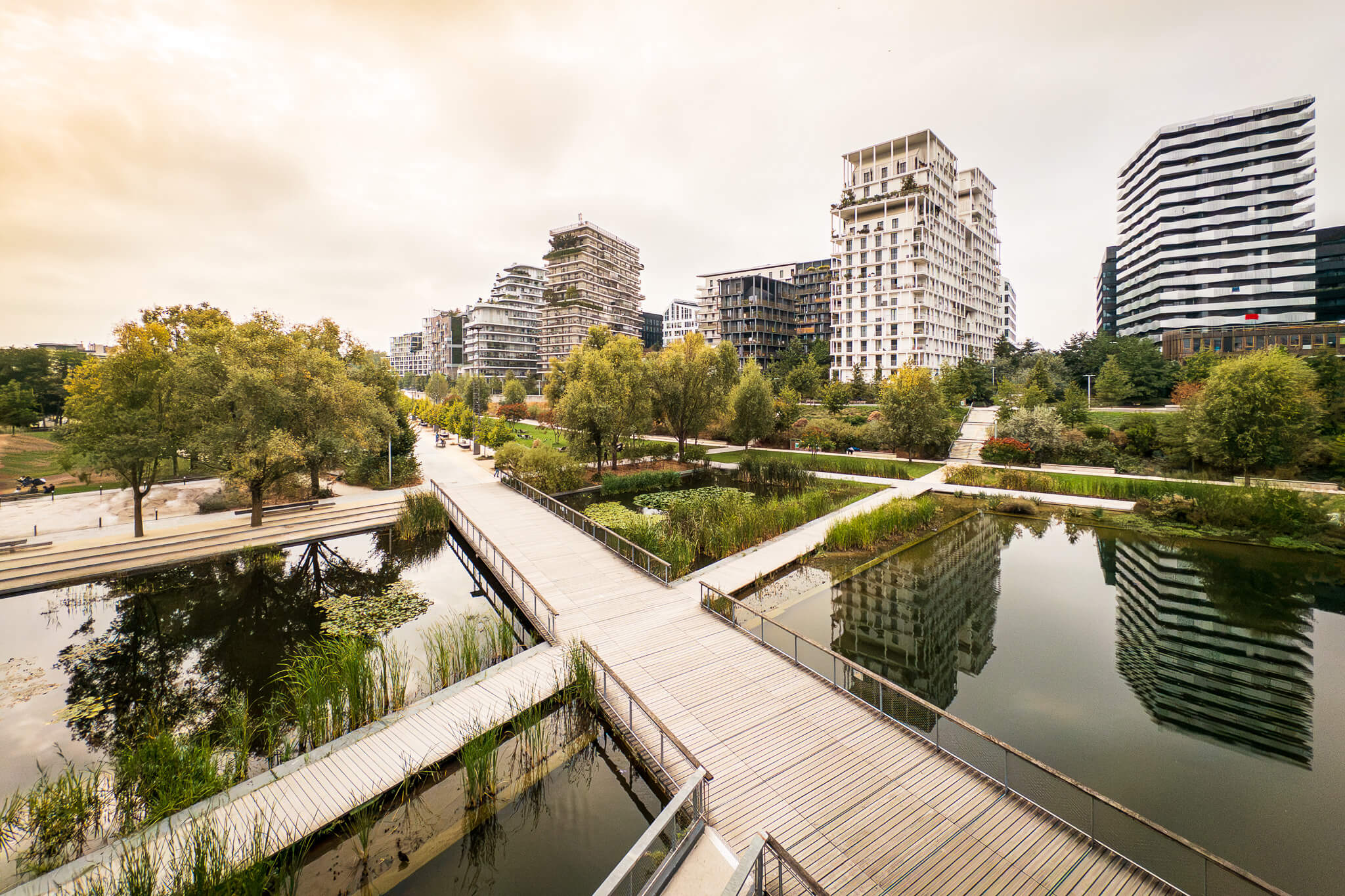
Parc Clichy-Batignolles–Martin-Luther-King is a large park (the 8th largest in Paris) that opened in stages between 2007 and 2020, on a site that was previously a railway freight yard. In the Paris bid for the 2012 Olympics, the site was proposed as the location of the Olympic Village. Today the park is a dynamic and lively area with walking paths, garden beds, a pond area with boardwalks, playgrounds and a large skate park. The park is surrounded by new eco-friendly developments that incorporate solar and geothermal energy, and even tested an automated vacuum waste collection system.
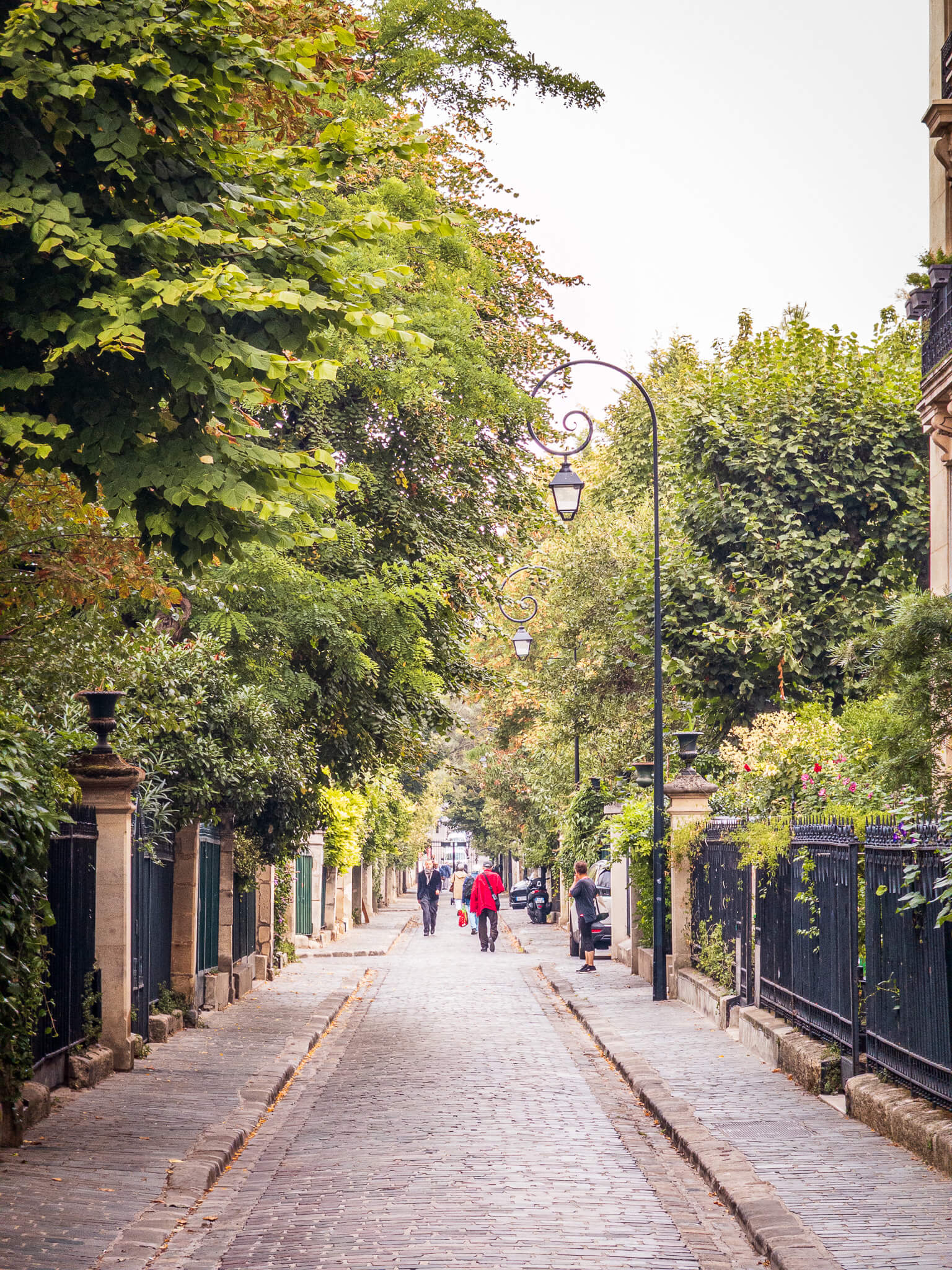
The nearby Cité des Fleurs is a beautiful cobblestone pedestrian street created in 1847 and stretches 320 metres, lined with houses and hôtels particuliers behind ornamental fences and impeccably landscaped yards (palm trees and all).
Not technically in Paris, but…
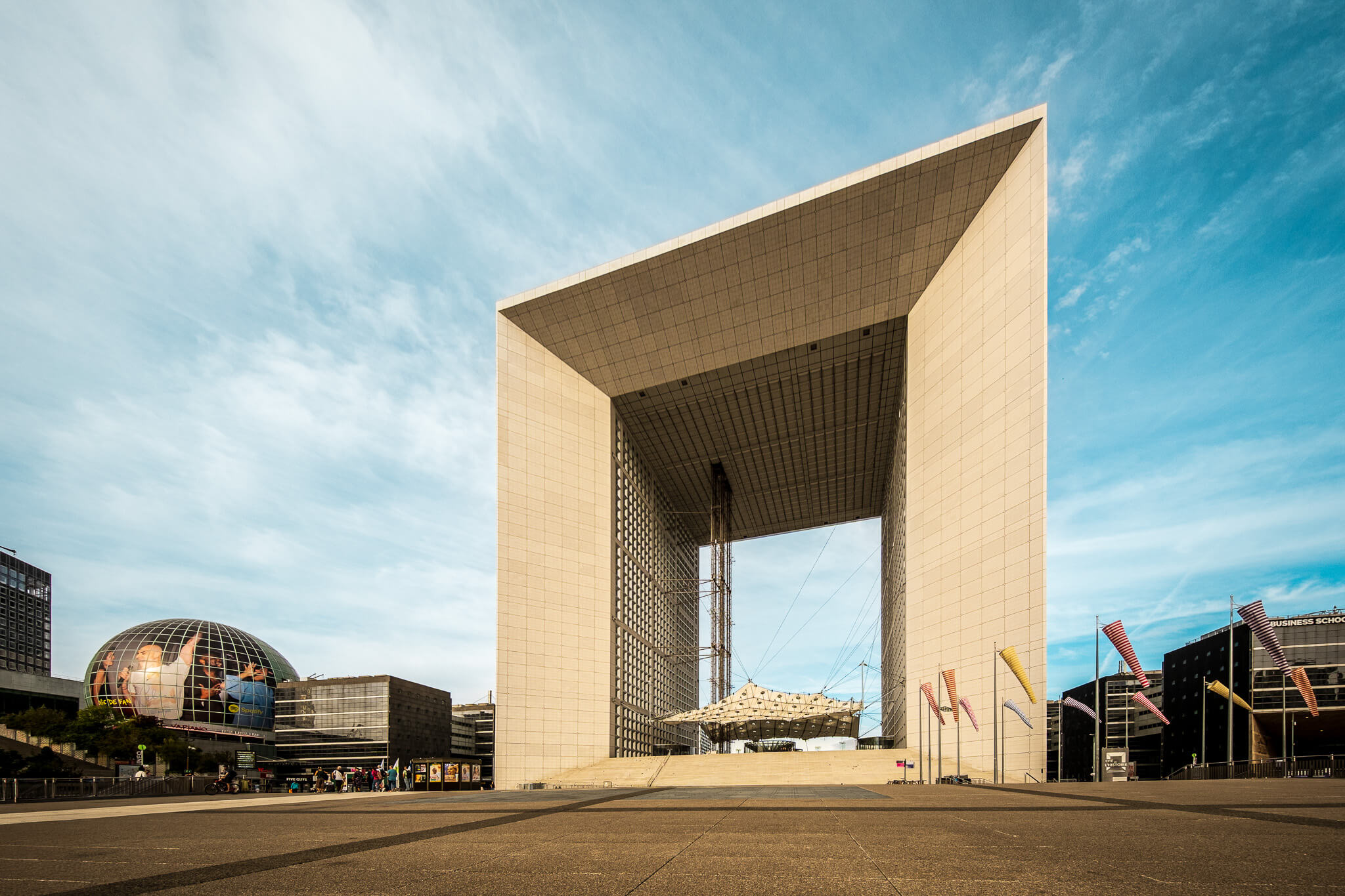
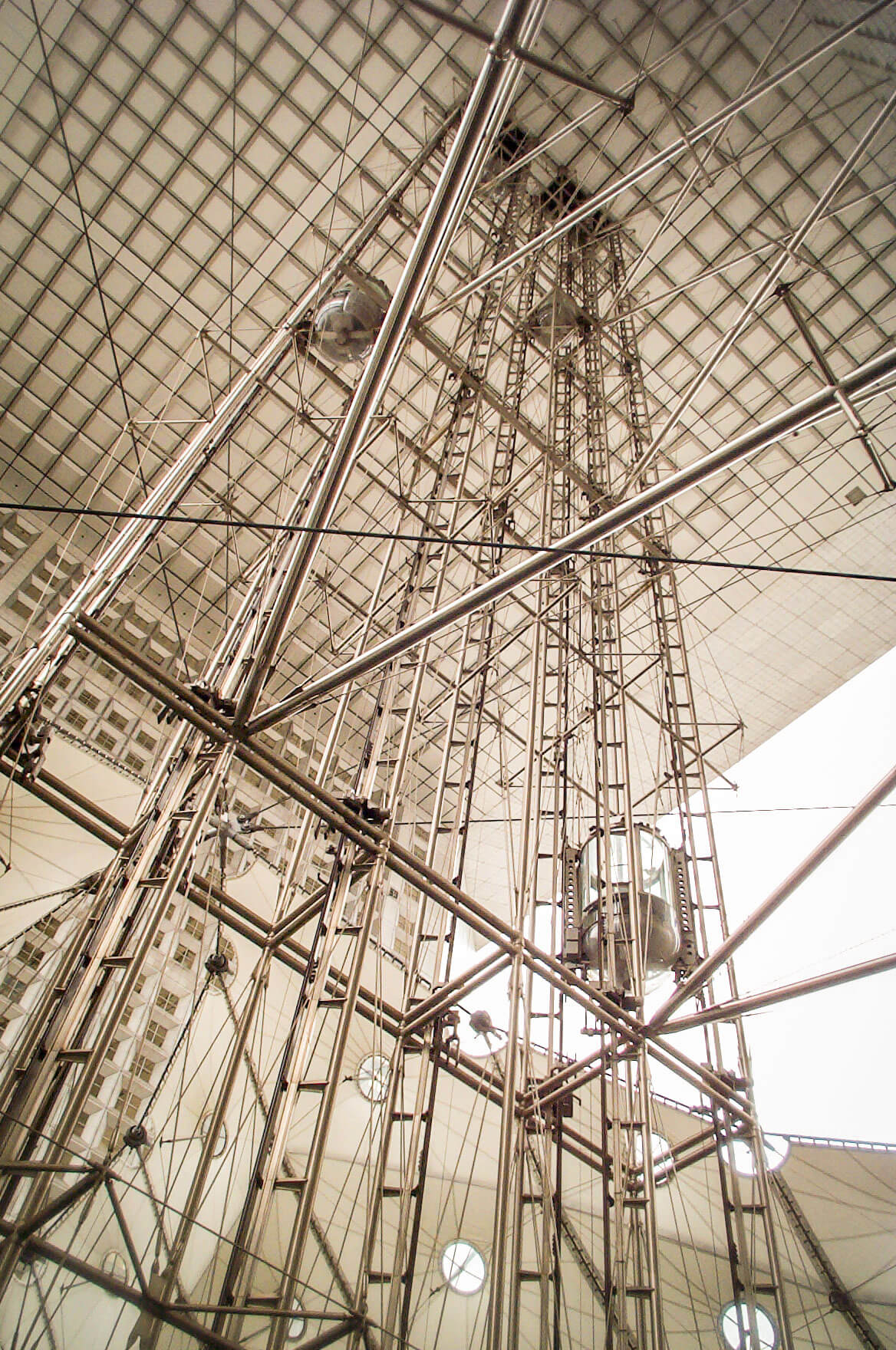
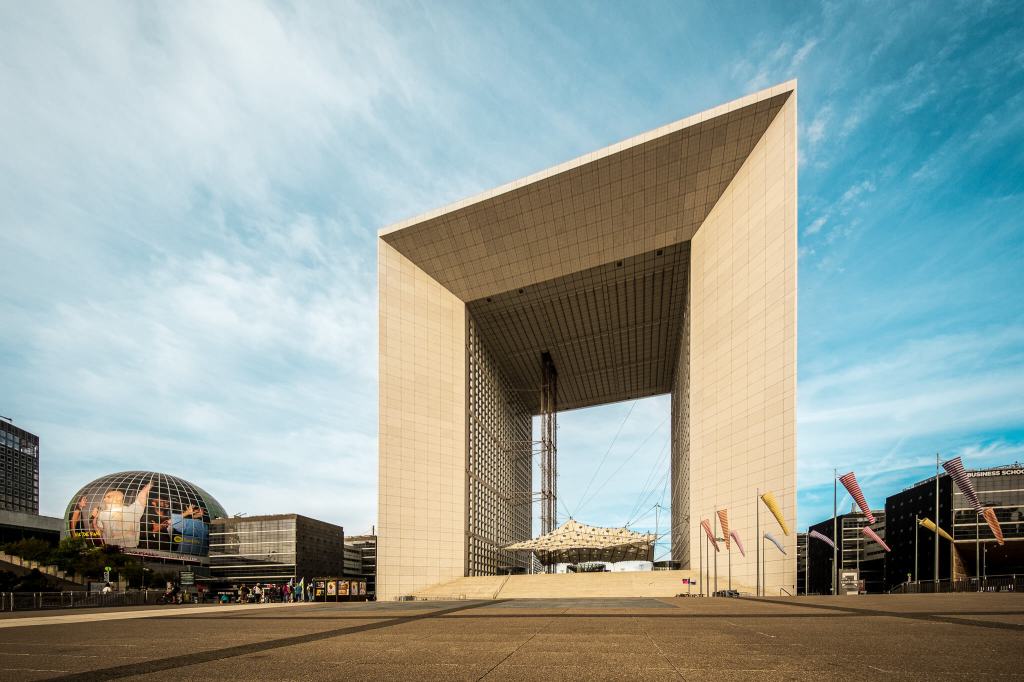
While we were on the western side of Paris, we took a short metro stop over to La Grande Arche de la Défense (or simply, La Grande Arche). Built in the late 1980s, it completes the historic axis of Paris that runs from the Louvre with the small Arc de Triomphe du Carousel, through the Jardin des Tuileries and Place de la Concorde, down the Champs-Élysées to the Arc de Triomphe and ending at La Grande Arche. Despite not being within the Paris city limits, it’s worth a visit, especially if you get off a metro stop early and walk along the promenade area of La Défense (surrounded by the skyscrapers that are banned in Paris proper).
La Grande Arche de la Défense is a massive cube-shaped monument with each dimension measuring 110 metres, forming a modern triumphal arch (the largest in the world). More than a monument, it’s actually a building tower housing government offices (sadly, the panoramic elevators and rooftop lookout is permanently closed). While it’s in line perfectly with the historical axis, the Grande Arche itself is rotated 6.33º due to engineering constraints. The existing train tunnels below the monument prevented construction of the monument’s foundation in perfect alignment with the axis. In some respects, this actually provides a better perspective to understand the shape of the building.
The 17e arrondissement revealed an interesting modern side to Paris, after we’ve been immersed in so much Haussmannian architecture. Interestingly, it still felt very Parisian thanks to wide sidewalks, lively parks and public spaces, and vibrant restaurant terraces (and good bakeries!)


Leave a comment