
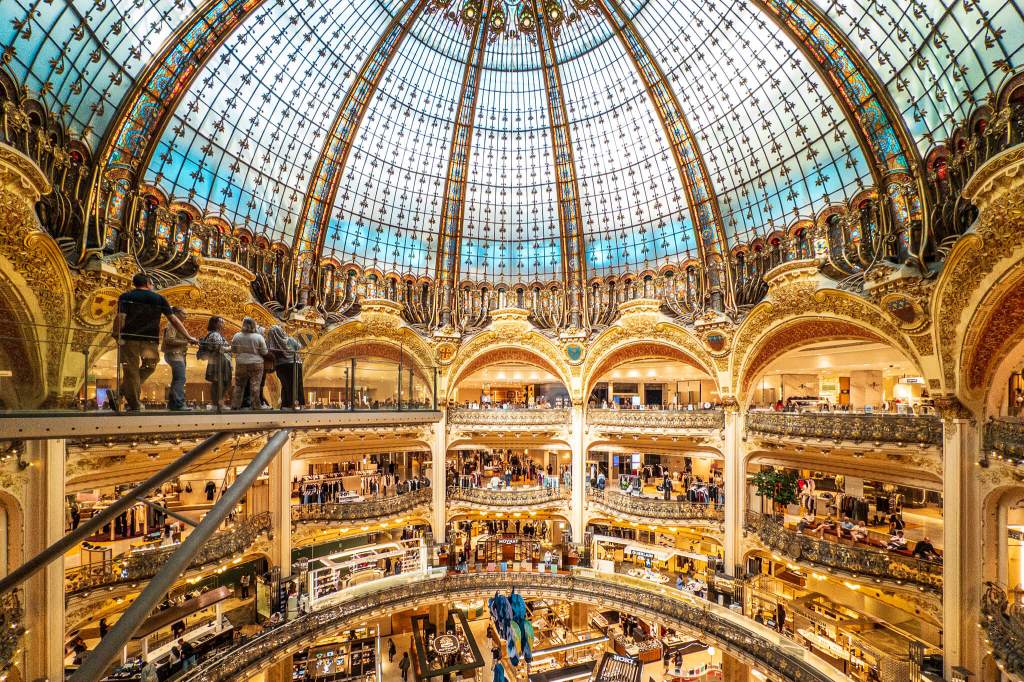
The 9e arrondissement is named Opéra after the incomparable Paris opera house, Palais Garnier. This is one of the fancier areas of Paris, with countless luxury shops, hotels and restaurants. It also features some of the best architecture in Paris, showing the evolution from Second Empire or Beaux-Arts through Art Nouveau and Art Deco.
The textbook example of Second Empire or Beaux-Arts architecture

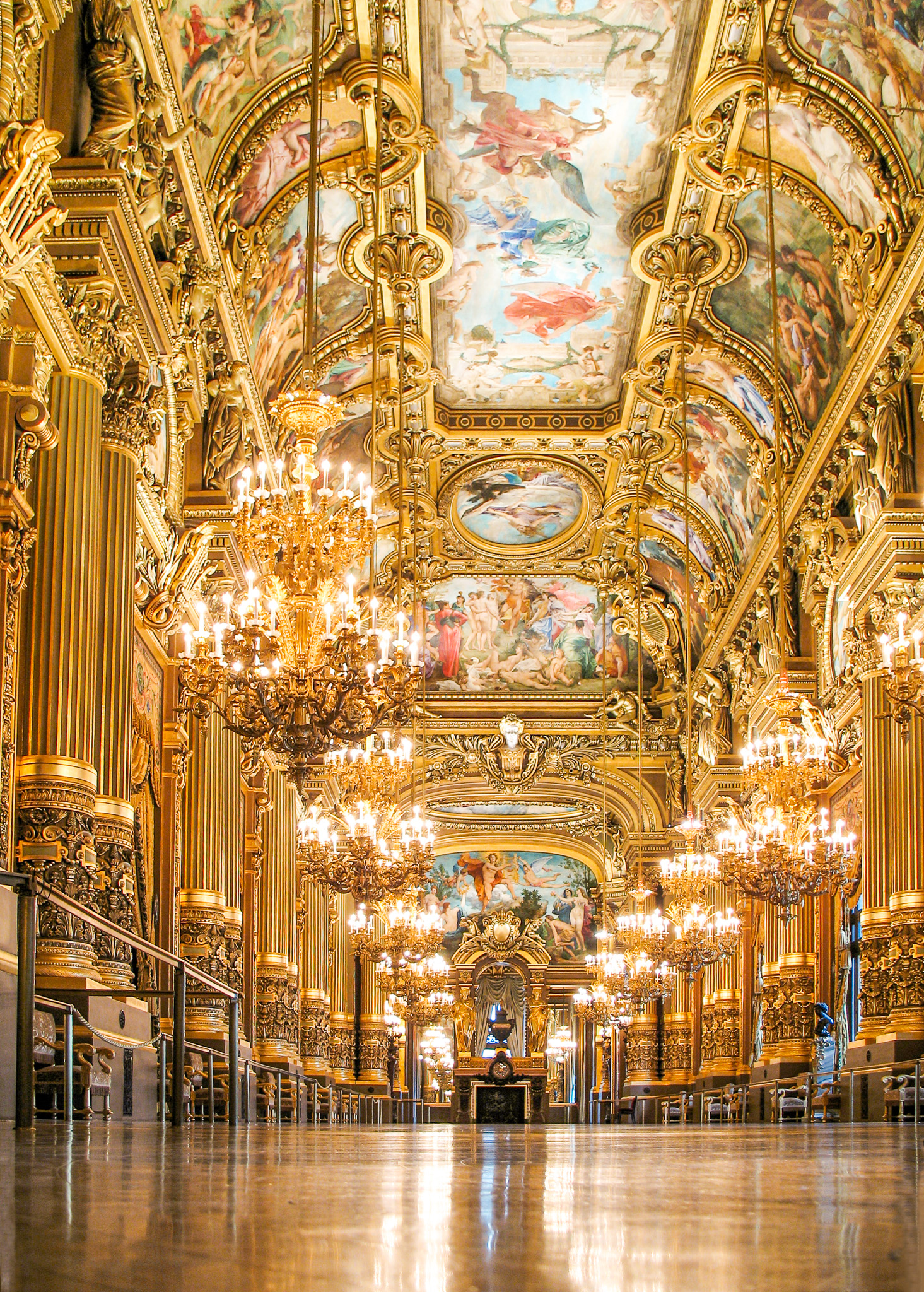
Even if you’re not an opera aficionado, it’s worth visiting the building that defined an architectural style. The Palais Garnier architecture is alternatively described as Second Empire (also known as Napoleon III) or Beaux-Arts, terms that are often used interchangeably. It was built between 1861 and 1875. Second Empire buildings like Palais Garnier were developed under Napoleon III and display extreme opulence and monumental scale. We often see a blend of historic architectural styles including baroque, classical and renaissance. The Beaux-Arts descriptor speaks to the architectural principles of symmetry and grand spaces.
While you can arrive directly at Palais Garnier via metro, it’s worth taking the 1km walk from the Louvre along Avenue de l’Opéra to appreciate the building from a distance. Up close, it’s easy to get lost in the numerous sculptures that decorate the building. The roof sculpture features Apollo holding a gilded lyre. The façade is decorate with busts of famous composers.
To view the opulent interior, including the grand staircase, the heavily gilded grand foyer, and the 7-8 ton chandelier featuring 340 lights, you can book a visit or attend a performance. While most major operas now take place at Opéra Bastille, Palais Garnier hosts ballet performances and smaller lunchtime chamber orchestra performances.
Note: The Palais Garnier will close for major renovations from 2027 to 2032 and its front façade is already covered with scaffolding. The photos above are from our 2006 visit.
Art Nouveau grands magasins
Just around the corner from Palais Garnier are two of the iconic Parisian department stores, or grands magasins, located on boulevard Haussmann. (The boulevard was created under Haussmann’s plans, but not named by himself, although interestingly he needed to demolish the house where he was born in order to create the new road.)
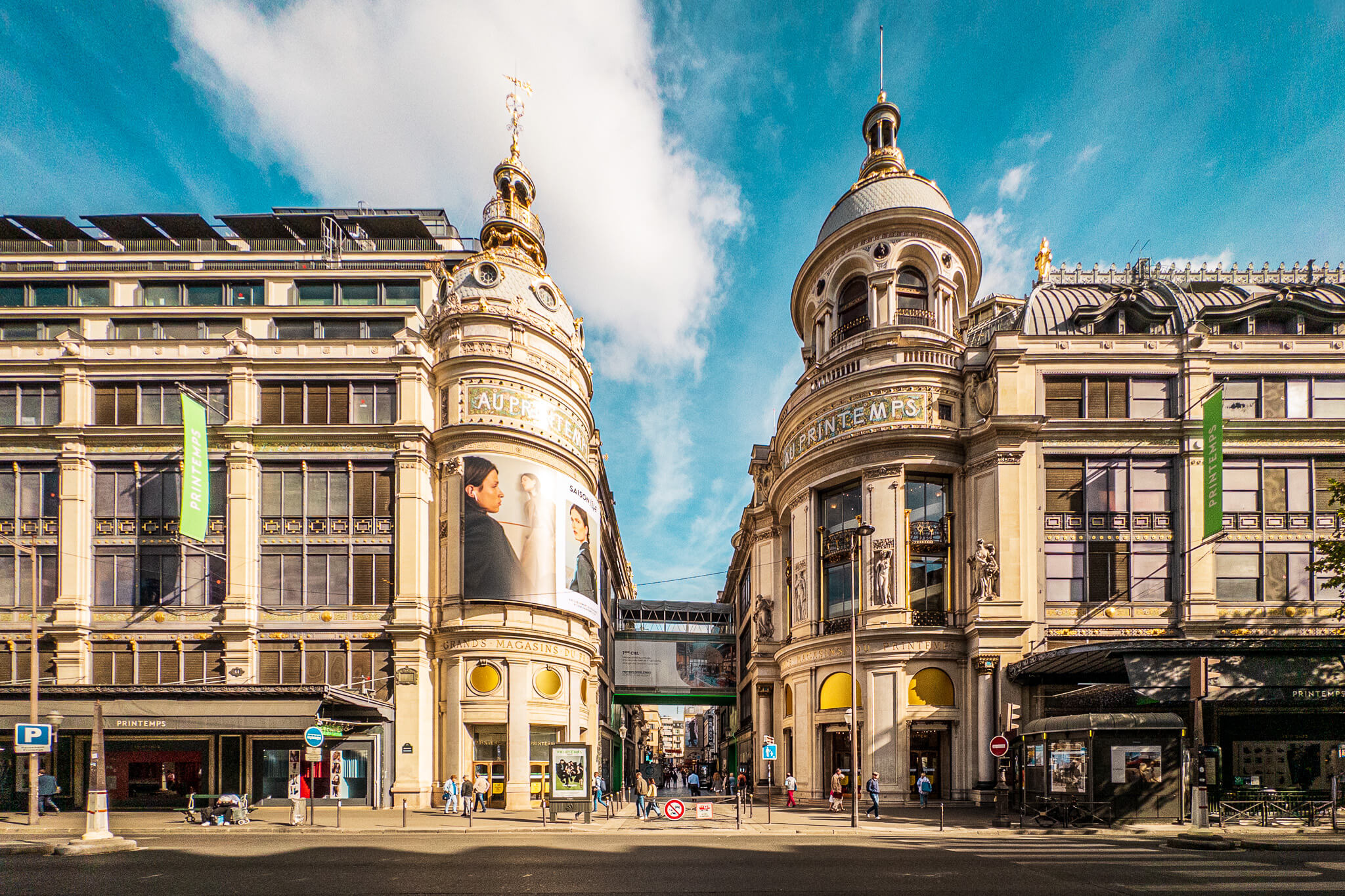
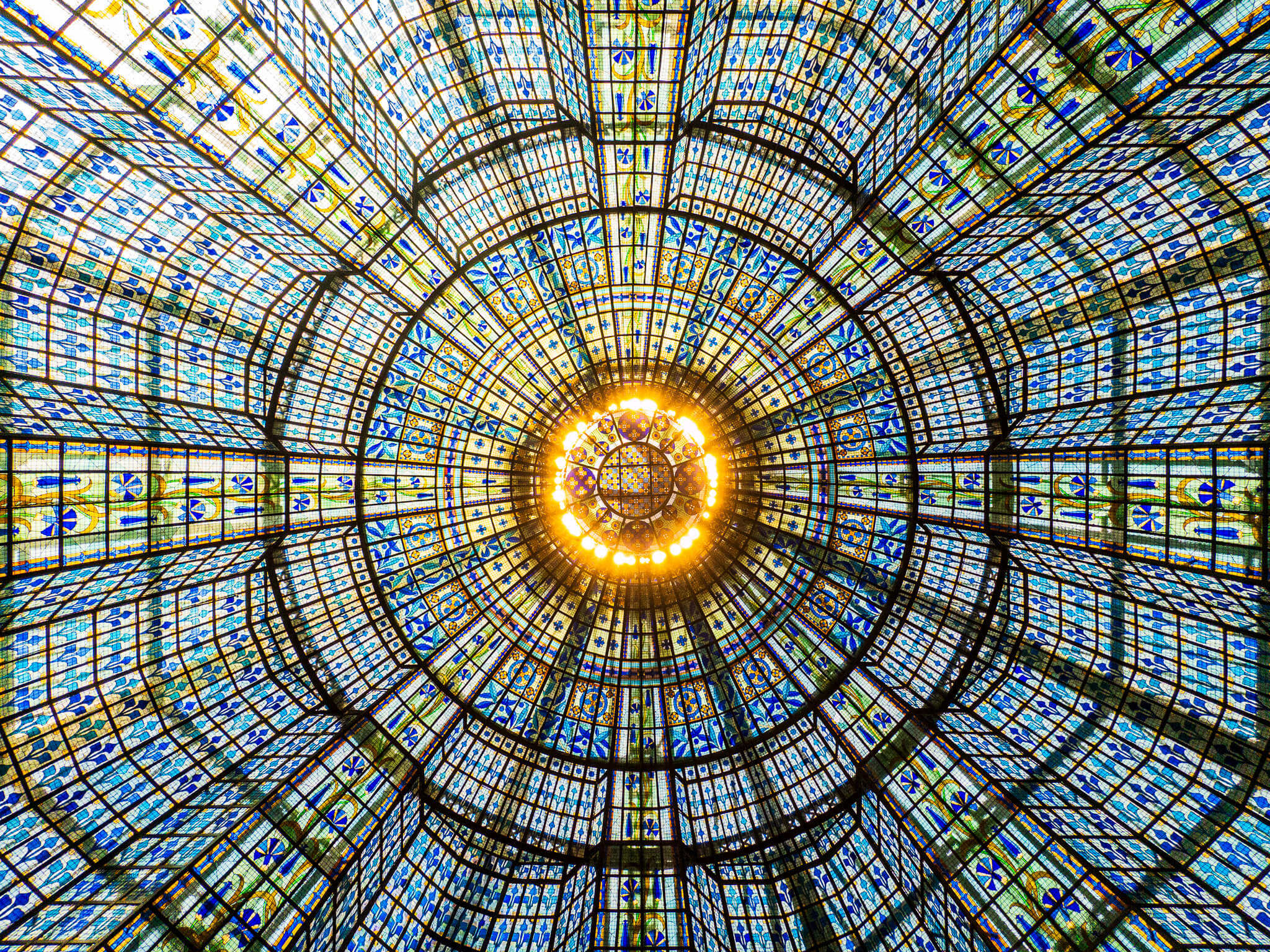
The Printemps Haussmann department store first opened in 1865, although it’s been reconstructed a few times following catastrophic fires. The 1883 iteration was the first public building in Paris to feature electric lighting. The ornate Art Nouveau façade we see today dates to a 1910 expansion. The iconic stained-glass dome added in 1923 was dismantled during WWII for protection and only reinstalled in 1972. The dome is located in the women’s fashion building, visible only from the upper floor (awkwardly on the floor that contains women’s lingerie, although there’s also a restaurant on this floor). The men’s fashion building contains cafés and restaurants that offer stunning views of the city (but no dome).
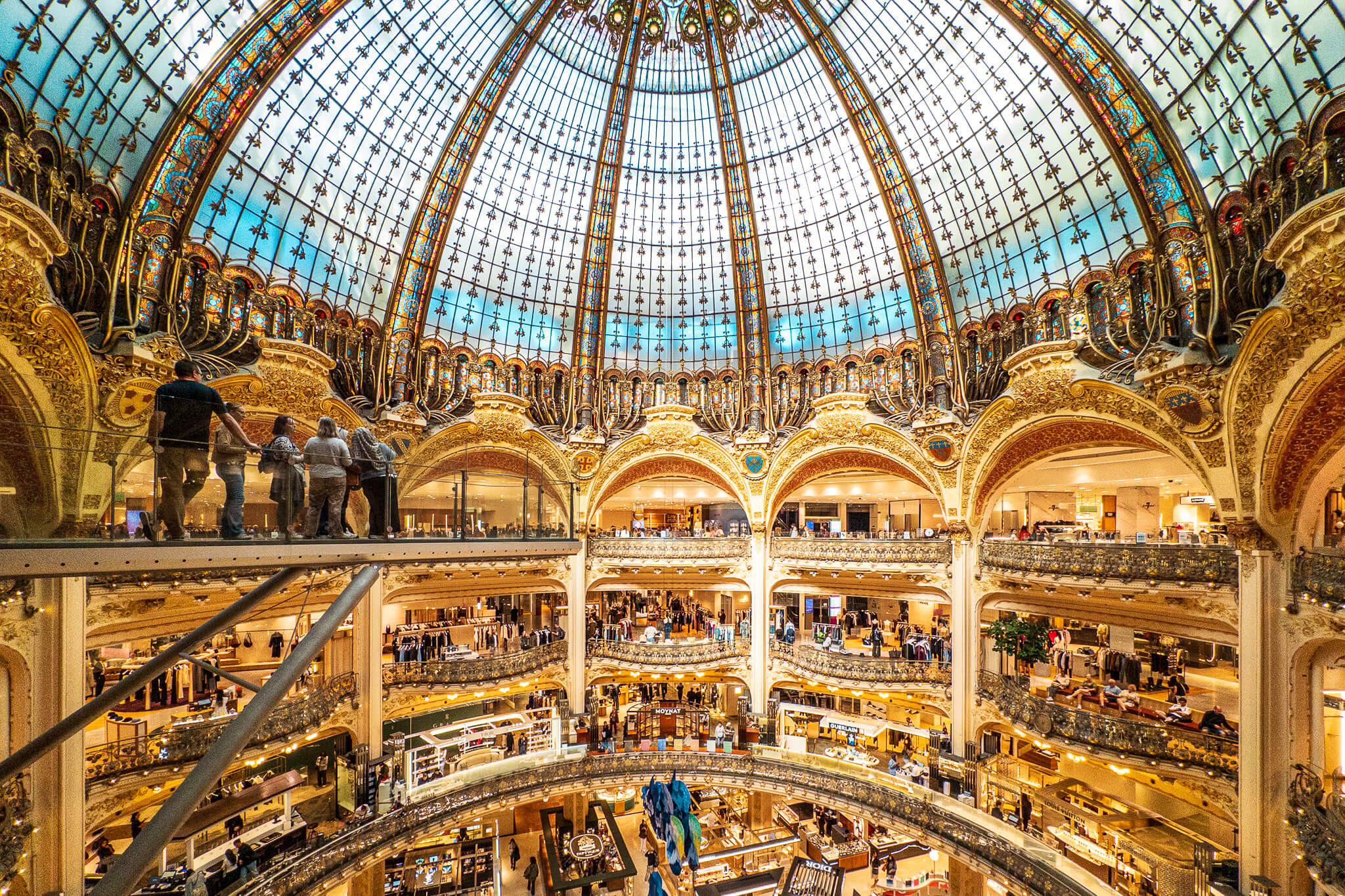
Galeries Lafayette Haussmann started as a small shop in 1893, gradually growing by purchasing neighbouring properties. A major renovation in 1907-1912 introduced the domed hall, a masterpiece of Art Nouveau architecture with neo-Byzantine influences. Further renovations in 1932 introduced Art Deco elements. On the top floor is a lookout area to admire the glass dome, which may require a short lineup as they pace visitors to prevent overcrowding. Alternatively, there are cafés on the upper two floors that provide amazing views of the dome, so grab a coffee and take your time to admire the architecture.
Galeries Lafayette Haussmann also has a rooftop restaurant with city views, and an Angelina tearoom location on the first floor.
Covered passages in the 9e
The 9e arrondissement is the official home to a couple covered passages that we explored while we were in the 2e arrondissement, Passage Jouffroy and Passage Verdeau.
Lunch in an Art Nouveau dining room
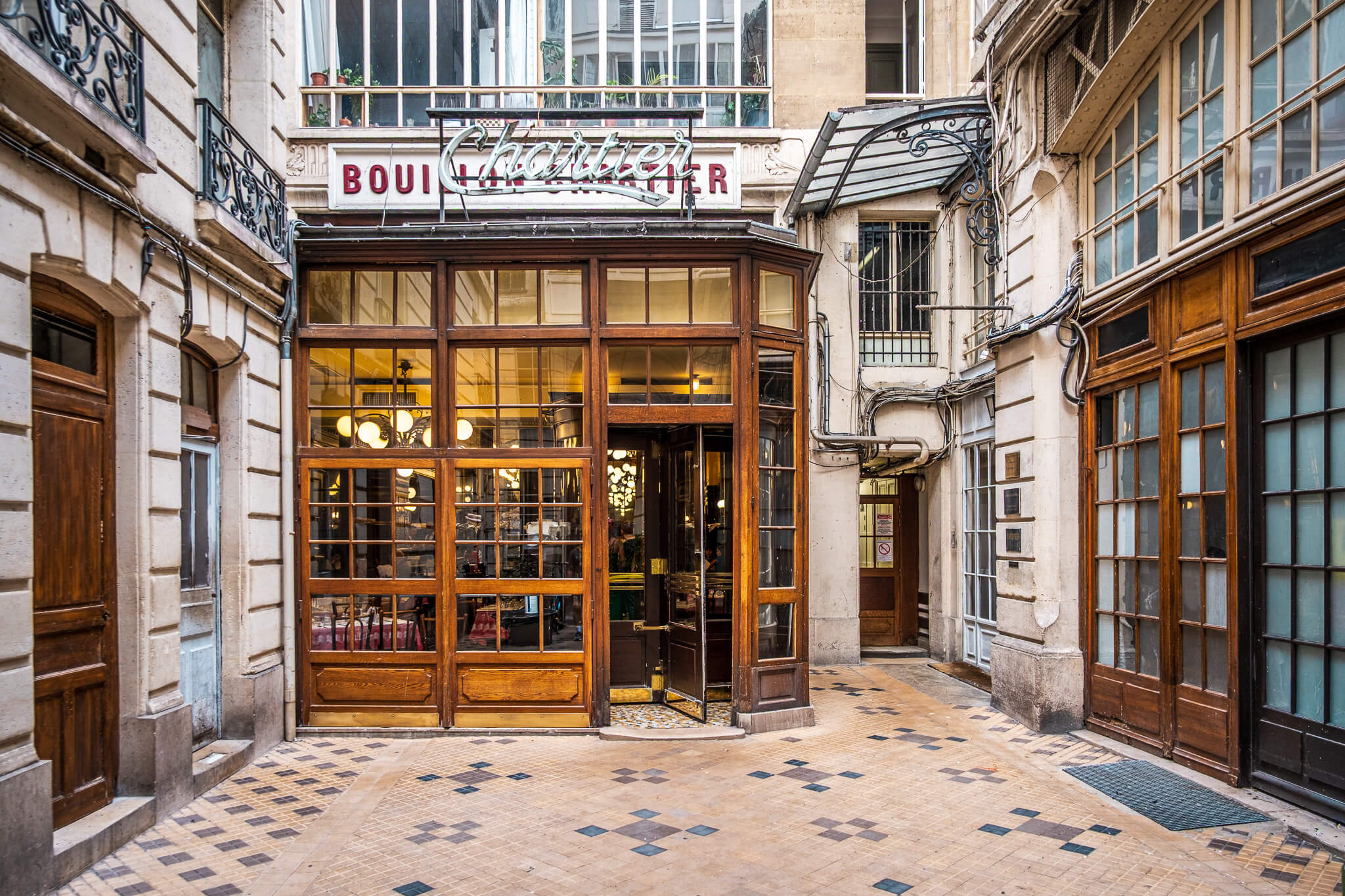
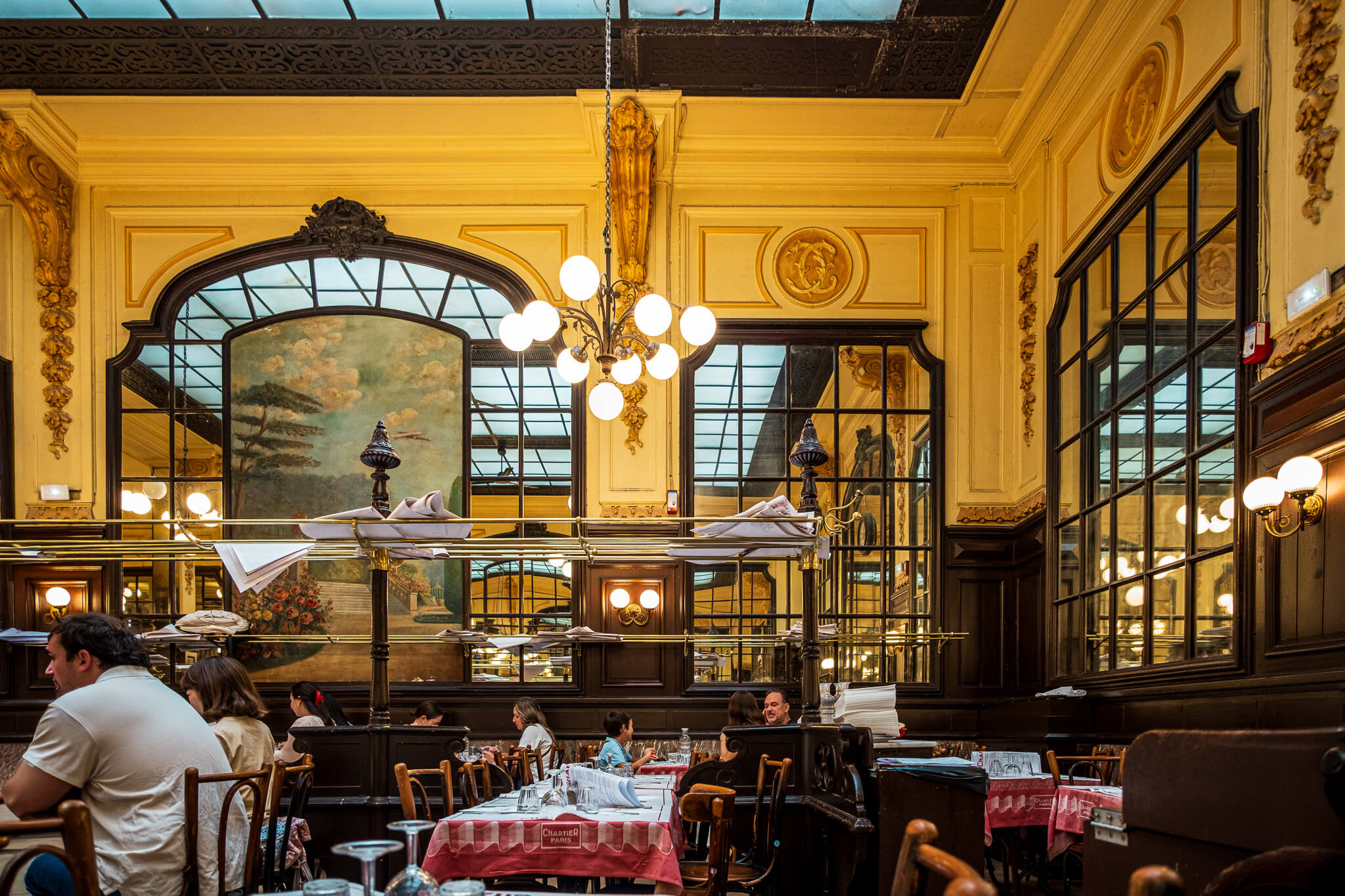
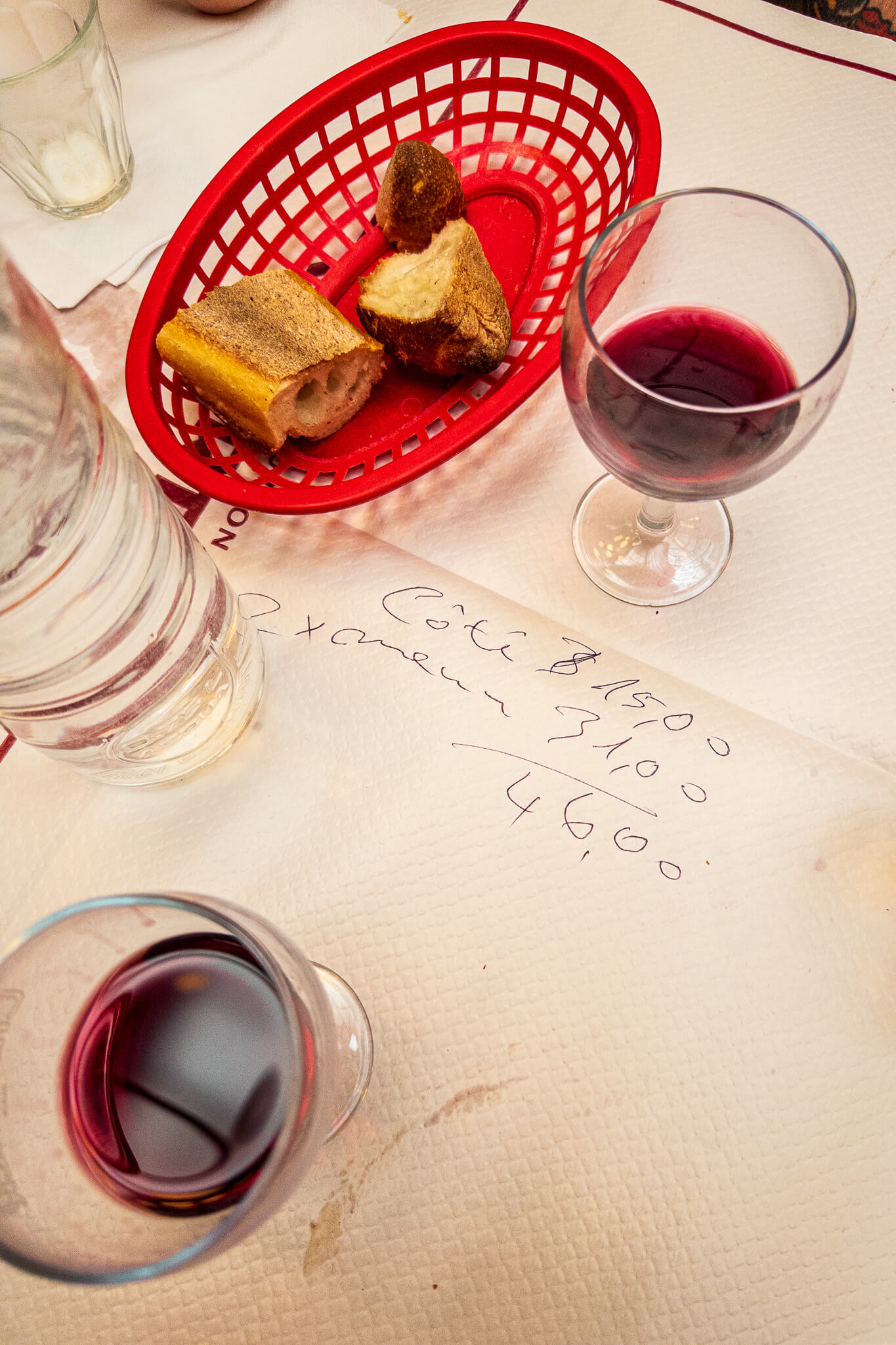
We had lunch at the original Bouillon Chartier location, opened in 1896 by founding brothers Camille and Frédéric Chartier with an Art Nouveau dining room. As we’ve learned from visiting Bouillon Chartier in Montparnasse (and seeing patterns in other popular restaurants), the key to having lunch at a popular spot is to arrive on the earlier side (between 11:30am-12pm) and you’ll get in right away. Especially at Bouillon Chartier where their dining hall can accommodate a lot of people. But if you delay until 12:30-1pm when the business crowds get out, you risk a lineup.
We enjoyed a three course meal with some more bouillon classics, including oeuf mayonnaise, escargots, steak-frites, choucroute, mousse au chocolat and baba au rhum. With a bottle of wine, our grand total was around €60.
Stepping into Art Deco at Folies Bergère
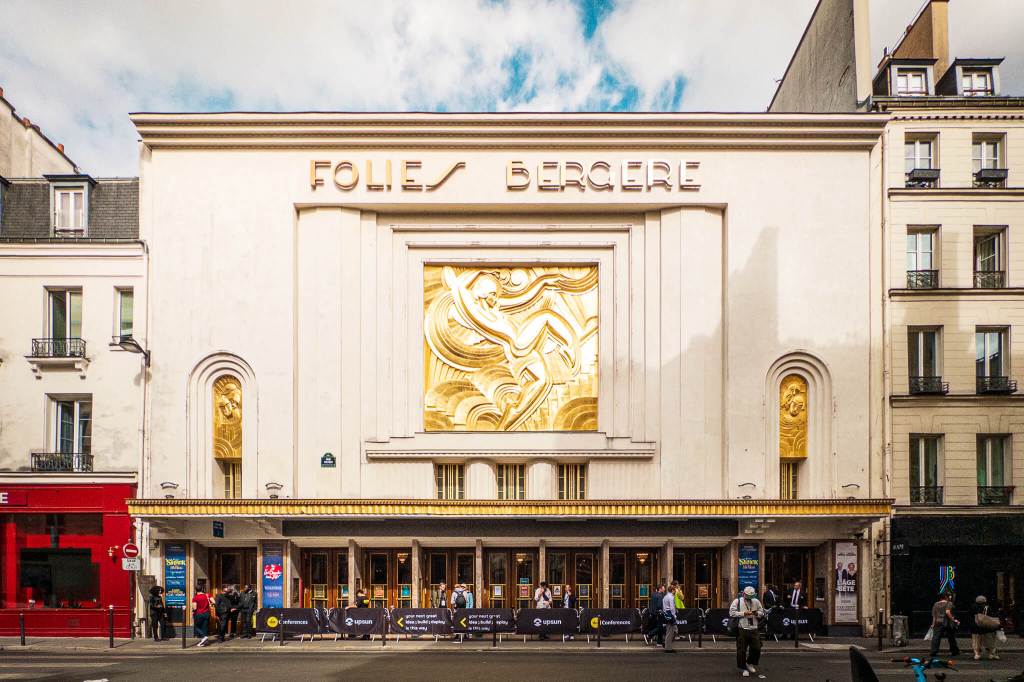
We ended the day passing by Folies Bergère, originally built as an opera house in 1869 but gained fame as a music-hall revue where Joséphine Baker debuted her banana skirt. The original opera house was in the Second Empire style and a major redesign in 1926 turned it into the art deco gem we see today.
The 9e arrondissement of Paris took us through some of the most impressive Beaux-Arts and Art Nouveau buildings in Paris, with Printemps and Galeries Lafayette free to visit (if you can avoid the temptation to shop). And while the exterior façades are impressive, the best parts are inside, so take the time to enter and admire the architecture, and enjoy a performance at Palais Garnier Which one is your favourite?

 Scuba Duo
Leave a comment