
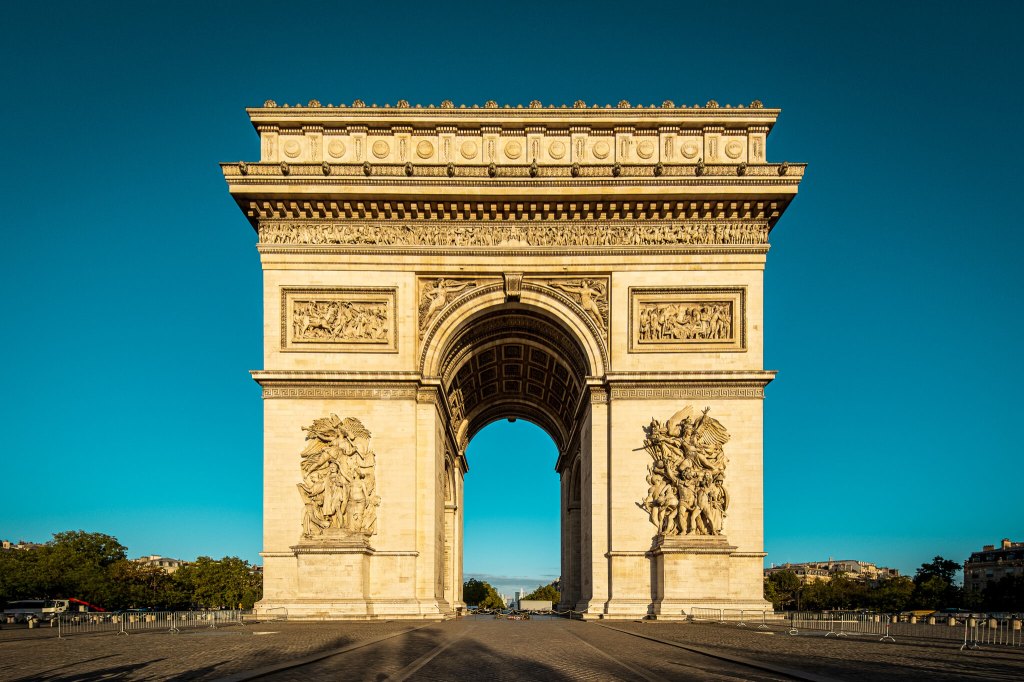
The 8e arrondissement is named Élysée, as it’s centred around the Avenue des Champs-Élysées, arguably the most famous street in the world and one of the most beautiful.
The Champs-Élysées is the axis that links the Louvre and it’s Arc de Triomphe du Carousel through to Place de la Concorde to the Arc de Triomphe (and then onwards to the Arche de la Défense). Nowadays, most people flock to the avenue’s large international chain stores and luxury brand shops.
The Champs-Élysées runs downhill from the Arc de Triomphe towards the Louvre, so I recommend starting at the Arc de Triomphe for the easier walk. You’ll also get to enjoy the monument before the crowds arrive.
The grandest monument in Paris
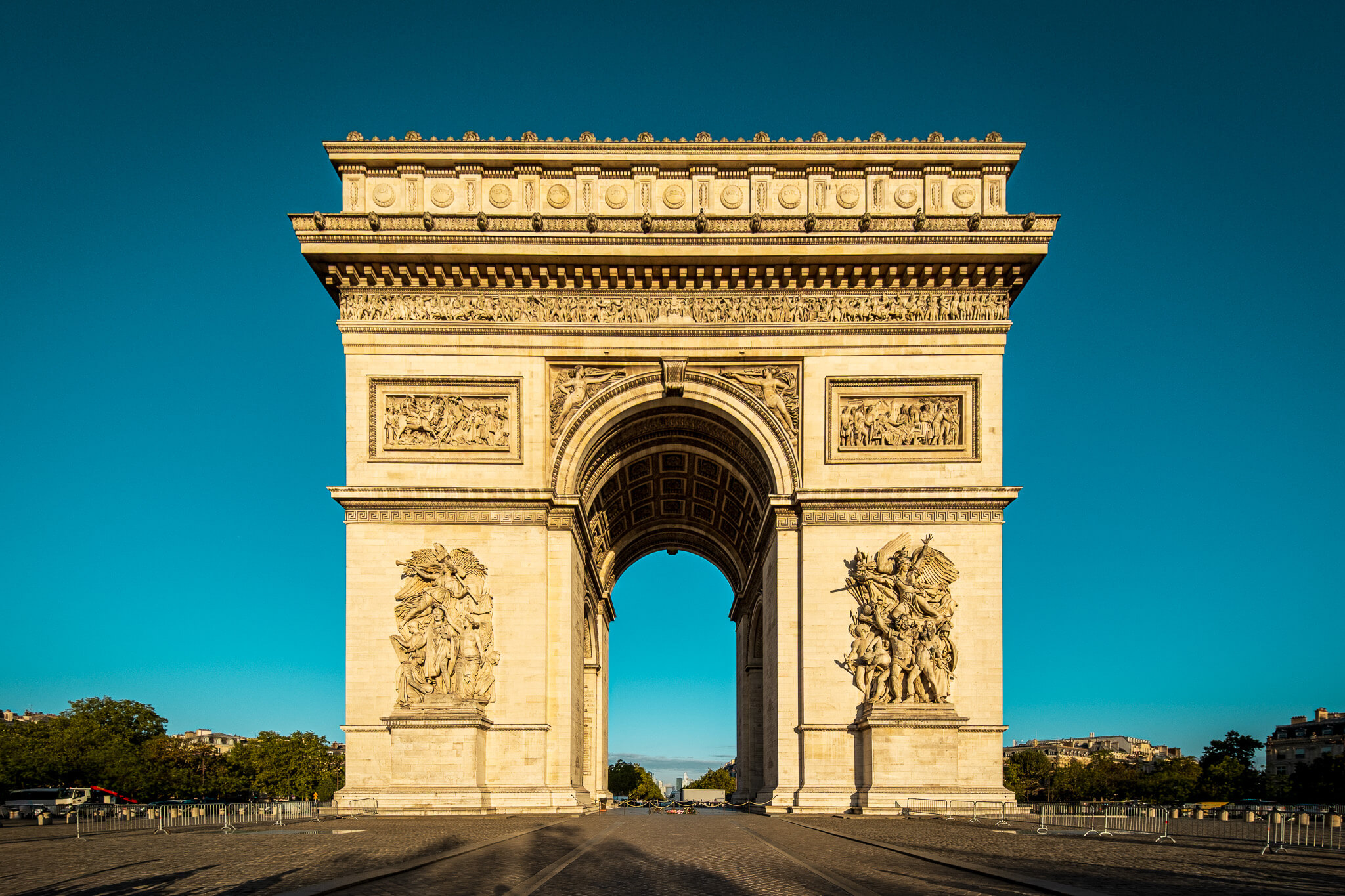
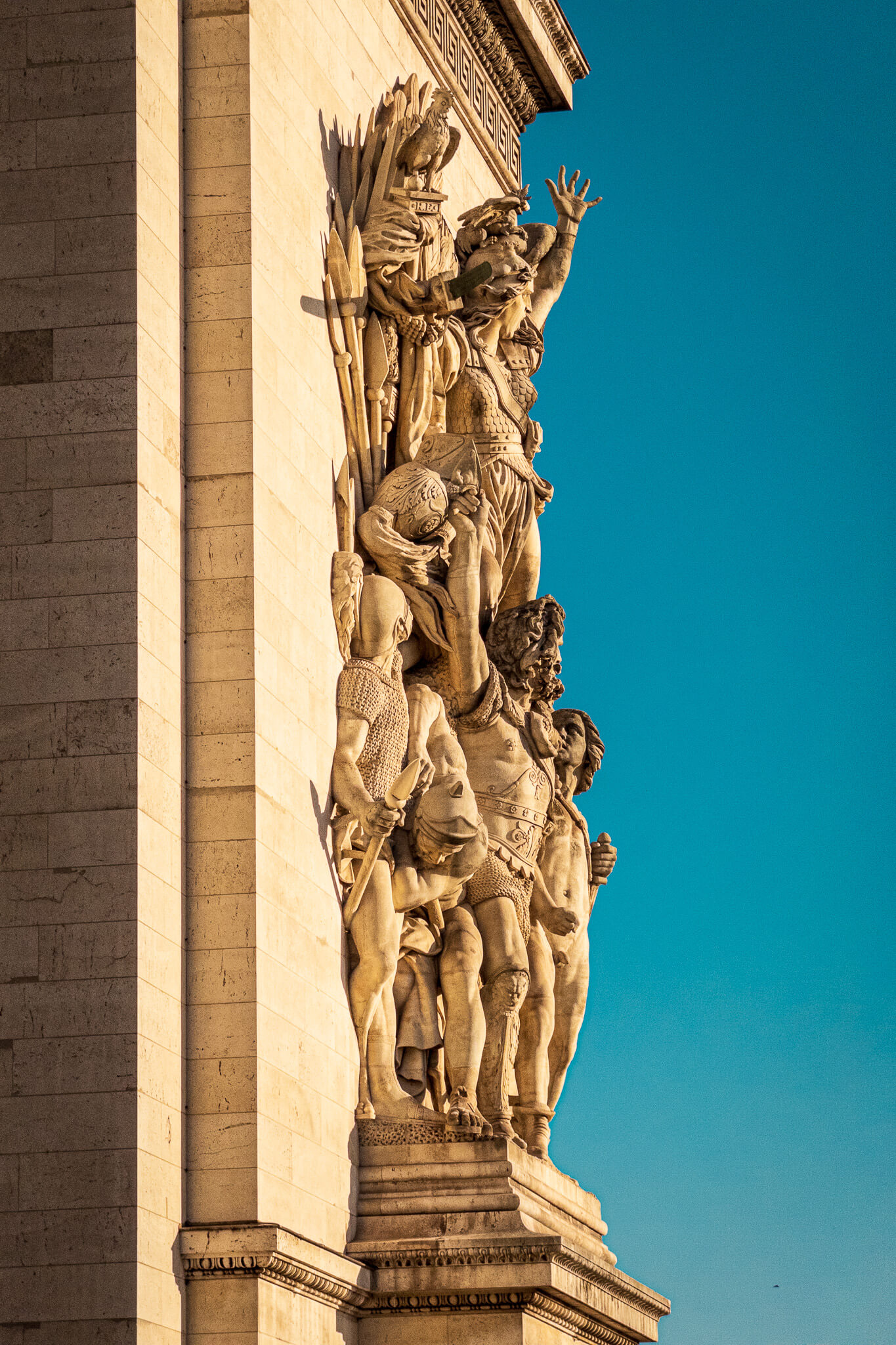
The Arc de Triomphe ranks right alongside the Eiffel Tower as an iconic symbol of Paris. Inaugurated in 1836, it’s a massive neoclassical monument that stands nearly 50 metres tall, 45 metres wide and 22 metres deep. The large inner vault is 29 metres tall. It was the largest triumphal arch in the world until it was surpassed by one in Mexico City; Paris would gain it back with the Grande Arche de la Défense in 1989.
Pedestrian underpasses below the square let you access the base of the Arc de Triomphe, as crossing the chaotic roundabout is impossible. It’s possible to pay to visit the top of the monument via a 240-step spiral staircase. The rooftop terrace offers unprecedented views of Paris, including the Eiffel Tower.
Architectural marvels from the Universal Exhibition of 1900
Further down the Champs-Élysées, we come across two majestic buildings created for the Paris Universal Exhibition of 1900, the Grand Palais and Petit Palais.
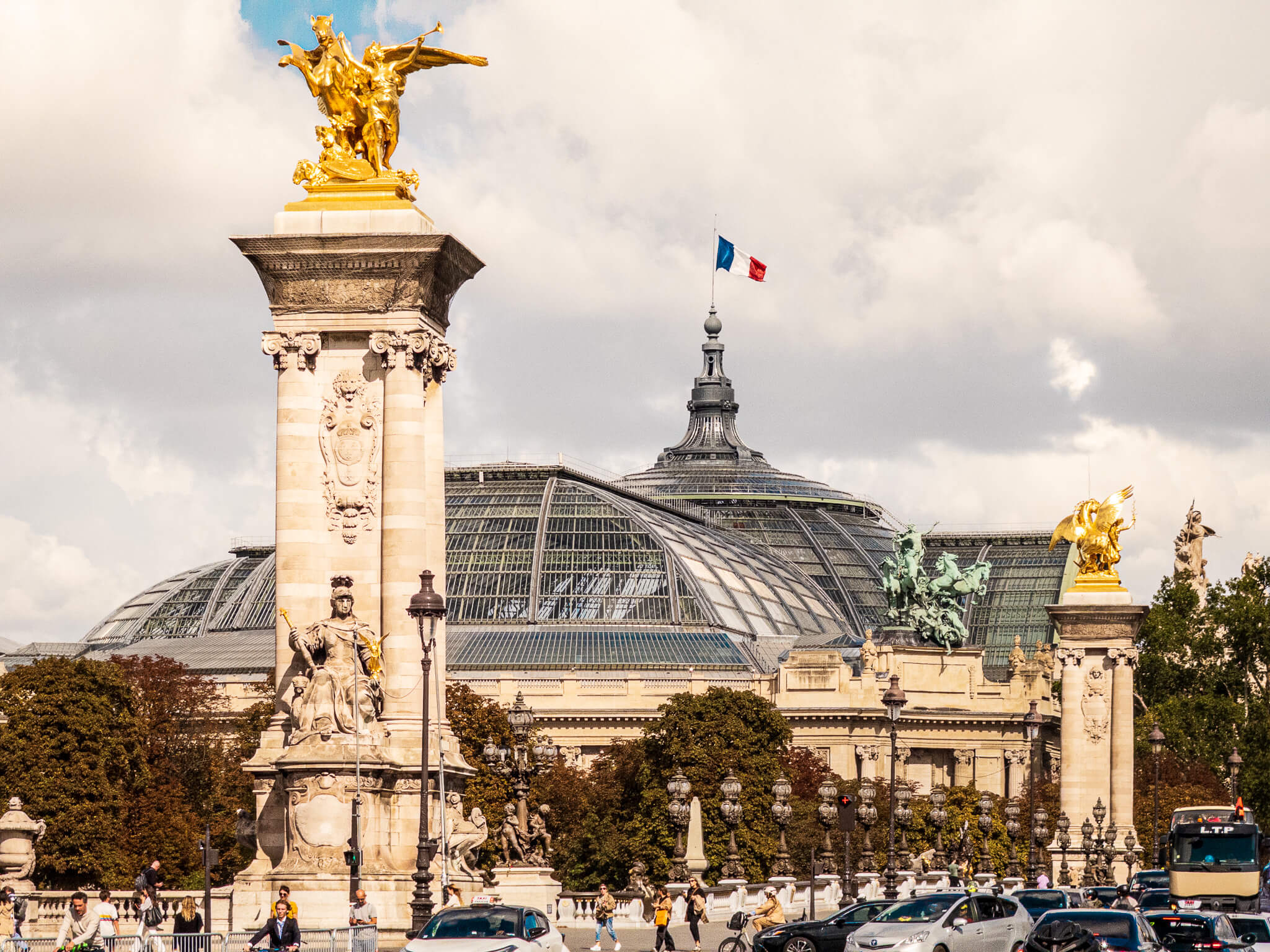
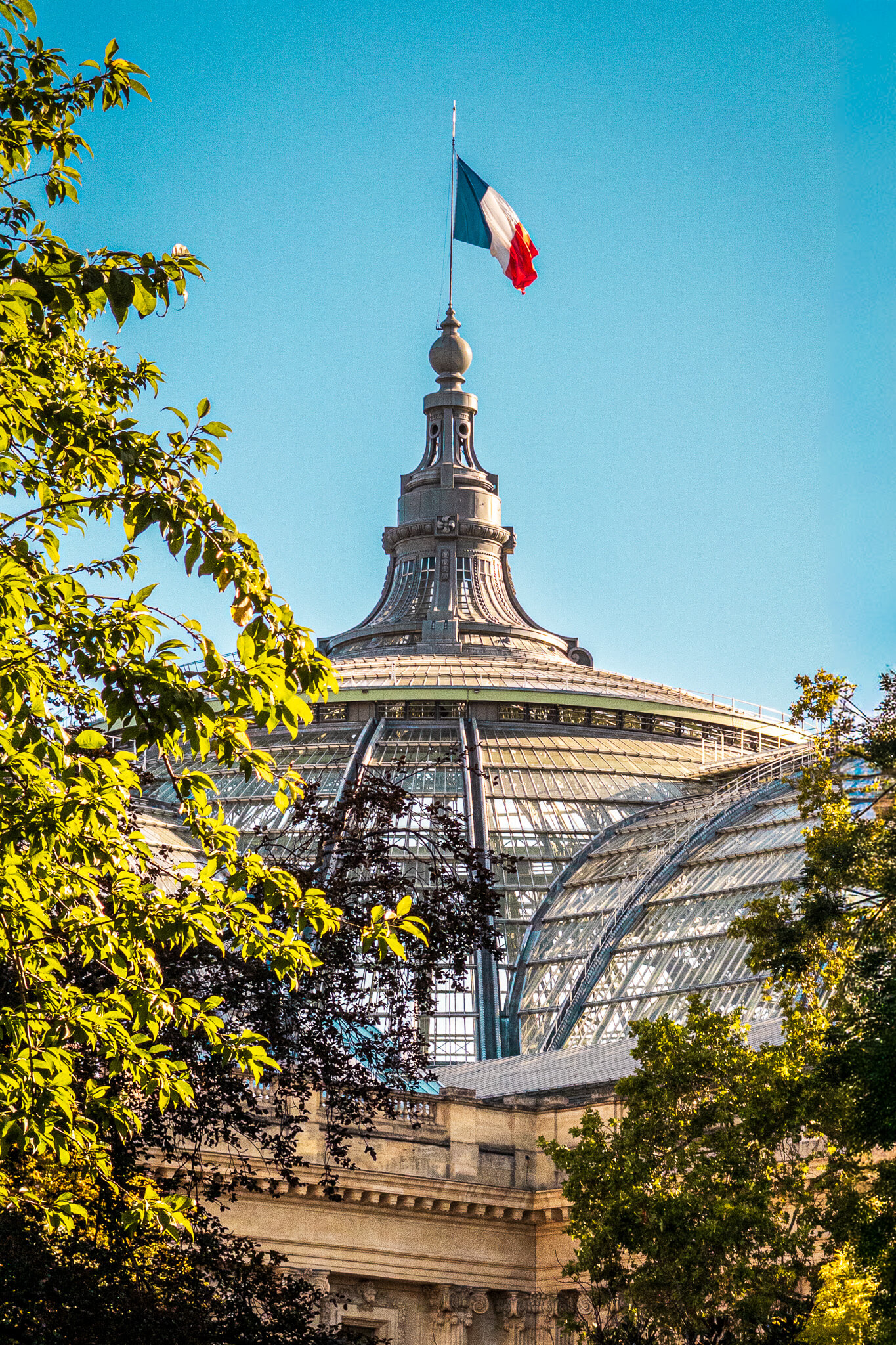
Grand Palais was designed as an exhibition hall, and continues to serve this purpose today. It combines a stone facade with a massive transparent roof made of steel and glass over the main hall, which measures 200×50 metres with a roof height of 35 metres (and upwards of 45 metres over the central dome). The roof structure alone uses more metal than the Eiffel Tower.
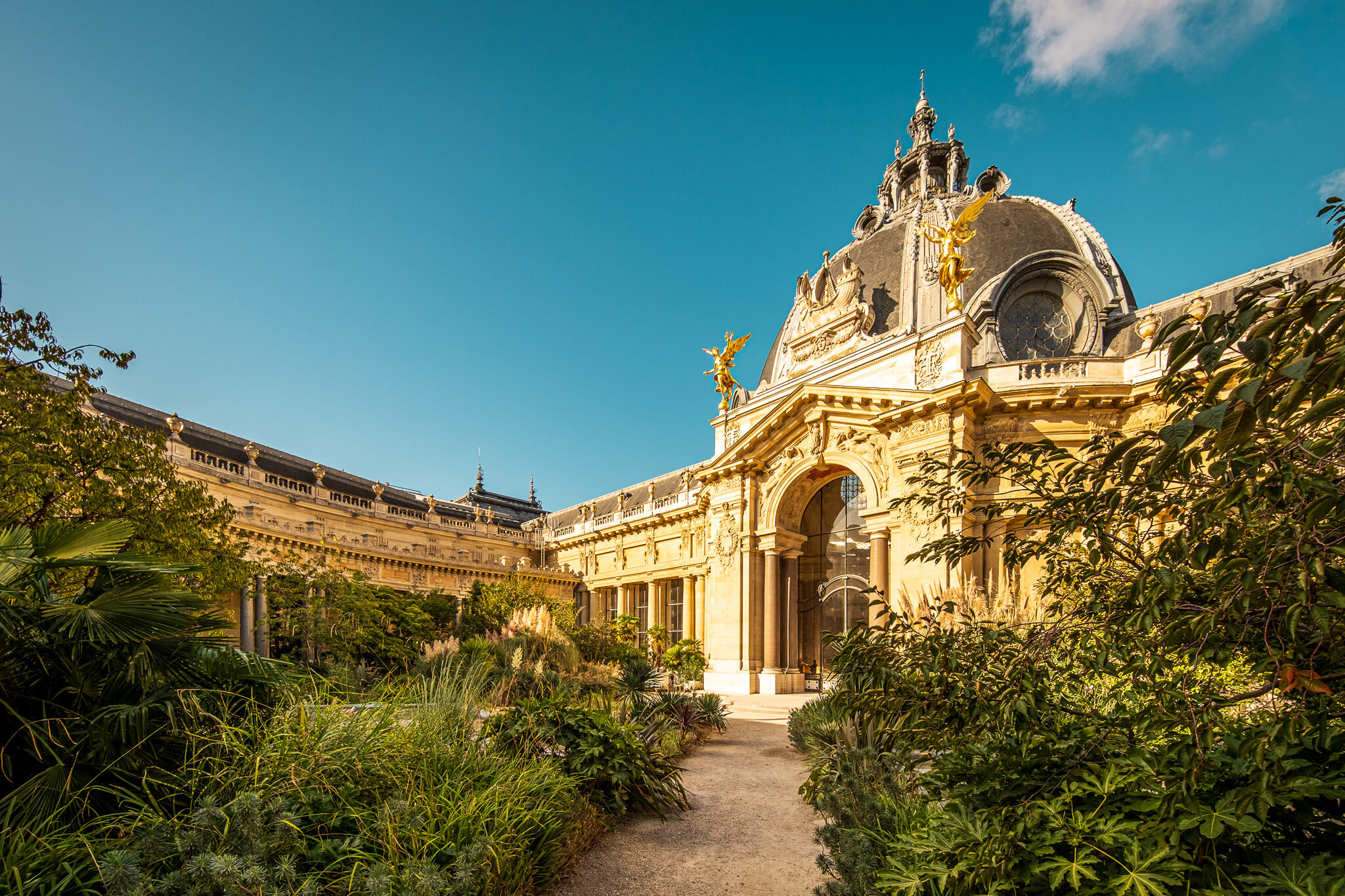
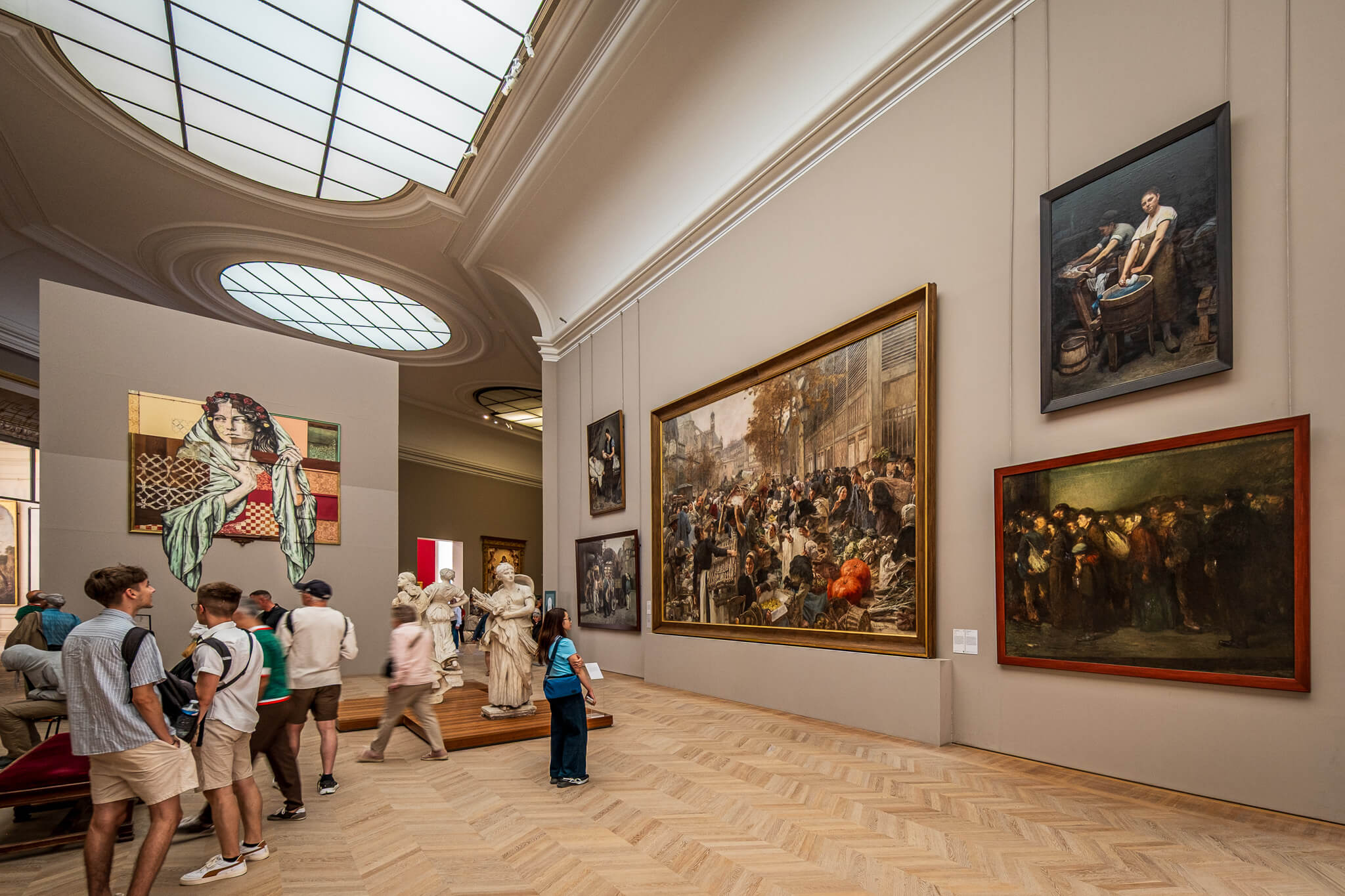
Petit Palais, located directly across from Grand Palais, was also built as an exhibition venue for the 1900 Universal Exhibition, with the idea that afterwards it would become the Musée des Beaux-Arts (Fine Arts Museum) of Paris. The museum opened in 1902, housing fine arts from antiquity through 19th-century French paintings belonging to the City of Paris. Today, the permanent collection of Petit Palais is free to visit, and is probably one of the few places you can find a painting by Monet and Rembrandt devoid of crowds (the museum gets a lot of visitors, but they seem unaware of these pieces). The museum also features some large-scale paintings from the late 19th-century of Parisian market life and the revolutions that will entice you to sit down and contemplate.
If the Louvre isn’t your thing, you could think of Petit Palais a free mini-Louvre with a small section with Greek antiquities and a solid collection of 19th-century French painting.
A royal square and execution site
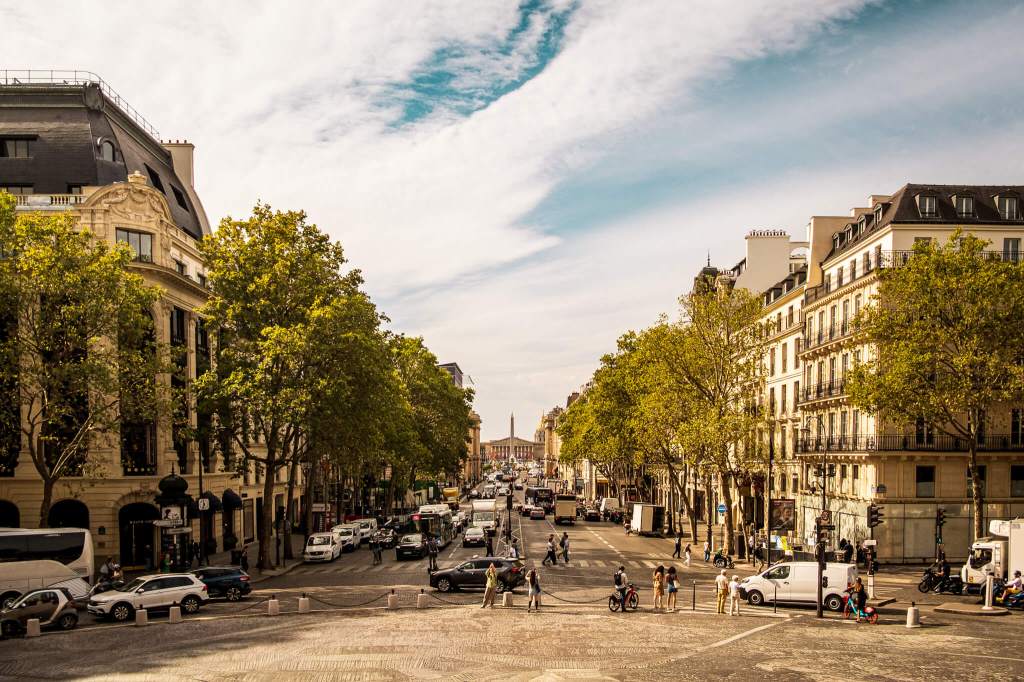
Place de la Concorde is a large paved square at the intersection of several major attractions. On the east-west axis, it connects the Champs-Élysées to the Jardin des Tuileries. On the north-south axis, it connects Église de la Madeleine to the Hotel de la Marine and then the Assemblée Nationale building on the other side of the Seine.
The square was originally named Place Louis XV (one of the 5 royal squares of Paris), then temporarily became Place de la Révolution (where Louis XVI and Marie Antoinette were executed), and then as a conciliatory gesture, was finally renamed Place de la Concorde (with some additional flip-flopping in between).
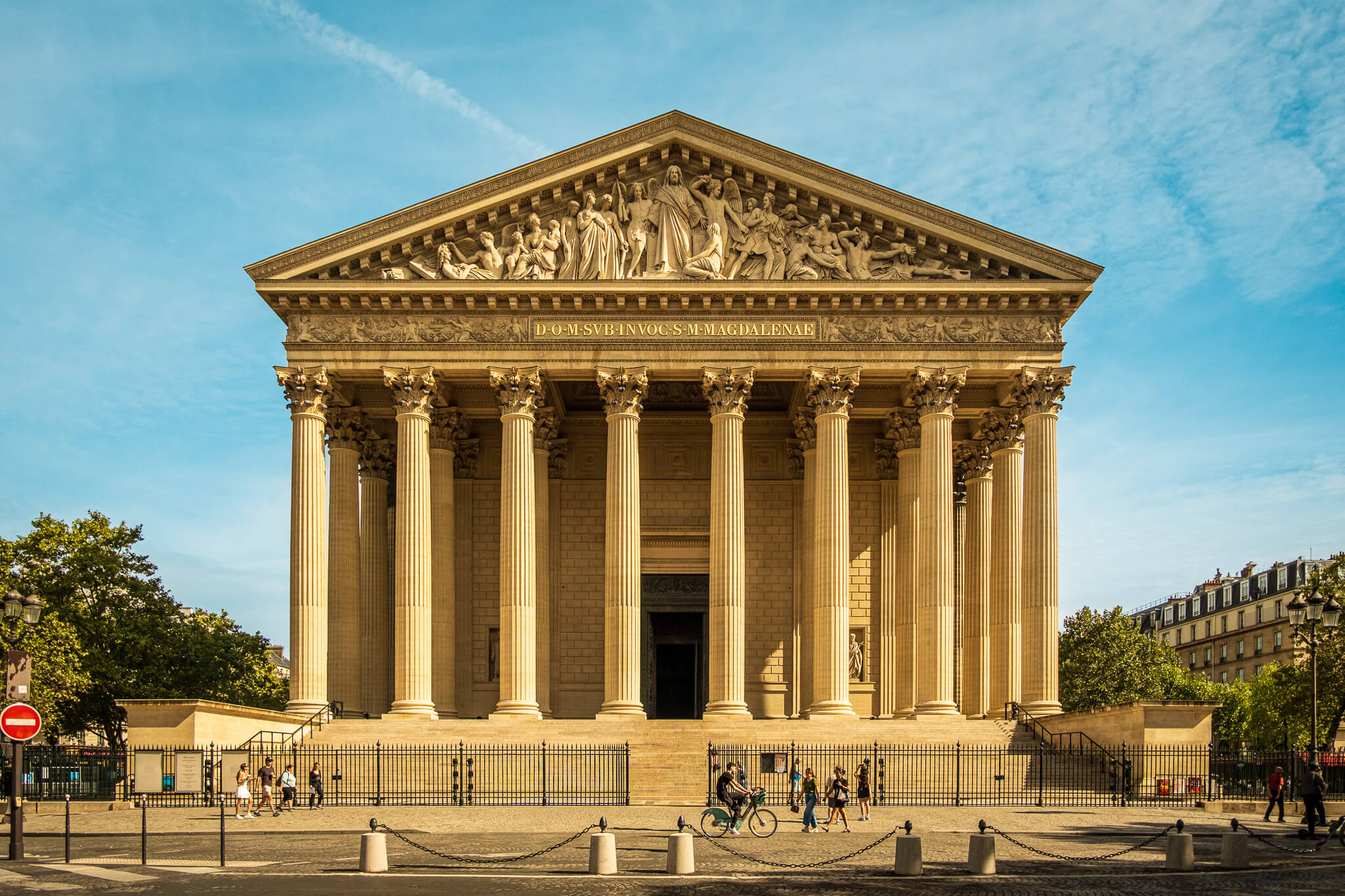
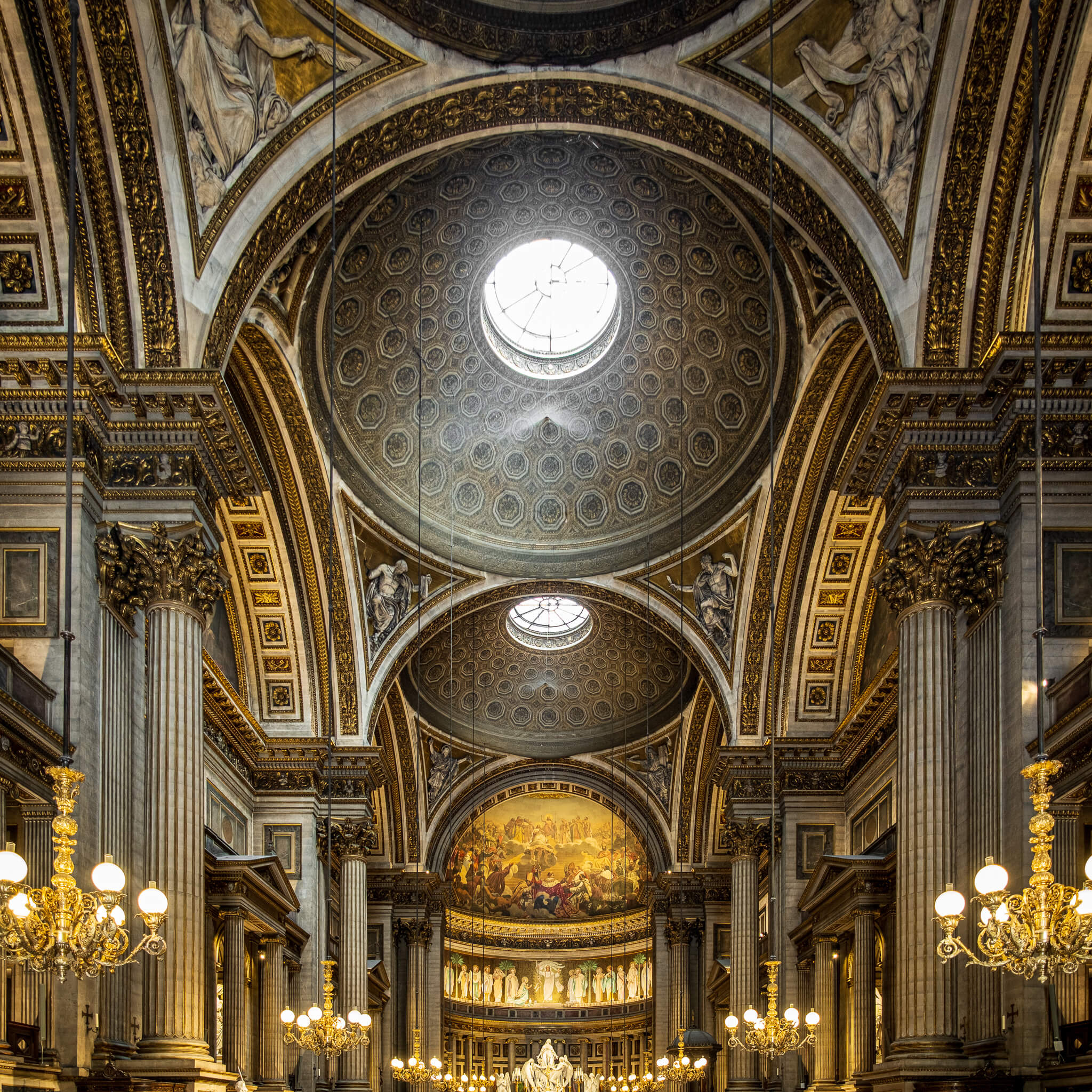
Directly north of the square is Église Sainte-Marie-Madeleine, more often simply called La Madeleine, which began construction as a church under Louis XV to cap off the new Place Louis XV. However, work was interrupted by the revolution. Napoleon had it redesigned in the style of a Greek temple to act as a monument for the army, but after his downfall, it resumed construction as a church (although it almost got turned into a train station). It was finally inaugurated in 1842.
Following the Greek temple design, La Madeleine is surrounded on all sides by Corinthian columns (with a double row in the front), amounting to 52 columns, each 20 metres tall. Unlike most churches with a transept that forms the shape of a cross, La Madeleine lacks a transept and is a pure rectangle.
The 8e arrondissement is a standout area, featuring the Arc de Triomphe which never ceases to impress. The Champs-Élysées is arguably a tourist trap nowadays, but it’s an easy avenue to explore on your way to the free and impressive museum at Petit Palais, then onwards to Place de la Concorde and La Madeleine.
 Scuba Duo
Leave a comment