
Named Bourse for the former stock exchange, the 2nd arrondissement of Paris is usually overlooked by tourists with limited time in the city. Strolling the area after being in the busy 1er arrondissement, you notice the striking lack of tourists. But it holds some true gems for fans of history, architecture and food.
What really sets apart the 2e arrondissement are the covered passages. The area is home to the largest number of Paris’s surviving 19th-century glazed commercial arcades. (Of the estimated 50 historic passages to have been built, only 25 remain, and some of these are modern recreations with no historical or architectural value.)
At the turn of the 19th century, the streets of Paris were dark and muddy. Covered commercial passages existed elsewhere in the world, but the glass-covered passages we see in Paris were an innovation. Soon after their creation, many added the new gas lighting. However, as Paris started paving streets and building sidewalks with gas street lights, their utility diminished.
Exploring the prettiest covered passages of Paris
Passage des Panoramas
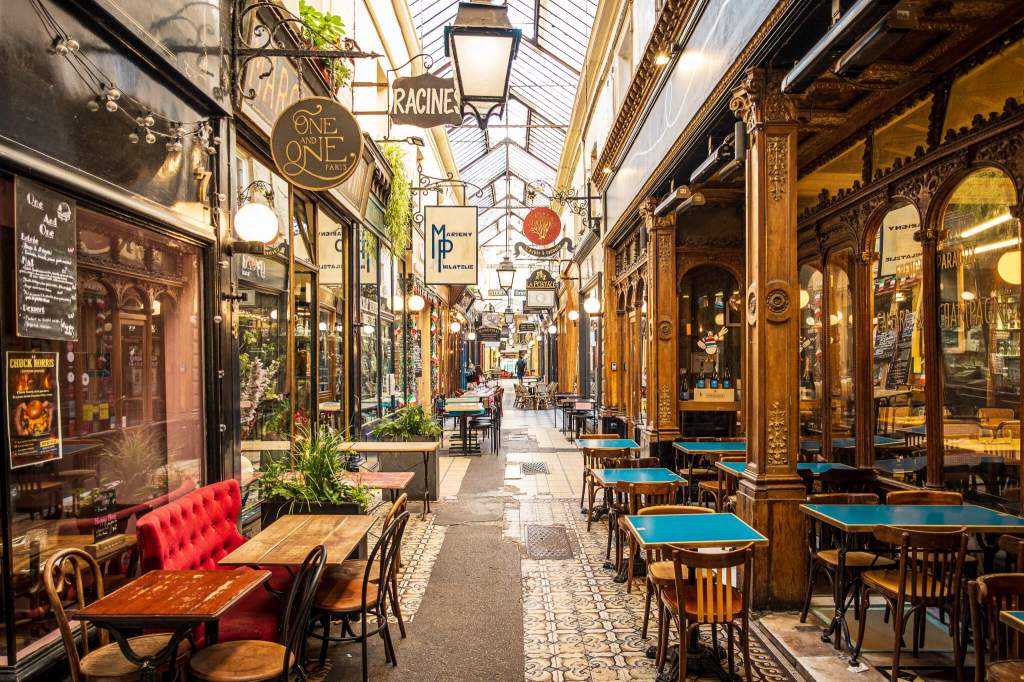
The Passage des Panoramas (pictured in the cover photo) was one of Europe’s first glazed arcades, opening in 1799. Gas lighting was soon added and the passage proved very popular. Many others started popping up in Paris and elsewhere in Europe. Two others were added directly to the north, acting as an extension of Passage des Panoramas.
Passage des Panoramas is still one of the prettiest covered passages in Paris, and one of the most lively, with several restaurants and cafés.
Passage du Grand Cerf
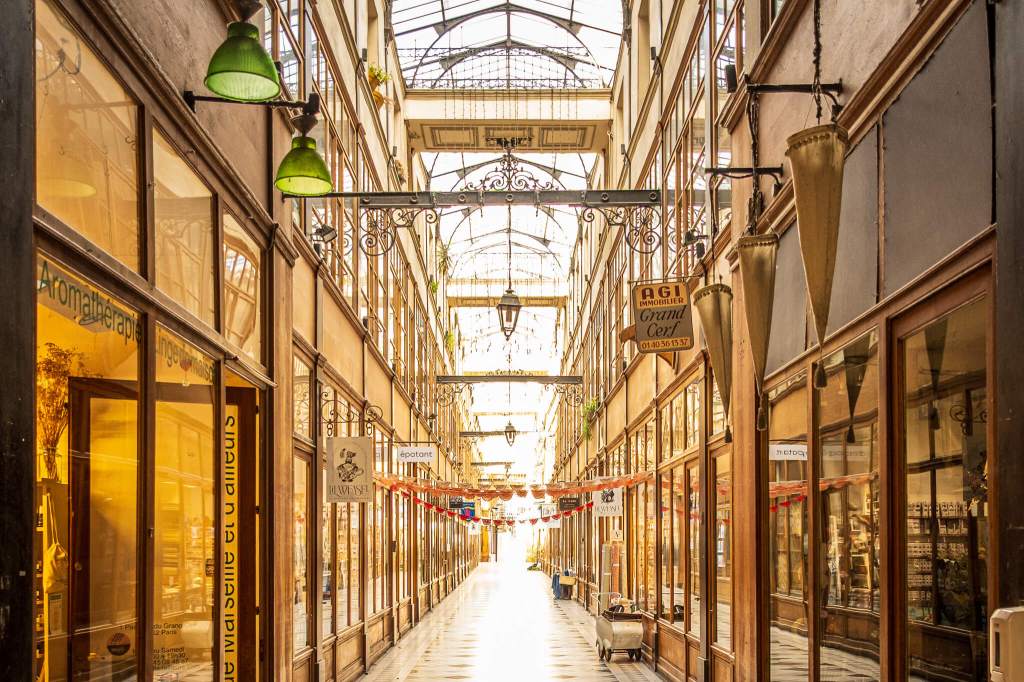
The Passage du Grand Cerf dates to 1825, with the current architecture dating to 1845. “Grand cerf” translates to large/great stag and refers to a hotel that was once in this area. This is one of the narrower passages, accentuated further by its full two-story height. While the passage itself seems like it has seen better days, there were a number of interesting artisans in this space, including a woodworker and tailor.
Galerie Vivienne
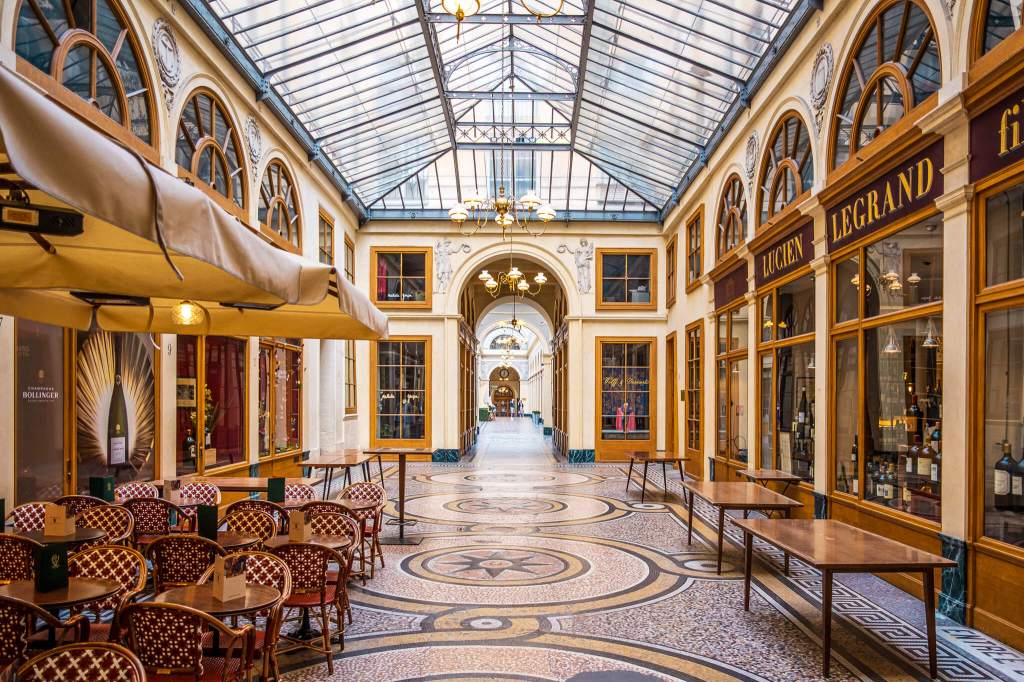
Galerie Vivienne was built in 1823 and is one of the wider, brighter covered passages, centrally located near the Palais-Royal and the Bourse de Commerce. It has also handled the transition to modern times better than others, being beautifully maintained and lined with busy restaurants, an impressive wine store, a book store, and more.
Galerie Véro-Dodat
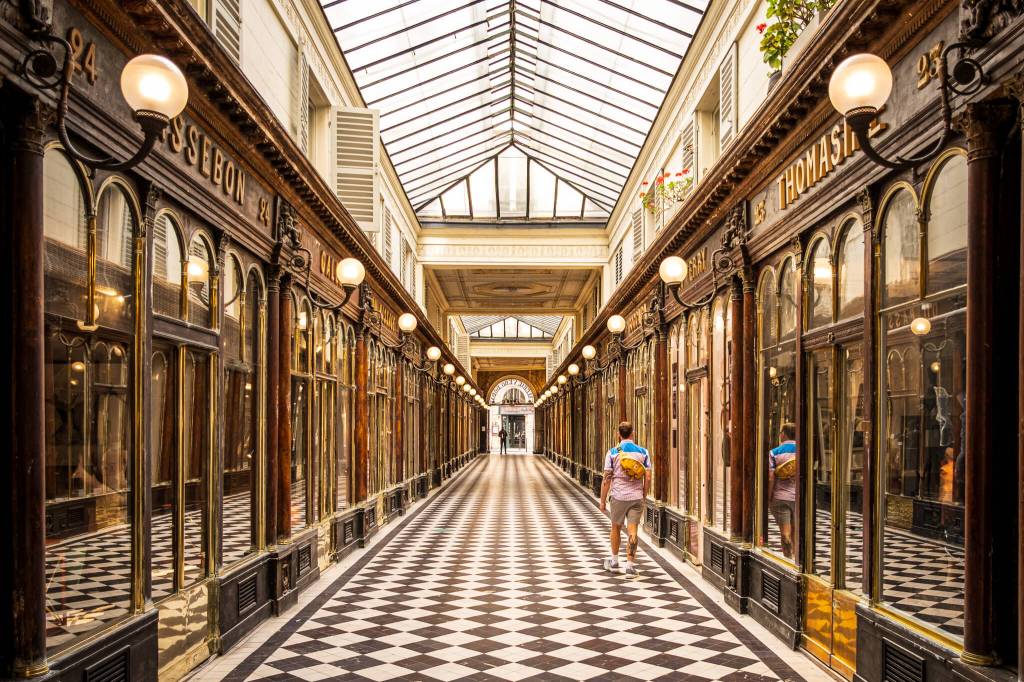
Galerie Véro-Dodat opened in 1826 and was one of the first covered passages to get gas lighting in 1830. It’s lined with small stalls for artists and artisans, as well as some luxury boutiques. Christian Louboutin opened his first boutique here in 1991 (and you’ll still find it here). Curiously, many shops have a small spiral staircases that lead to the short second level. (Closed on Sundays.)
Passage Jouffroy and Passage Verdeau
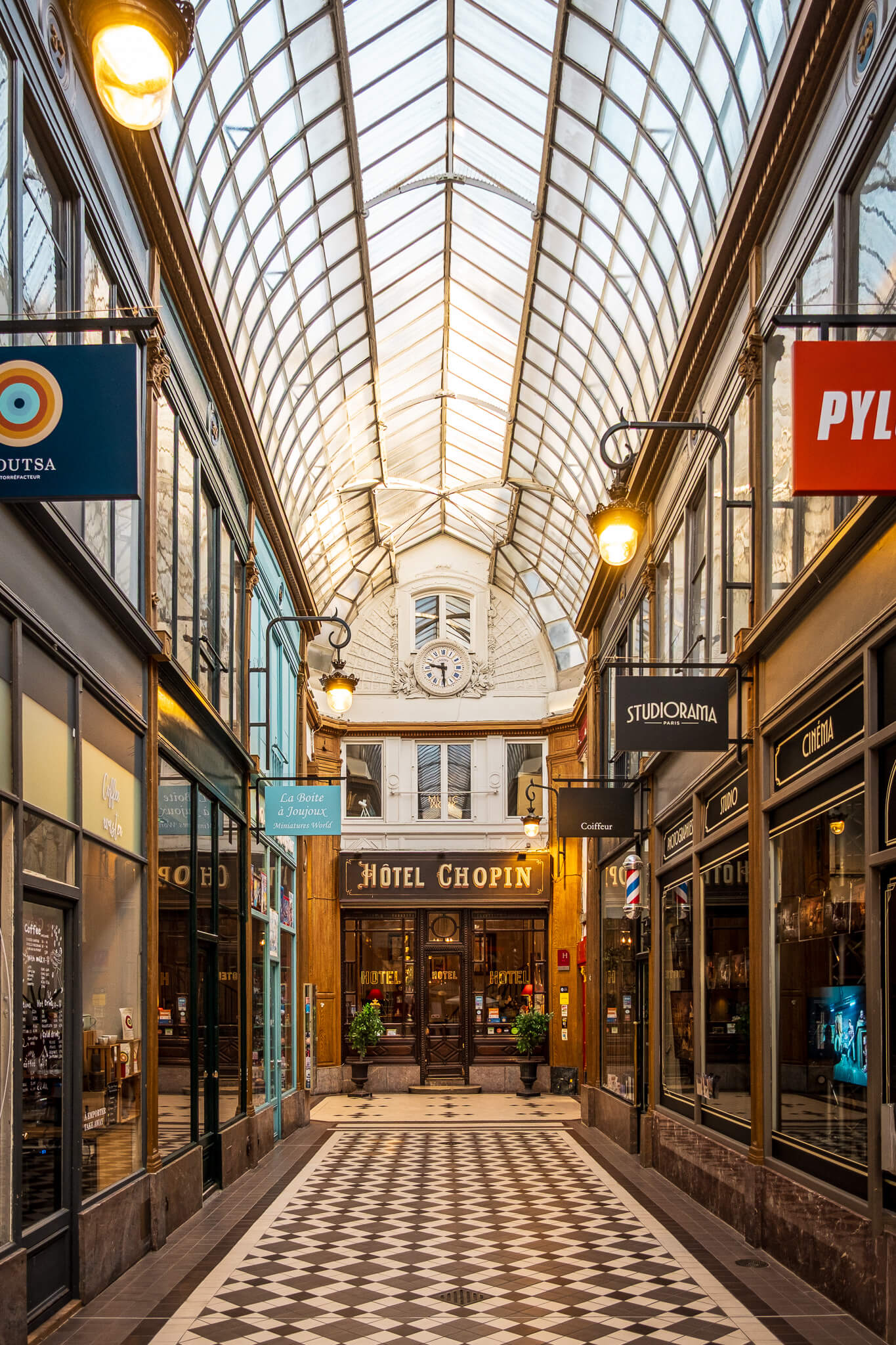
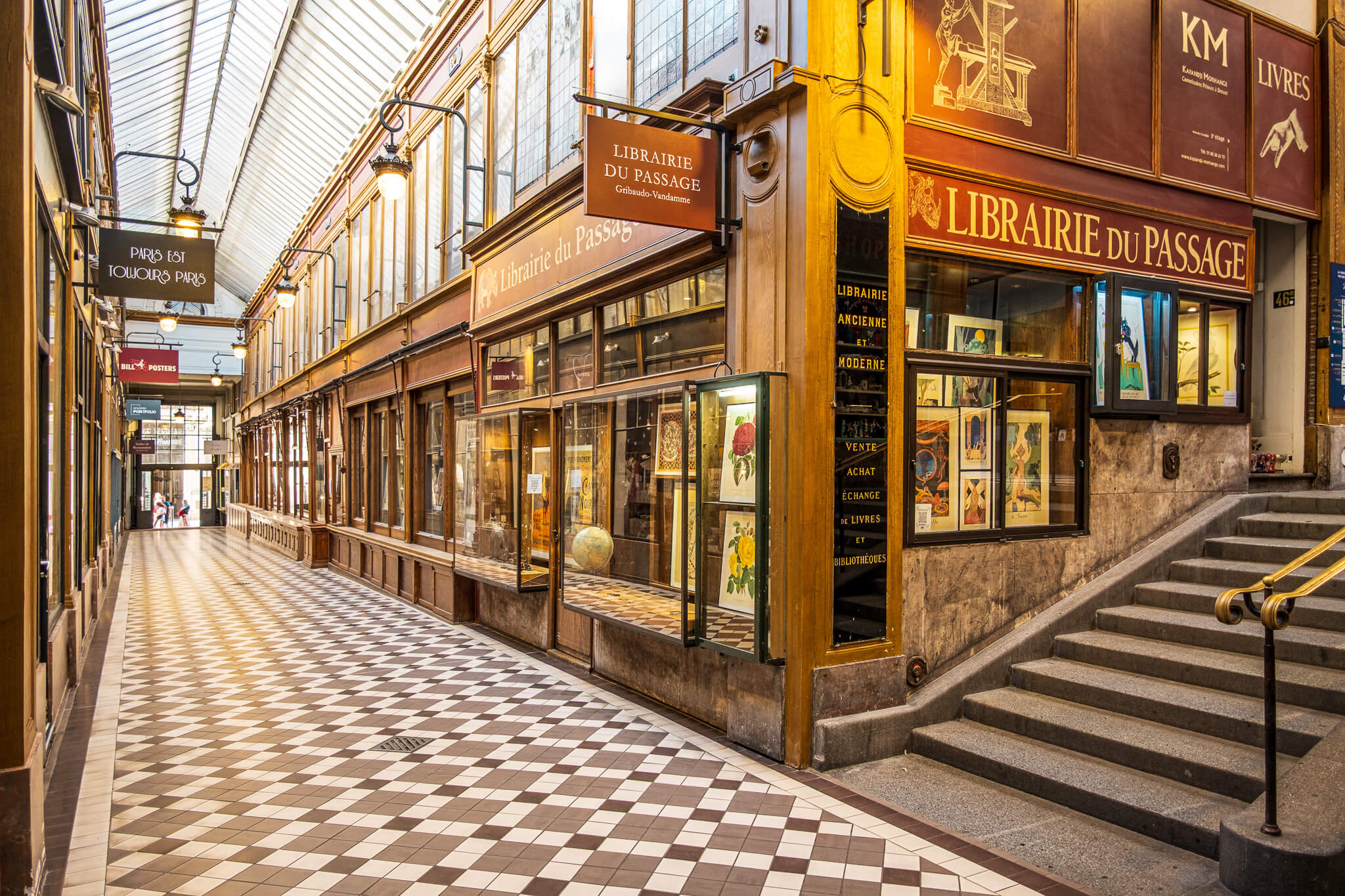
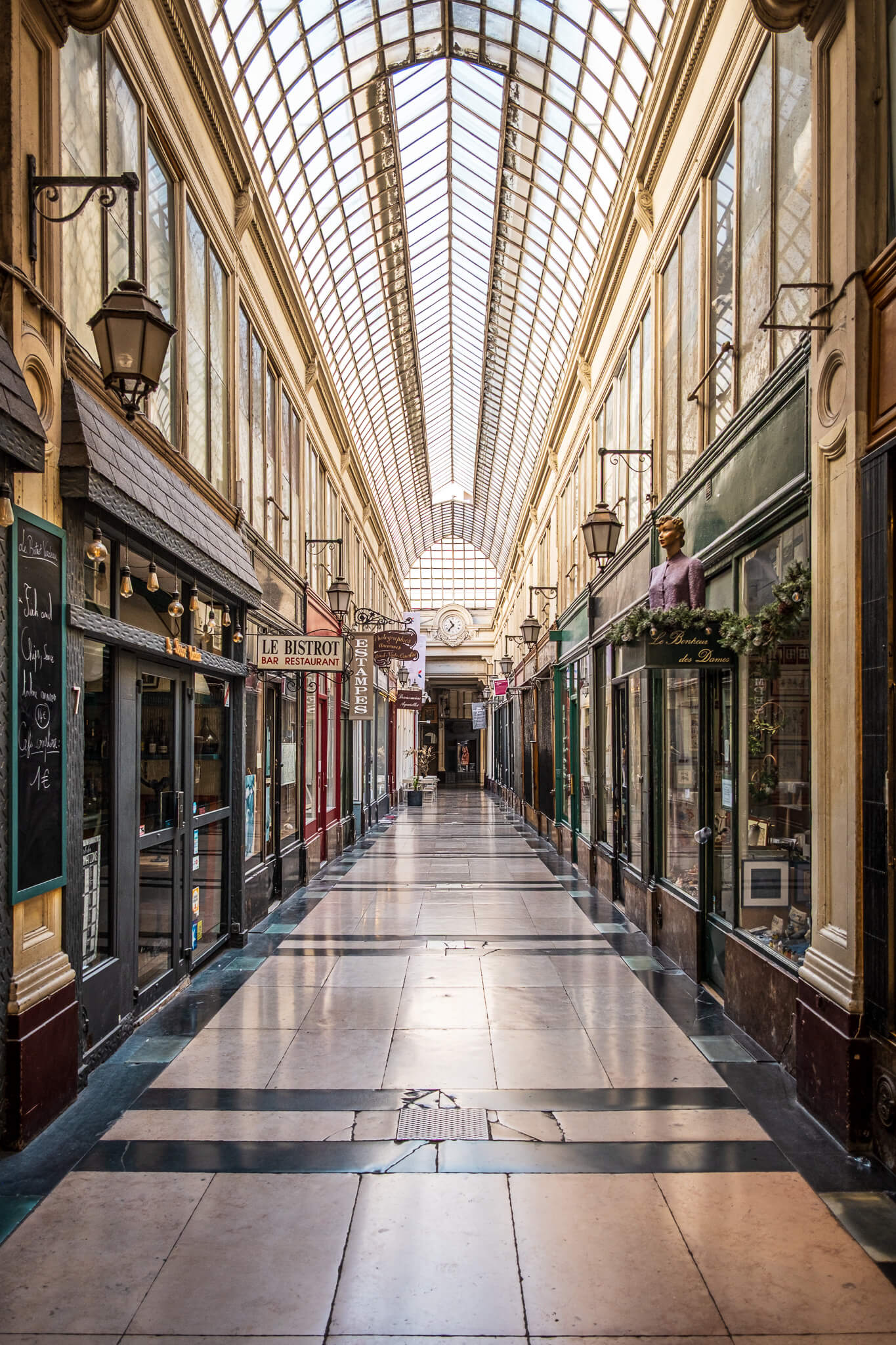
Passage Jouffroy is technically located in the 9th arrondissement, just across the Boulevard Montmartre from the 2nd arrondissement. It was created in 1845 as a northern continuation of Passage des Panoramas, capitalizing on the popularity of the earlier covered passage. Passage Jouffroy makes a couple jogs as it navigated a few plots of land when it was built. If you continue further north into the 9th arrondissement, Passage Jouffroy leads into Passage Verdeau, created in 1846. Passage Verdeau has apparently never achieved the success of the Passage des Panoramas or Passage Jouffroy, despite having one of the more impressive glass canopies.
Another royal square
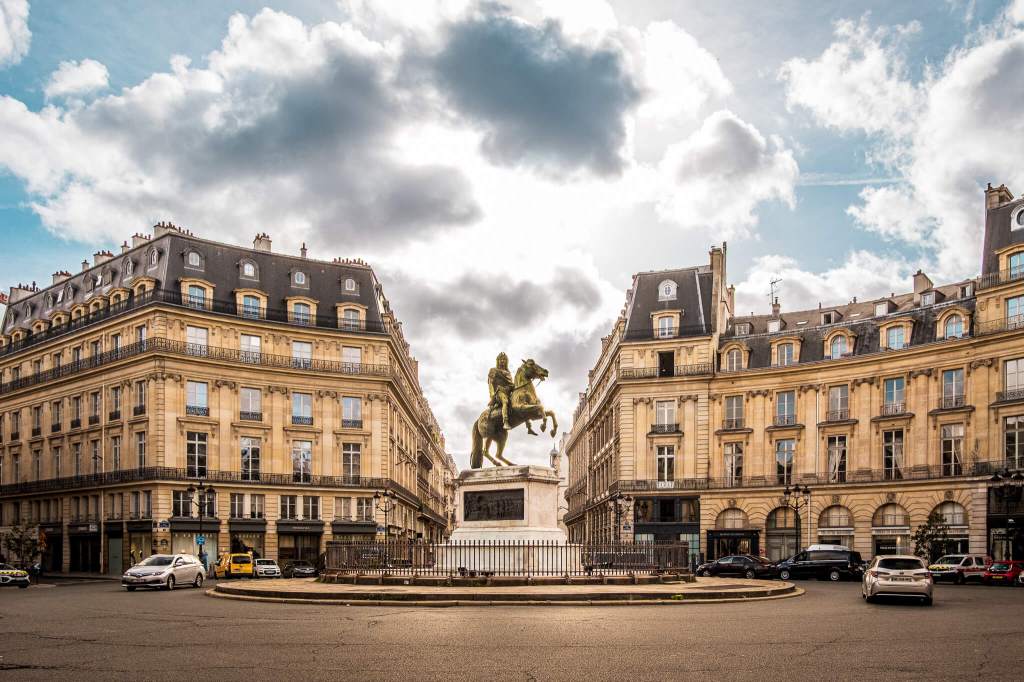
Place des Victoires is another royal square of Paris, this one split right along the boundary line between the 1er and 2e arrondissements. The square serves as a roundabout connecting six streets and features an equestrian statue of Louis XIV surrounded by grand private houses. At the inauguration of the square in 1686, the central statue depicted Louis XIV being crowned by Victory. Since the surrounding houses weren’t yet complete, canvases painted with the façades were used as the backdrop. The original statue was destroyed in the French Revolution, and was eventually replaced by the statue of a general under the rule of Napoleon (which would also get destroyed and melted to make the Henry IV statue on Pont Neuf). During the Bourbon Restoration, in 1828, Charles X returned the statue to one of Louis XIV, this time dressed as emperor on a horse.
Grabbing a bite to eat on Rue Montorgeuil pedestrian street
Rue Montorgueil is a pedestrian street that starts near Les Halles and Église Saint-Eustache and goes north. It’s famous for its food offerings. The street is packed with cafés, restaurants, pastry shops, fishmongers and green grocers. It’s a lovely place for a leisurely stroll, or the perfect spot to stop for a meal. On our Sunday morning visit, it was pleasantly busy but not crammed. It was easy enough to pop into a pastry shop without lining up, and most restaurants had tables available. It’s the perfect place to grab a table facing the street and people-watch (or buy a pastry and sit on a bench, like we did).
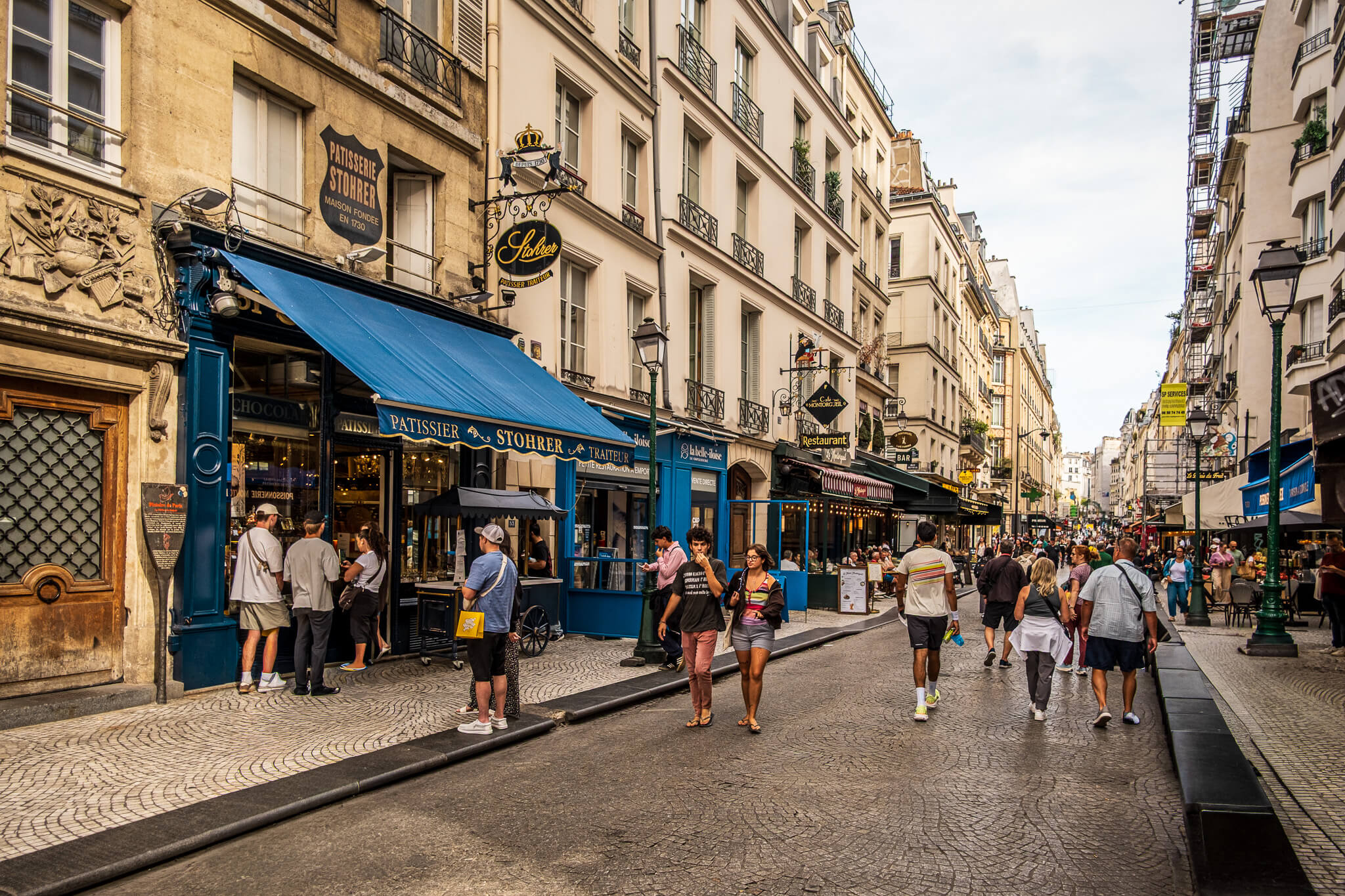
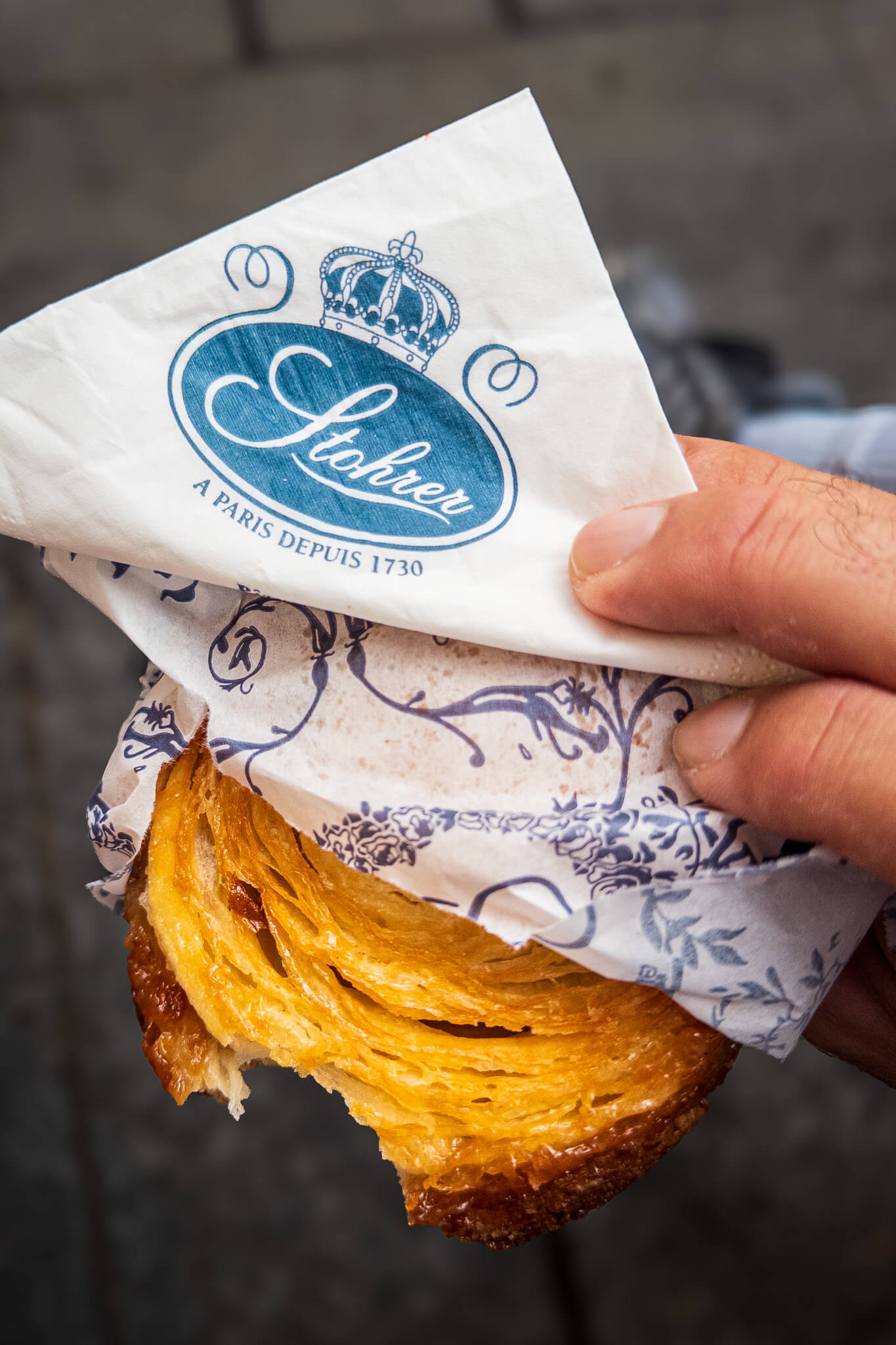
We stopped into the famous Stohrer pastry shop, established in 1730 and known as the oldest pâtisserie in Paris. It was founded by Nicholas Stohrer who was the pastry chef to the King of Poland, and who accompanied the king’s daughter to France to marry Louis XV in 1725. He set up shop here on rue Montorgueil five years later.
The Stohrer pâtisserie offers everything from the classic croissants and pains au chocolat, to more elegant fine pastries. We chose something in the middle: the kouign-amann. It’s also worth noting the pastries are priced on par with other pâtisseries.
We thoroughly enjoyed our leisurely stroll through the 2e arrondissement. It took us through quaint passages, quiet streets and grand boulevards that felt truly Parisian, and off the tourist track. Is there something we missed in the 2nd?

 Scuba Duo
Leave a comment