
The 14e arrondissement of Paris is named Observatoire after the Paris Observatory, the world’s oldest observatory still in operation. The arrondissement includes the Montparnasse area, which became the intellectual and artistic hub of Paris in the early 1900s as this scene moved away from the Montmartre district. The 14e is largely a residential area, with both Haussmann-era construction as well as newer construction that makes it feel like you’ve left Paris entirely. Like yesterday in the 13e, the lack of tourists in the 14e (beyond the Montparnasse train station area) makes it a welcome change.
Hanging out at historic gathering places
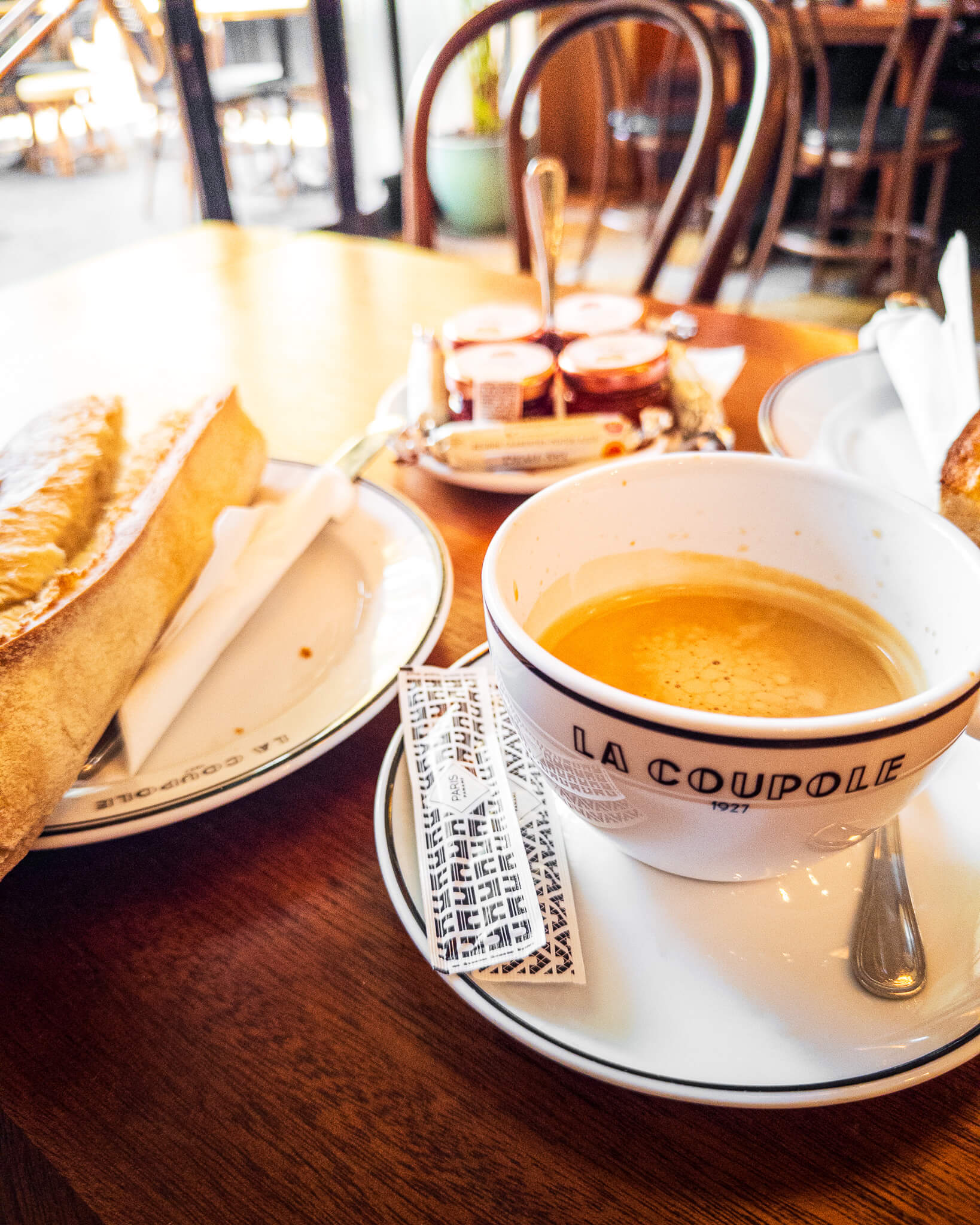
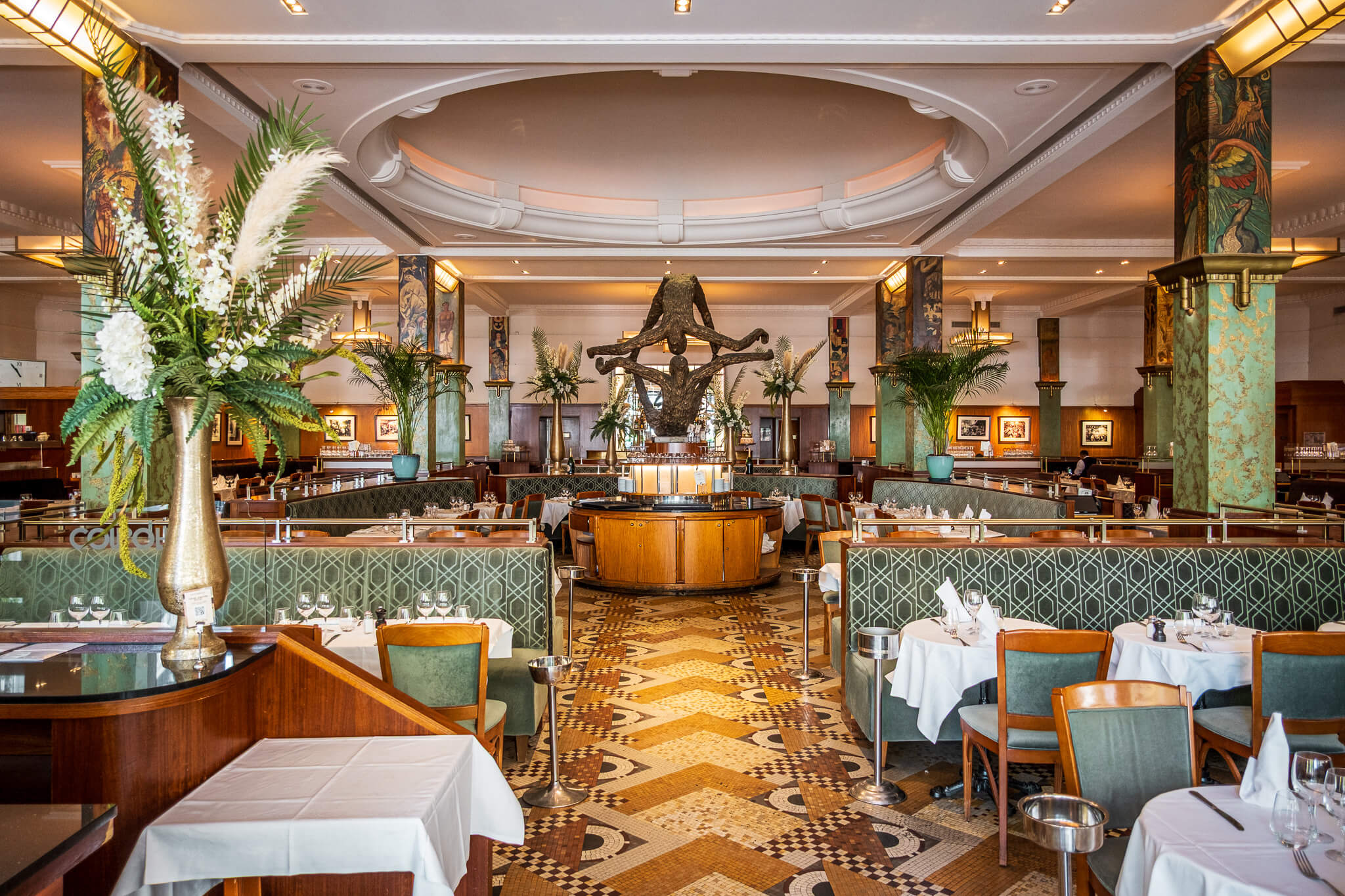
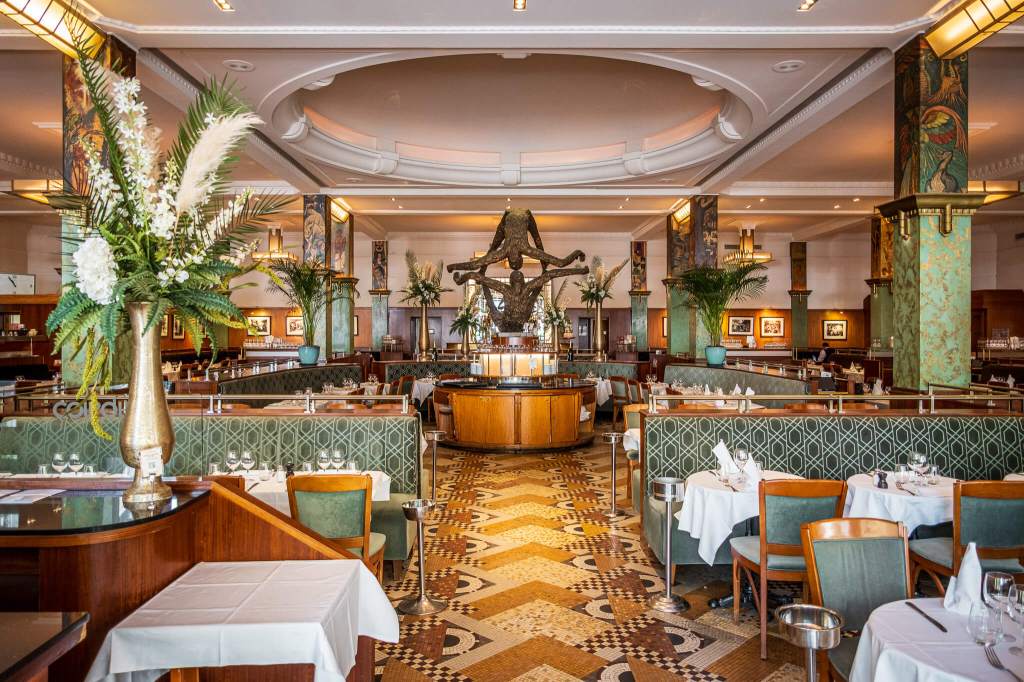
The area is still home to a few renowned brasseries from the early 20th century that catered to the artistic and literary community. Pick up a novel from the period and you’ll read about characters dining at La Coupole or Le Dôme. Artists that you’d find here include Picasso, Chagall, Dalí, Edith Piaf, Marlene Dietrich, Josephine Baker, Hemingway and Henry Miller. La Coupole has an affordable breakfast menu and weekday lunch menu (and an extensive seafood menu) while Le Dôme is a more upscale proposition.
We’ve very much taken to large Parisian breakfasts at La Coupole consisting of coffee, fresh grapefruit juice, a pain au chocolat, baguette with AOC butter and jam, and soft-boiled eggs. While a modern office was added above La Coupole in 1988, the interior was preserved and hasn’t changed much since it opened in the roaring twenties. We were worried the place would be touristy because of its history, but it was just locals grabbing some breakfast and reading the newspaper.
It’s also worth pointing out the historic restaurants La Rotonde and Le Sélect, which are across the street and technically fall into the 6e arrondissement.
Monumental ’80s residential architecture
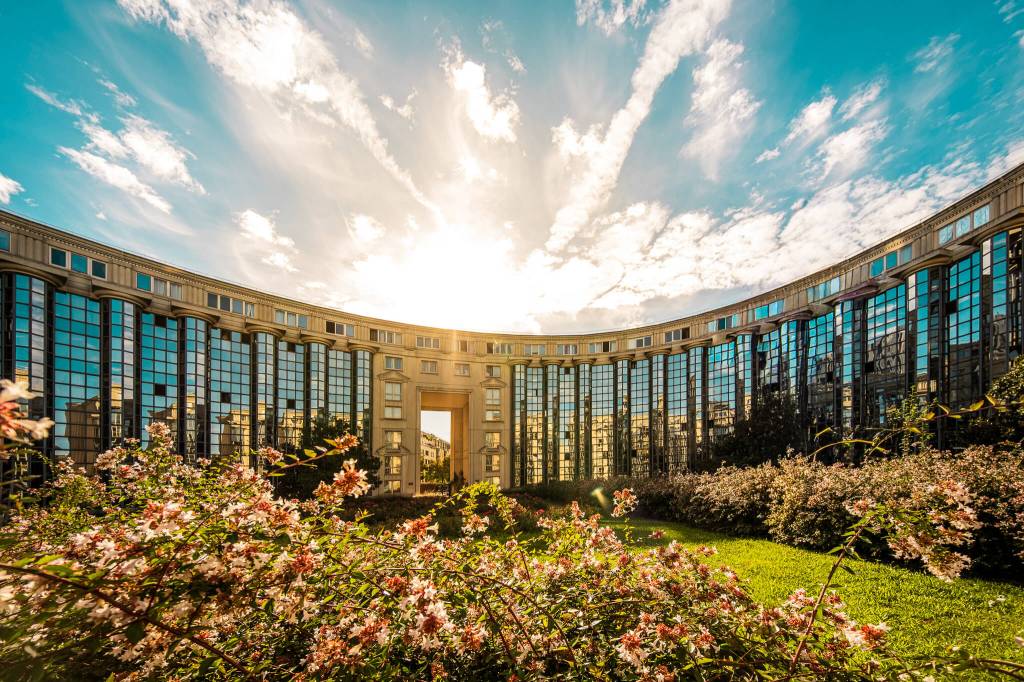
Tucked in behind the Montparnasse train station at Place de Catalogne is a large residential complex called Échelles du Baroque built in 1985. The entire complex is designed using circular shapes and doric columns. The entrance of the complex is through a portal at Place de Catalogne, and reveals two separate apartment complexes: Les Colonnes (pictured above) forming an ellipse and evoking doric columns in its glass curtain wall, and Amphithéâtre shaped like a Roman amphitheatre.
The most unique church in Paris
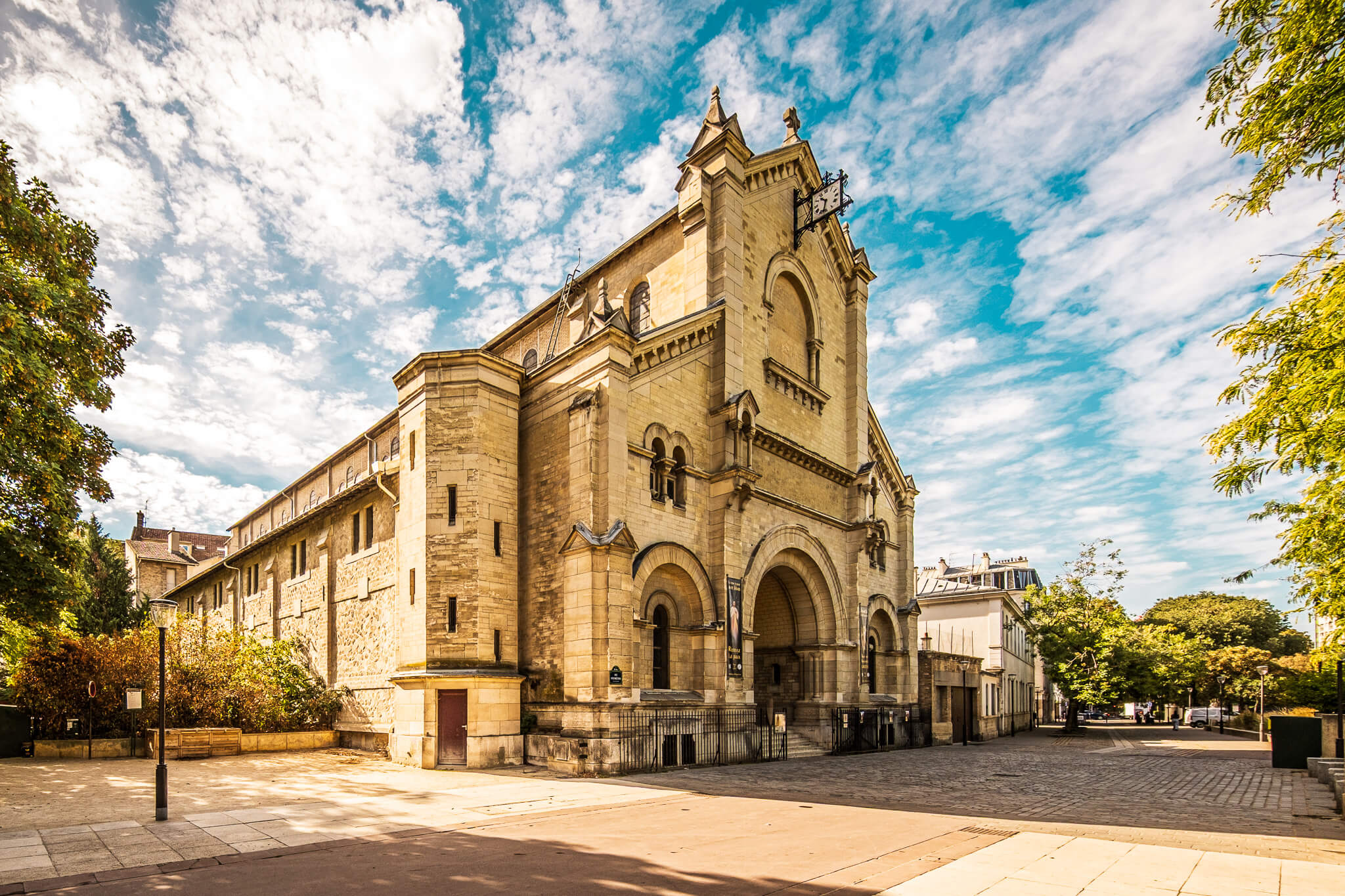
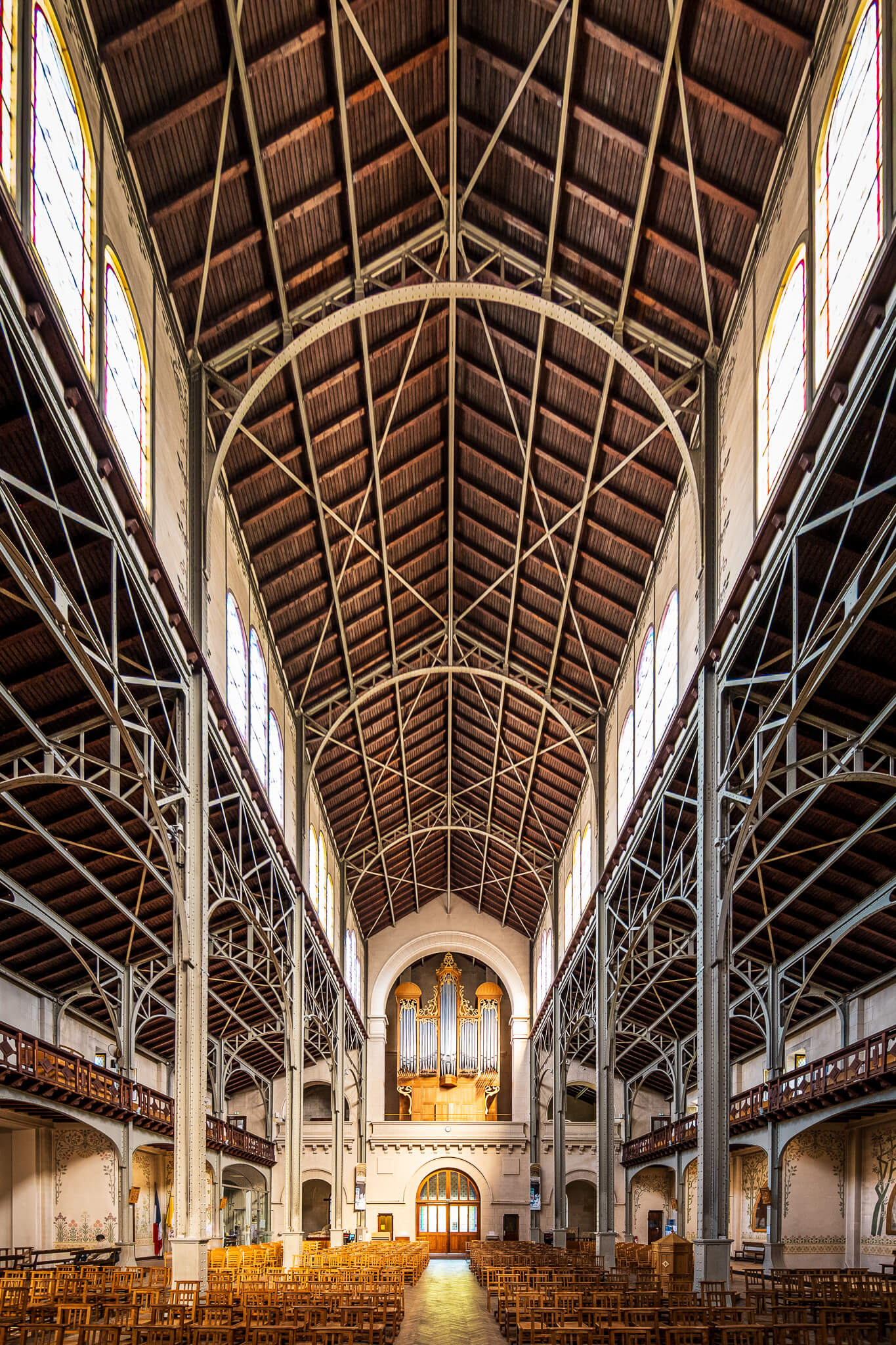
Just outside the Échelles du Baroque complex is Église Notre-Dame-du-Travail, built between 1897 and 1902. From the outside, you wouldn’t suspect anything too special. The façade seems Romanesque (technically Neo-Romanesque), flanked by octagonal towers.
But step inside and you’ll notice the church is unlike any other in Paris. The structure is made entirely of steel and has been left exposed. Rumours say some of the steel was recuperated from a pavilion from the 1855 Paris Universal Exposition.
And the creepiest part of Paris
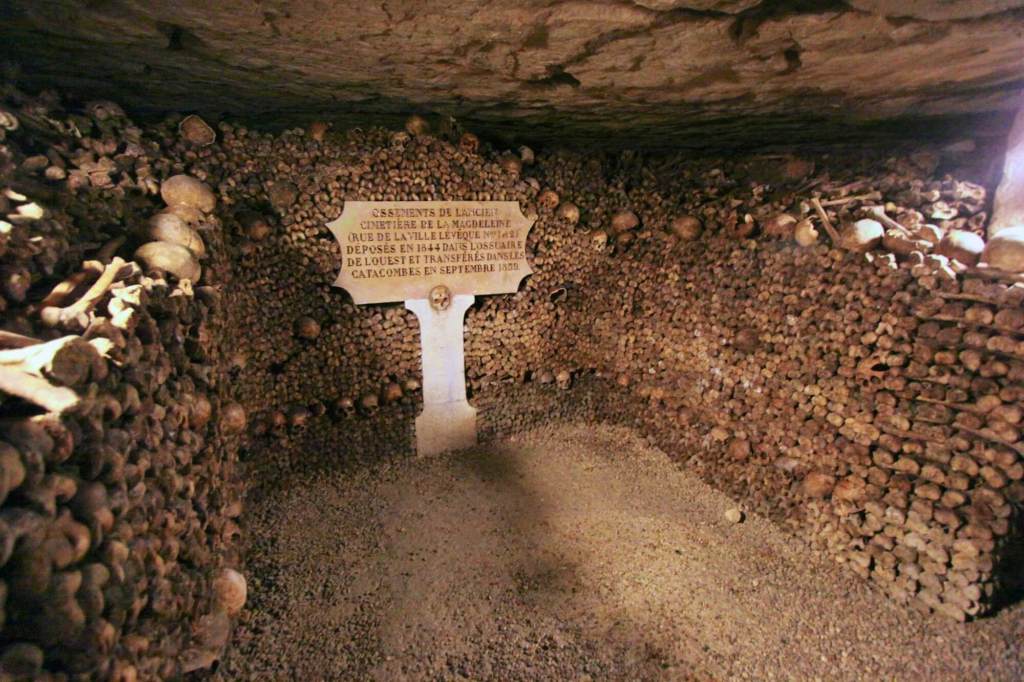
The Catacombs of Paris are an odd solution to two major problems. Paris had an underground network of abandoned tunnels where limestone was quarried dating to the 12th-14th centuries. Many of these were illegal and undocumented, causing major cave-ins in the 18th century as the city was expanding.
Around the same time, many of the cemeteries of Paris were overflowing with mass graves, collapsing basement walls.
The solution was to transfer the remains of over 6 million people into the tunnels. It opened to the public in the early 19th century and remains one of the more bizarre and creepier destinations in Paris.
We thoroughly enjoyed our day in the 14e arrondissement of Paris with a hearty breakfast followed by leisurely exploration away from the tourists. We’ll definitely be back for some more breakfasts before we leave.


Leave a comment