
The 11e arrondissement of Paris is named Popincourt, after Jean de Popincourt, a 15th-century president of the parliament of Paris who had a large major and estate in the area. The arrondissement is strangely devoid of any major tourist attractions, but is a popular spot for restaurants and night life. It straddles a few large squares, including Place de la Bastille, Place de la République and Place de la Nation.
Celebrating the French Republic
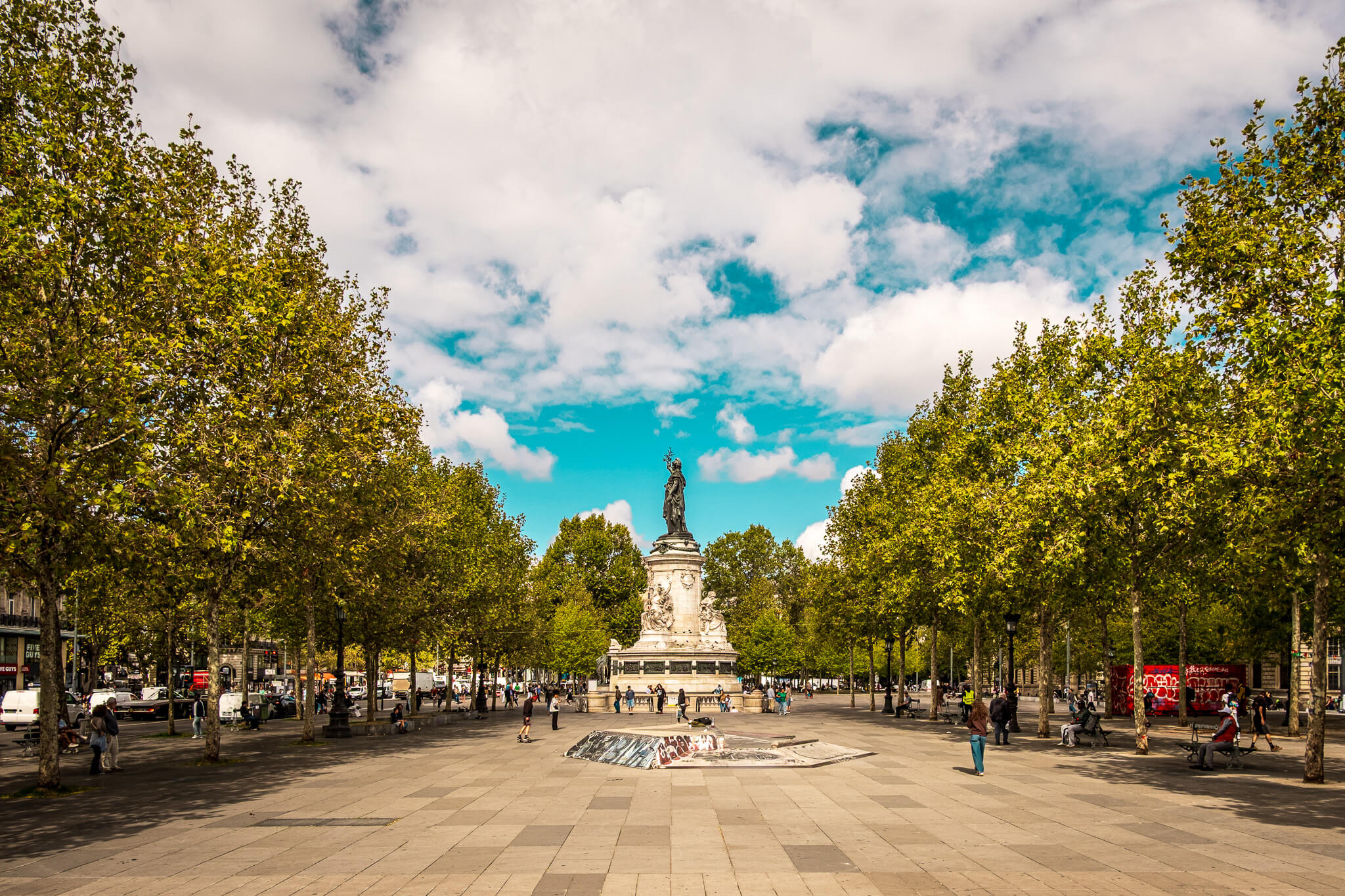
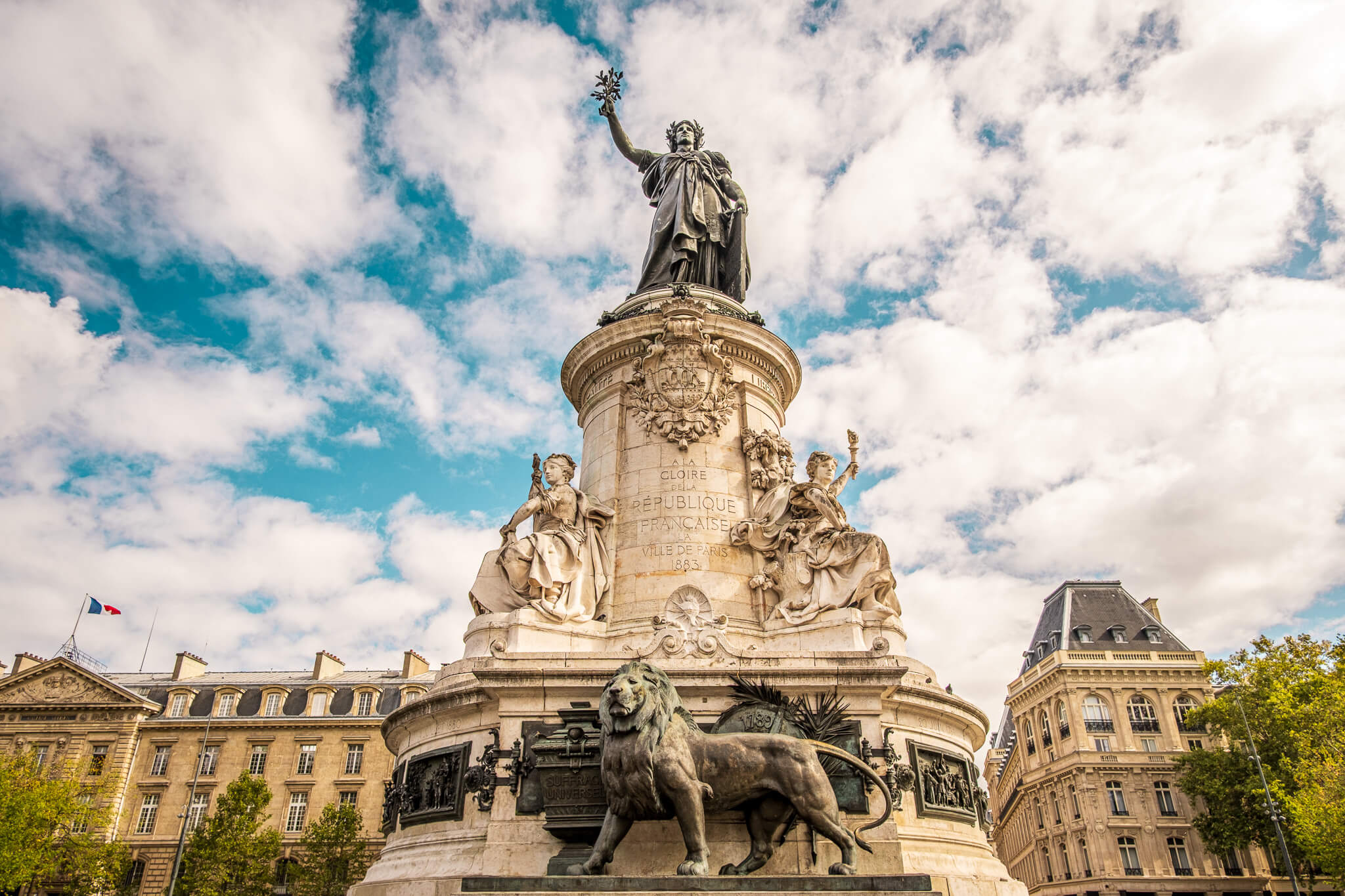
Place de la République is one of the larger squares in Paris with a significant pedestrian area (as so many are largely roundabouts). A first square was developed in this spot in 1811 but its current format was developed by Haussmann, and a major renovation completed in 2013 carved out the two hectares of pedestrian space on the sunnier side of the square. Its current name celebrates the French Republic (in contrast to the previous monarchies) and the centre of the square contains a large statue depicting Marianne, the personification of France.
The site of a revolution
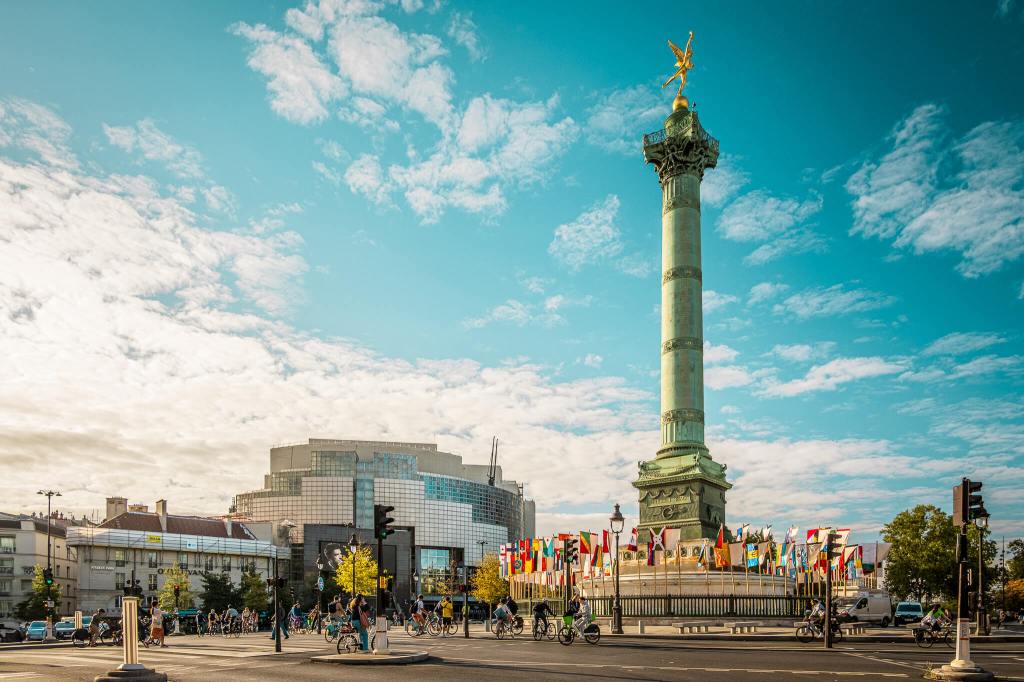
If walls could talk, I’d spend a lot of time listening to the ones around Place de la Bastille, one of the most notorious squares of Paris. Here marks the symbolic start of the French Revolution.
Place de la Bastille is the location of the former Bastille prison, a medieval fortress that was used as a state prison by the kings of France until it was stormed on July 14, 1789 and later demolished. It was originally built during the 14th century to defend the eastern side of Paris and became a prison in 1417. It increasingly became a symbol of the tyranny of the monarchy, used to imprison anybody who got in the way of the king.
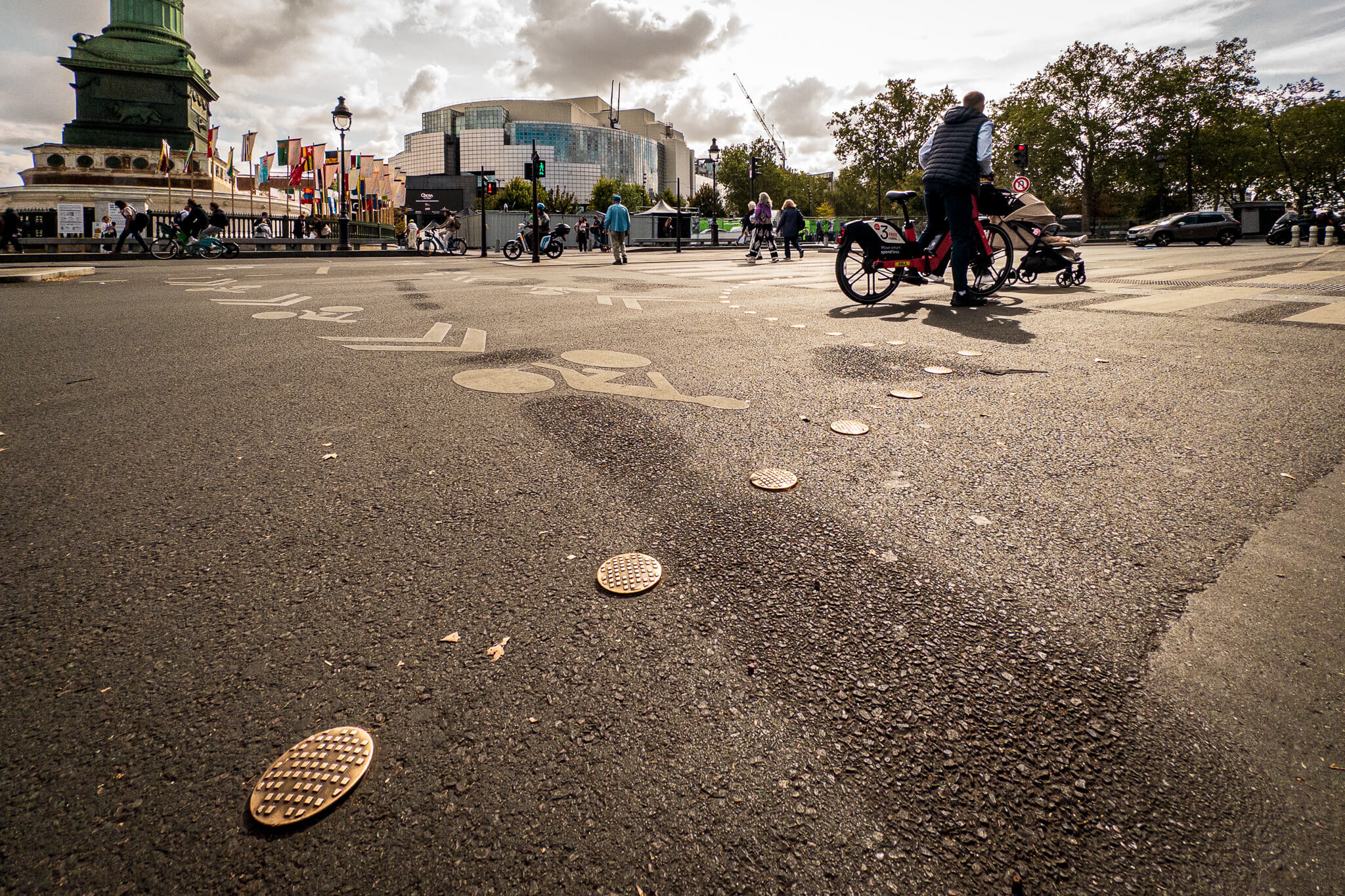
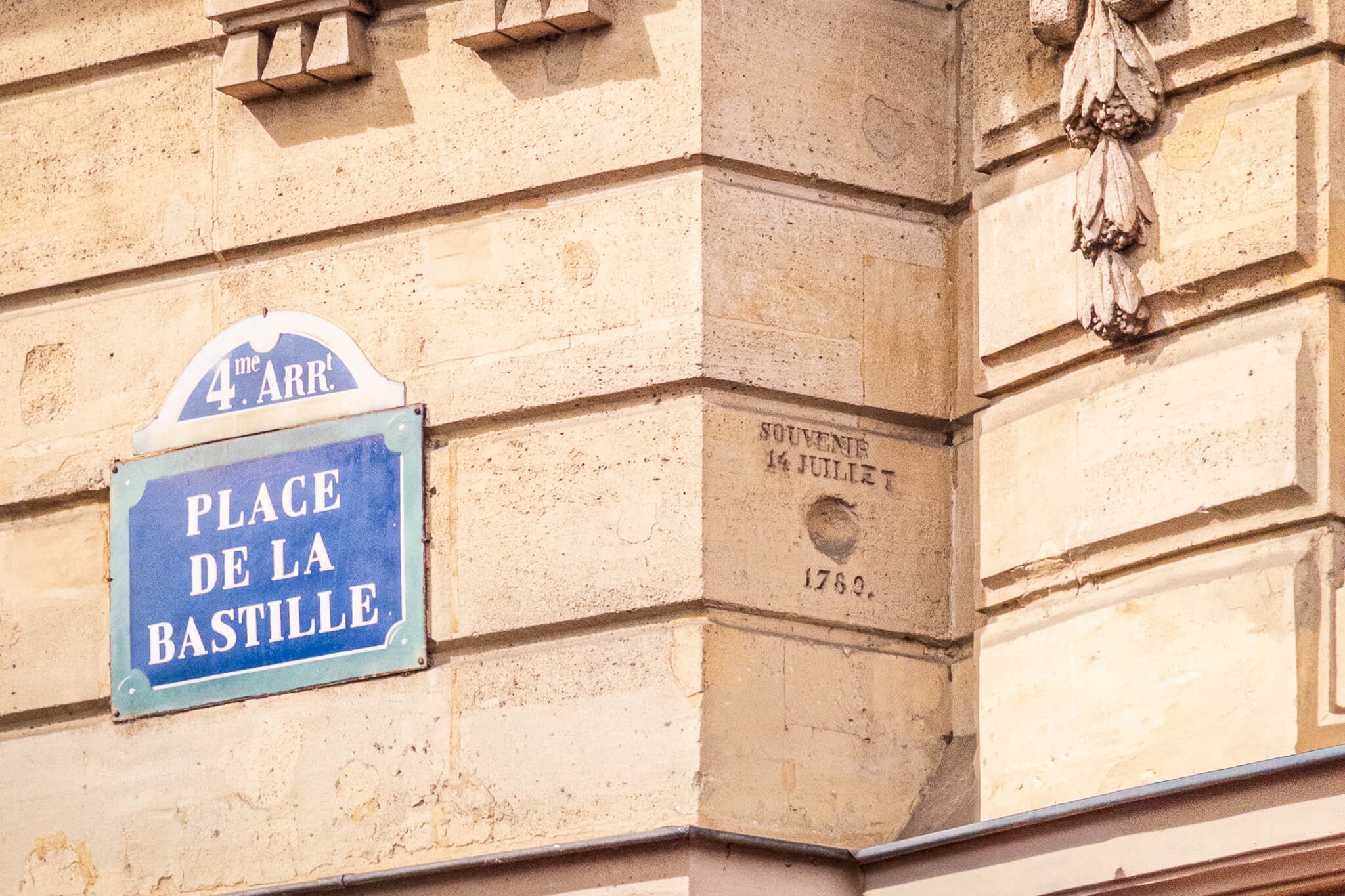
If you explore Place de la Bastille, you’ll find markers in the ground designating where the former Bastille prison was located (mostly around 3 Place de la Bastille). You’ll also find the imprint of a cannonball hit in one of the building façades (although this is purely commemorative of the July 14th storming, as this building wasn’t constructed until 1871).
The monument at the centre of Place de la Bastille is the July Column, built between 1835 and 1840. It commemorates the revolution of 1830 that saw the fall of Charles X, King of France, and the start of the constitutional monarchy of Louis-Philippe, King of the French.
Place de la Bastille is also home to the Opéra Bastille, but since it’s technically located in the 12e arrondissement, we’ll talk about it later.
Exploring the area
The 11e arrondissement is popular with Parisians as a dining and nightlife hub, featuring plenty of trendy restaurants and bars. It’s not often that you’ll find people line up over an hour for a ham and butter sandwich (at Le Parizot, an experience we skipped).
There’s also a good amount of shopping in the area, with some of the larger boulevards lined with both independent shops and chain clothing stores. And as as you look around, it’s mostly Parisians and very few tourists.
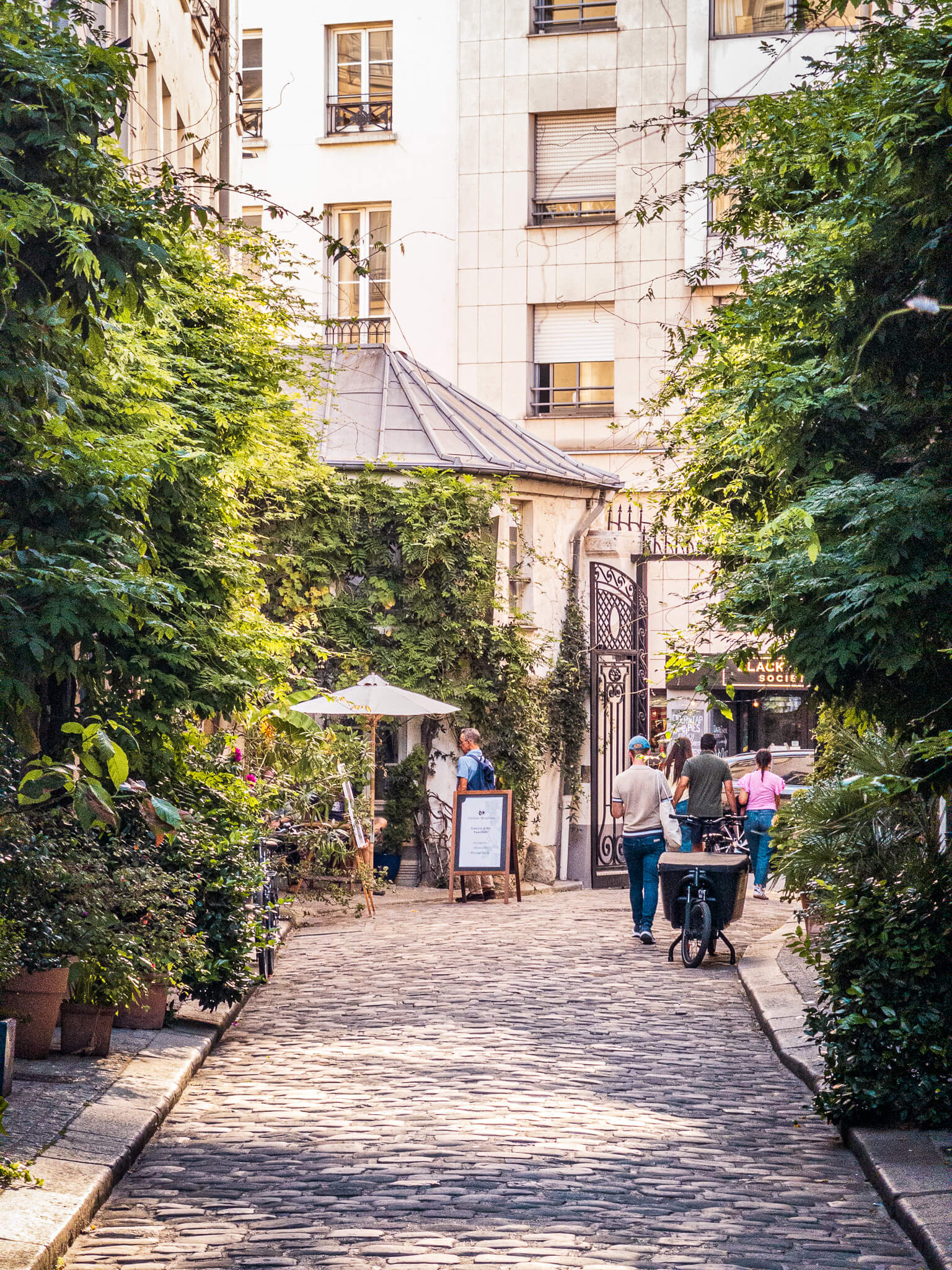
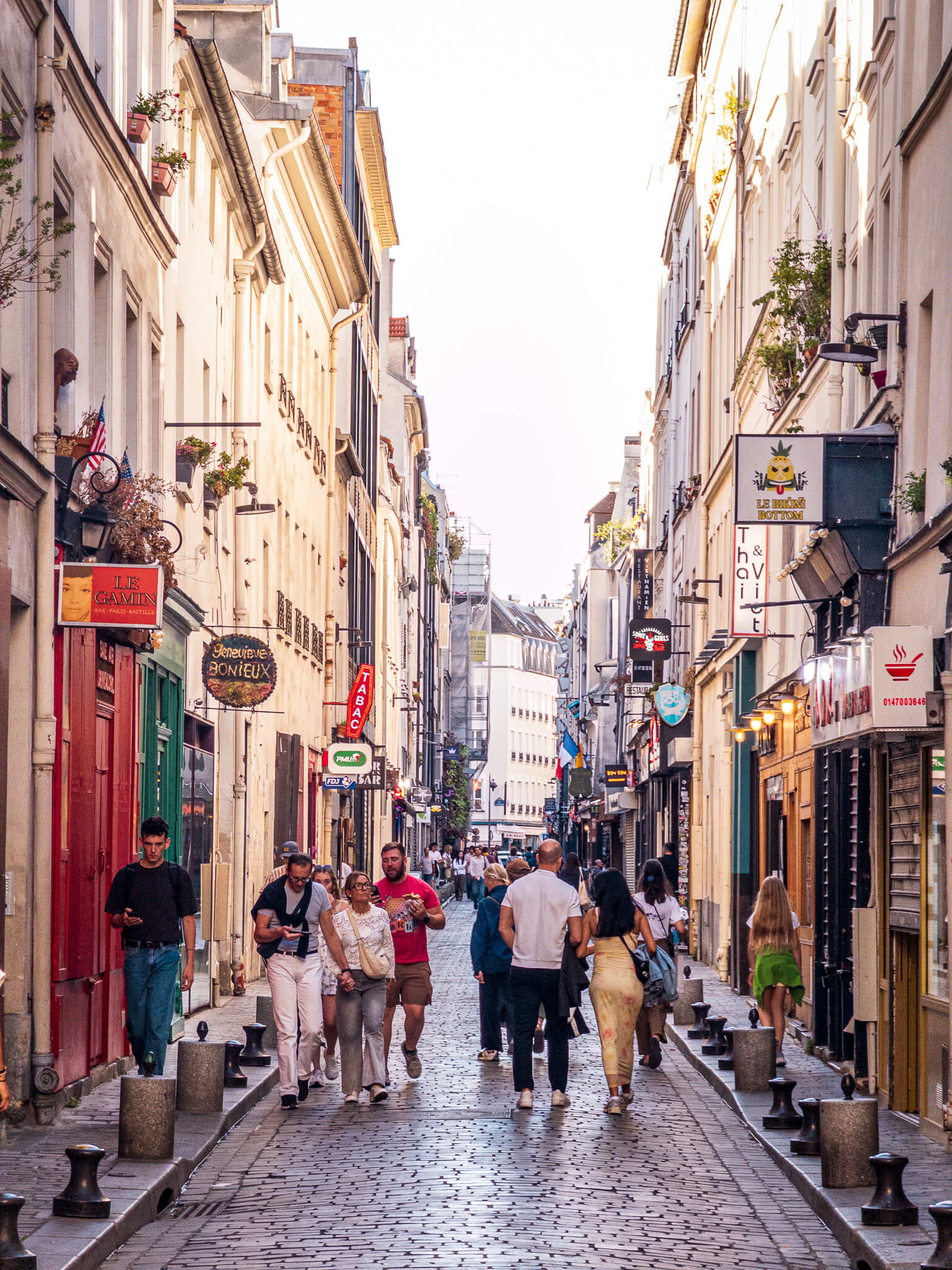
If you’re looking to escape the hectic Place de la Bastille, there are some quiet gems hidden in plain sight. Just off the square is the old cobblestone alleyway of Cour Damoye, lined with workshops, art galleries, offices and a coffee roaster. A bit further east is Rue Lappe, a quaint street that was originally home to metalworkers and later became known for bars and nightclubs, and is now filling up with trendy shops and restaurants. Another notable spot in the area is Passage Lhomme, a private passageway that’s only open on weekdays (we were here on a Saturday, so we couldn’t get in). Passage Lhomme is an open cobblestone passage with lush vines, quaint shops and a view of a preserved 19th-century brick chimney from a former sawmill.
The more you dig into the area tucked away behind Place de la Bastille, the more you’ll discover that the large city blocks are pierced with quaint small passages that most visitors overlook.
After learning about the French Revolution and La Bastille at Musée Carnavalet, it was fascinating to walk around the exact spot where the storming of the Bastille took place without seeing so much as a stone from the original structure. And despite how hectic Place de la Bastille was, we could find peace only a few steps away in the hidden cobblestone alleys of the 11e arrondissement.
 Scuba Duo
Leave a comment