
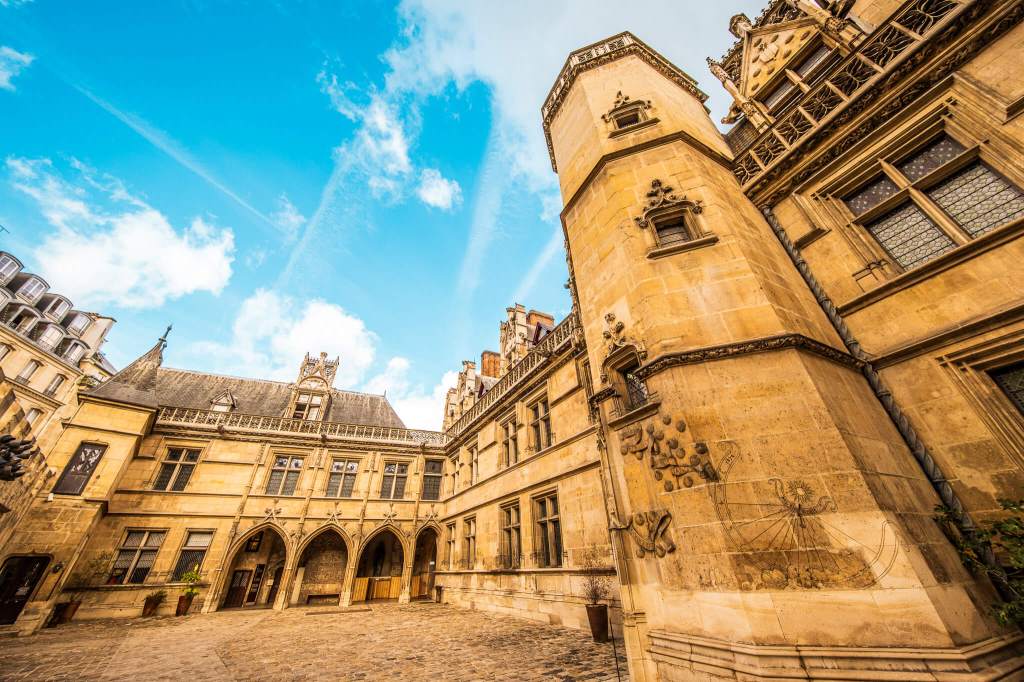
The 5e arrondissement reveals the history of Paris from the days of the Roman Empire through medieval times and beyond. It’s named after the Panthéon, a glorious monument, although the most interesting destinations in the arrondissement predate it by centuries.
The oldest structure in Paris is a Roman amphitheatre
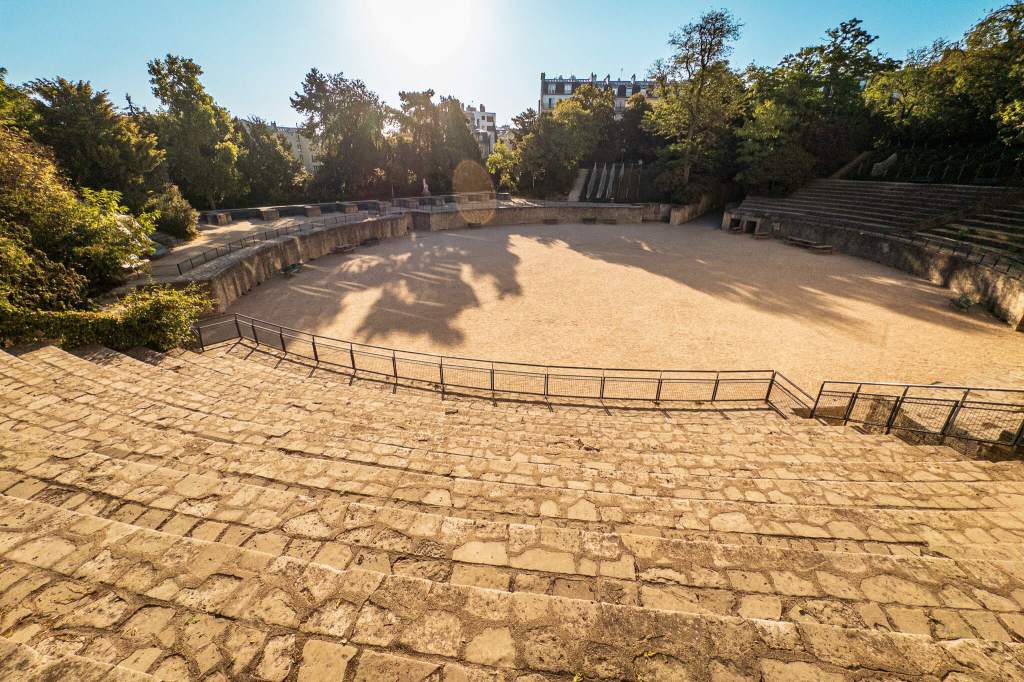
The Arènes de Lutèce is the oldest structure in Paris, the remains of a Roman amphitheatre and theatre stage, built in the 1st century when the city was known as Lutetia. At this time, the Roman Empire was near its peak size and territory. The Arènes de Lutèce could hold 15,000 people and held gladiator fights and theatrical plays. Only part of it remains, as much of the stone was used to build 3rd-century fortifications around the city.
It eventually got buried and long forgotten until 1869 when it was rediscovered during Baron Haussmann’s construction projects. Few people know about this site, so if you visit in the morning, you’ll likely have it all to yourself.
More remnants of the wall of Philip Augustus
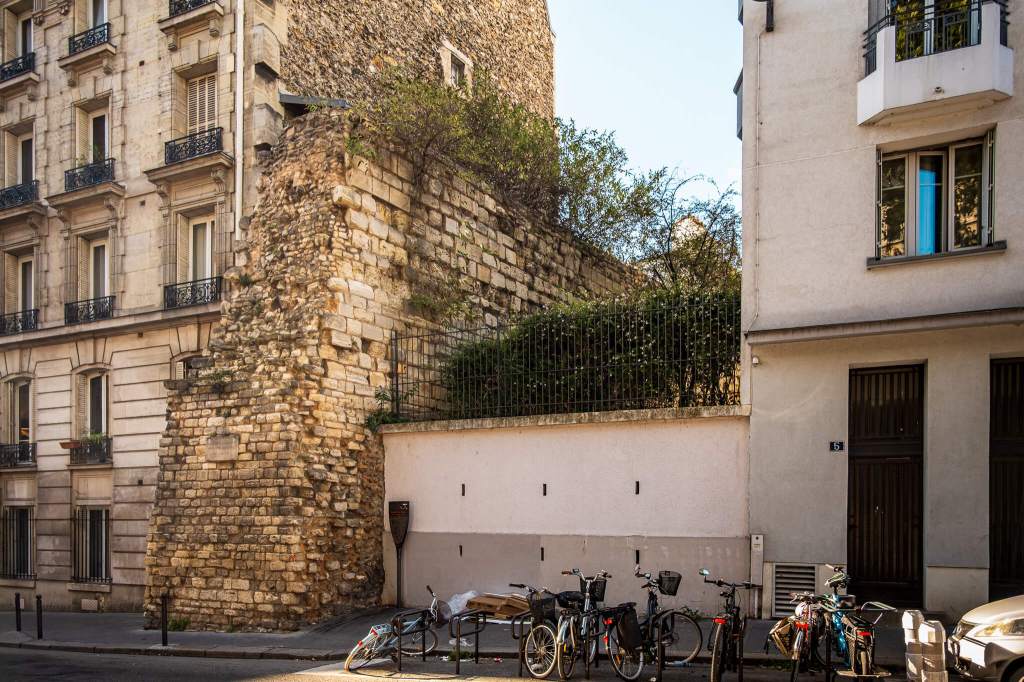
We saw part of the c. 1200 wall of Philip Augustus on the right bank of the Seine in the 4e arrondissement, and now we see a segment of the left bank wall on Rue Clovis.
Roman to medieval architecture and history at Musée de Cluny
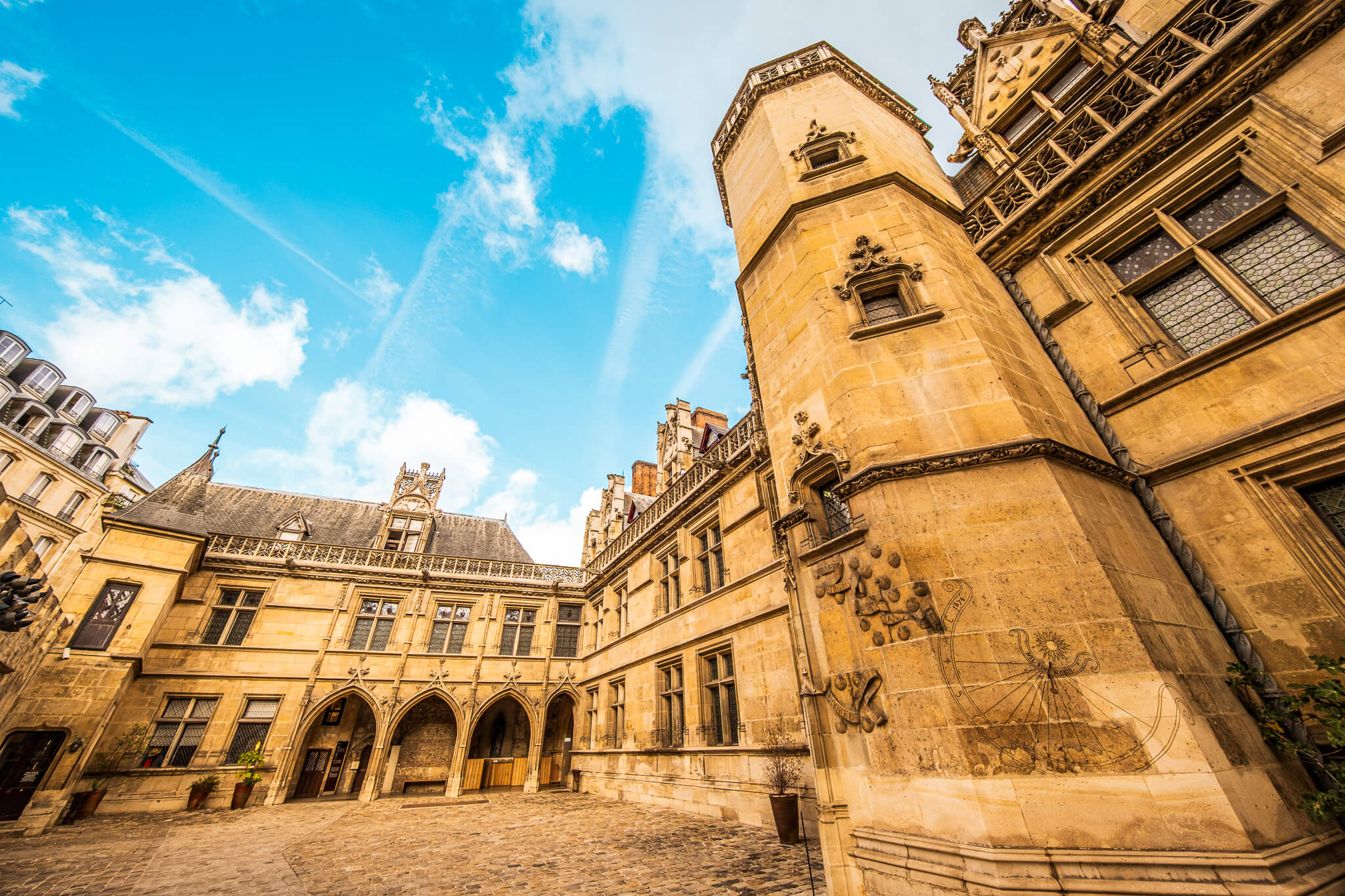
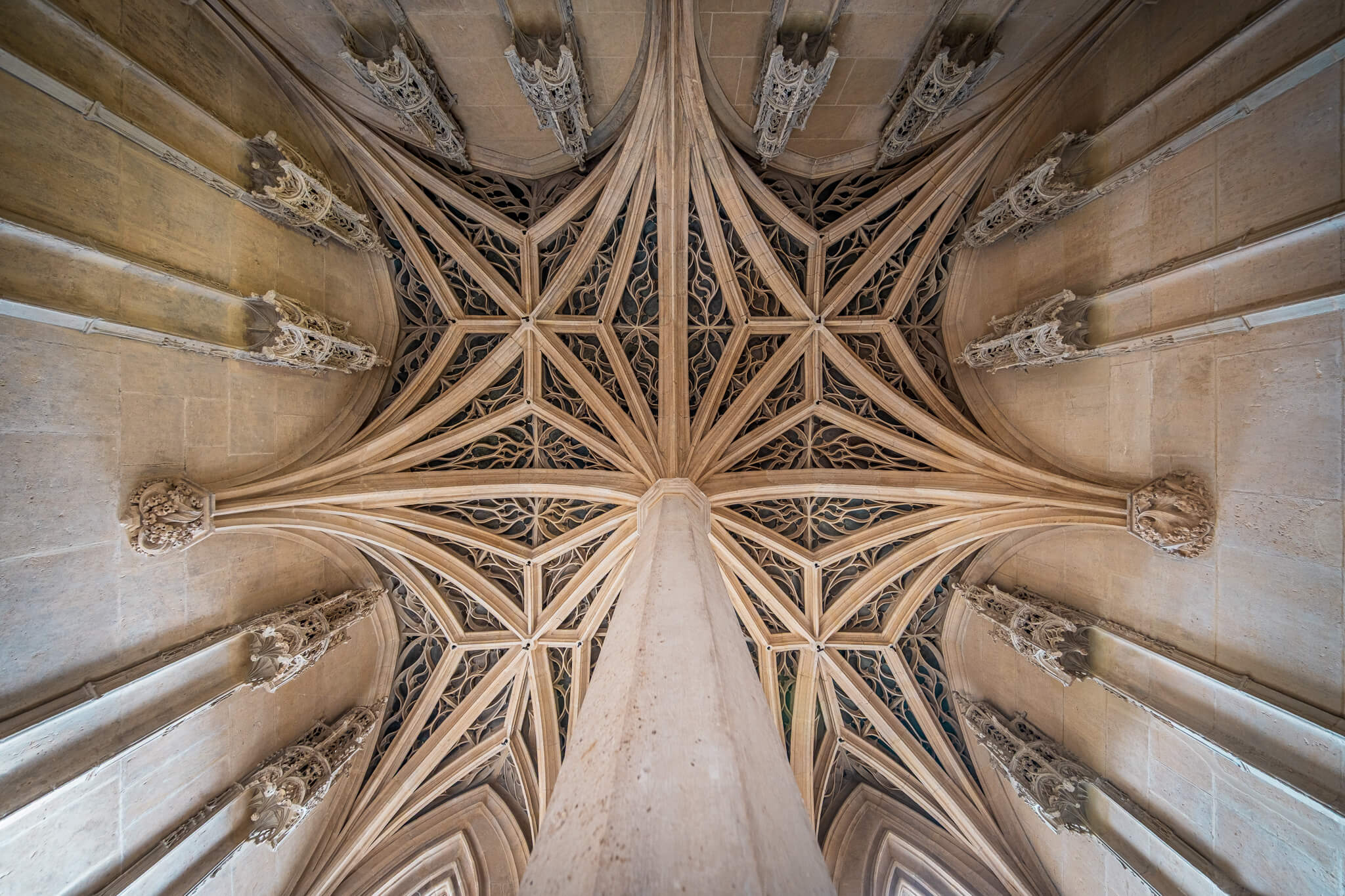
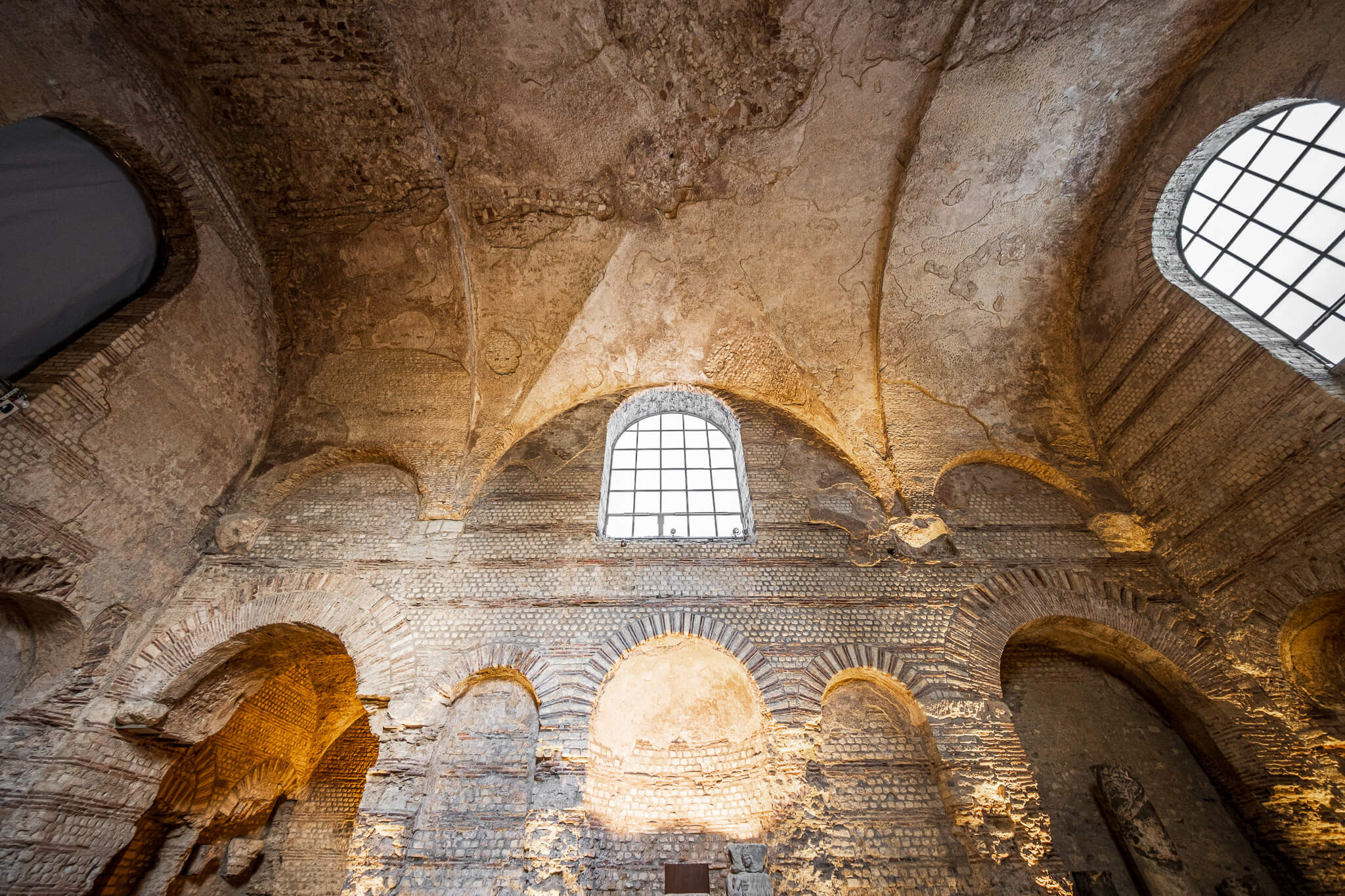
The Musée de Cluny is a medieval arts museum housed in a fascinating set of buildings that includes a late 1st-century Roman bath complex and the 15th-century Hôtel de Cluny mansion.
Similar to the Hôtel de Sens in the 4e arrondissement, the Hôtel de Cluny is another rare example of medieval civic architecture in Paris. The mansion was built around 1500 on the foundations of the Roman baths for the Abbey of Cluny. The frigidarium (the cold bath room) of the Roman baths was built towards the end of the 1st century and is well preserved.
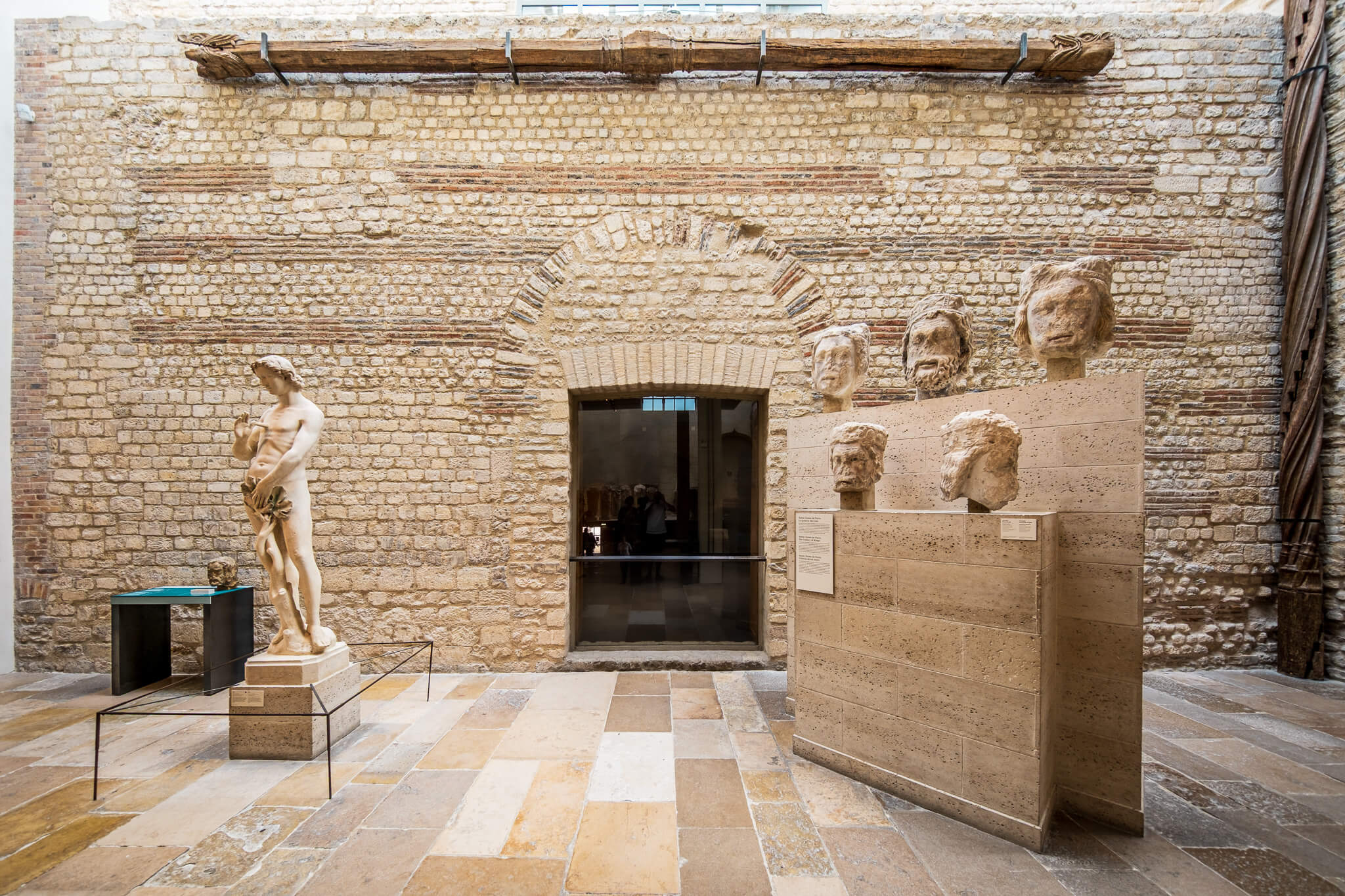
The museum houses many fragments of the original sculptures from the Notre-Dame de Paris cathedral.
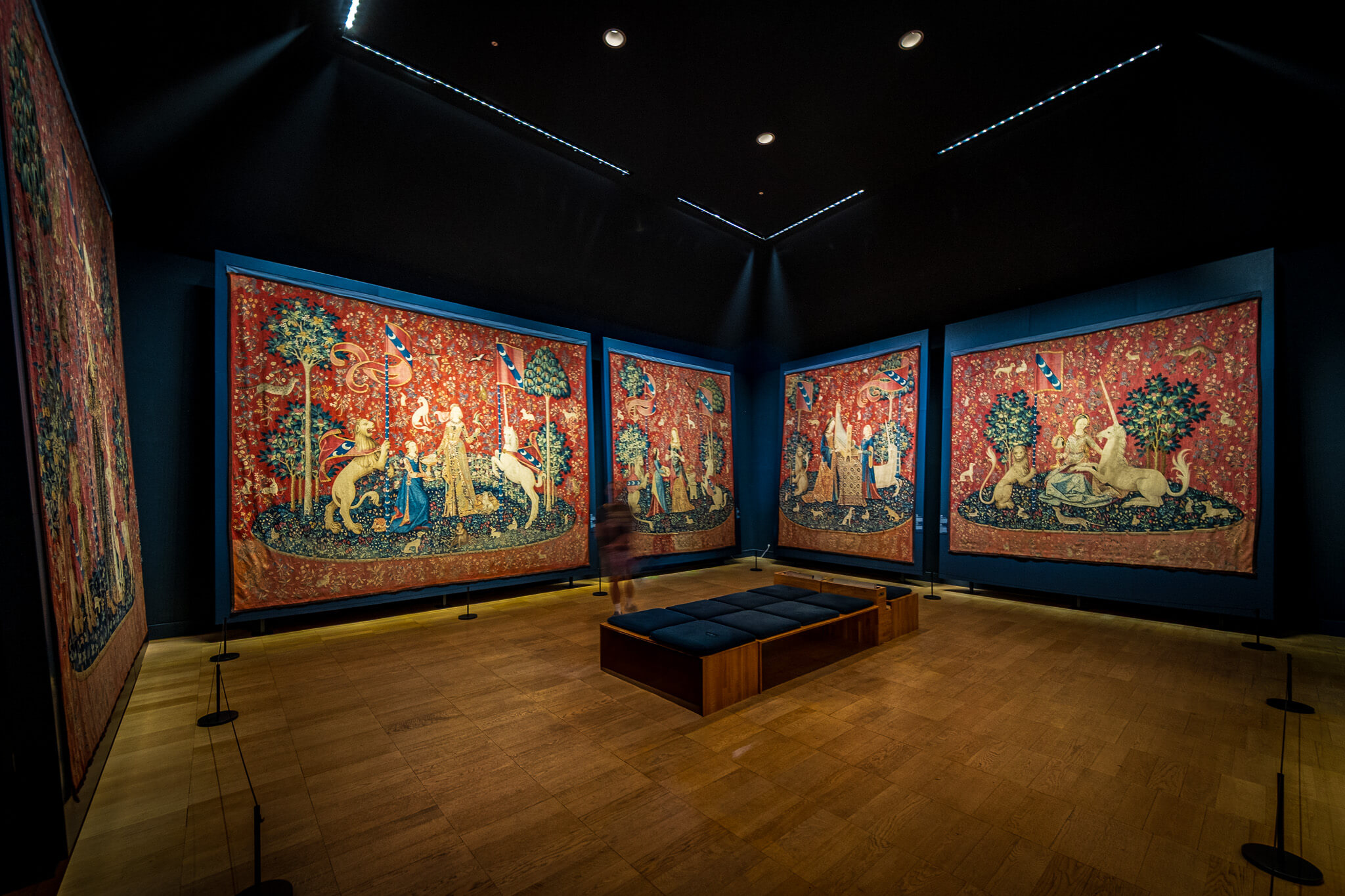
One of the most famous and genuinely most fascinating pieces of medieval art in the museum is the Lady and the Unicorn tapestry set. The six large tapestries depict a lady and a unicorn, in addition to various other creatures. The tapestries date to around 1500, although it’s not known exactly where they were made or where they were originally displayed. Nor do we fully understand their meaning. Five of the tapestries appear to depict the five senses, but the sixth tapestry is left open to interpretation.
I’d highly recommend the Musée de Cluny to everybody visiting Paris. Not only does it showcase a period of history that we rarely see elsewhere, but the crowds are minimal compared to other museums and attractions in Paris.
Modernist architecture at Sorbonne University
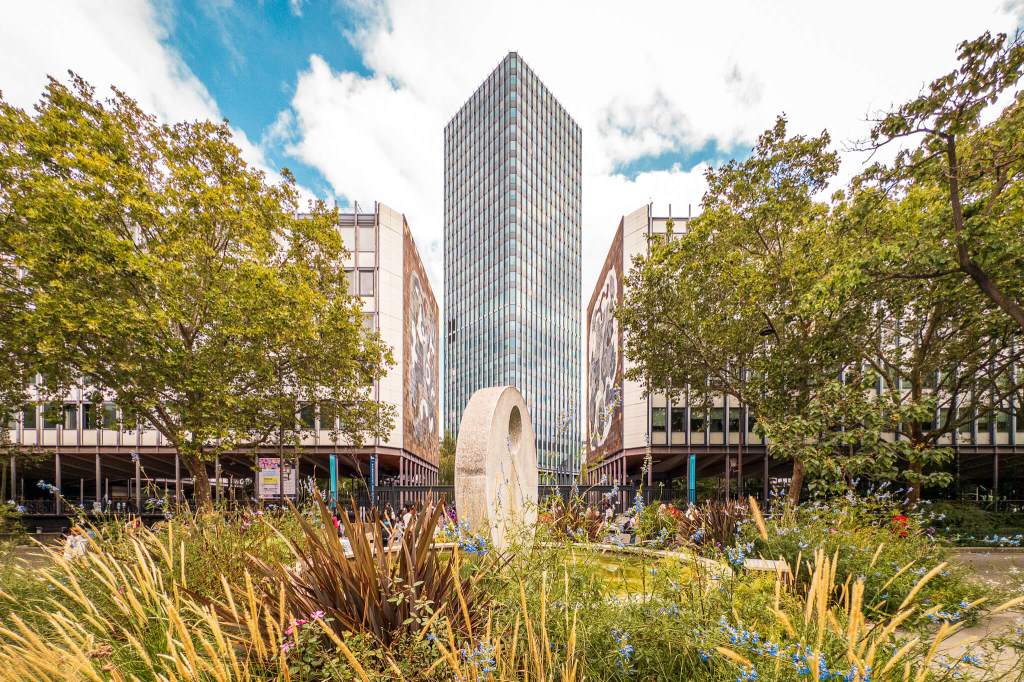
The science and engineering campus of Sorbonne University is an intriguing example of modernist architecture, built around 1960. It features a massive grid of buildings all raised on stilts, allowing students to walk across the campus in any direction. In the centre is a tall 85-story tower.
One of the oldest streets in Paris
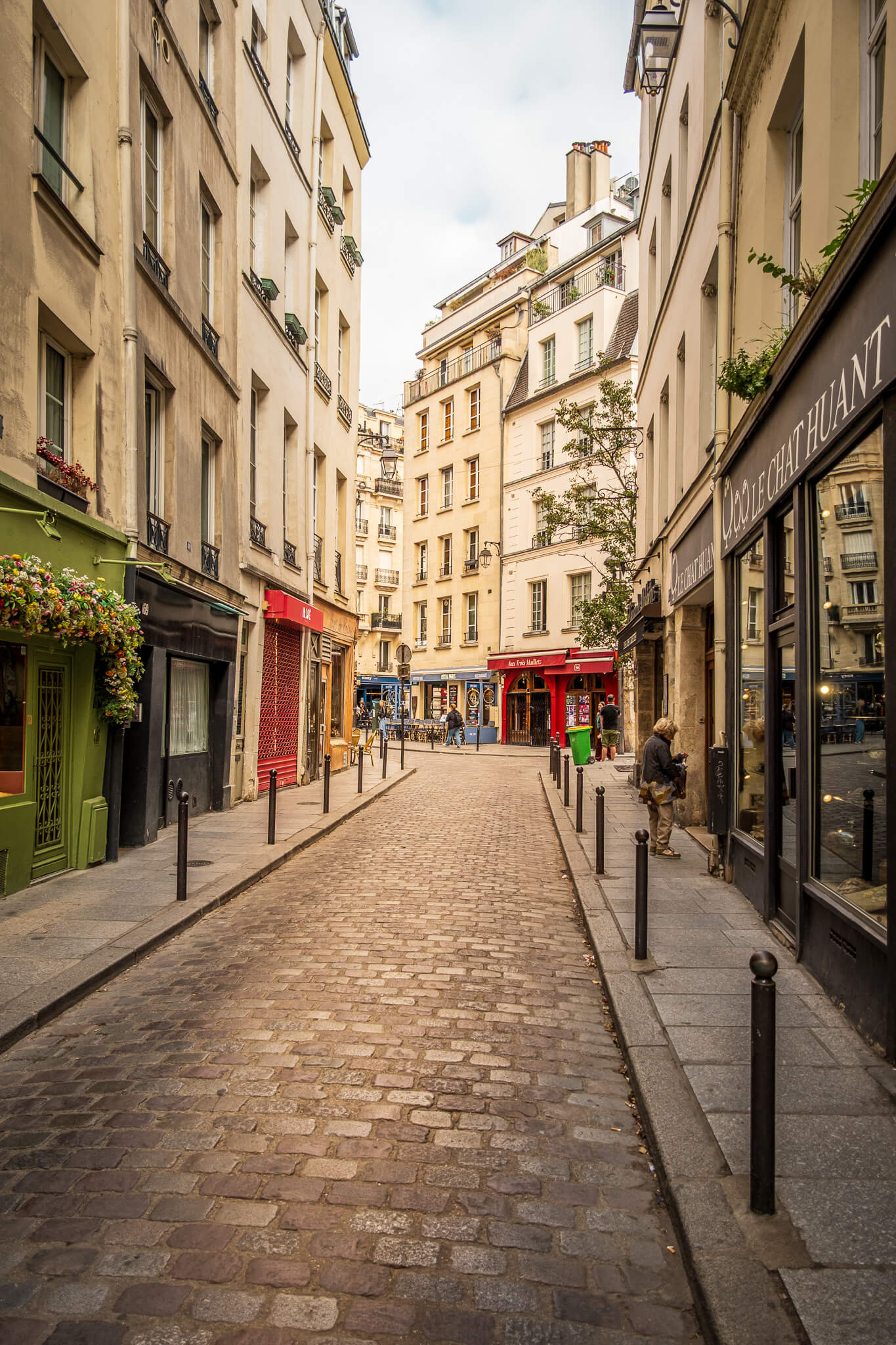
Rue Galande follows the path of an ancient Roman road that led to Rome. The street we see today dates to 1202 and we can still find medieval homes dating to the 15th and 16th centuries.
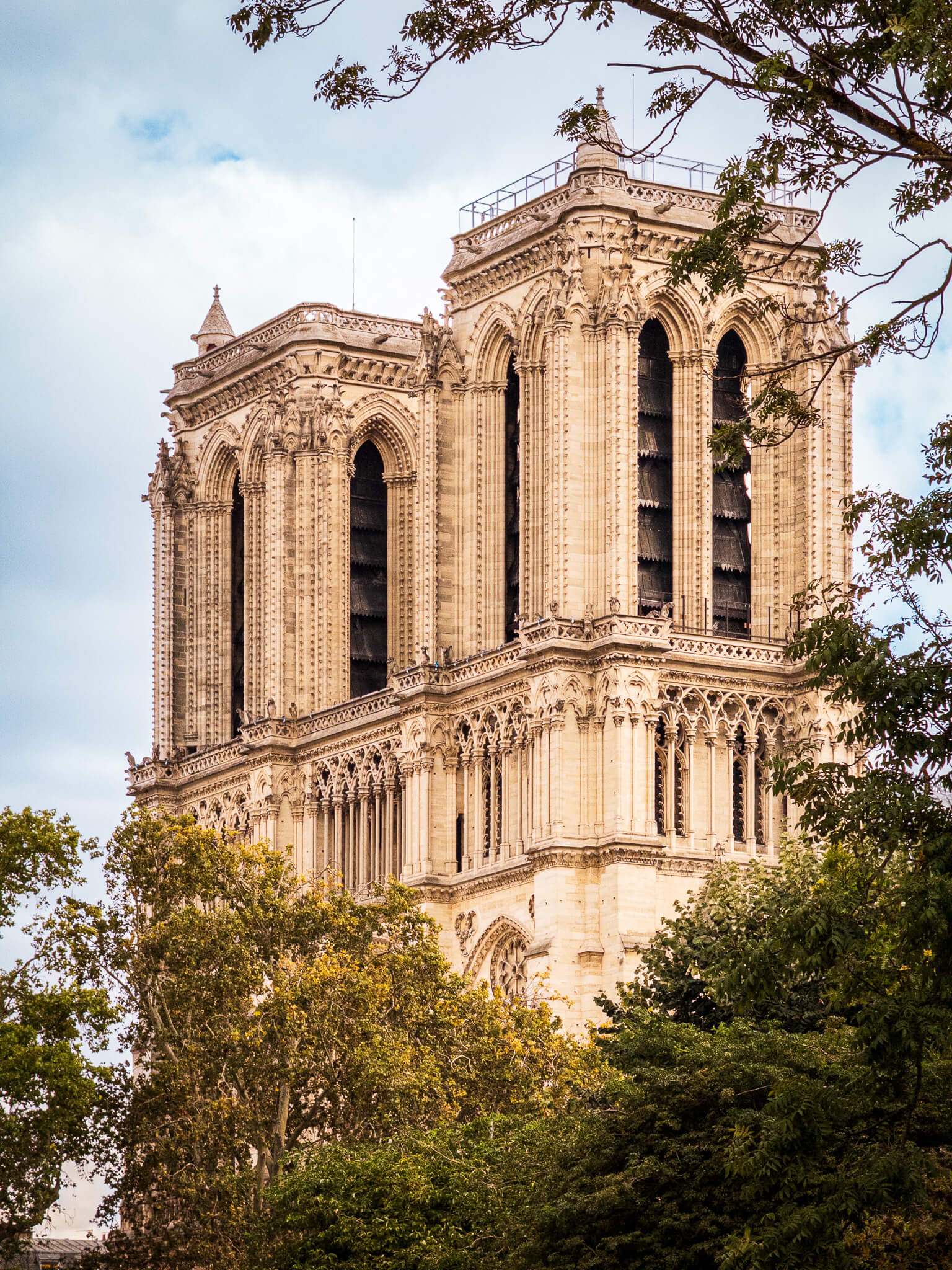
As a bonus, it offers an amazing view of the towers of Notre-Dame.
Lunch and shopping
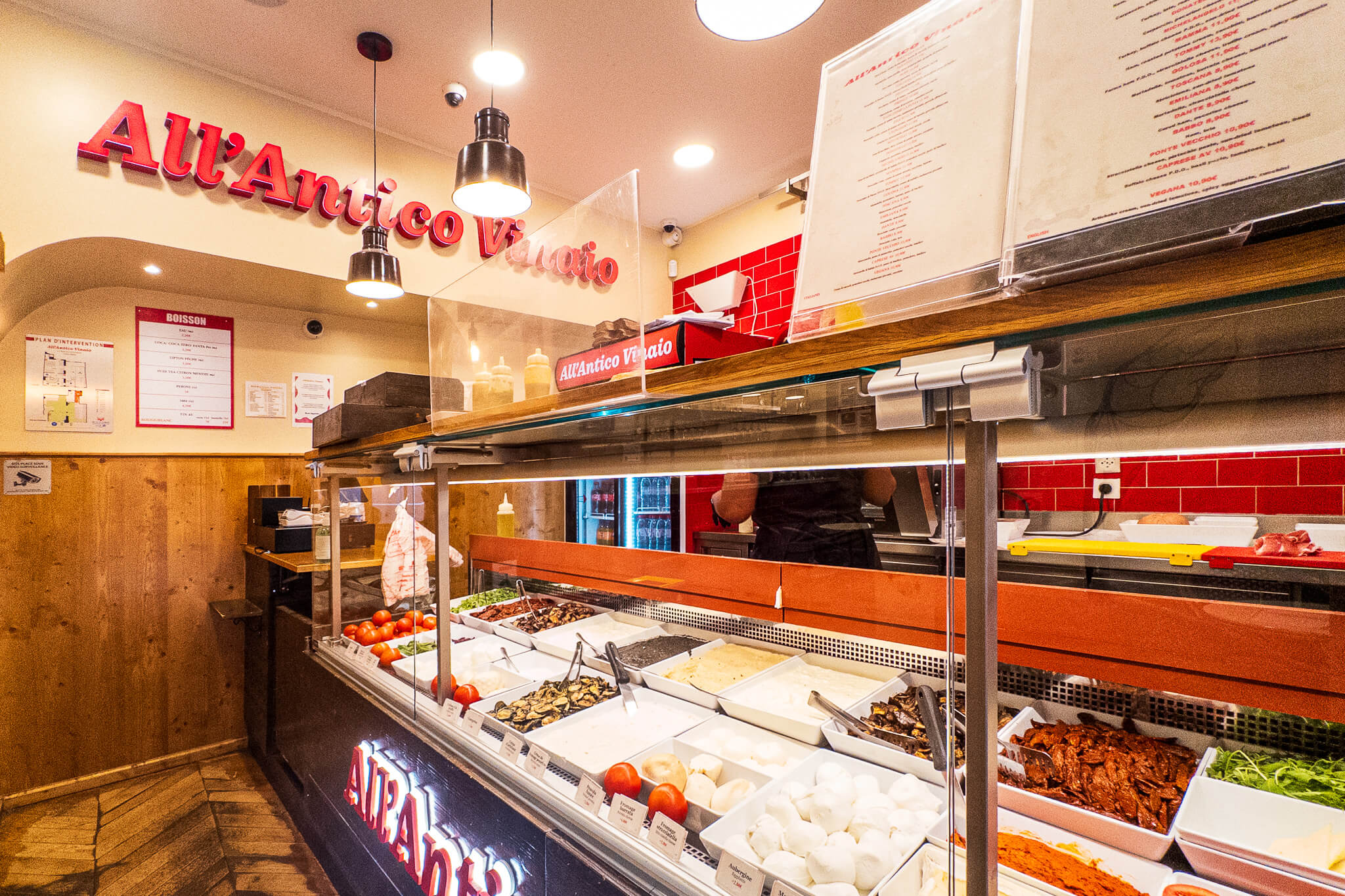
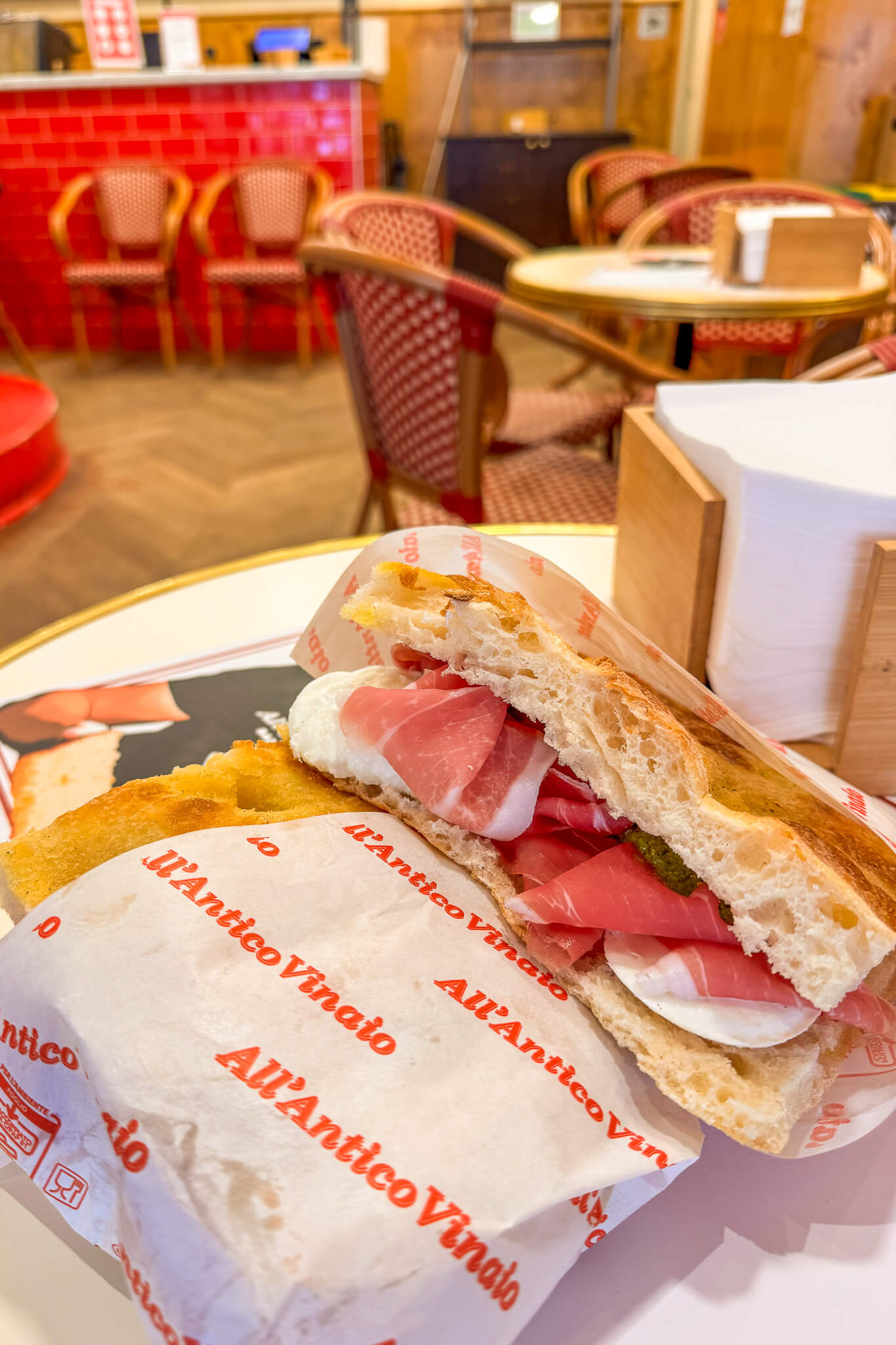
Just around the corner from rue Galande, on rue du Petit-Pont, we find All’Antico Vinaio, a sandwich shop from Florence that has spread to locations around the world. While we’d normally shy away from chain restaurants while in Paris, this place gets rave reviews and fits in with the Roman start of our day.
We can confidently say these were the best sandwiches we’ve ever had. So much that returned a couple days later for more. We tried the Boss (prosciutto crudo, pecorino cheese, truffle cream and arugula) and the Italiana (prosciutto crudo, buffalo mozzarella, basil pesto and tomato). All sandwiches are made with freshly-baked schiacciata (often still warm), a traditional thin flatbread from Tuscany (similar to focaccia but crispier).
While you’re in the area, if you’re into any type of outdoor activity, check out the Au Vieux Campeur network of shops. Founded in 1941, the store has grown into a “village” by expanding to some 40 individual storefronts over several city blocks, with each storefront focusing on one sport or outdoor activity.
Strolling through the Jardin des Plantes
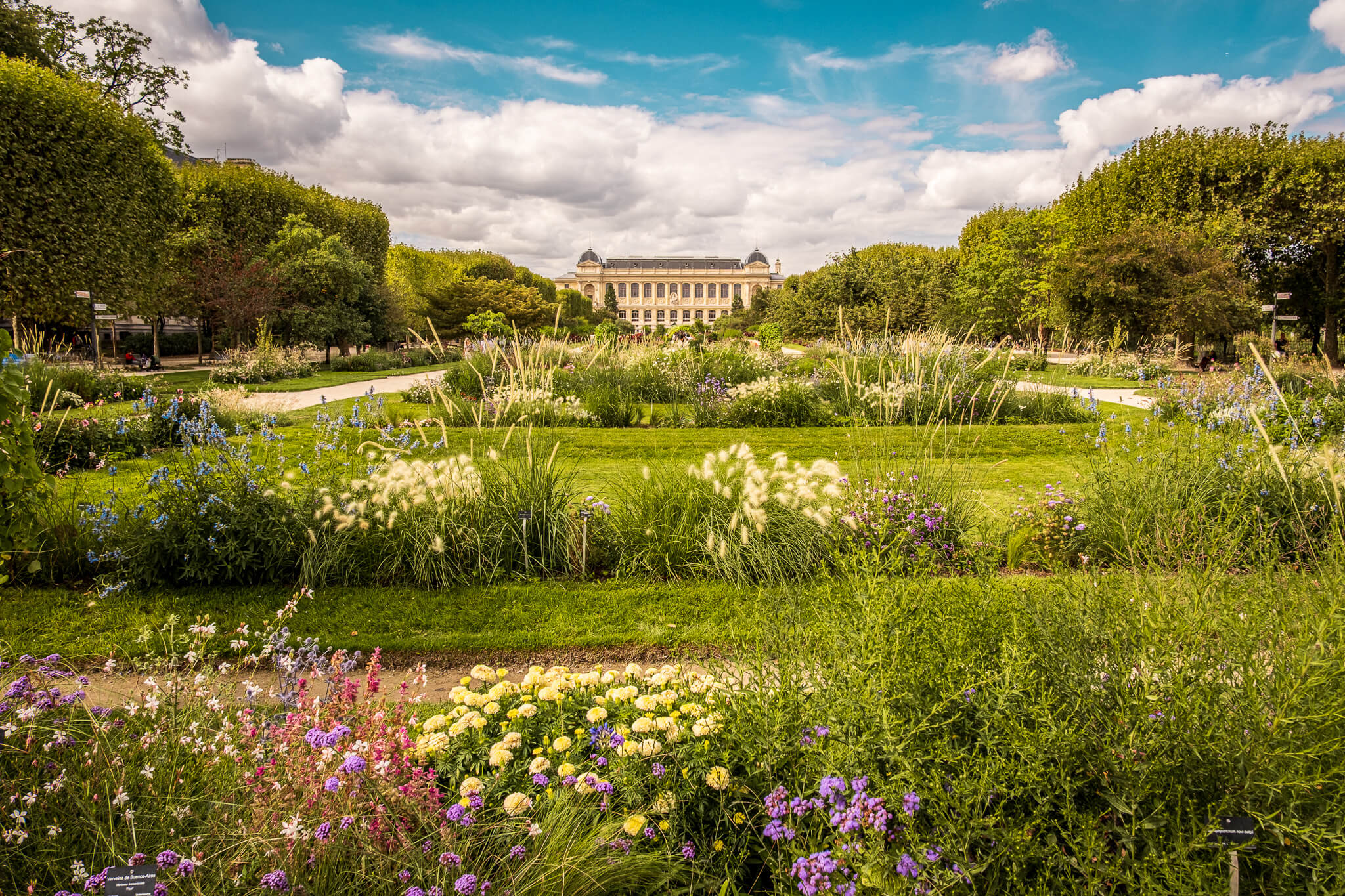
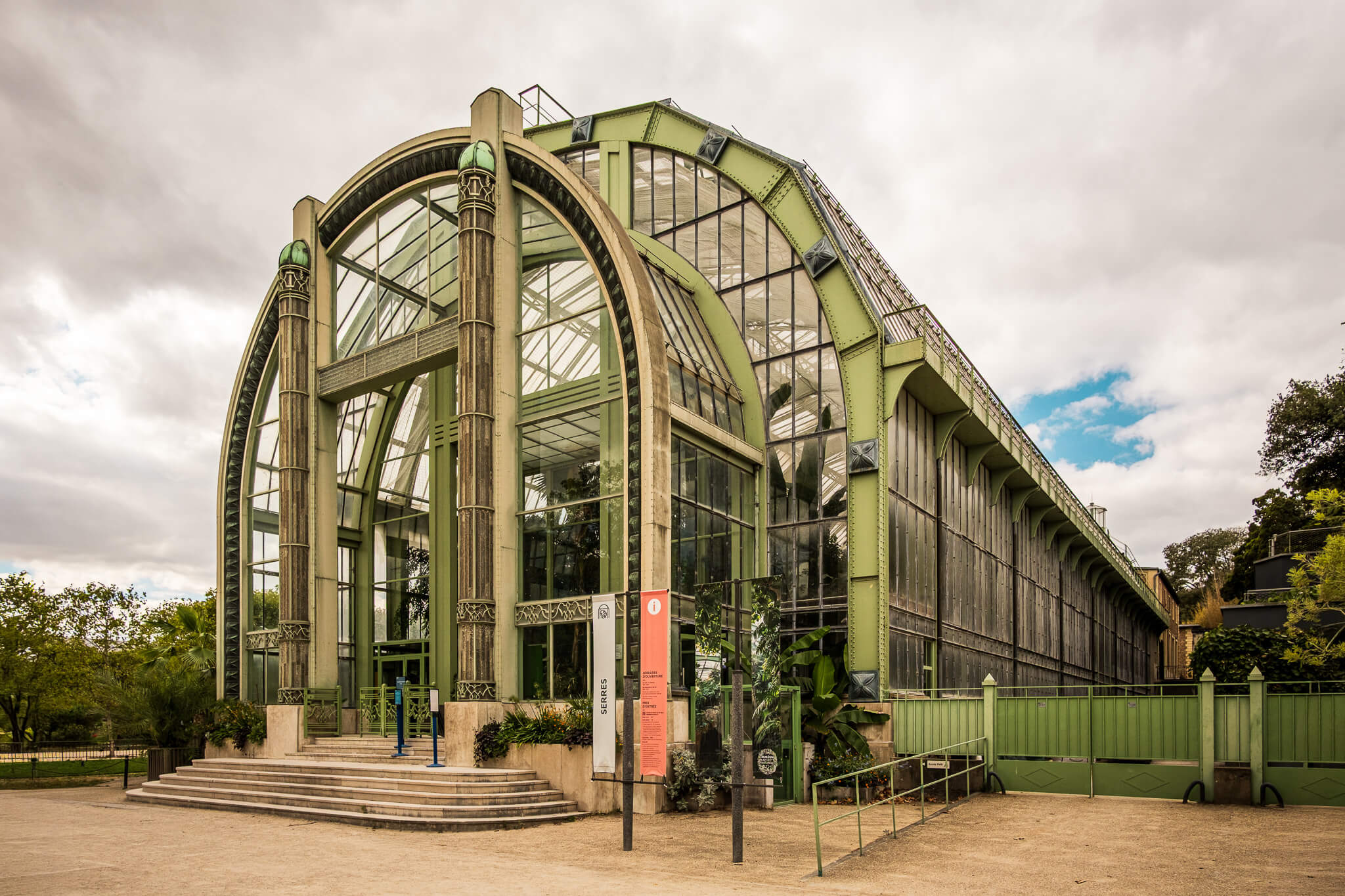
The Jardin des Plantes is the main botanical garden of Paris and home to the Museum of Natural History. The garden is free to access, while the museum buildings each require a separate admission fee. We explored the gardens, but decided to skip (at least for now) the art deco greenhouses, the Gallery of Evolution and the Gallery of Mineralogy and Geology.
The garden had the feel of a cross between a formal French garden and a less formal English garden. It was a lovely stroll, but didn’t blow us away (although we’re definitely not visiting at prime time for a garden).
From royal church to national temple
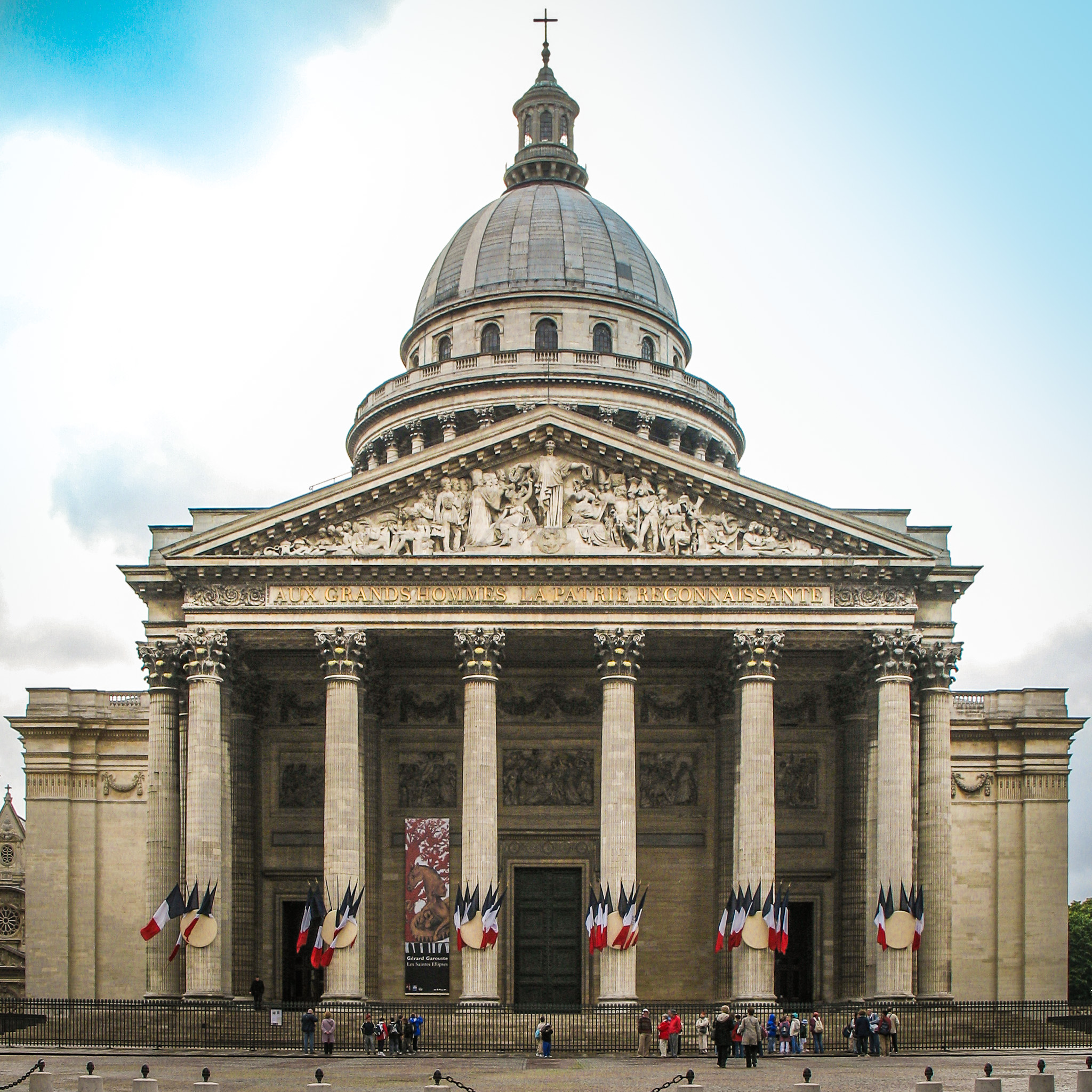
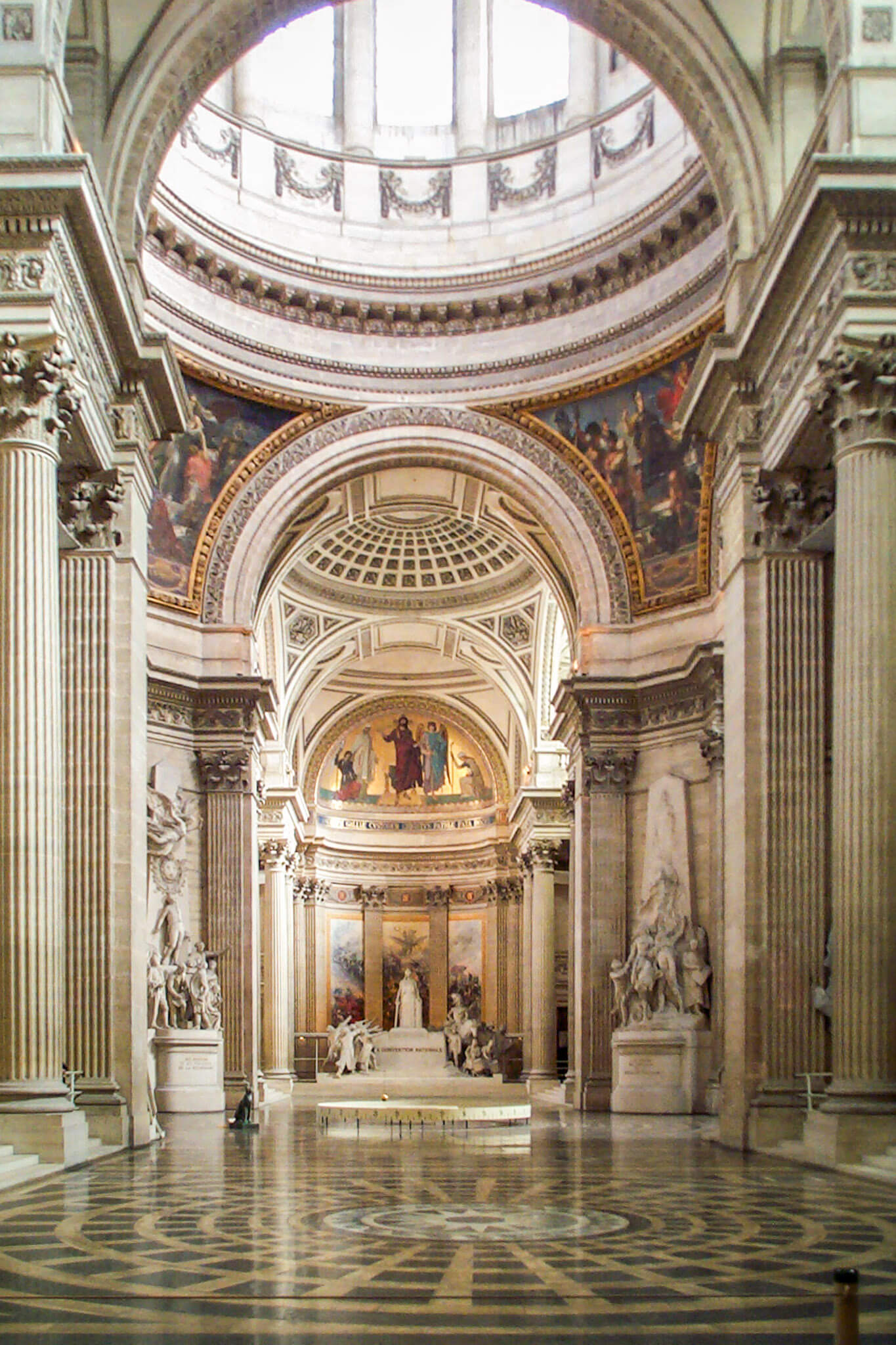
We end our day with the monument after which the arrondissement in named.
The Panthéon is a massive neoclassical building whose dome can be seen throughout the 5e arrondissement. It was commissioned by King Louis XV in 1744 as a church for Saint Genevieve. However, it was only completed in 1790 during the French Revolution, and the purpose of the building shifted to a mausoleum for French heroes. Today, we can find the tombs of over 70 notable French writers, scientists and politicians.
The Panthéon is also where physicist Léon Foucault hung a 67-meter pendulum in 1851 to demonstrate the rotation of the Earth. A replica of Foucault’s pendulum can still be seen swinging in the Panthéon today.
The top of the dome can be accessed by climbing 206 steps and offers a stunning (if not terrifying) 360º view of Paris. (We did this on our previous visit and can highly recommend it!)
Our day in the 5e arrondissement was a fascinating day contemplating Paris before it was Paris, then seeing how it evolved through the early to late medieval period, through the revolution to modern times. Feel free to share ideas for other things to explore in the 5e arrondissement.

 Scuba Duo
Leave a comment