
Named for the Hôtel de Ville, the 4e arrondissement houses the Paris city hall and comprises the eastern half of Île de la Cité (remember the western half is in the 1er arrondissement), all of Île Saint-Louis to the east, and the lower part of Le Marais. A wander through the area reveals over 800 years of history and architecture.
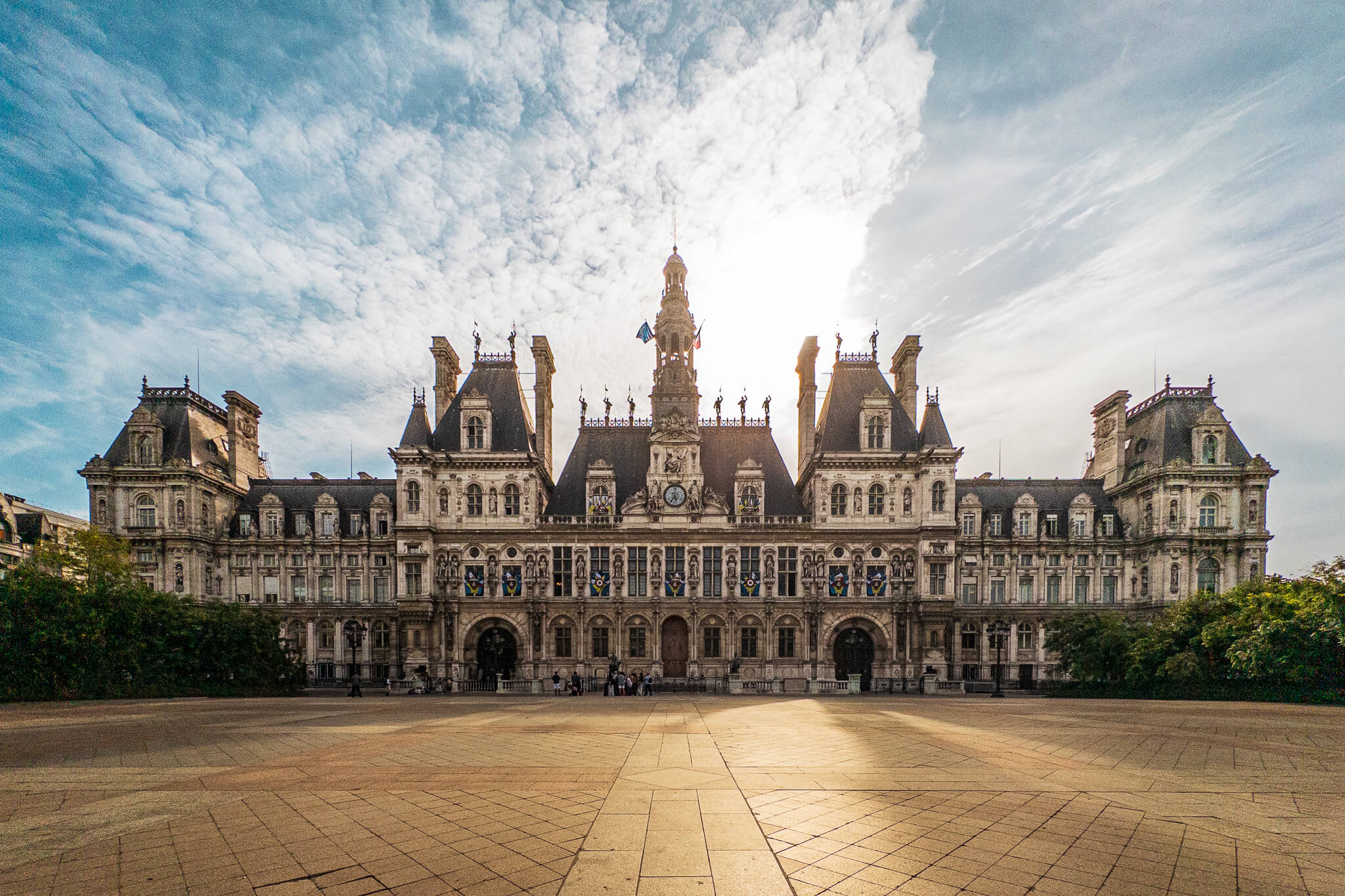
As the powerhouse of France, Paris has an impressive Renaissance Revival Hôtel de Ville dating to the late 19th century, although there has been a city hall building in this location since 1357.
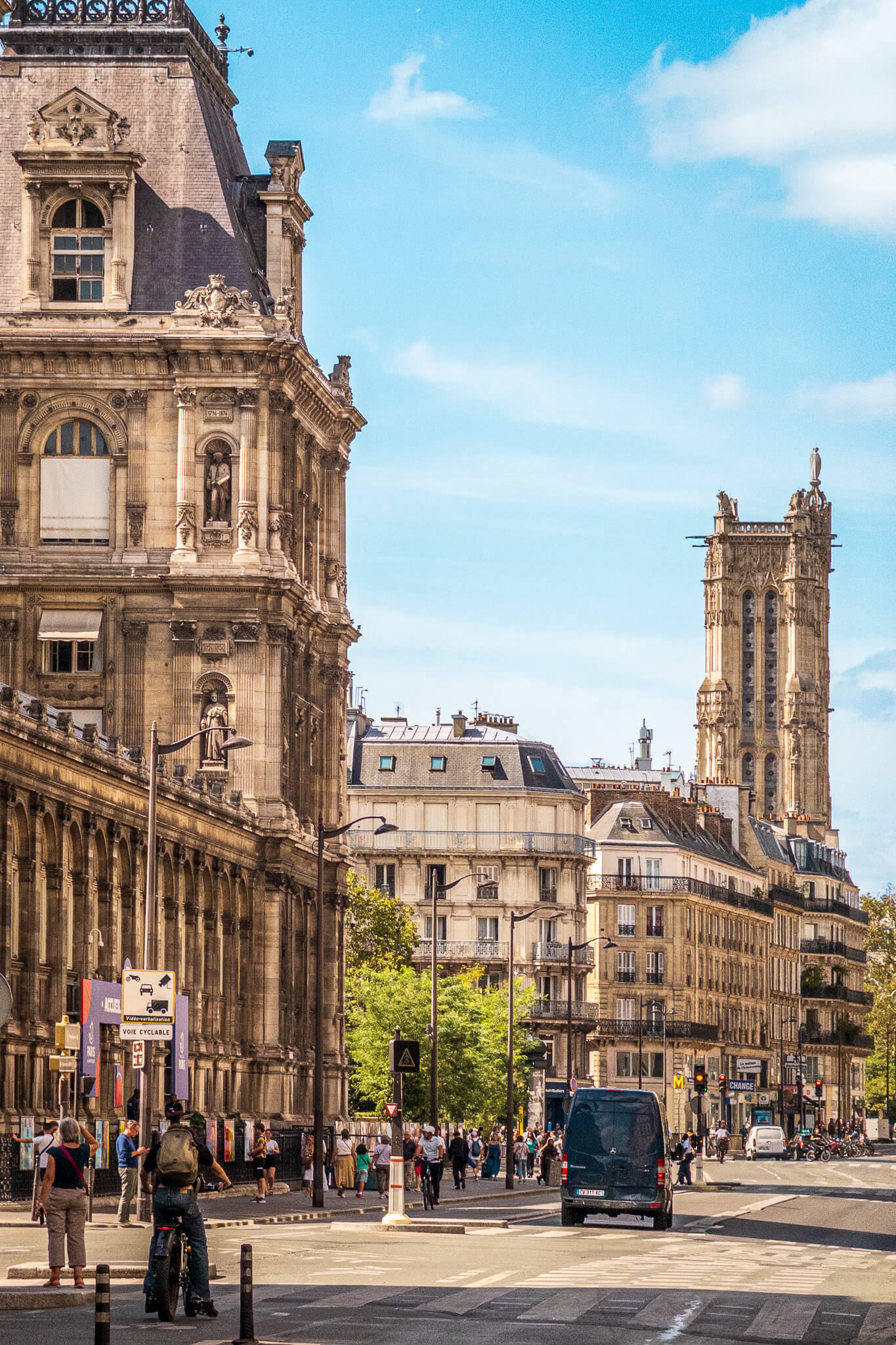
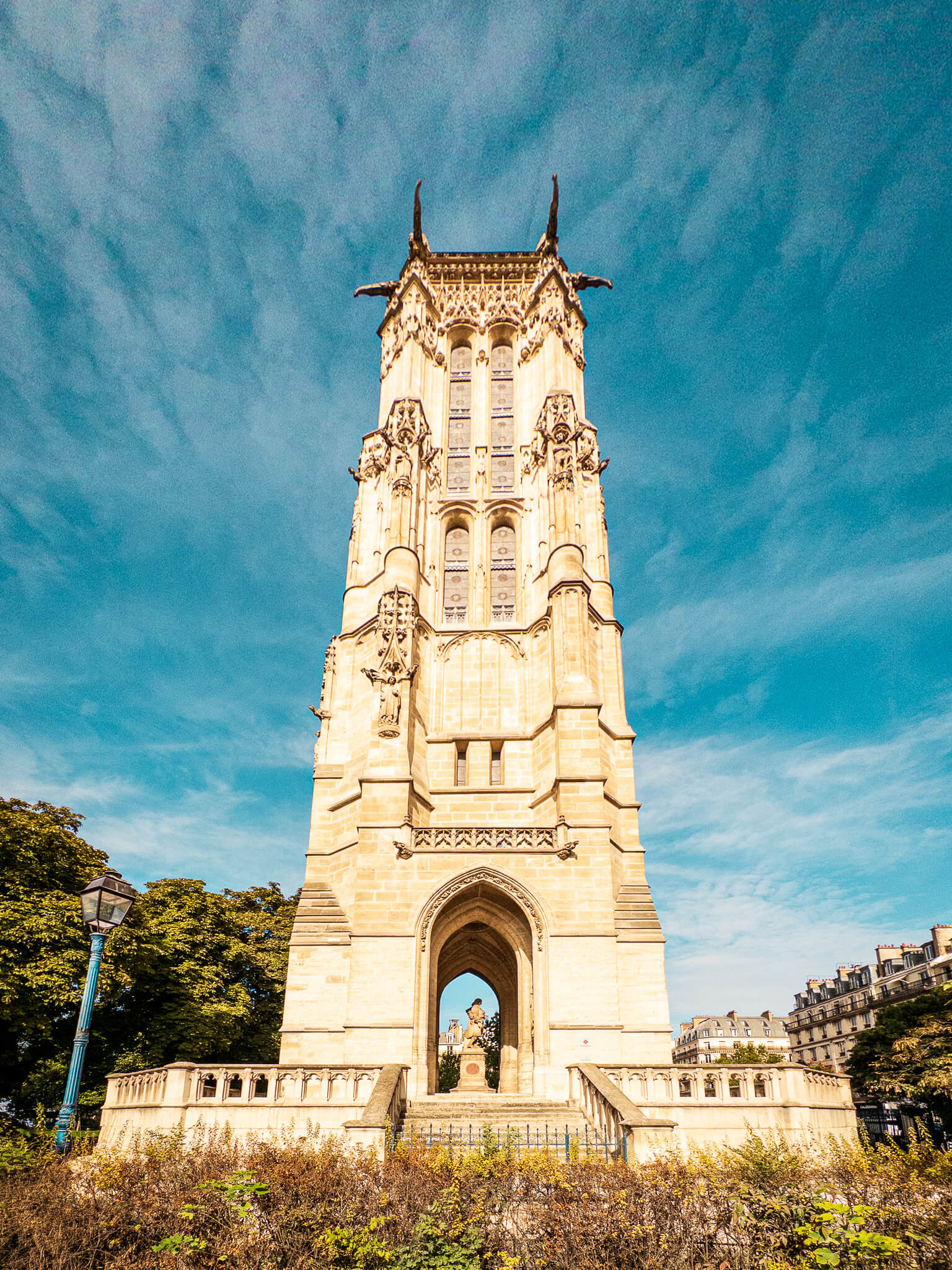
Slightly to the west of city hall is Tour Saint-Jacques, a 52-metre tower in the Flamboyant Gothic style. It is all that remains of a medieval church that was demolished during the French Revolution. Stones from the old church were scavenged for other buildings. For a period in the 1800s, the tower was used as a shot tower, where lead shot was produced by dropping molten lead from a height, forming spherical balls while falling.
The restored Notre-Dame de Paris

By far the most famous attraction of the 4e arrondissement is the Notre-Dame de Paris cathedral. This is literally the centre of Paris, because all driving distances to Paris are measured to Notre-Dame. Construction of the cathedral began in 1162 and took nearly 200 years to complete. After the devastating fire in 2019, it reopened to the public in December 2024, and in 2025 it was the most visited monument in Paris, surpassing the Eiffel Tower and the Louvre with 30,000-35,000 daily visits. Despite reopening, restoration work is still ongoing.
Notre-Dame is a Gothic masterpiece notable for the use of flying buttresses, the external supports that allowed builders to go taller than any other church in Europe at the time.
Even if you’ve visited Notre-Dame previously, it’s worth another visit as the stonework is sparkling clean after the recent restorations. Entrance inside the cathedral is free, and while you can reserve a timed entry slot to bypass the security line, if you arrive early in the day, you can easily enter without a reservation and without a line-up.
We have a visit to the towers booked, but not until later in our vacation, so photos will be coming later!
The hyper-modern Centre Pompidou
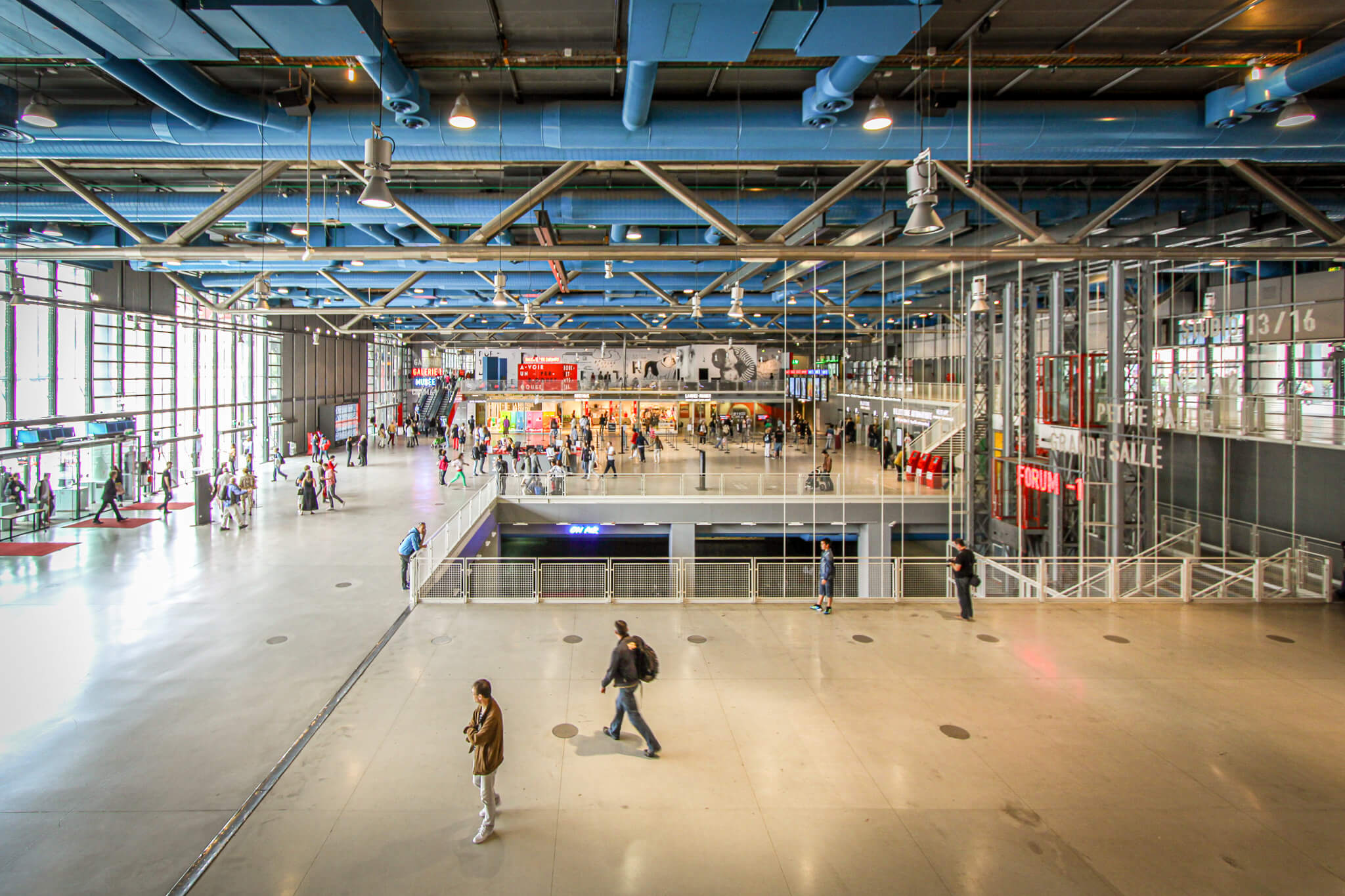
When visiting a city like Paris, we often talk about historical architectural styles like Gothic, Renaissance, Neoclassical, Renaissance Revival, and Second Empire. Less often do we dig deep into contemporary architectural styles.
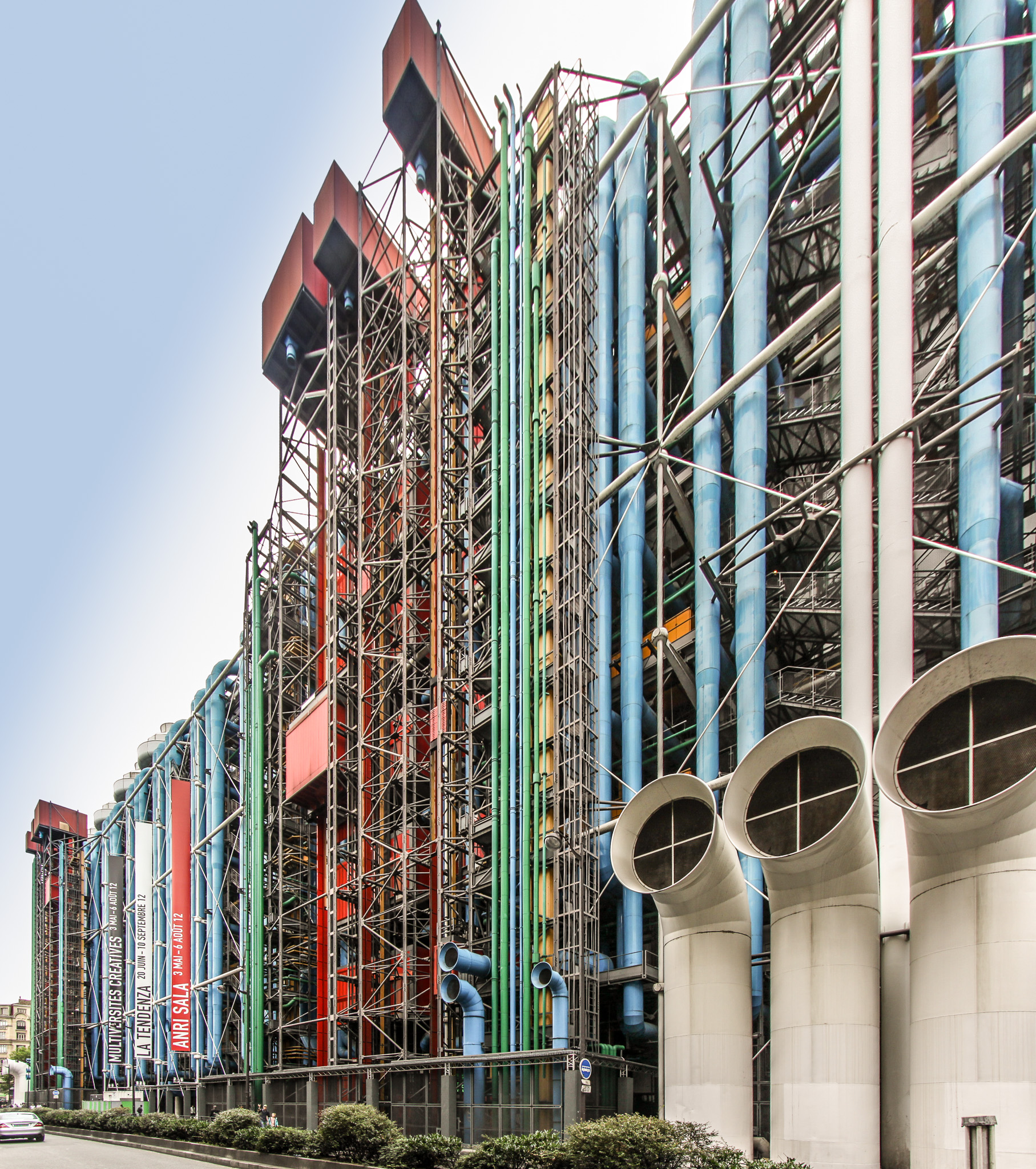
The Centre Pompidou is an example of the high-tech architectural style, and houses a library, a modern art museum and a research centre. The building is uniquely constructed “inside-out” with pipes for climate control, plumbing and electricity on the outside of the building. Everything is colour-coded, with blue for climate control, green for plumbing, yellow for electricity, and red for elevators and escalators.
The Centre Pompidou is currently closed for renovations, and is planned to re-open in 2030. The exterior is entirely clad in scaffolding, masking the external architecture. We’re showing photos from our last time in Paris.
The medieval mansion of Hôtel de Sens
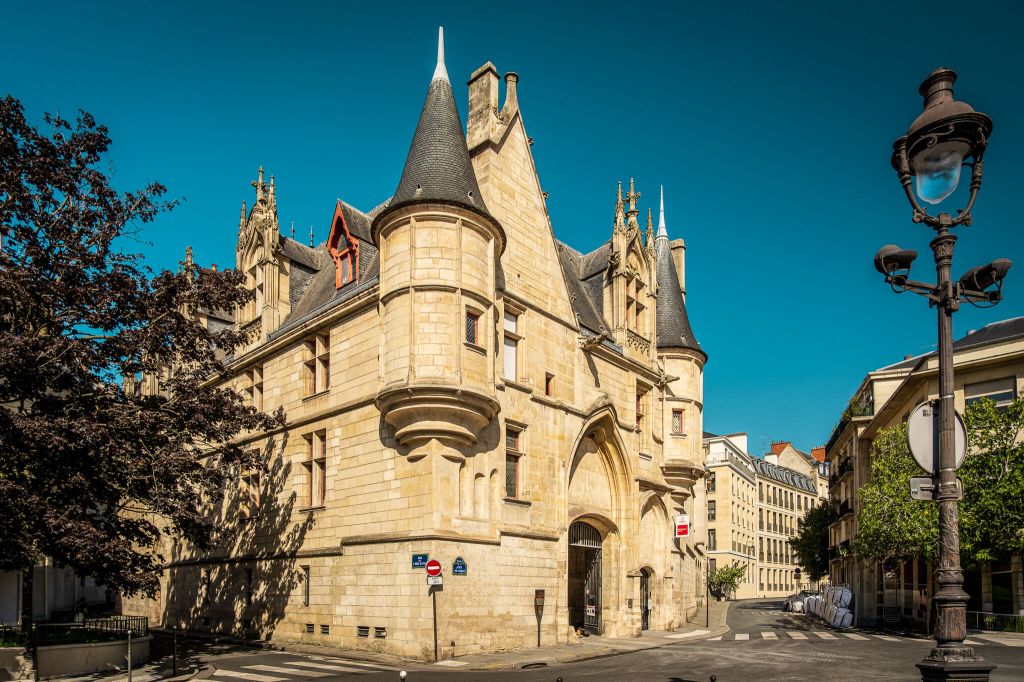
We can find plenty of medieval castles and churches, but it’s less often that we find a medieval mansion. The Hôtel de Sens is a rare example of late-medieval and early-Renaissance civil architecture in Paris, featuring corbelled turrets, a square central tower, and pointed arches. It was built between 1475 and 1519 for the Archibishops of Sens and heavily restored in the mid-1900s. It was confiscated during the French Revolution and now houses an art and design library.
During the uprising that forced Charles X to abdicate in 1830 (thus ending the Bourbon Restoration), a cannonball hit the Hôtel de Sens and it is still embedded in the facade. The date of the impact (July 28, 1830) was later engraved directly beneath the cannonball.
Finding calm in Village Saint-Paul
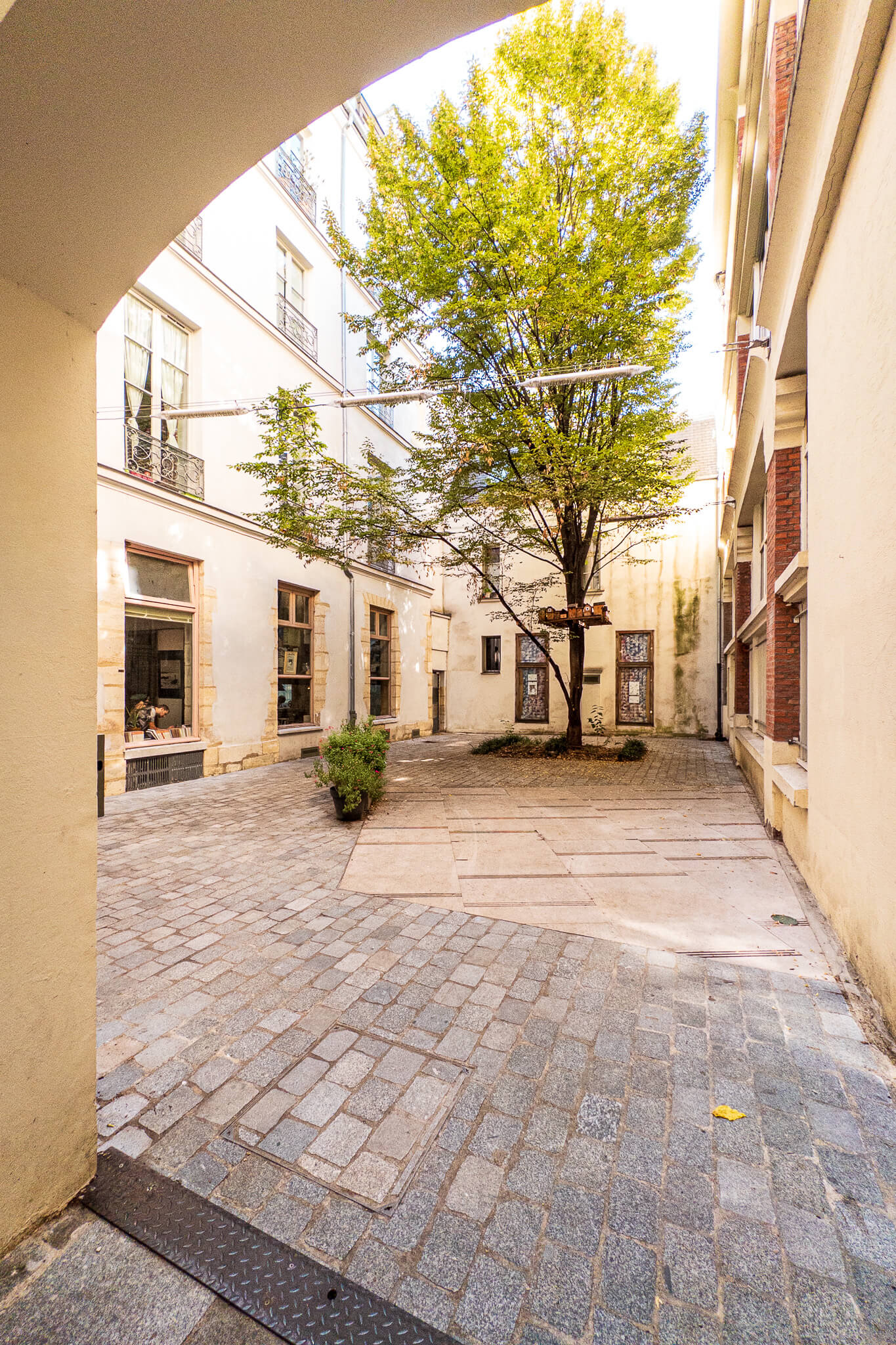
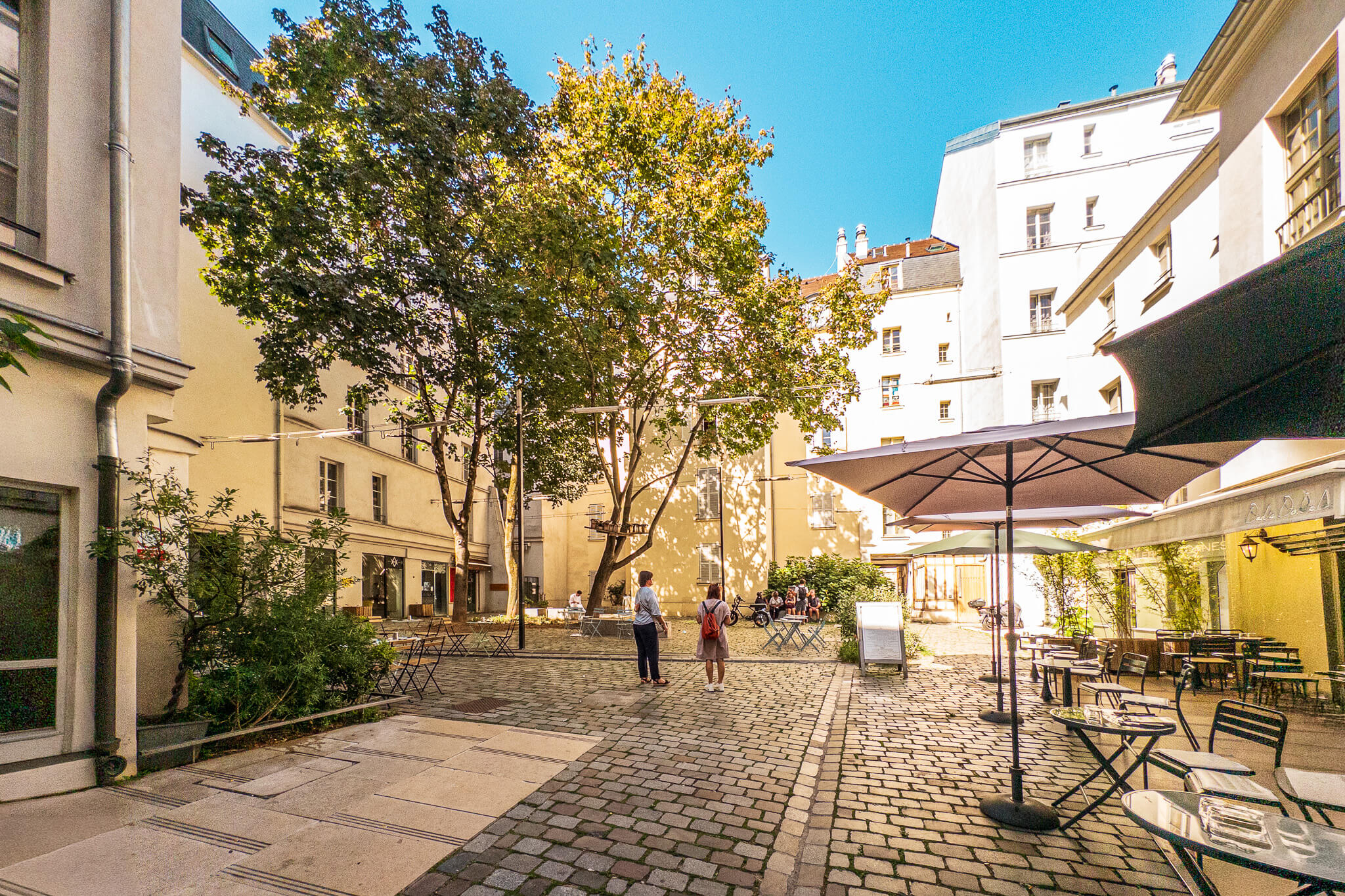
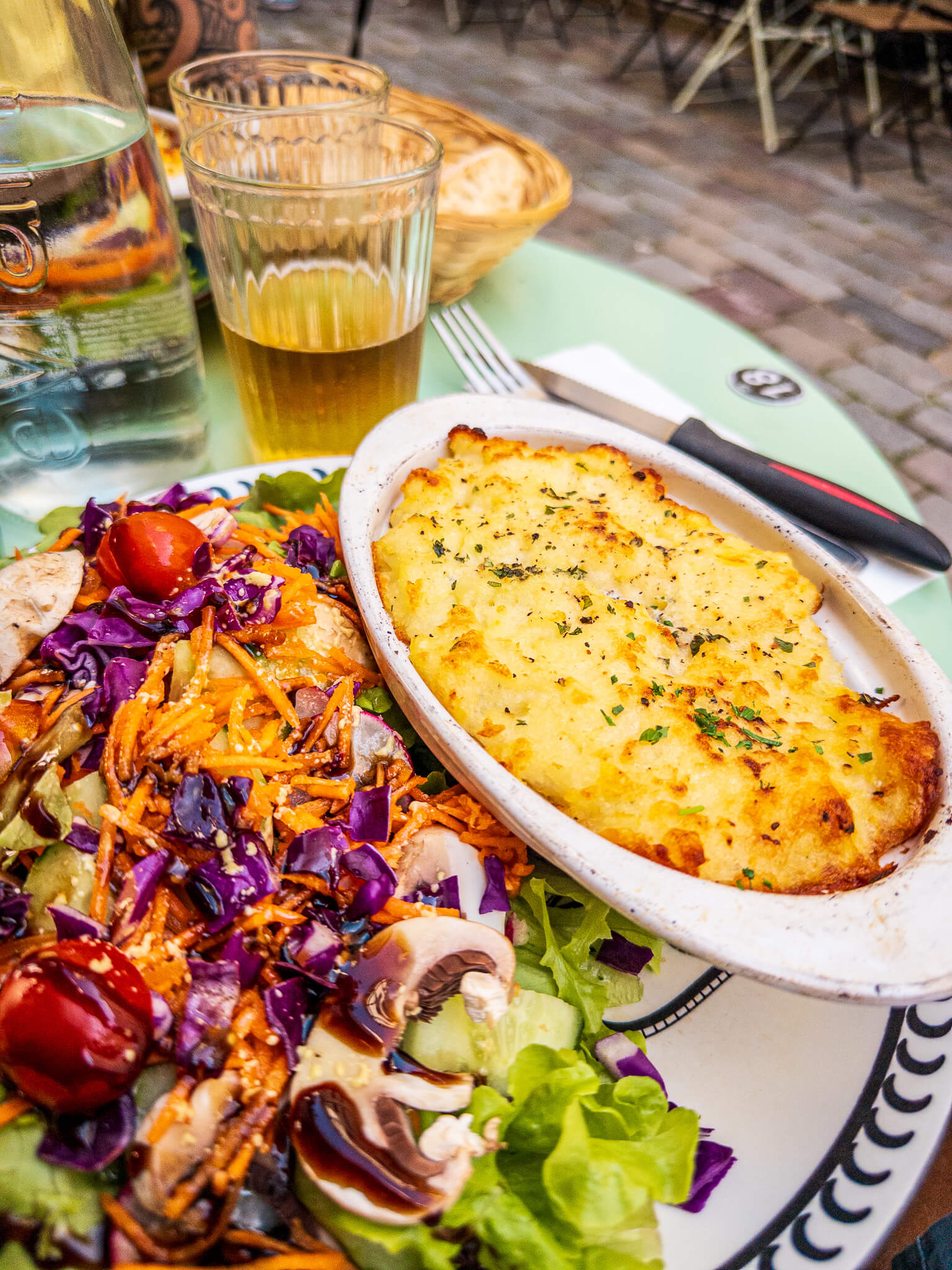
Inside the hectic Marais district hides a quiet hidden area known as Village Saint-Paul. It’s a full city block with network of six inner courtyards and can be accessed through 10 gateways.
The area was originally where Charles V built a residence and royal gardens in the 14th century (after leaving Palais de la Cité). During the 16th-18th centuries, the palace was broken up and the land sold off. By the 19th-20th centuries, the area had grown crowded and neglected, officially labelled îlot insalubre n°16 (an unsanitary zone) and slated for destruction in the 1930s. While most of the other îlot insalubre were razed, n°16 was spared by instead demolishing only the buildings in the worst condition, thereby de-densifying the block and making it liveable.
Today Village Saint-Paul is a quiet residential block with inner courtyards that house boutiques, art galleries and restaurants. With the warm September weather, we enjoyed an absolutely delicious lunch of parmentier de canard (essentially shepherd’s pie made with shredded duck meat) at Bistrot Caché. For dessert, the Biscoff cheesecake was perfection.
The wall of Philip Augustus
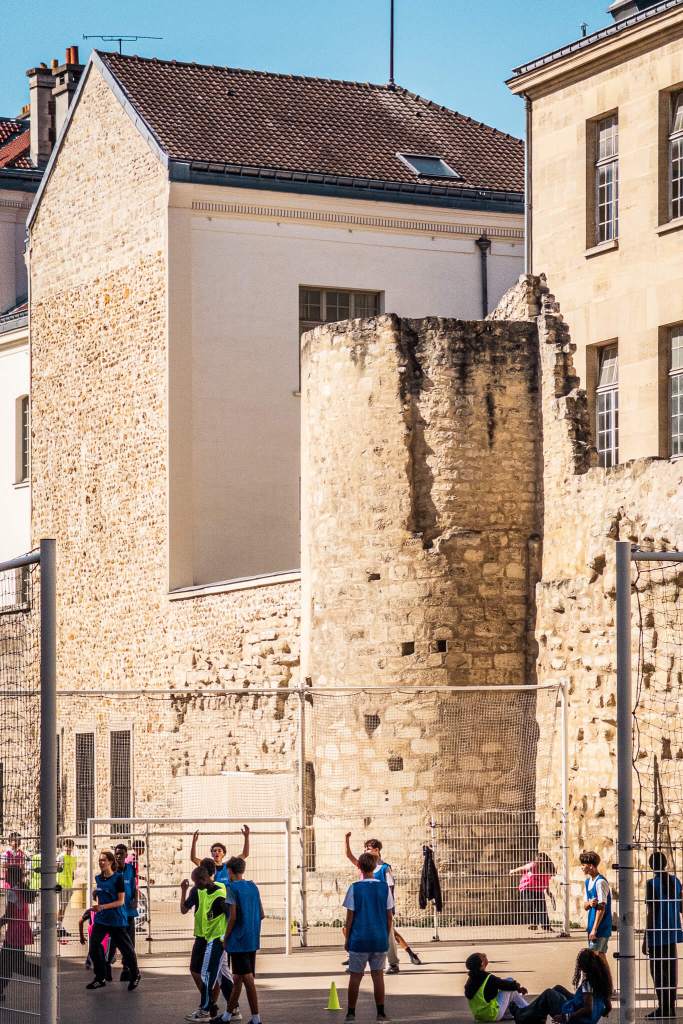
The oldest city wall of Paris for which we know the plan is the wall of Philip Augustus, built between 1190 and 1213. The wall had a circumference of approximately 5km, with Île de la Cité at the centre. The Louvre fortress was built on the western side to strengthen the fortification.
Very little remains of this original wall. The largest stretch of the wall can be found near Village Saint-Paul, behind a playground along rue des Jardins-Saint Paul. Where the playground now stands, a strip of derelict buildings was demolished (part of îlot insalubre n°16), revealing a 60-metre stretch of the wall, including two defence towers.
World-famous ice cream on Île Saint-Louis
Île Saint-Louis is a compact island to explore, with a road running the entire circumference of the island, a single road running lengthwise through the middle, and a handful of cross streets. It can be accessed by several bridges from both side of the Seine, as well as one bridge from Île de la Cité, behind Notre-Dame cathedral.
The island has a chill vibe, with cute shops, including some excellent bakeries.
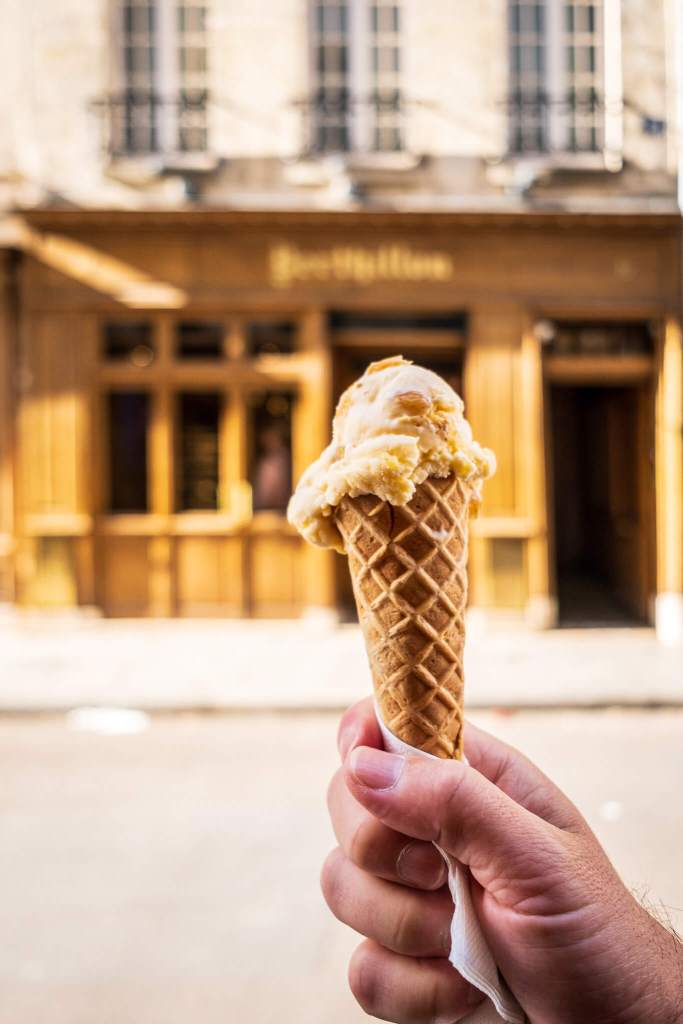
But perhaps the most famous attractions of Île Saint-Louis is the Berthillon ice cream shop, founded in 1954. The scoops are small and aren’t necessarily cheap, and the flavours are relatively simple, so you’ll wonder what the fuss is about… until the first lick. The ice cream is so intensely flavoured that you’ll wonder how they pack in all the flavour. One small scoop is all you’ll need. It’s probably the best ice cream we’ve ever tasted! (And we plan on returning before we leave!)
The shop can get busy during peak season and peak times of day, so plan your visit accordingly. We came for an ice cream breakfast (why not?!) and there was just one customer in front of us. Also be aware they shut down for several weeks in July and August, so verify they’re opening before making the trek over.
Another royal square
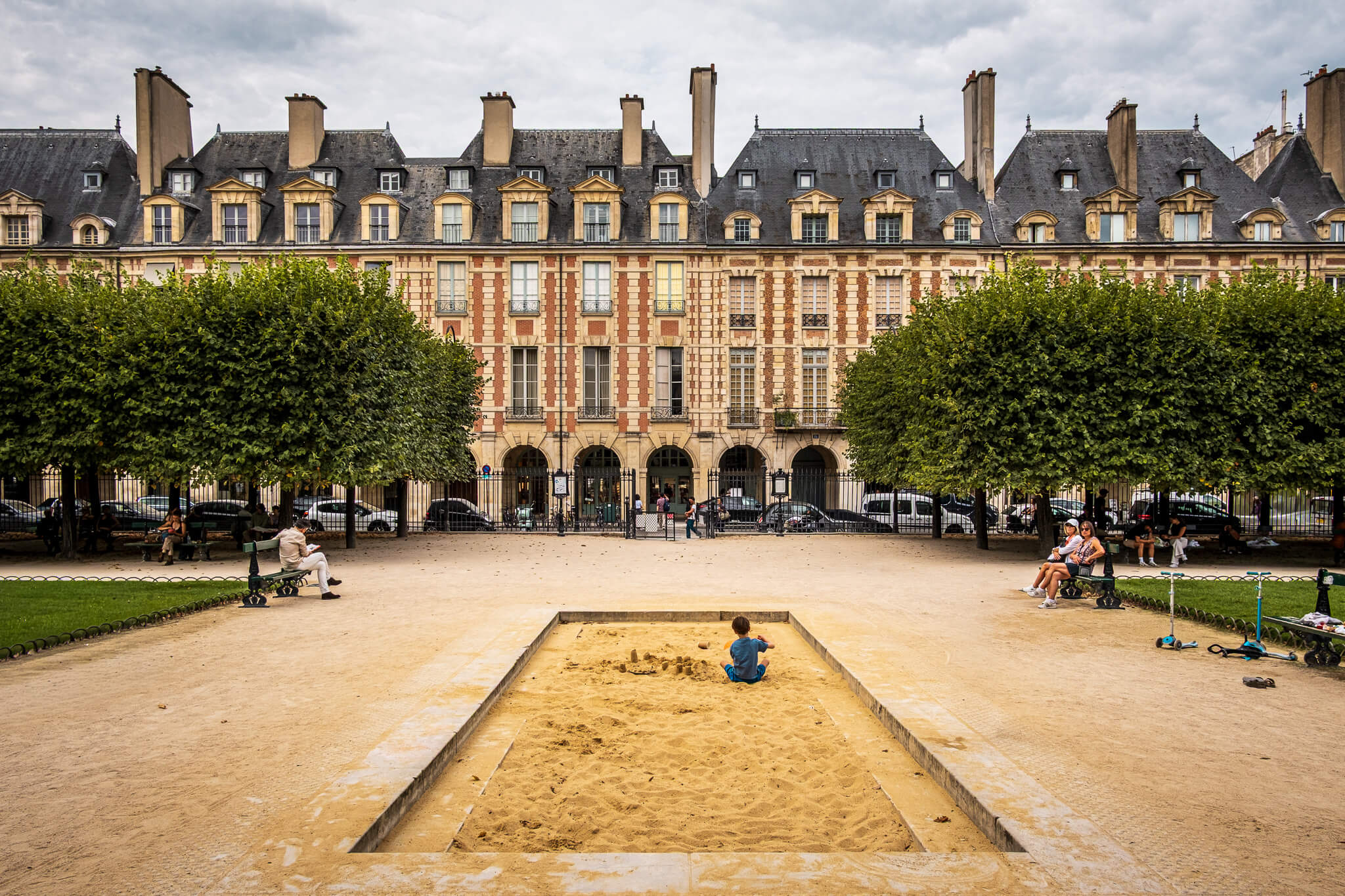
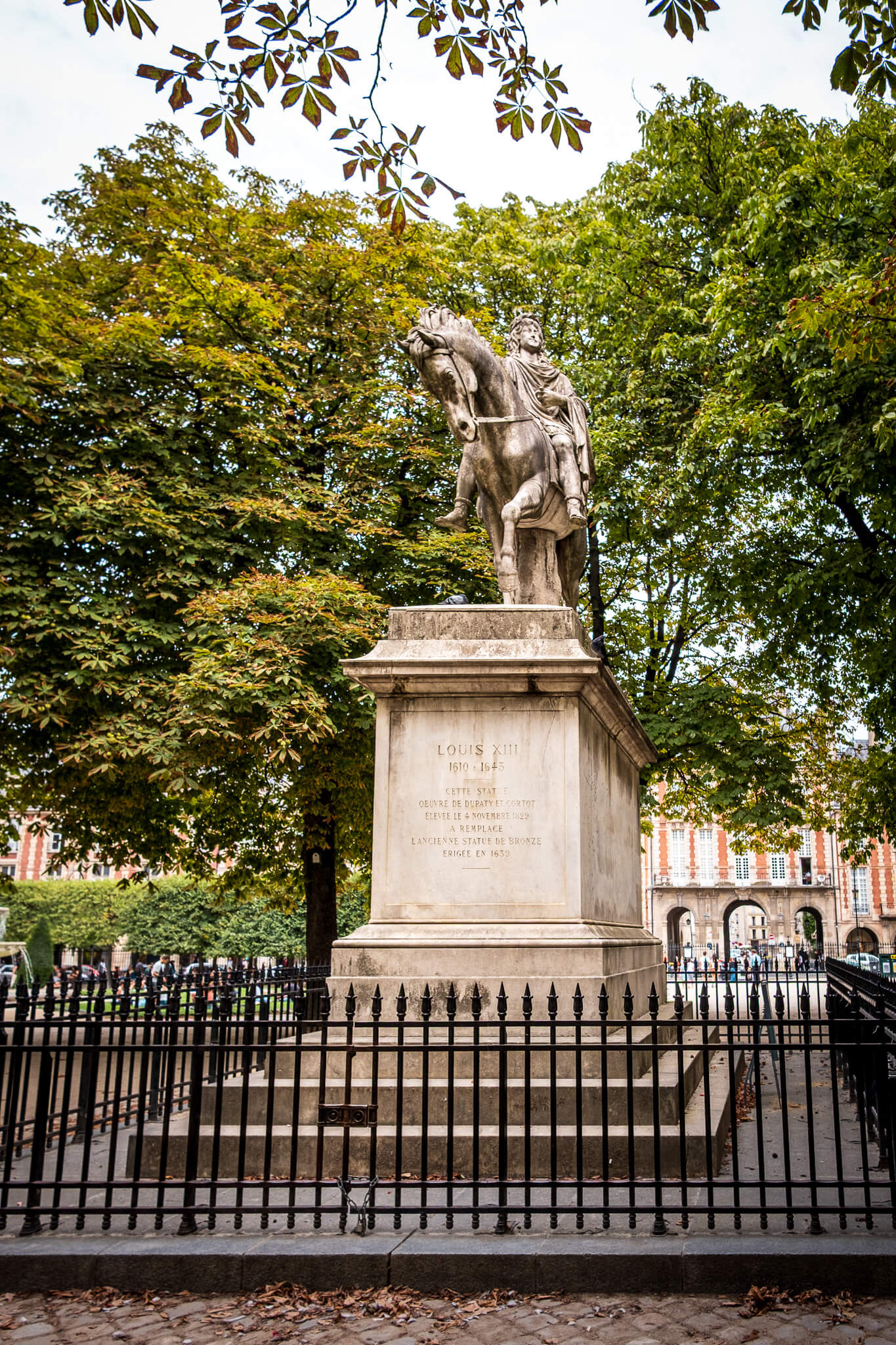
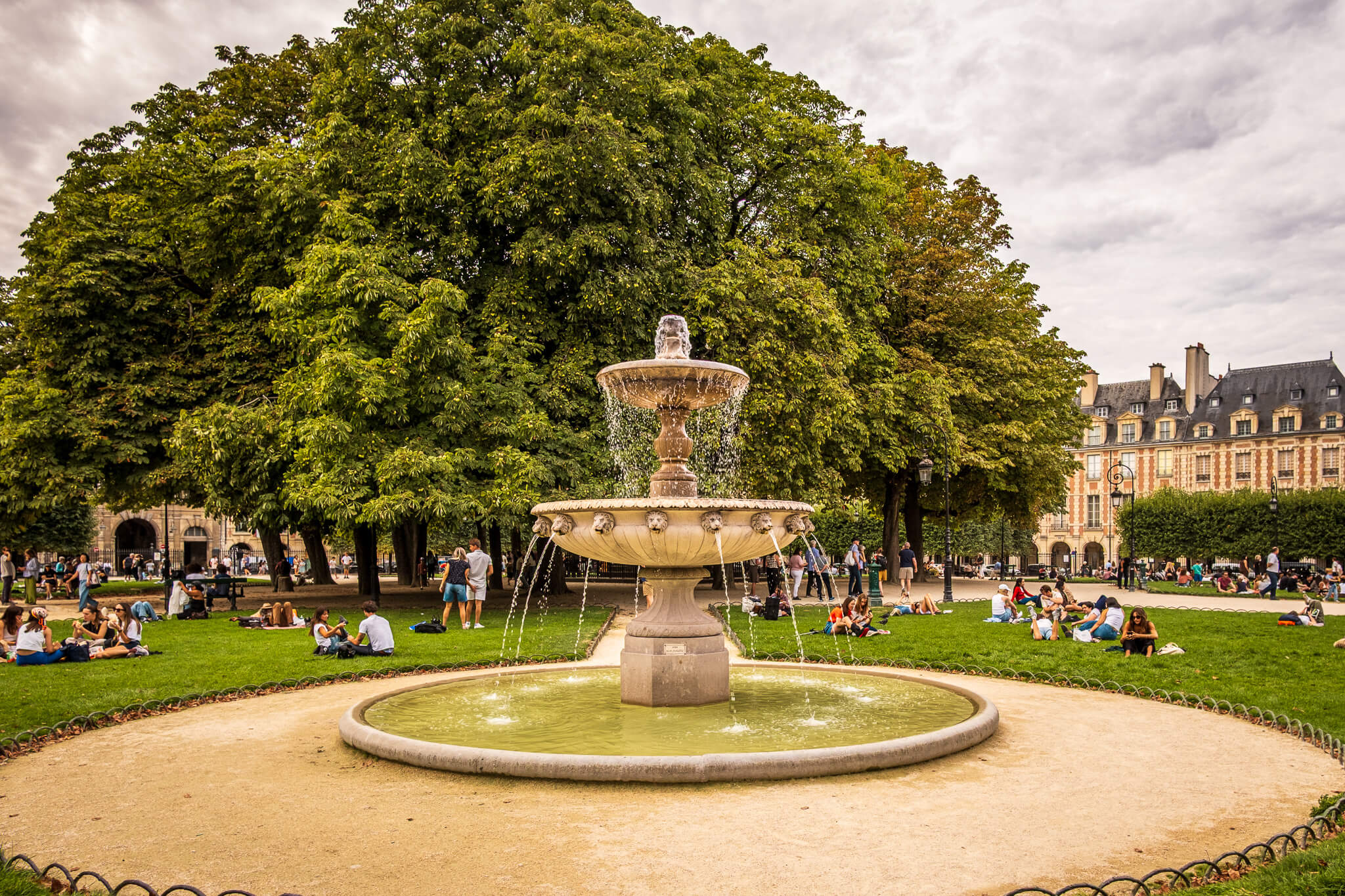
In the north-east corner of the arrondissement on the border with the 3e arrondissement, we find another royal square. Place des Vosges was originally named Place Royale and is the oldest planned square in Paris.
The square is a true square measuring 140×140 metres, built under Henry IV from 1605 to 1612, on the site of a mansion and gardens that Catherine de Medici had demolished.
The surrounding houses all feature matching facades of stone and red brick with slate roofs. It was renamed to Place des Vosges after the revolution. Victor Hugo lived at n°6 and started writing Les Misérables here.
This was by far the busiest royal square we visited, likely owing to its manicured lawn that made it popular with both locals and tourists enjoying a picnic lunch or just chatting. The surrounding streets, with cafés, restaurants and shops were also hopping. It’s clearly still in the thick of the trendy Marais area.
We thoroughly enjoyed our stroll through the 4e arrondissement. While Notre-Dame de Paris is on everybody’s radar, we were pleasantly surprised by the lesser-known architectural and historical gems like Hôtel de Sens and the wall of Philip Augustus. And then we topped it all off with a quiet lunch and some amazing ice cream. What are your favourite spots in the 4th?

 Scuba Duo
Leave a comment