
The 3e arrondissement of Paris includes the northern, quieter section of Le Marais, much of which remained untouched during Baron Haussmann’s sweeping reconstruction of the city in the mid-1800s. Most of the 3rd is made up of older, smaller streets without the large Haussmannian boulevards we see throughout Paris.
The Knights Templar in Paris
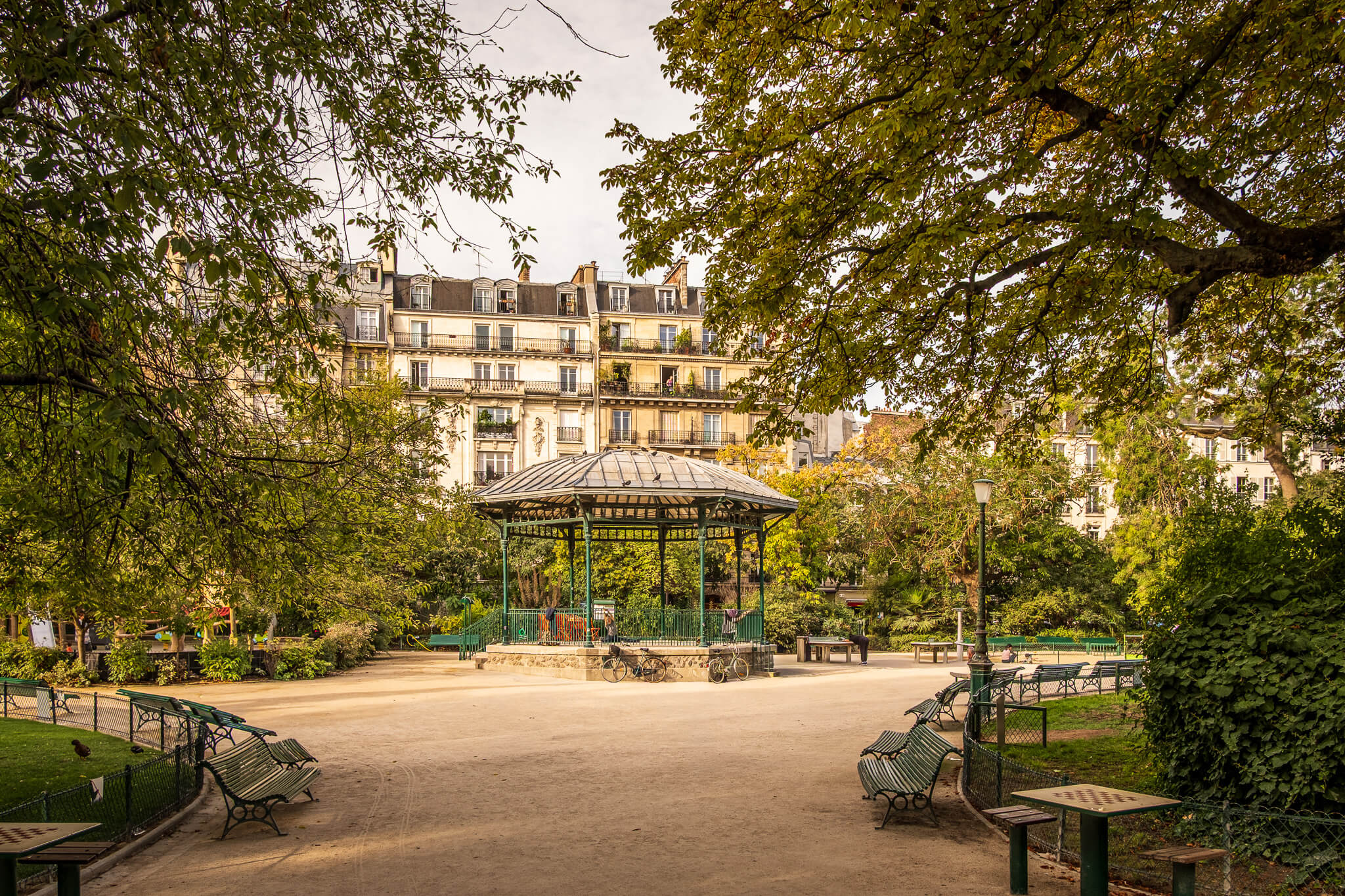
The arrondissement is named Temple because the Knights Templar owned land in this area and constructed a medieval fortress here starting in 1240, the Tour du Temple. Square du Temple is now a park that sits on the site of the former fortress. During the revolution, the fortress tower was used as a prison for Louis XVI (before his execution), Marie Antoinette (before she was transferred to the Conciergerie), and their son (who died from illness while imprisoned here). Later in 1808, Napoleon had the Temple prison demolished so that it couldn’t become a pilgrimage site for royalists. The area of the square is historically important, but offers little more than a small urban park. Interesting if you’re walking through the area, but not worth a detour just to see it.
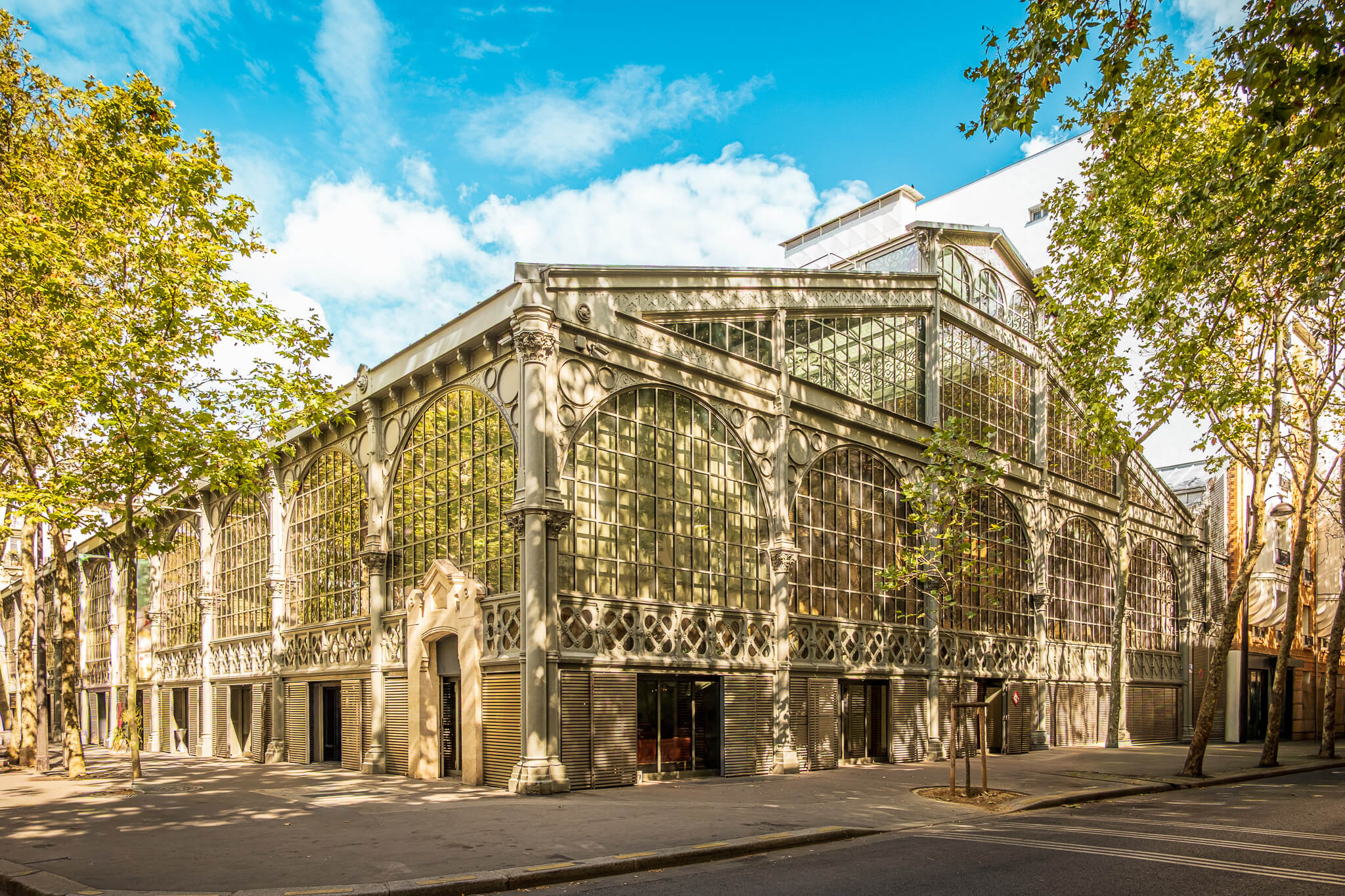
Nearby is the Carreau du Temple, a former clothing market building from 1863 constructed of cast iron, brick and glass. It’s now a multifunctional event space.
The oldest covered market in Paris
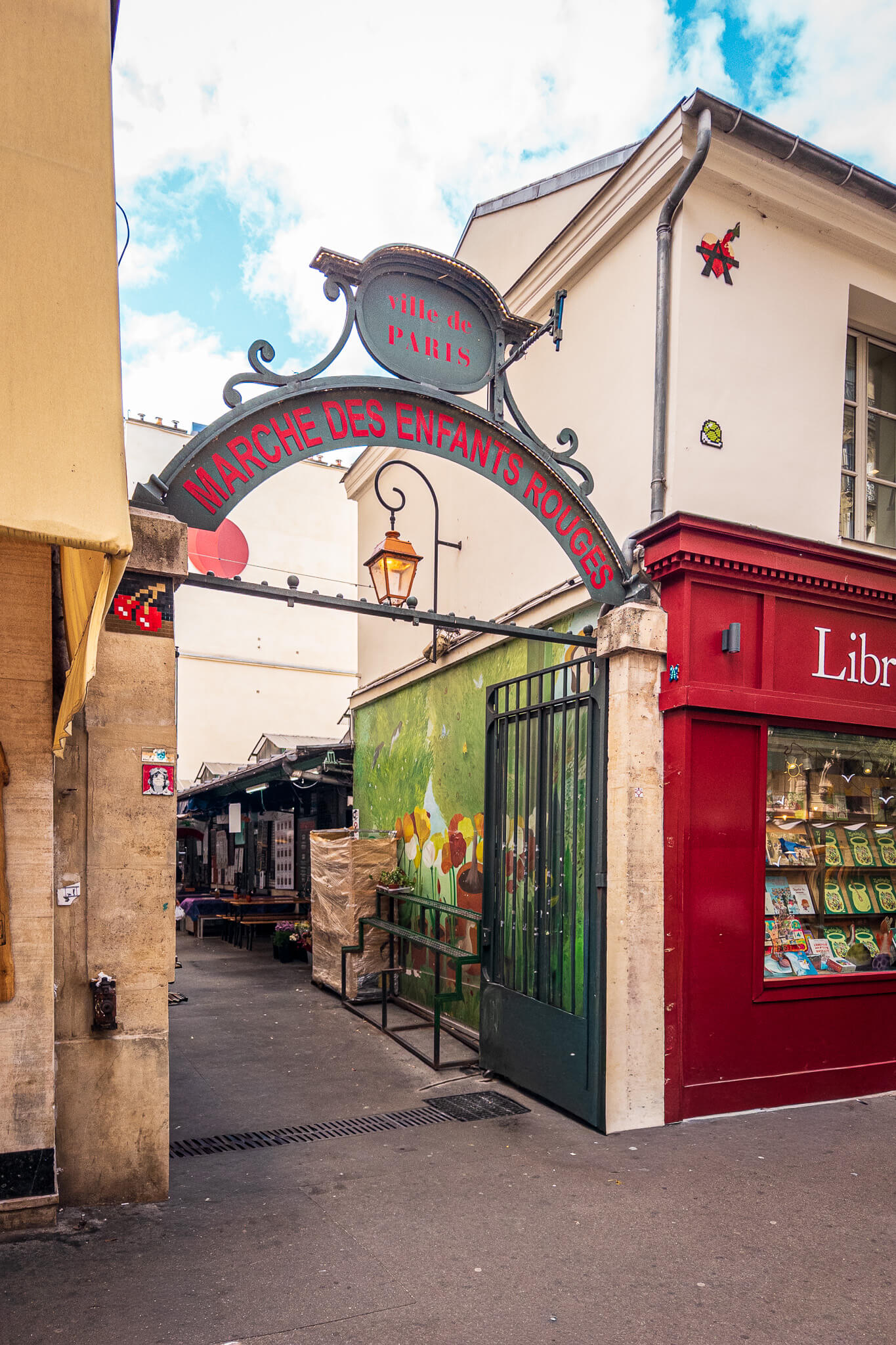
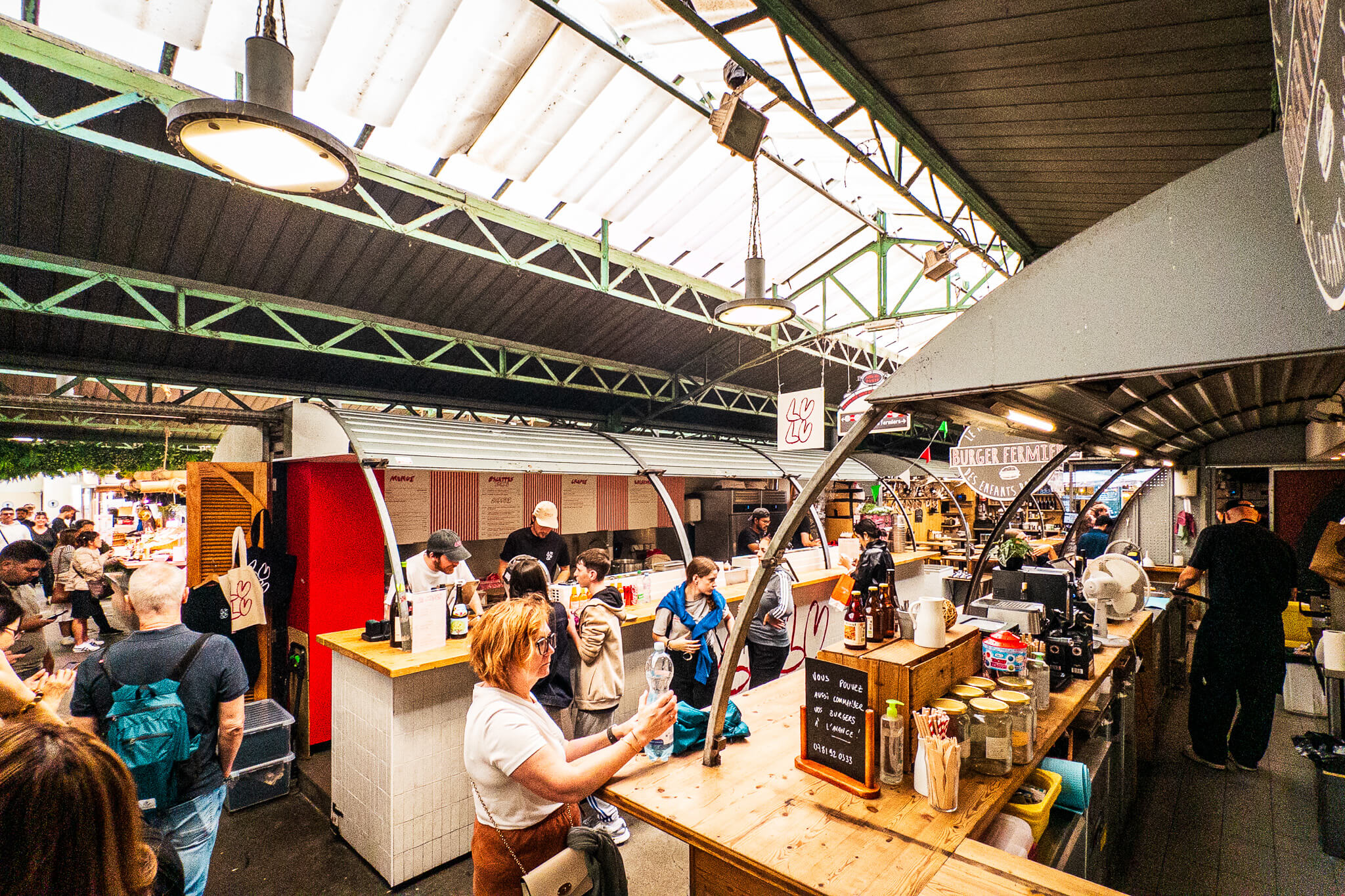
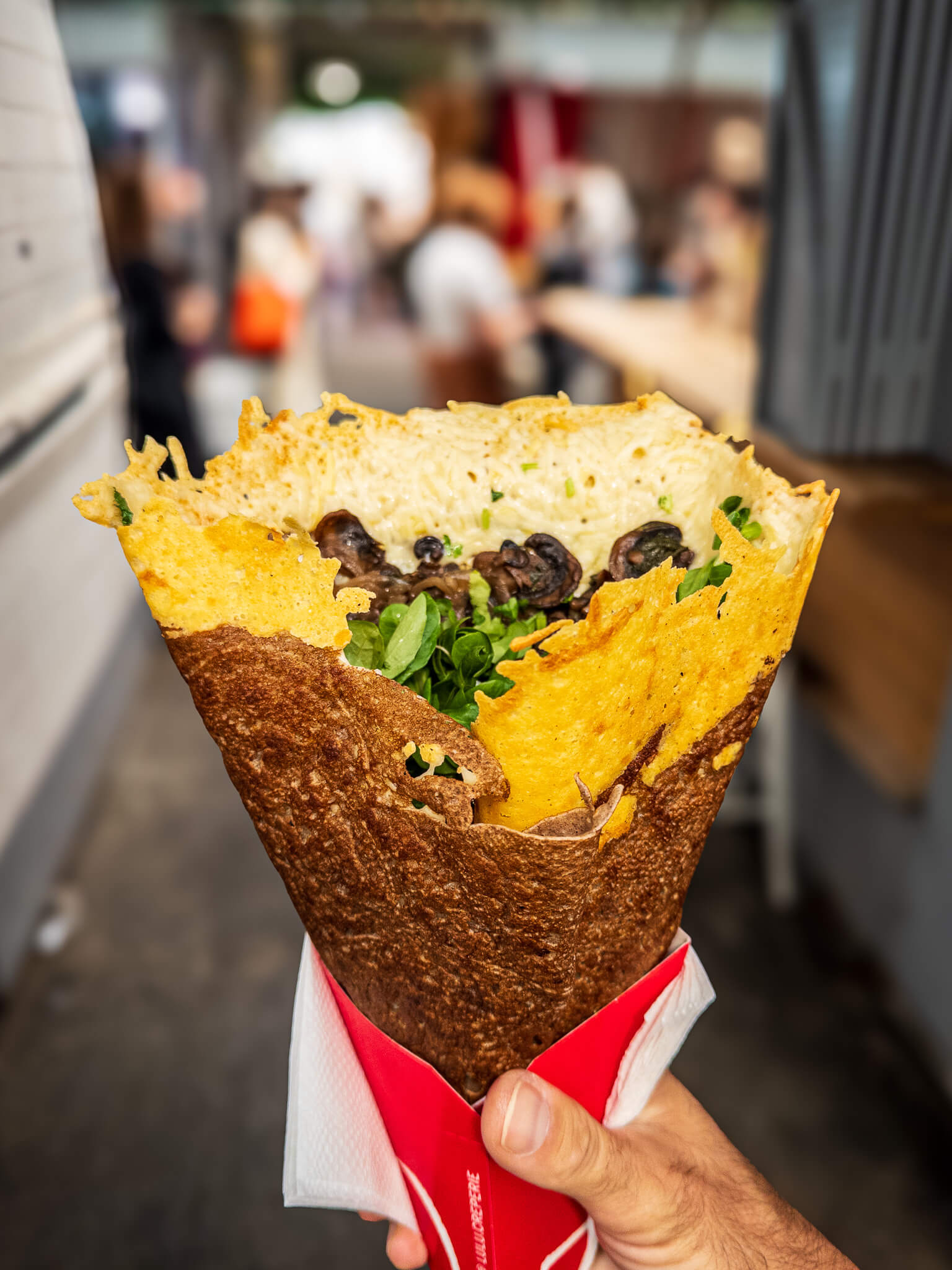
For a breakfast treat or lunch, visit Marché des Enfants-Rouges, the oldest covered food market in Paris, first opened in 1615 at the request of Louis XIII. It was originally name the Petit Marché du Marais, but eventually became know as Marché des Enfants-Rouge because of a nearby hospice or hospital that housed orphaned children. Most accounts say they were named enfants-rouges (red children) because they were clothed in red, but other sources say this wasn’t the case—red dye would have been too expensive to spend on them. Rather, they say orphans were categorized as red or blue: red children were orphans whose mother died in childbirth and blue children were abandoned and often found bluish from the cold.
The market is an amazing source for meats, cheeses and fresh vegetables, but is also noteworthy for its food vendors. We stopped at LULU Crêperie for a giant stuff crêpe, which was absolutely delicious (if not a bit pricey).
Quiet cobblestone streets
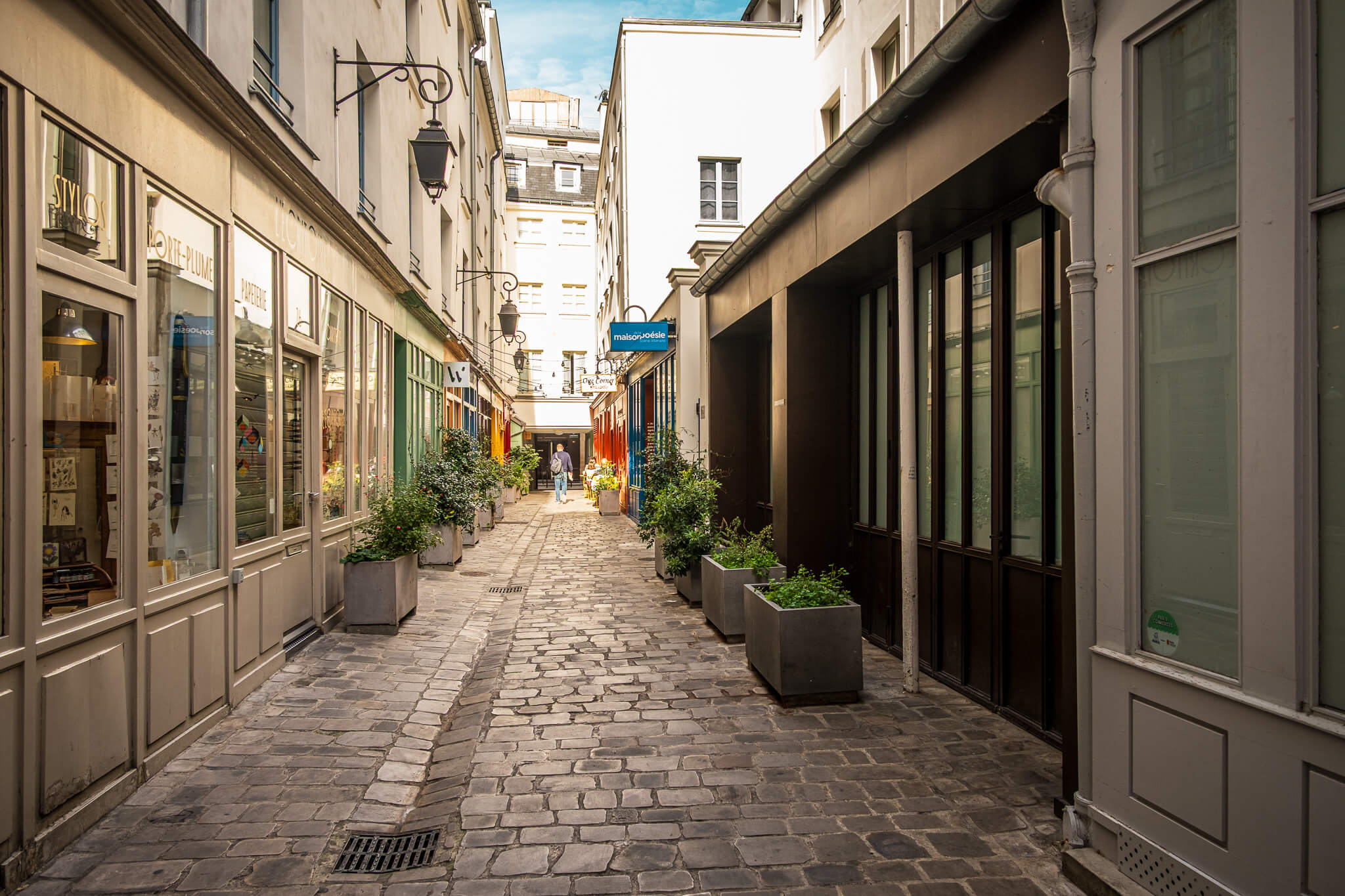
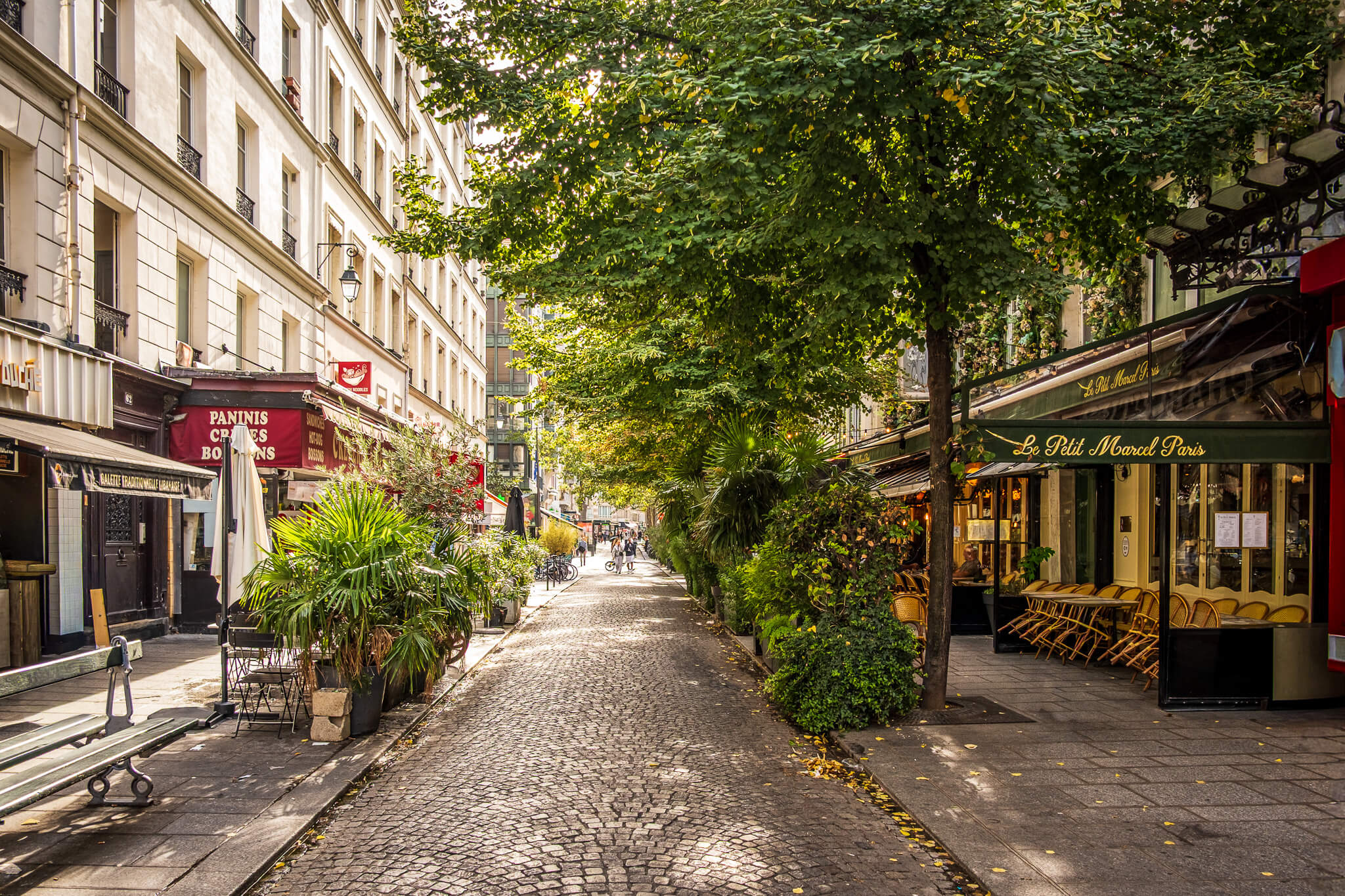
We took a quiet morning stroll through the small streets of the area spared by Haussmann, starting with Rue des Vertus and Rue des Gravilliers. Unfortunately, Passage de l’Ancre (a cute open passage) was closed when we walked by. We continued to Passage Molière and finished with Rue de Venise. Many of these are lined with independent boutiques and restaurants, while others are were lined with nightclubs. You’ll find these streets empty first thing in the morning, and then gradually fill up as the day progresses.
The history of Paris at Musée Carnavalet
The 3e arrondissement is home to Musée Carnavalet, a free museum dedicated to the history of the city of Paris, housed in two hôtels particuliers, or mansions. Hôtel Carnavalet built in the mid 1500s and is one of the oldest private mansions in the Marais district and a rare example of Renaissance architecture in Paris.
The museum is grand in scope, beginning with pre-history and concluding with the revolution and post-revolution period. I’d recommend that any visitor with a bit of extra time visit the museum.
The Musée Carnavalet was created in 1880 at the request of Baron Haussman to house artefacts from buildings that would be demolished during his remodelling of Paris. And by artefacts, we don’t just mean small objects… in some cases, entire walls, rooms, ceilings, fireplaces and storefronts have been preserved here. The Hôtel Carnavalet portion of the museum soon filled up, so a neighbouring mansion was purchased to expand the museum as we see it today.
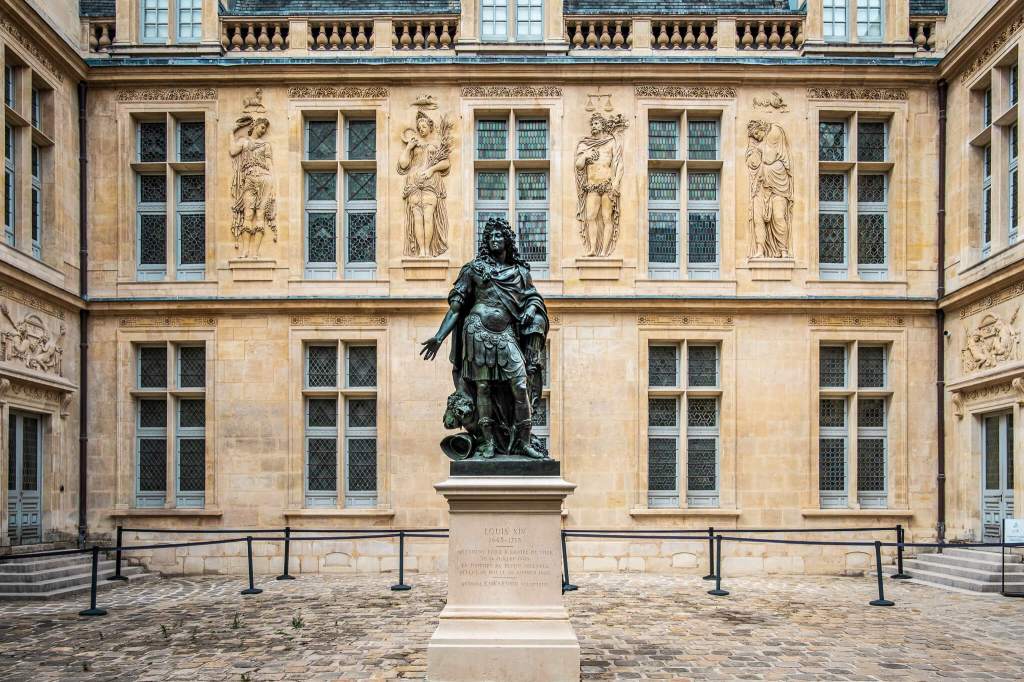
The entry courtyard features a statue of Louis XIV dressed as a Roman emperor. It’s one of the few original sculptures that weren’t destroyed during a revolution, being moved to the Hotel de Ville before the revolution and then moved here to the museum in 1890.
Part of the first floor is a collection of original Parisian shop signs from the 18th and 19th centuries.
In the vaulted basement of the mansion, we go back into the Bronze Age history of the area with a collection of artefacts including arrow heads, knives, etc. We also learn about the Roman settlement of Lutetia (which we’ll discuss more in a few days).
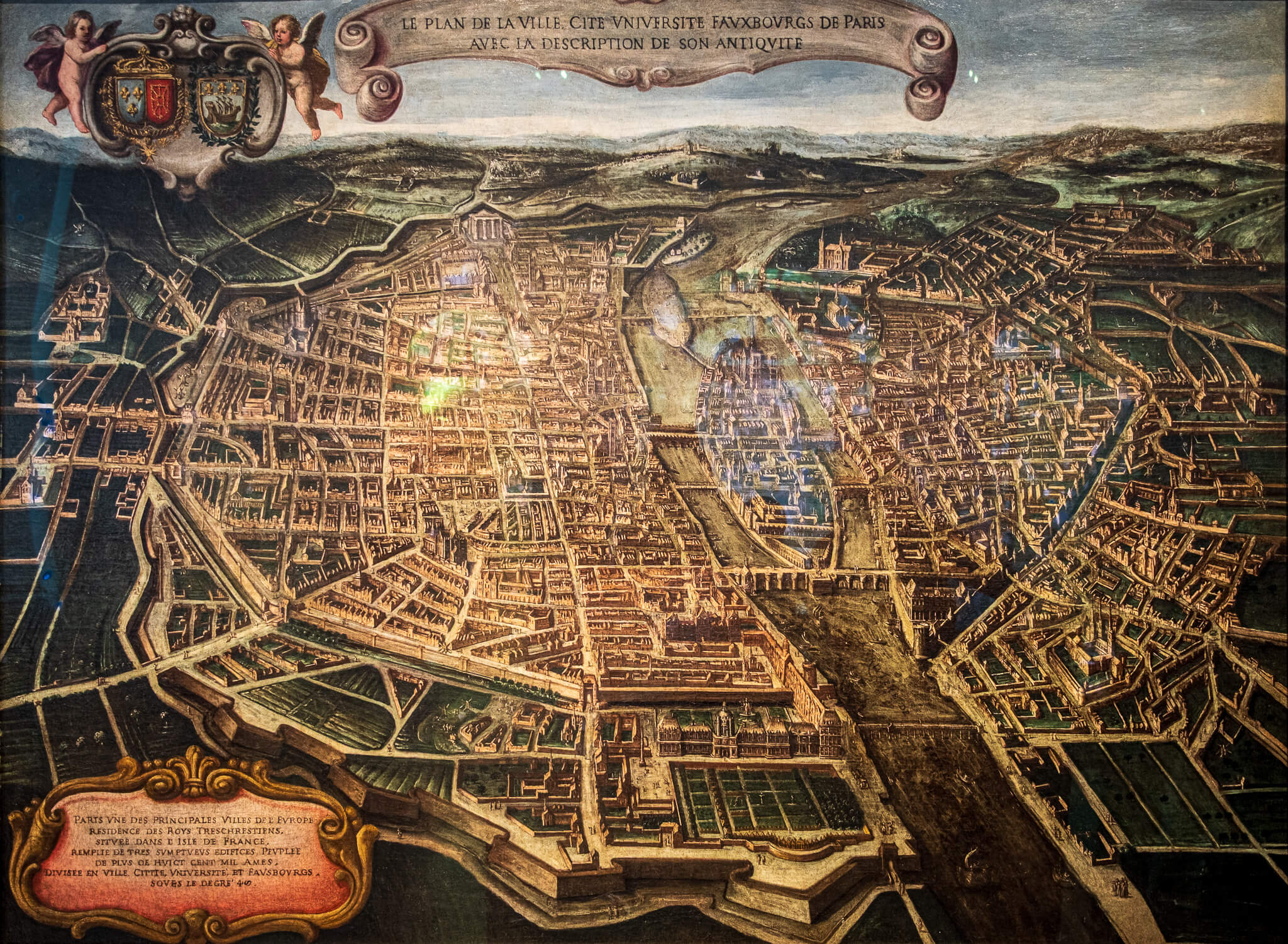
Throughout the Carnavalet museum, scale models and paintings depict Paris at various periods of its history, allowing you to visualize the progression of the city. It’s particularly interesting to see the state of the Louvre Palace construction (and destruction), and how the old city bridges (before Pont Neuf) were all lined with houses (similar to the Ponte Vecchio in Florence).
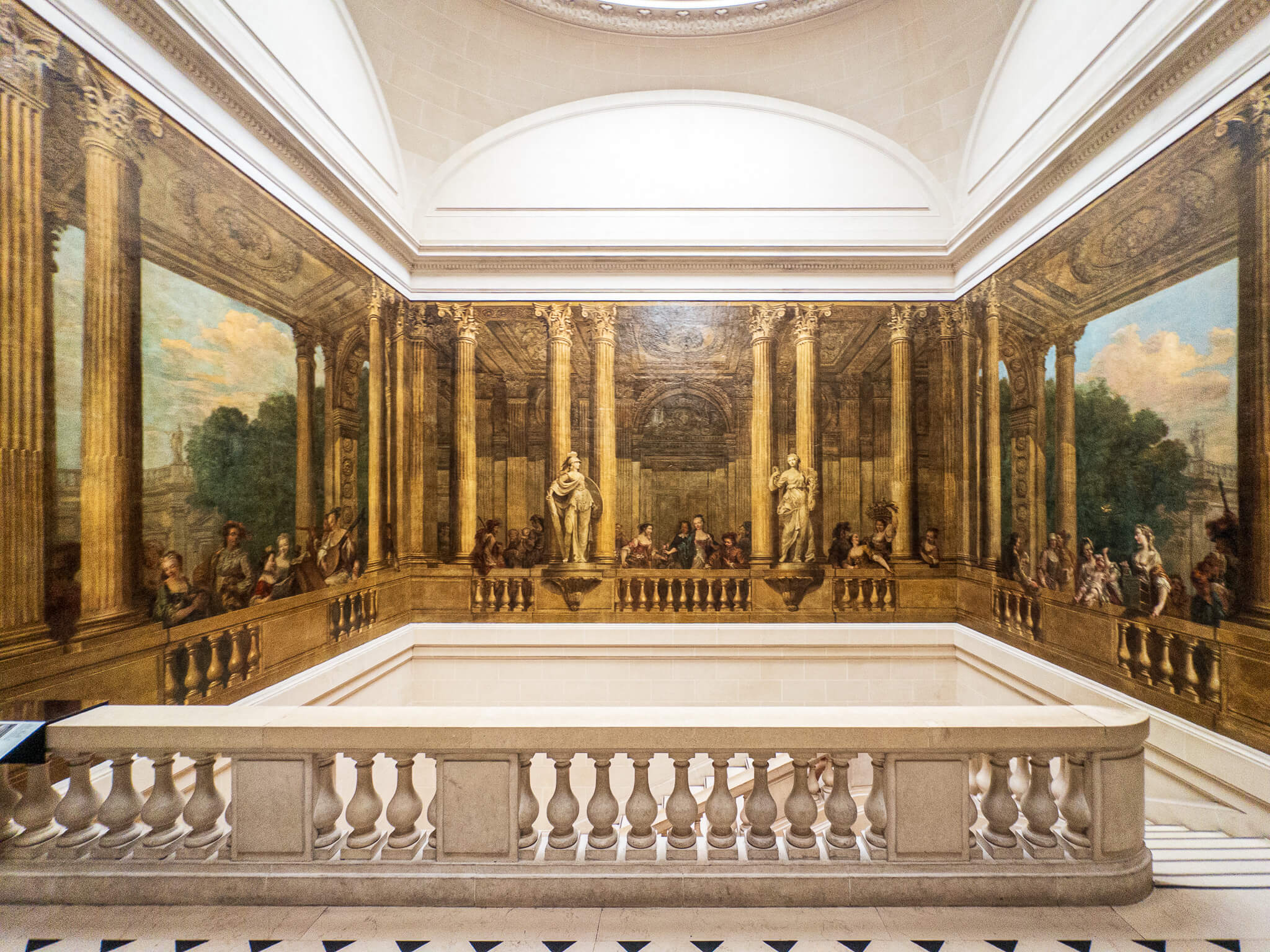
The Escalier de Luynes (Luynes Staircase) is an 18th-century staircase saved from the Hôtel de Luynes when it was demolished in 1900 for the expansion of Boulevard Raspail. It features trompe-l’œil murals painted and was reconstructed in the museum around 1910.
The history of the French revolutions (and the restoration period when the monarchy was restored) can be tricky to follow. The Carnavalet museum helps walk you through it. (And to understand that the Napoleons, as emperors, were arguably as bad as the kings they replaced.)
The museum has several depictions of the Bastille, a 14th-century fortress that was used as a prison by the monarchy. It was famously stormed during the first revolution, being a symbol of the monarchy’s absolute power and corruption. The revolutionaries also needed gunpowder to feed the muskets they seized from the Hôtel des Invalides, which had been moved to the Bastille.
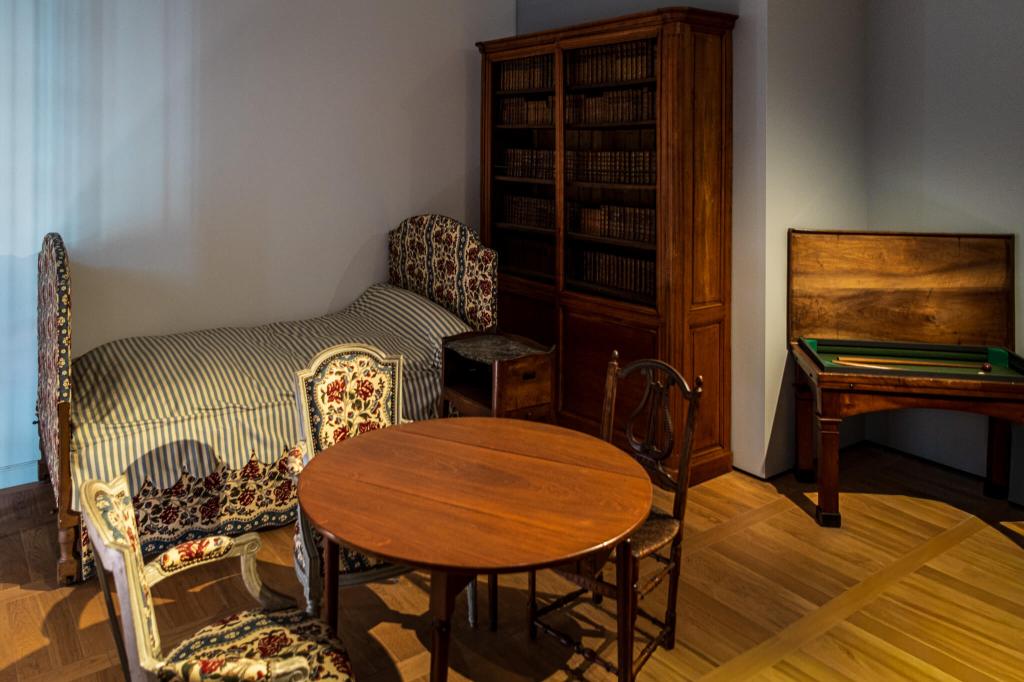
One of the most interesting displays depicts the prison cell of Louis XVI, Marie Antoinette and their son when they were held at the Temple Prison. The furniture is the original furniture (although not necessarily displayed as it would have been laid out in the cell). Despite their ultimate fates, they seemed to have some decent comforts in their cell!
Arts et Métiers
The 3e also includes the Musée des Arts et Métiers, a science and technology museum partly housed in a former church. It houses the original Foucault pendulum that demonstrated the Earth’s rotation, which was originally hung in the Pantheon (the Pantheon still showcases a replica). The museum also features vintage flying machines hanging from the church ceiling, and original scale models developed during the creation of the Statue of Liberty. We decided to skip the museum as we were experiencing a bit of museum fatigue.
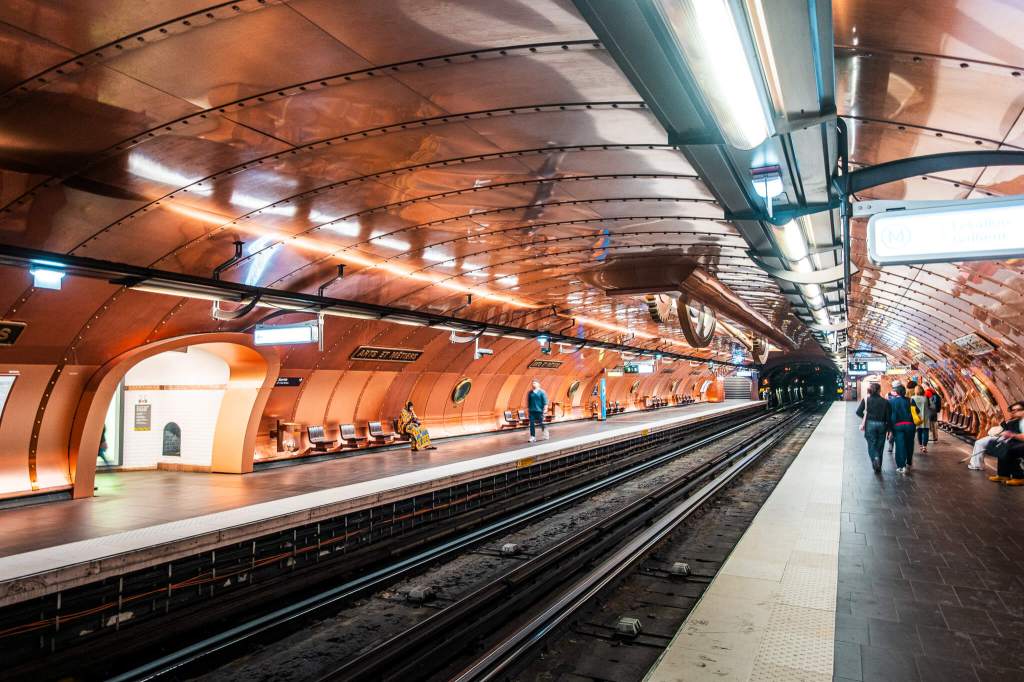
However, in the theme of steampunk art, we made a brief stop at the Art et Métiers metro station (line 11 platform), which was renovated in 1994 and lined with riveted copper plates.
The 3e arrondissement should be a must-see area of Paris for all visitors, if only to learn about the history of Paris at Musée Carnavalet. The narrow cobblestone streets of the upper Marais area offer a contrast to the large, busy streets in other areas of Paris, and the Marché des Enfants-Rouges is a true haven for food lovers. What are your favourite spots in the 3e arrondissement?

 Scuba Duo
Leave a comment