
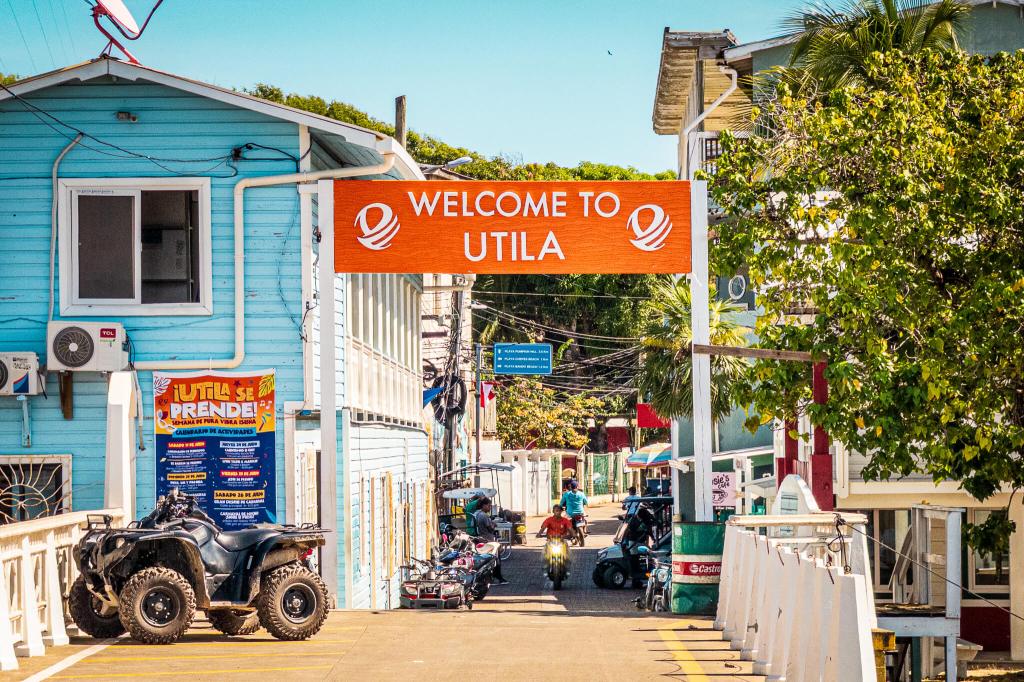
Today marks one year living in Utila, our small tropical paradise island off the Caribbean coast of Honduras. And we couldn’t think about living anywhere else right now. There’s something magical about this place.
Let’s try to break down what makes Utila so special to us…
Seeing the ocean every day
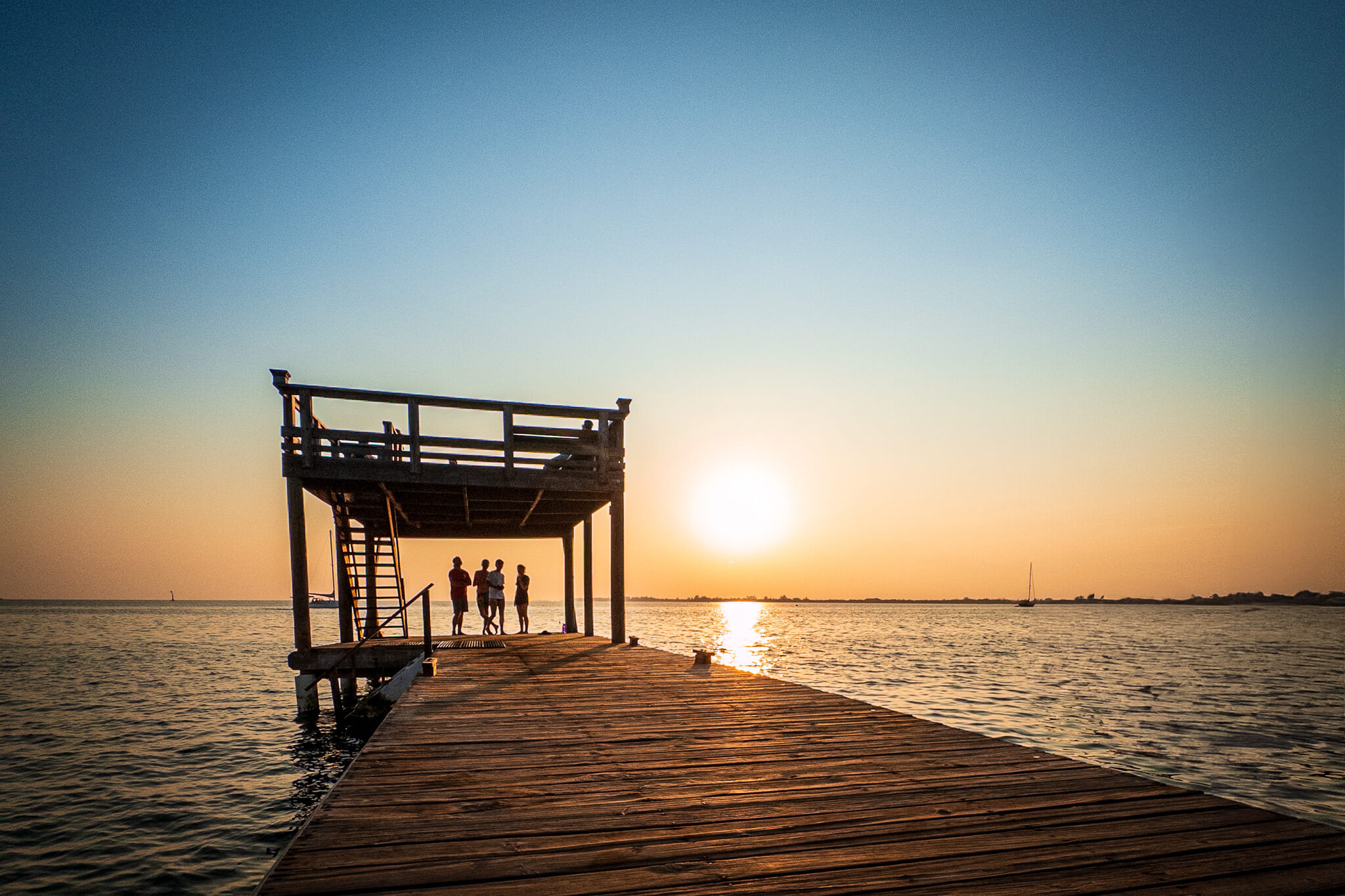
While we don’t have an oceanfront view from our accommodations, the main street of town is along the ocean, so it’s hard to avoid seeing the ocean every day. On top of that, much of the harbour faces west, so we get amazing sunsets over the water. Almost every dive shop has a dock that overlooks the harbour and encourages guests to hang around through the evening.
Everything is walkable
Pretty much everything on Utila is walkable. That having been said, once you’re here long enough, you tend to get a bit lazy. And in the summer when it feels like 40ºC/100ºF and you’re sweating through your shirt within 5 minutes of stepping our your door, most locals and residents choose to get around on a scooter, motorbike, ATV or golf cart. For those of us who haven’t taken the plunge on a motorized vehicle, tuk-tuk taxis are cheap and convenient (US$1.50/person to most destinations).
Tuk-tuks and jumbos
You’ll notice the distinct lack of full-size motorized vehicle on Utila. There are a few vans and trucks on the island, belonging to one of the telecom companies and the municipality. The garbage truck is nothing more than a pickup truck (and smaller than the monster pickup trucks we have in North America).
Taxis are 3-wheel tuk-tuks. They are small and nimble, with an incredibly tight turning radius, useful for turning around on the narrow roads of Utila. But don’t let their size deceive you: we regularly fit 4 people (plus the driver) in a tuk-tuk. Or two people, 4 large suitcases and 2 carry-on bags.
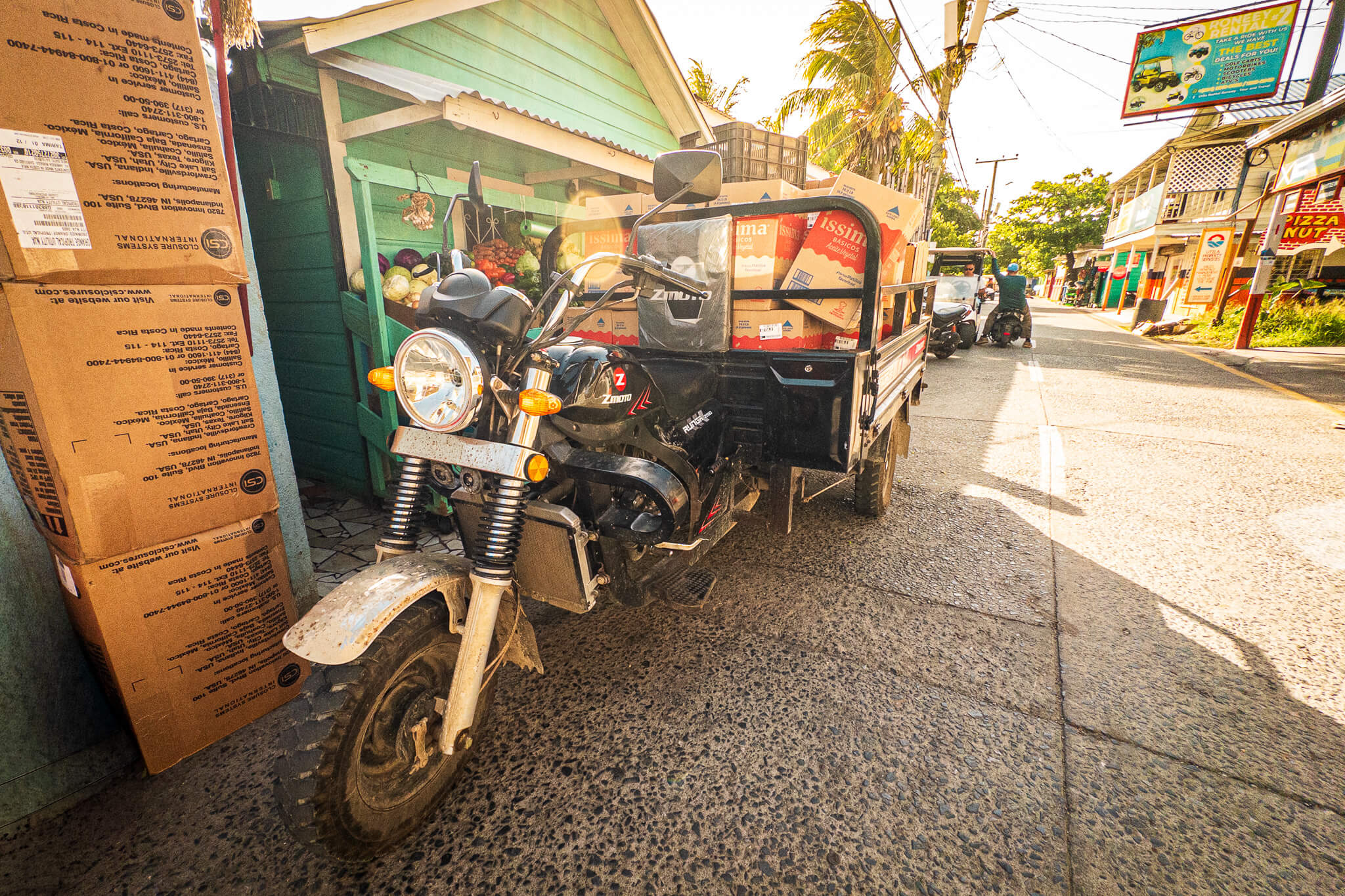
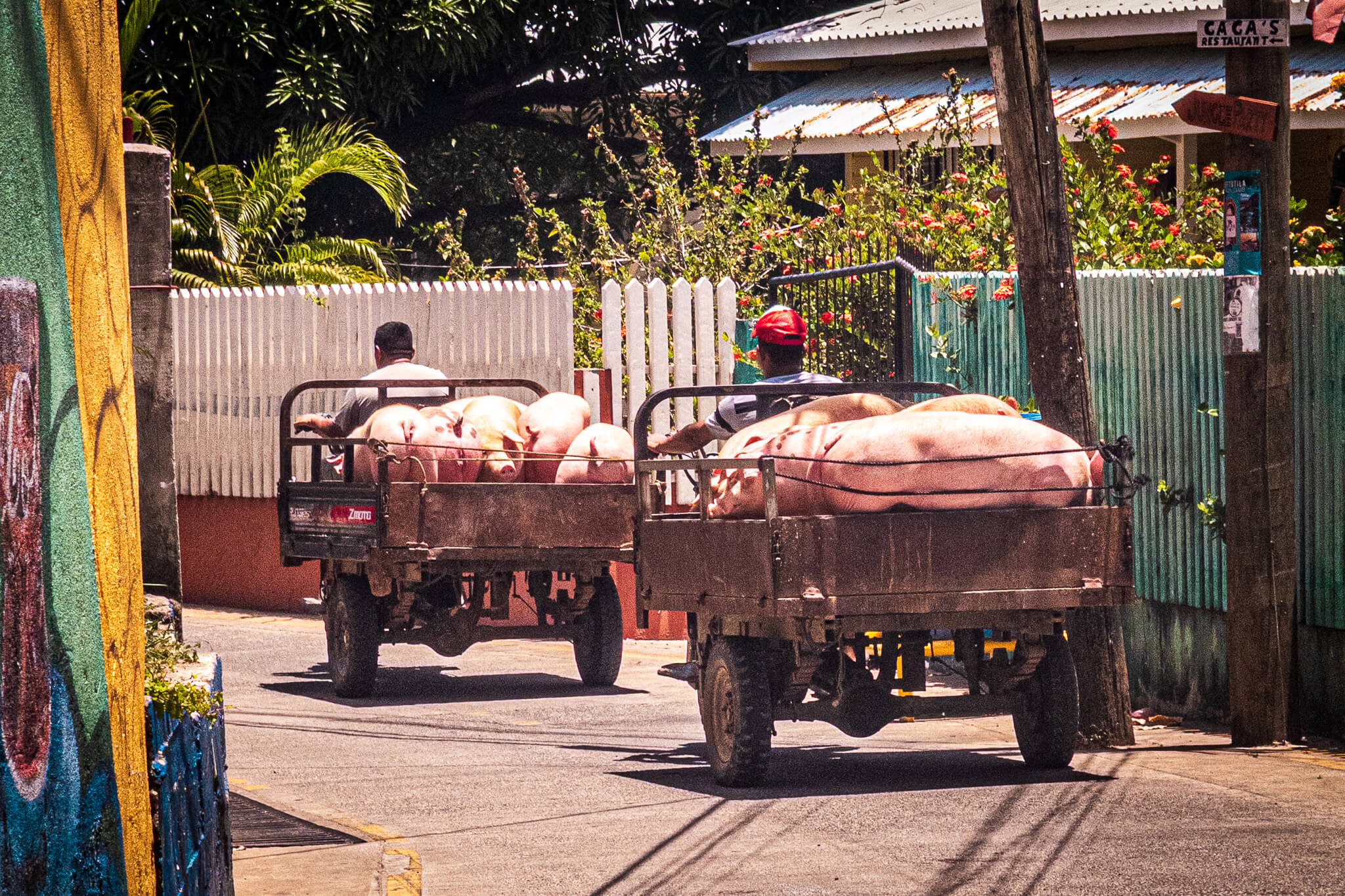
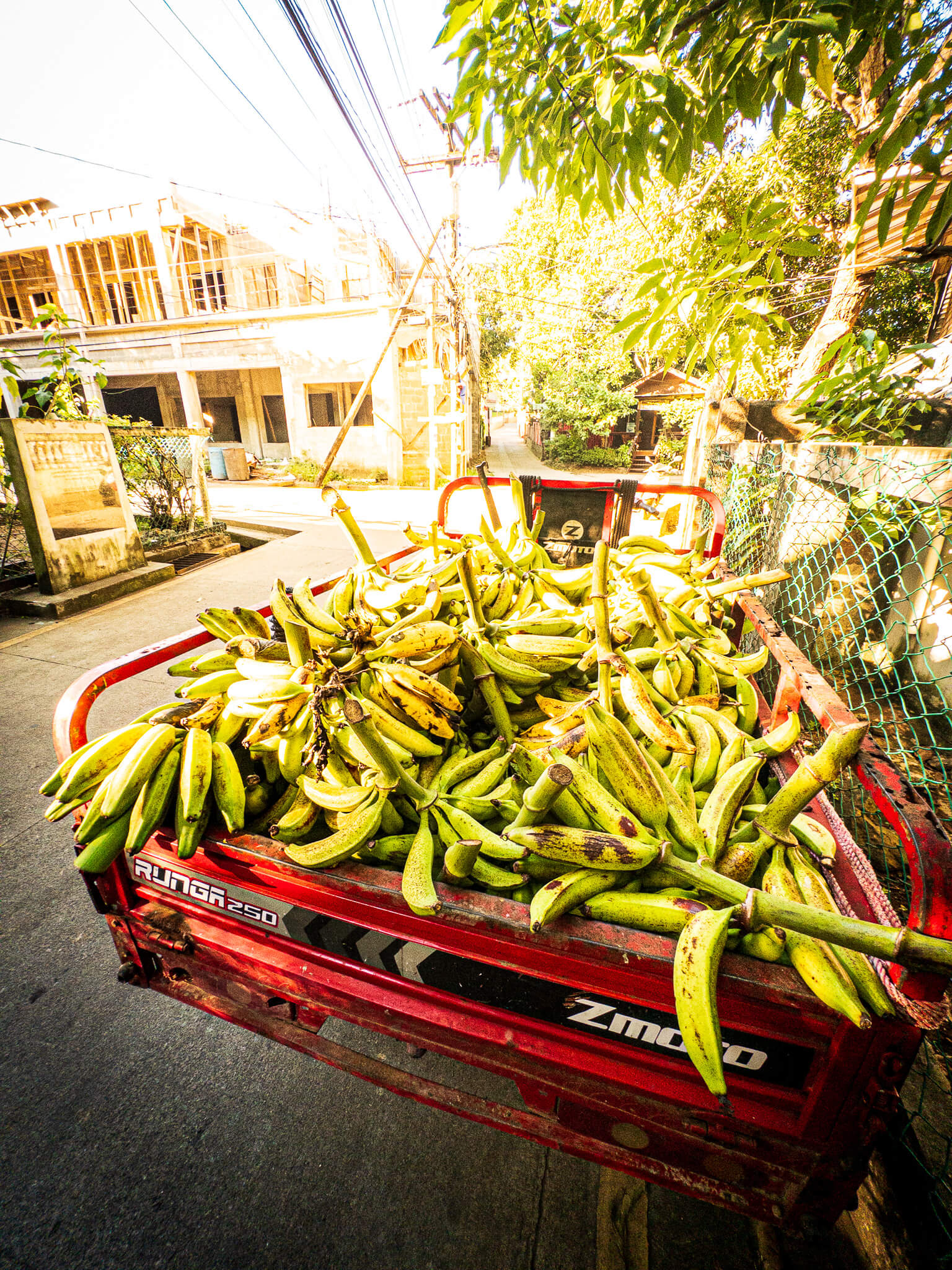
For transportation of larger cargo, we have “jumbos”. These are essentially small flatbed trucks built on a motorcycle body. Everything sold in shops on the island gets distributed on these jumbos after arriving via transport boat. Including live pigs!
Your regular joints know you by name and order
When we walk into the Pink Flamingo café, we’re warmly greeted by name. Without even stepping up to the order window, the barista Reba is asking if we want our usual iced latte and iced americano.
At Gaga’s Grab n’go, we’re warmly greeted by Shelly who asks if we want our usual order (tacos flautas and pollo chuco with beers) or if we want to mix it up.
Similarly, at Eva’s Café & Bar at Mango Inn, we’re asked if we want our usual iced coffees (one black, one with milk). On days off, we’ll keep a tab open for the day and hang out by the pool.
Great Honduran food
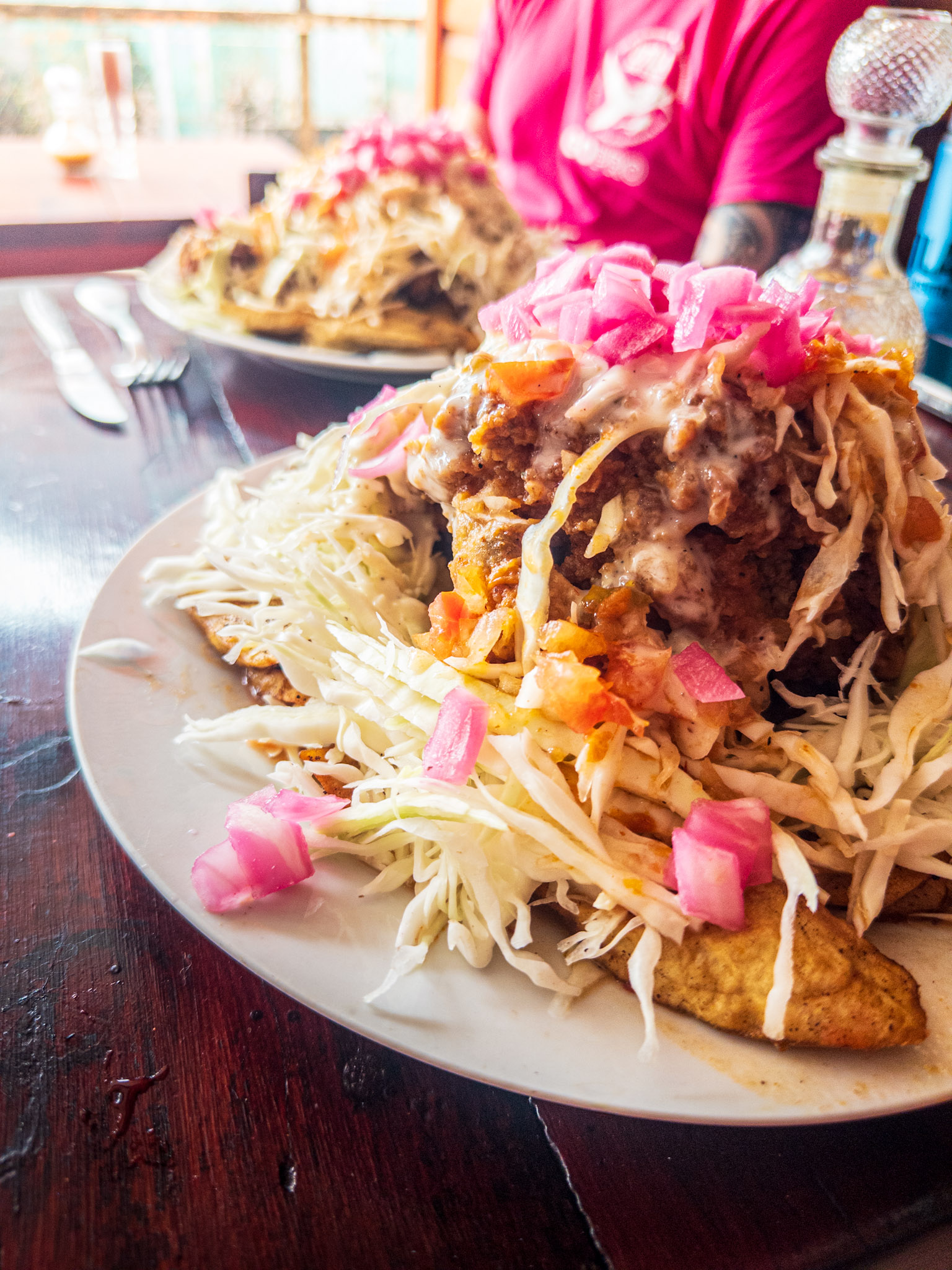
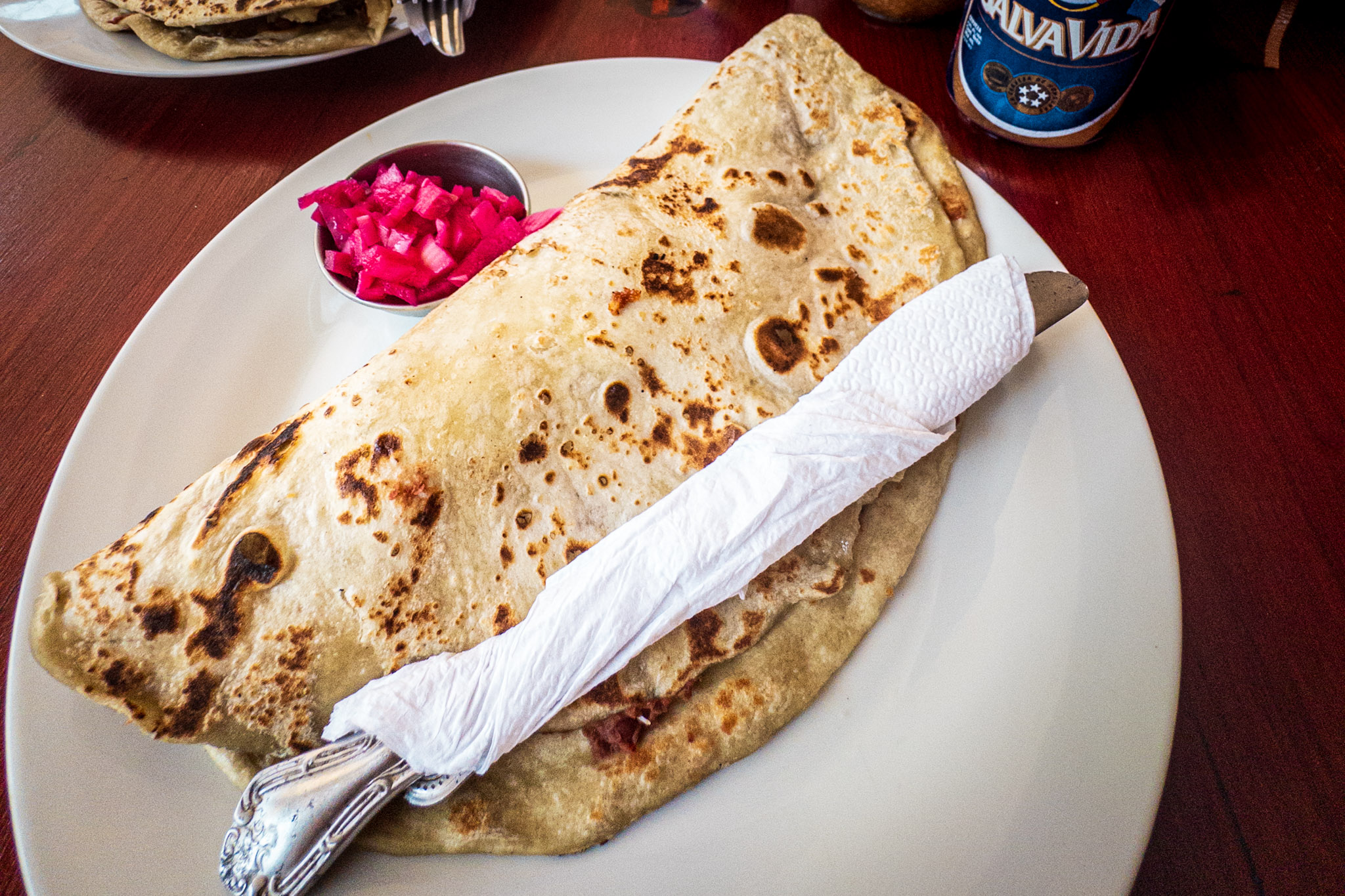
Honduran food is generous and wholesome. After a big day of scuba diving, it just hits right. Proteins tend focus on chicken and pork, and while much of it is fried, it’s often paired with a generous serving of plantains or cabbage.
If there’s a tortilla involved, it’s always prepared fresh to order. No packaged or pre-made tortillas here!
Juicy Honduran fruit
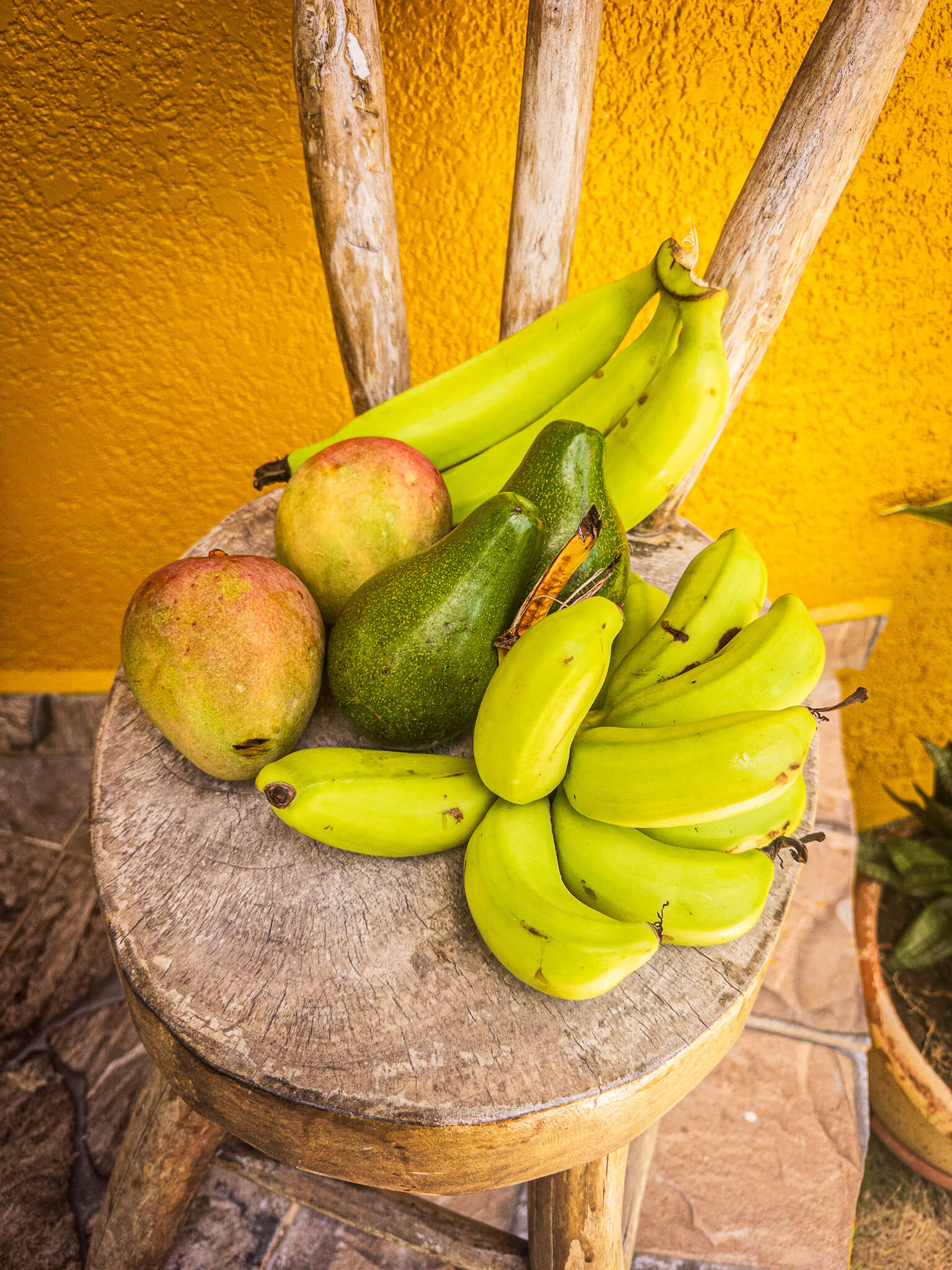
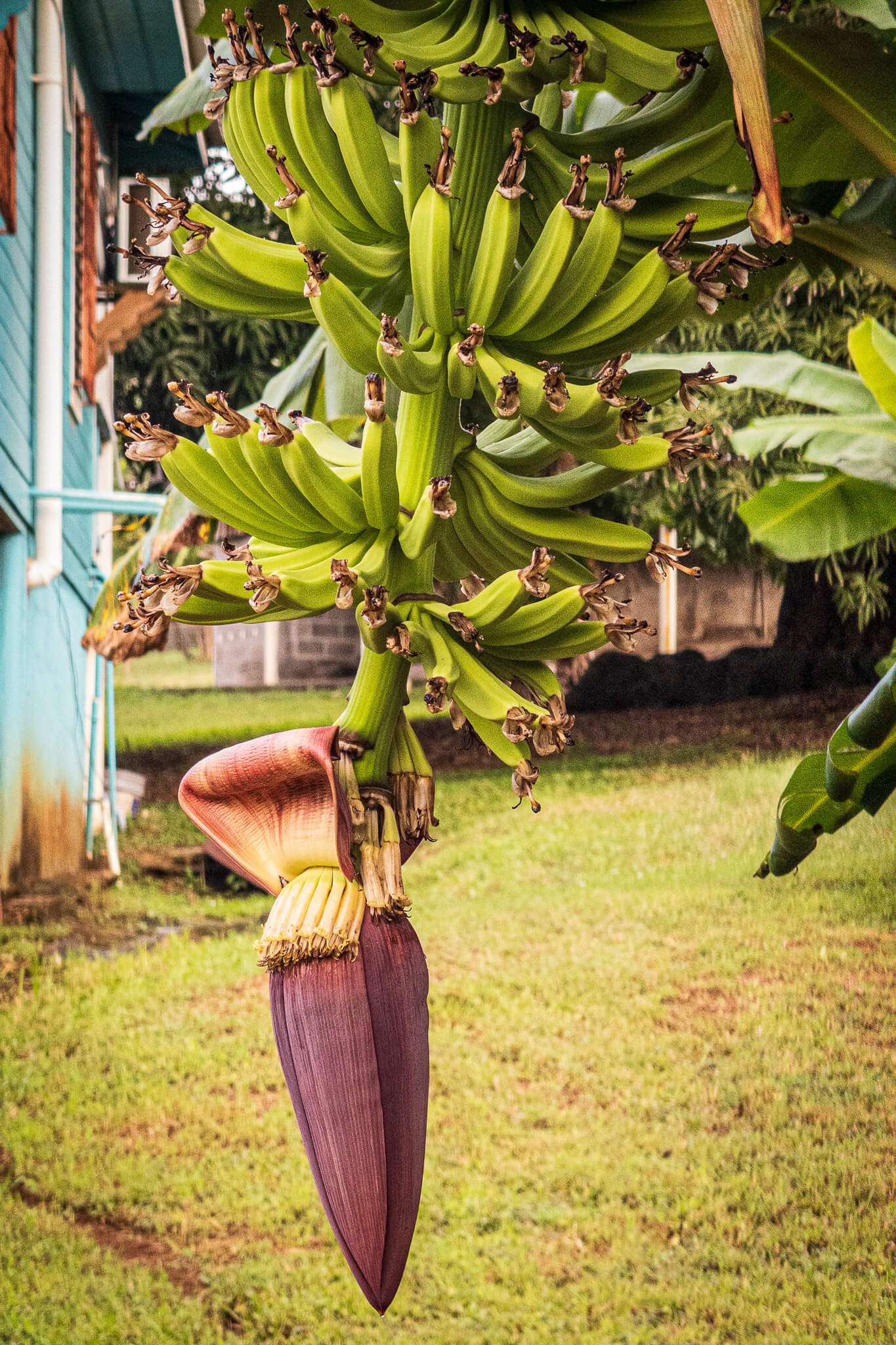
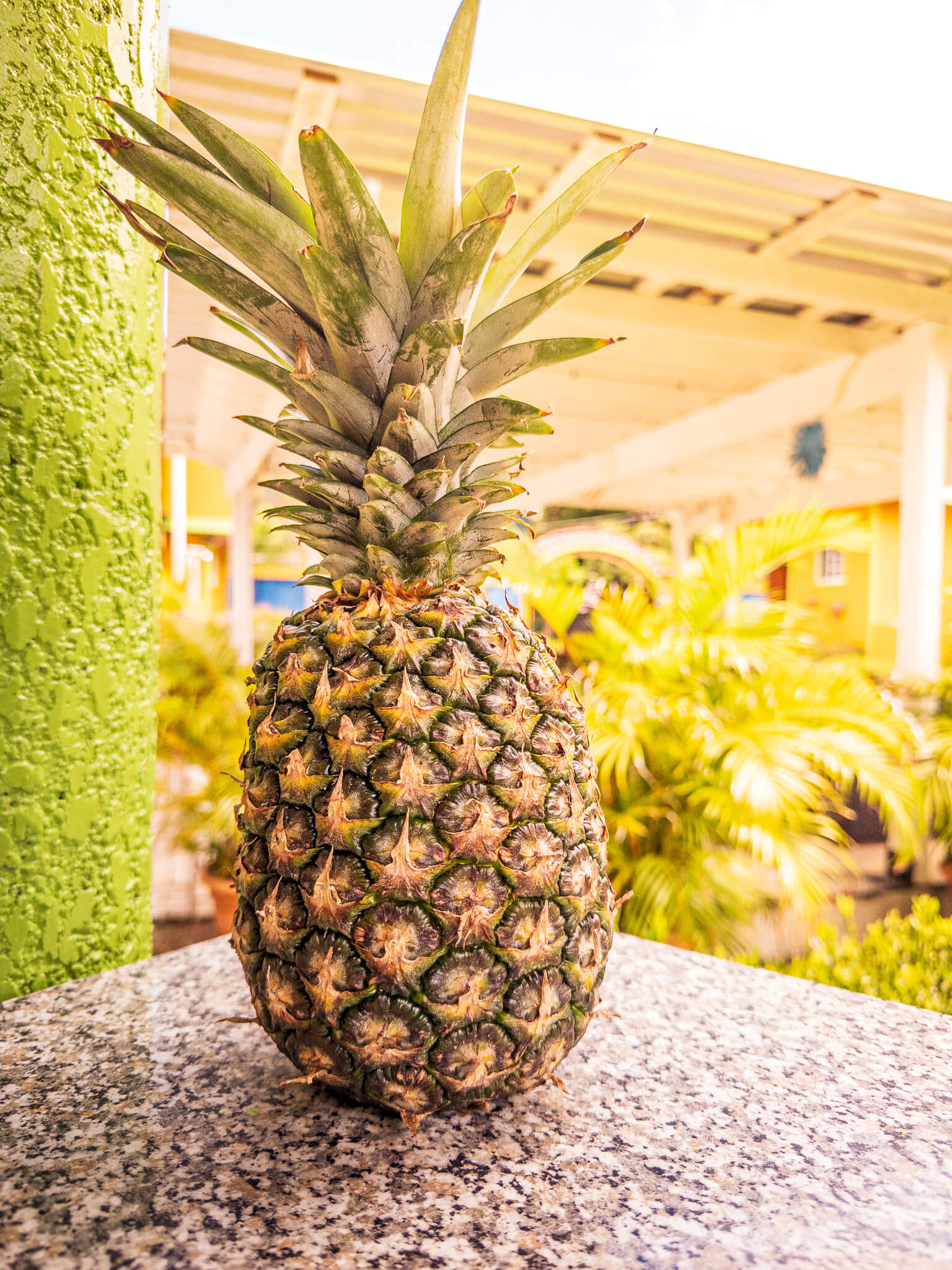
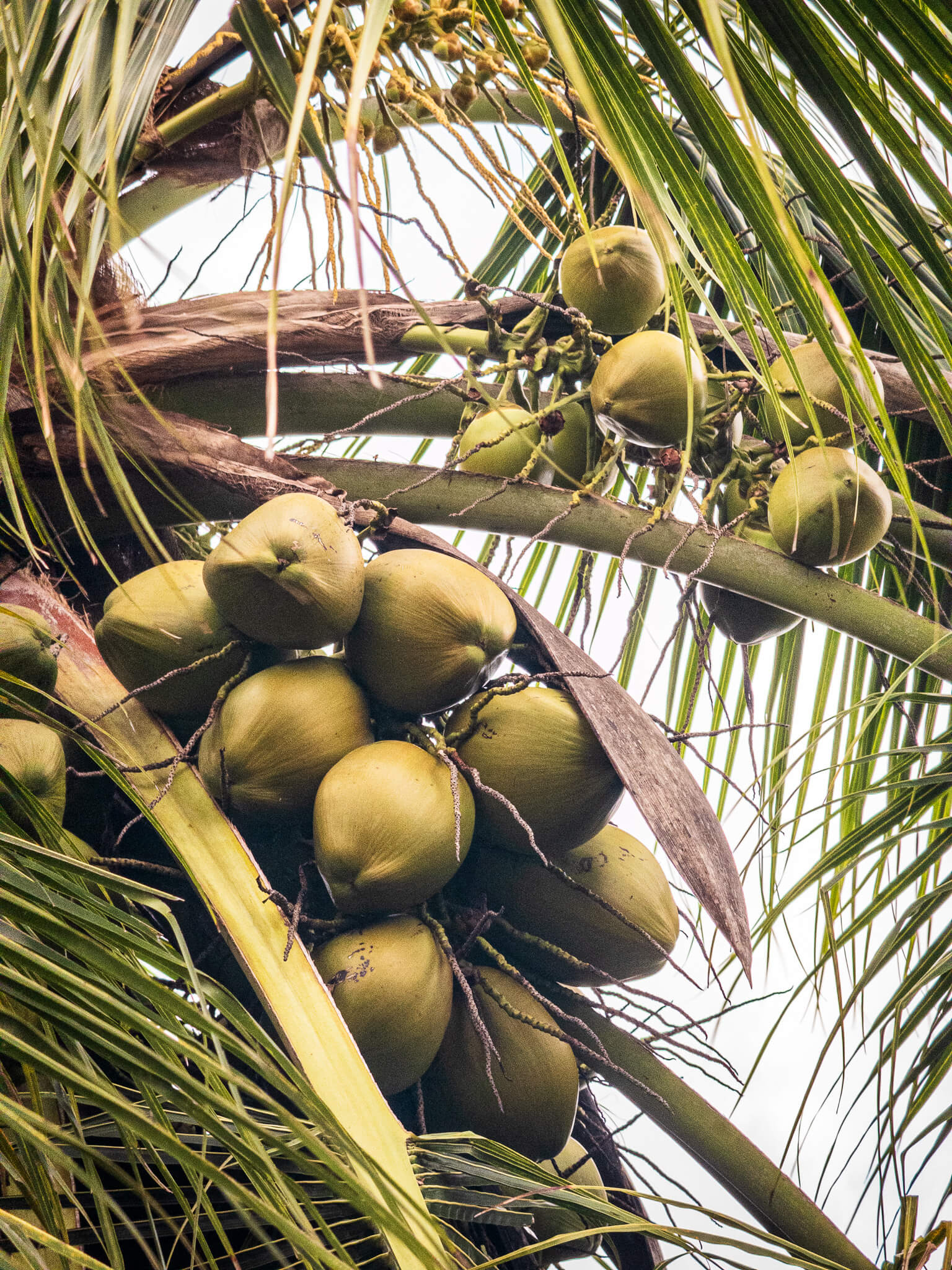
The fruit of Honduras is delicious and it doesn’t travel far to get to Utila. Much of it comes from the mainland, but it’s possible to find fruit sourced directly from Utila, including coconuts, bananas, plantains, mangos, avocados, breadfruit and starfruit.
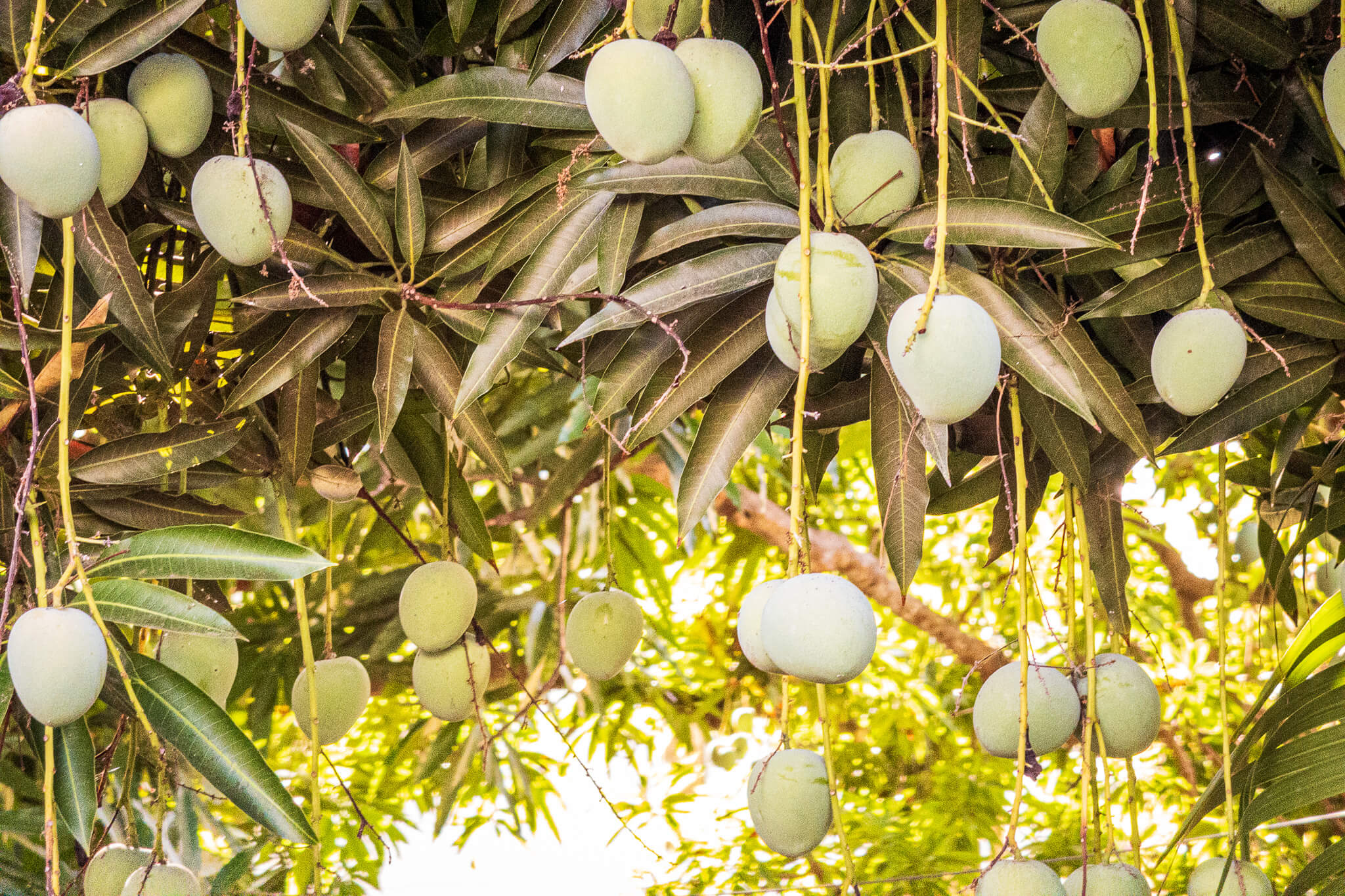
Starting in late spring, the numerous mango trees that line the streets of Utila start forming fruit and literally start drooping by the weight of the fruit. The streets start to become littered with falling mango. (And you worry about one falling on your head.)
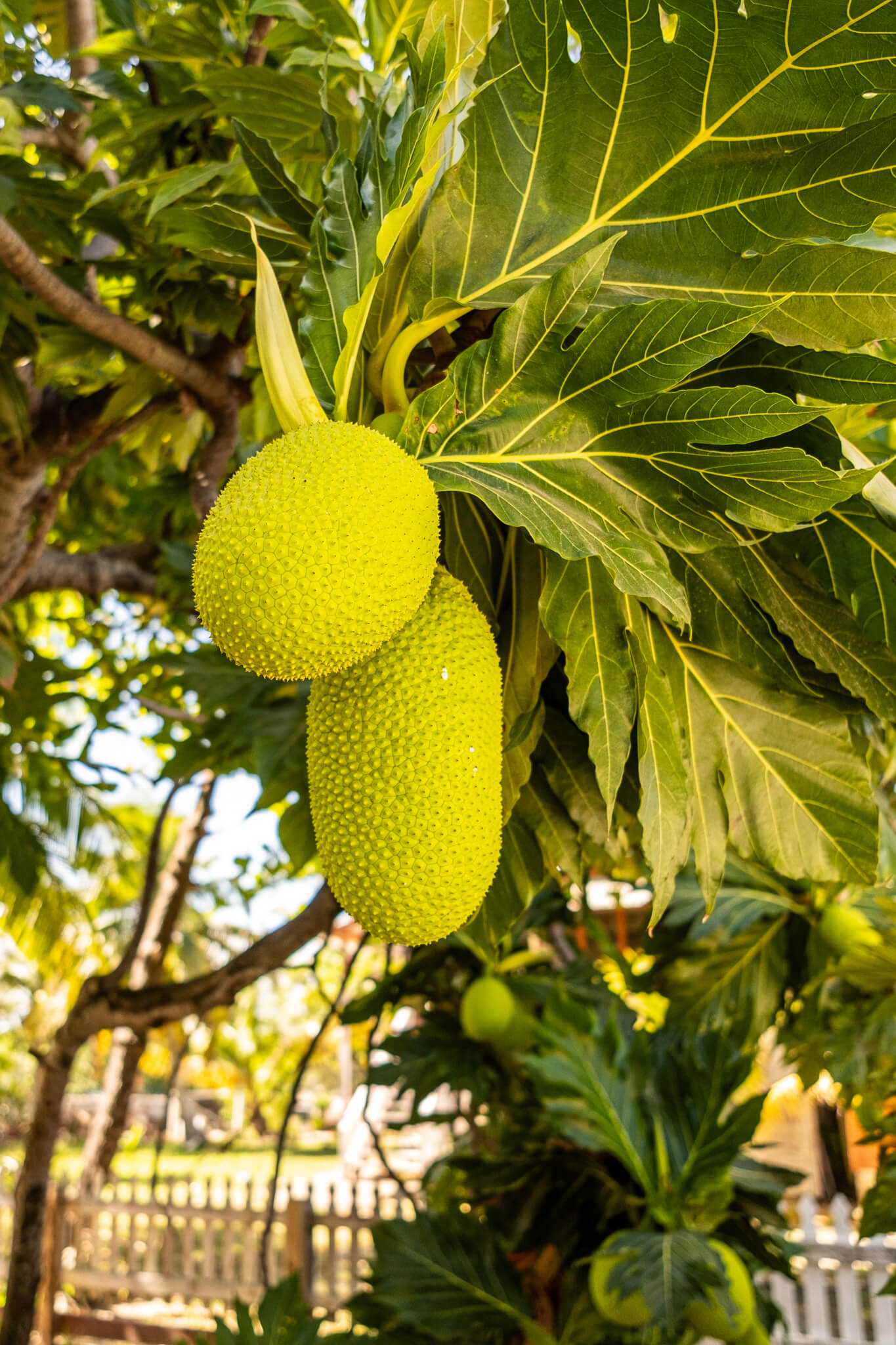
Later in the year, you’ll start to see a rather large, curious fruit on equally large trees with large leaves. This is breadfruit. It’s treated more like a vegetable in Utila, where it’s sliced and fried to make a delicious alternative to (potato) fries.
The other fruit that’s treated like a vegetable is the ubiquitous plantain that can be seen transported by the truckload. I’ll never get tired of fried plantains!
You can even find starfruit growing on Utila.
Bananas aren’t the most exciting fruit in North America, but once you try a locally grown banana, you understand how much flavour we lose when they travel halfway across the world. You can’t beat sliced banana on granola for breakfast, or some homemade banana bread that’s extra banana-y.
But it’s the pineapples that take the cake. Sourced directly across the sea on the mainland, our pineapples are sweet and juicy, with only a hint of tartness. Delicious on their own, or as the base for a delicious piña colada (no self-respecting bar on Utila makes a piña colada with anything except fresh pineapple).
The islanders stick together
There’s an old-world, small-town charm to Utila. We regularly get offered rides into town from total strangers. Especially during rainy season, people take pity on us walking, and offer us a ride.
Shoes are optional
Unless you’re walking a significant distance, it’s easy to get by without shoes. And by shoes, I mean sandals (it’s way too warm in the summer to wear closed shoes, and too wet in the winter). As soon as we arrive at the dive shop, we kick off our sandals and go around barefoot all day. If we’re hanging out at Pink Flamingo all day, we’ll also kick them off.
And if I’m heading down the street less than a couple hundred feet, I’ll often go barefoot. The streets are kept surprisingly clean of trash and leaves, swept daily by residents and volunteers. Just watch out for the occasional piece of gravel, and keep in mind the pavement gets hot around midday.
Have you visited Utila? What are your favourite memories that make Utila unique?


Leave a Reply