
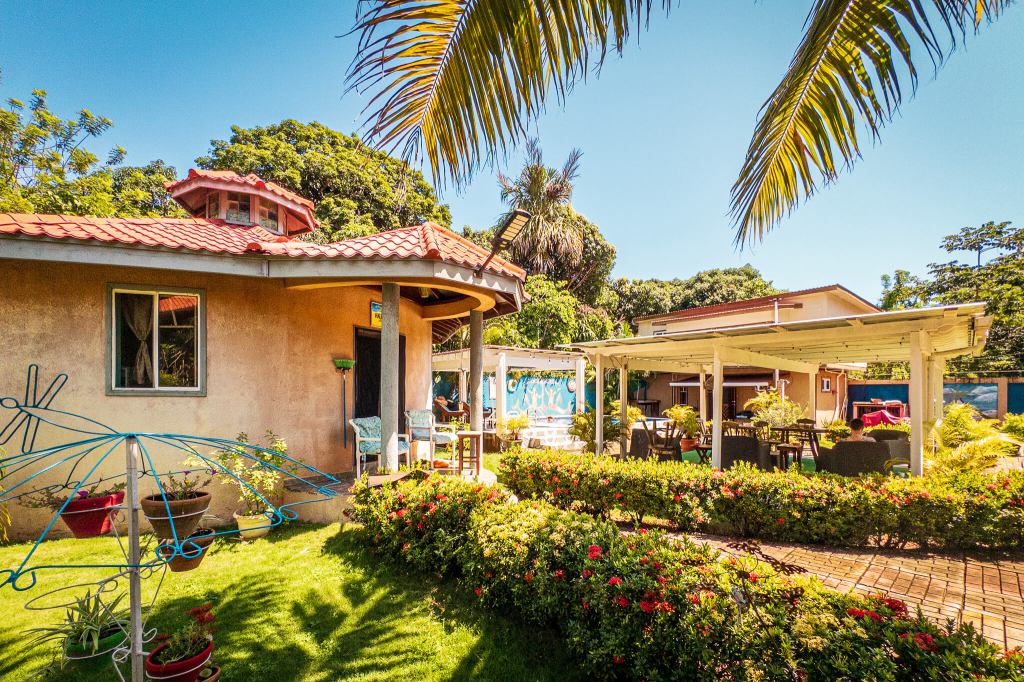
Wow… the last life update on the blog was in October 2025! In that post, we talked about selling our possessions to live nomadically, and that we were planning on spending a few months on the island of Utila, off the coast of Honduras.
Well, fast-forward 8 months and we’re still in Utila with no plans on leaving any time soon.
When we initially moved here, we knew we could live here relatively affordably while searching for scuba jobs around the world. We’d let a future job dictate where we’d settle down.
But after a few short weeks in Utila, we found ourselves settling in here very nicely.
Settling down in Utila
Utila is a small, chill island. Almost everything is within walking distance. For everything else, a tuk tuk taxi ride is 40 lempiras (US$1.50) per person to most destinations. You can eat a simple baleada meal for a couple dollars. Beer and rum is cheap too.
Since both of us did professional scuba training at Utila Dive Center, we get to hop on their boats and go scuba diving for free. Unlimited free scuba diving is a huge benefit for our retirement budget. (Which comes in exchange for a bit of free labour, including loading and unloading tanks on the boat, and helping tie off the boat at the dock and dive sites).
It also helped that we already knew a bunch of people in Utila from our previous visits. Additionally, Utila attracts a young, diverse crowd of divers from around the world. Many stay for months at a time while they complete their divemaster training. So it’s easy to make friends.
So with no other specific destination calling our name, one question became obvious: why leave? Let’s settle in here and stay as long as we’re enjoying ourselves.
With that in mind, we needed to think about logistics. There are a few ways people stay in Utila longterm.
How to stay long-term in Honduras
- Make periodic “visa runs”. Visitors from the US, Canada and EU can visit Honduras without a visa, and will get a passport entry stamp valid for 1-3 months. A 3-month stamp isn’t guaranteed and is at the discretion of the immigration officer at the airport. If you have a valid reason to stay for 3 months (e.g. enrolment in a divemaster scuba course) and proof of onward travel (ie. return flight within the 3 month mark), your odds are good. It’s possible to get a 1-month extension (again, at the discretion of the immigration officer) by paying US$20 and providing a letter from your dive centre indicating you have an ongoing course. Under this scheme, you leave Honduras every 3-4 months to get a new passport stamp on re-entry. You must leave the CA-4 zone, which means you cannot simply visit neighbouring Guatemala, El Salvador, or Nicaragua. You must wait at least 72 hours before returning to Honduras.
- Pay a fine. We’ve encountered many people who simply overstay their passport stamp, and pay a fine when they exit the country. The amount of the fine increases the longer you stay. The minimum fine is approximately US$250-300. Historically, this has not impacted re-entry and was therefore cheaper than making visa runs. However, Honduras is tightening up its immigration processes, and people are reporting more hassle at the airport when trying to get back into Honduras. Some sources also indicate possible re-entry bans. Attempt at your own risk!
- Become a permanent resident. Retirees and many scuba professionals who wish to stay long term in Utila apply for Honduran permanent residency. This process requires working with a Honduran lawyer. They will charge approximately US$1,600 in fees and expenses. You’ll incur additional expenses for getting criminal checks and other documents in your home country, and getting those documents authenticated in a process called apostille. There are various routes to becoming a permanent resident, including being a retiree with a minimum fixed pension income, having a minimum real estate or investment income, or investing in a Honduran business or government bonds. There is also a more obscure route through “Article 21” if you can show a smaller but regular income from abroad. While some of the upfront fees can be hefty, and the process can take upwards of a year, once your application process is underway, you can continuously request passport stamp extension and stay in the country indefinitely (for US$20/month). And it only takes avoiding a couple visa runs for the investment in permanent residency to pay off.
How we applied for Honduran permanent residency
We contacted a lawyer in October 2025 to have some initial discussions around options for permanent residency. She was highly recommended by 2 colleagues at Utila Dive Centre.
We didn’t qualify for the retiree path because our retirement income is through self-directed investments. This path requires a fixed pension income. We briefly toyed with the investor route. We wouldn’t have invested in a Honduran business, but we considered investing in Honduran bank certificates or government bonds. Ultimately, we didn’t feel comfortable with this route, as we’d have a significant amount of money locked away until we decided to leave the country. This route would also take just as long, and the lawyer fees were higher since there was apparently more work involved. We decided to proceed with the “Article 21” approach that most non-retirees take.
In late November/early December 2025, Keith and I both returned briefly to Canada. This was partly a visa run, and partly an opportunity to get fingerprinted for a criminal record check. Despite rumours of long processing times for criminal record checks in Canada, these arrived within a couple weeks, and we submitted them promptly for apostille authentication. Thankfully, this too only took a couple weeks.
Nothing official started until January 2026 when we received the physical copies of our apostilled criminal record checks from Canada. We believe our lawyer submitted our application to the Honduran government in person in Tegucigalpa, and we received the official proof of processing within a few days (before the end of January). This proof of processing allows us to renew our passport stamps and stay in Honduras indefinitely while our residency application is pending.
We were warned there would be months of radio silence. Then out of the blue in May, the government reached out requesting some additional banking documents and some additional small fees. We figure that’s positive progress.
Now we continue to wait…
 Scuba Duo
Leave a comment