
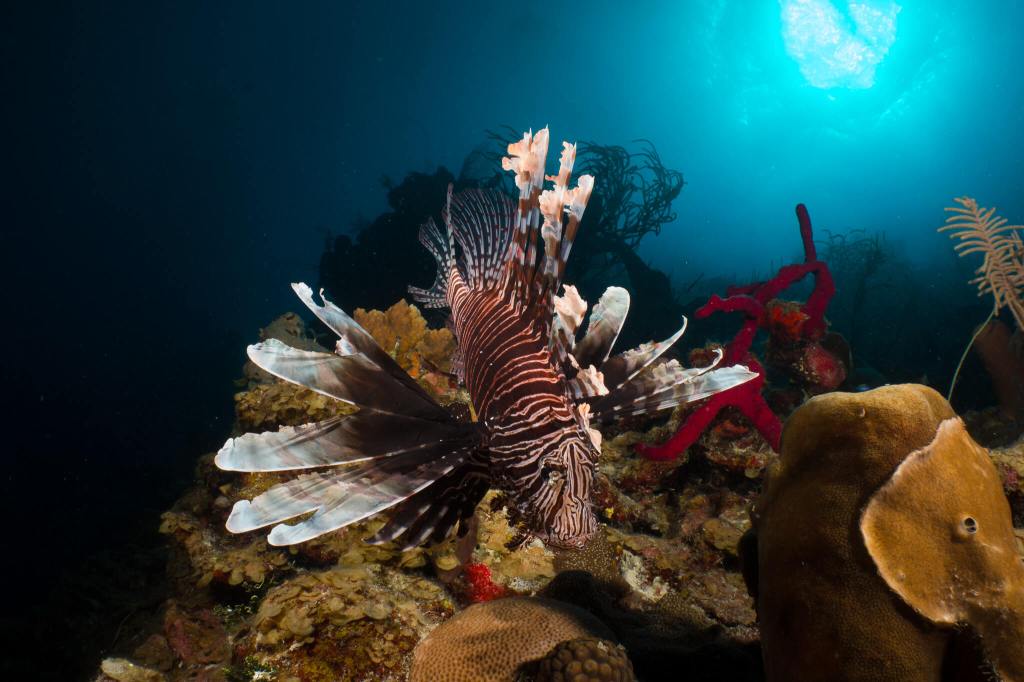
Lionfish are impressive reef fish. Almost every scuba diver in the Caribbean has seen one. In some areas, you’ll see them on every dive. The red lionfish most commonly seen in the Caribbean (and largest lionfish species) is unmistakable with its white and reddish-brown striped body, and long, flamboyant pectoral and dorsal fins.
The problem with lionfish is that they’re native to the Indo-Pacific Ocean. They shouldn’t be here in the Caribbean, Atlantic Ocean, or Gulf of Mexico. They’re invasive, voracious feeders with no natural predators, preying on crustaceans and small fish, devastating the coral reef ecosystem.
A single lionfish can reduce the population of juvenile reef fish by 79%.
Their bright markings ward off any would-be predators. Also hidden in the beautiful fins are venomous spines: 13 in the dorsal fin, 2 in the pelvic fins, and 3 in the anal fins. A sting from a lionfish can be excruciatingly painful for hours or even a full day.
Cause and effect
There are several theories as to how the lionfish was introduced to the Atlantic, whether accidentally transported in ship ballast tanks, pet lionfish released after getting too large for an aquarium, or escaping a public aquarium damaged during a hurricane. The truth is most likely a combination of all these theories.
Because they are so devastating to coral reef health, most jurisdictions encourage hunting lionfish. Spearfishing by scuba divers and freedivers is permitted in areas that are otherwise off-limits to fishing, and not limited by size or number. (Many places still prohibit triggered spearguns, so a polespear is most commonly used.)
Hunting invasive lionfish in the Caribbean has been shown to improve reef health, but this needs to be a regular activity, as lionfish breed on a monthly basis.
Lionfish hunting special courses
In areas of the Caribbean with an active scuba community, many dive shops will offer specialty courses on hunting lionfish. Some of these are even endorsed by PADI as a PADI distinctive specialty (such as the Caribbean Lionfish Containment Diver specialty at Utila Dive Center) that counts towards the PADI Master Scuba Diver rating. Hunting lionfish relies on excellent buoyancy, trim and finning techniques.
For ethical reasons, we try to spear the lionfish in the head to make a lethal shot and minimize any suffering. This is also in the best interest of the diver, because a large lionfish putting up a fight could result in a painful sting.
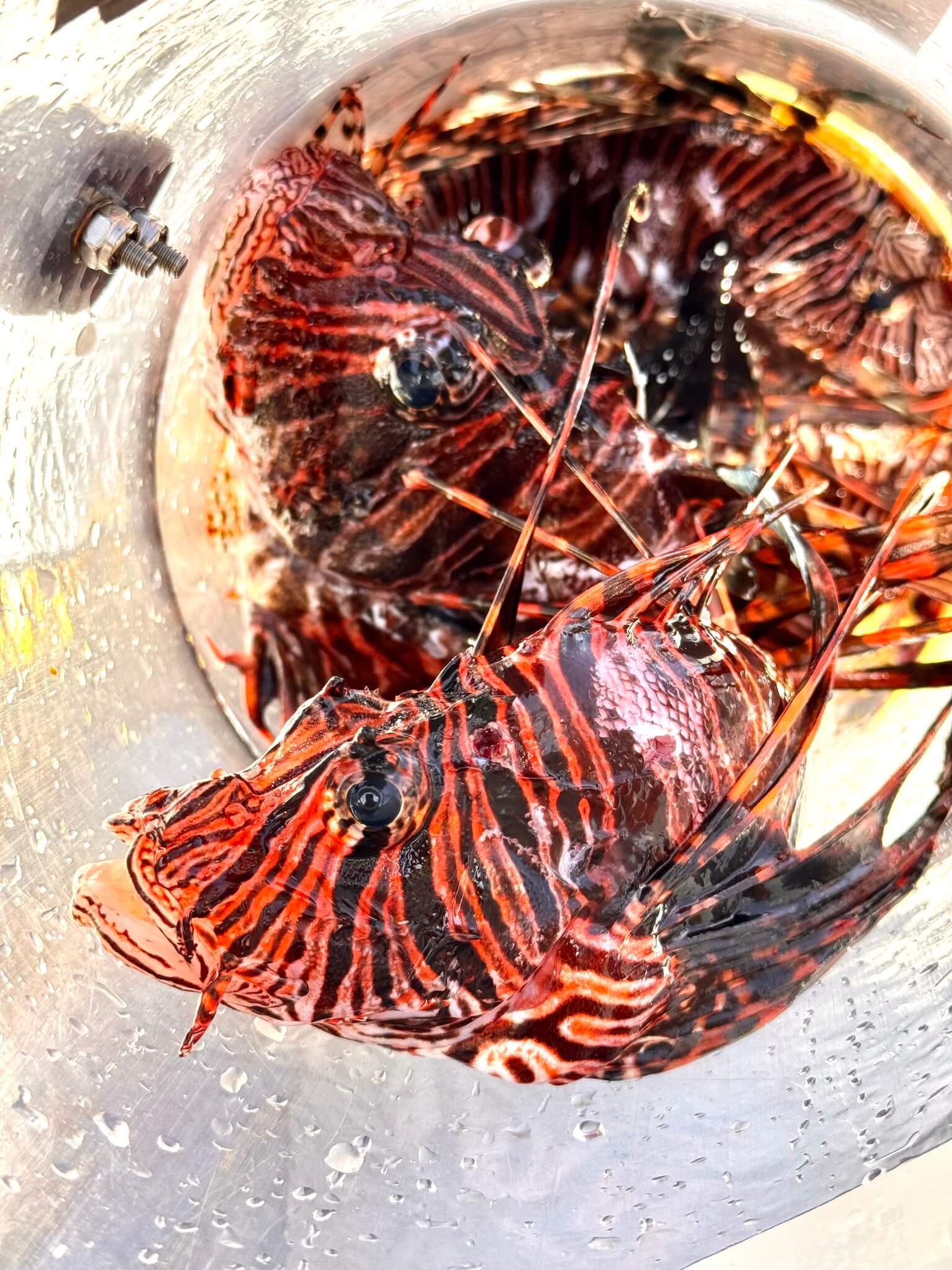
Dead lionfish can be left on the reef in hopes that other fish may develop an appetite for them. But many divers prefer to collect the lionfish in a specialized containment device (called a Zookeeper) to safely bring them back ashore.
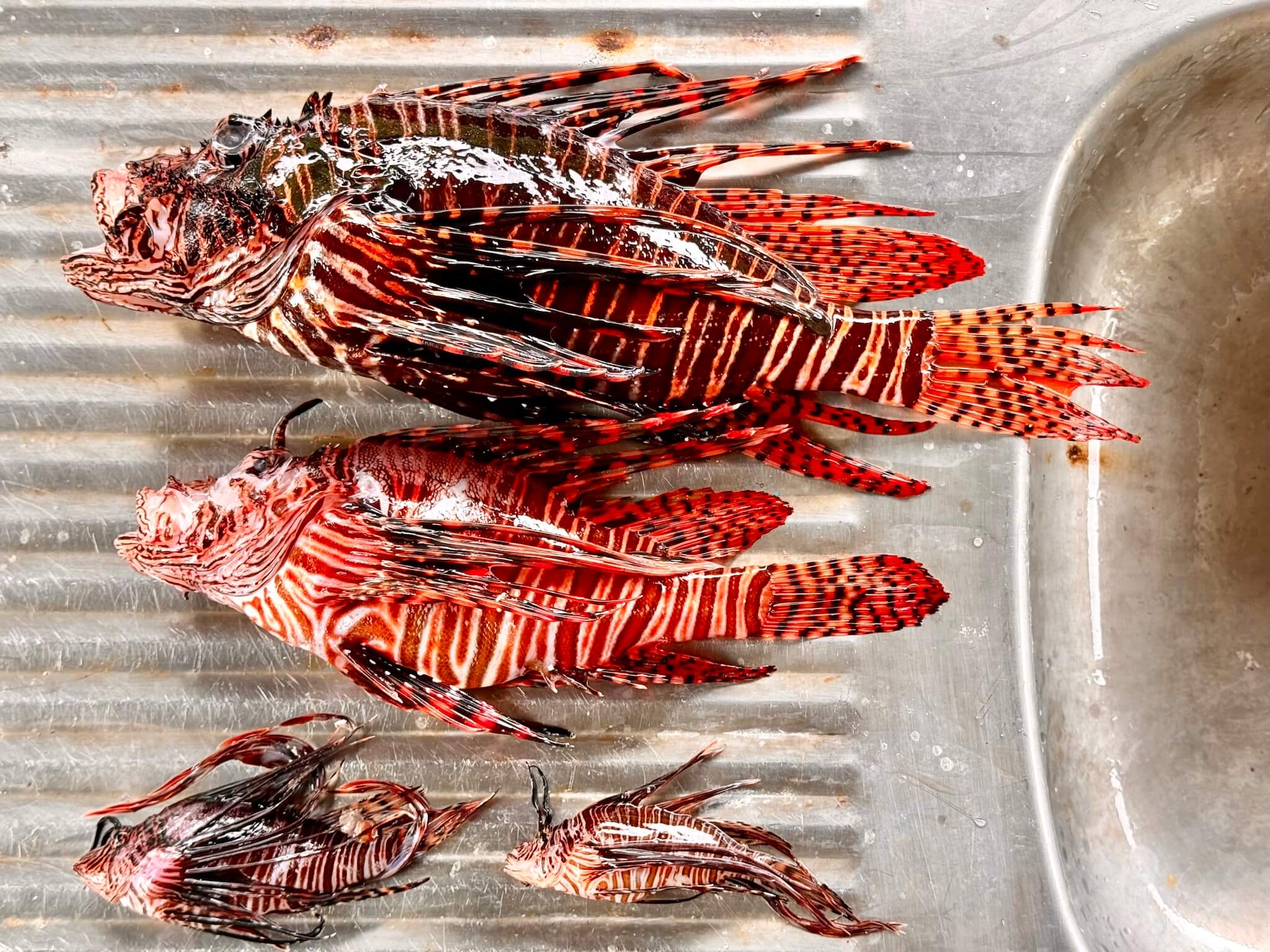
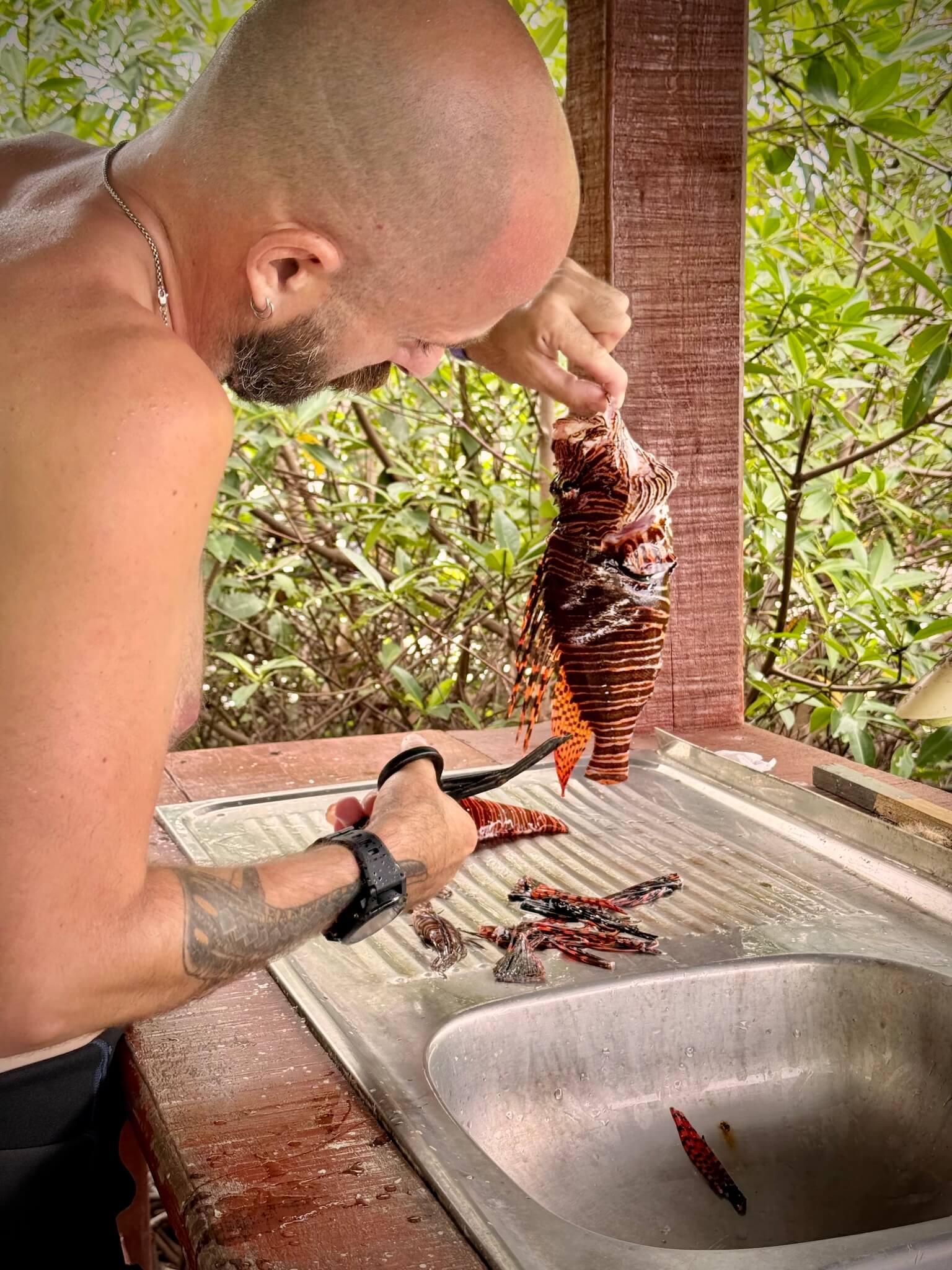
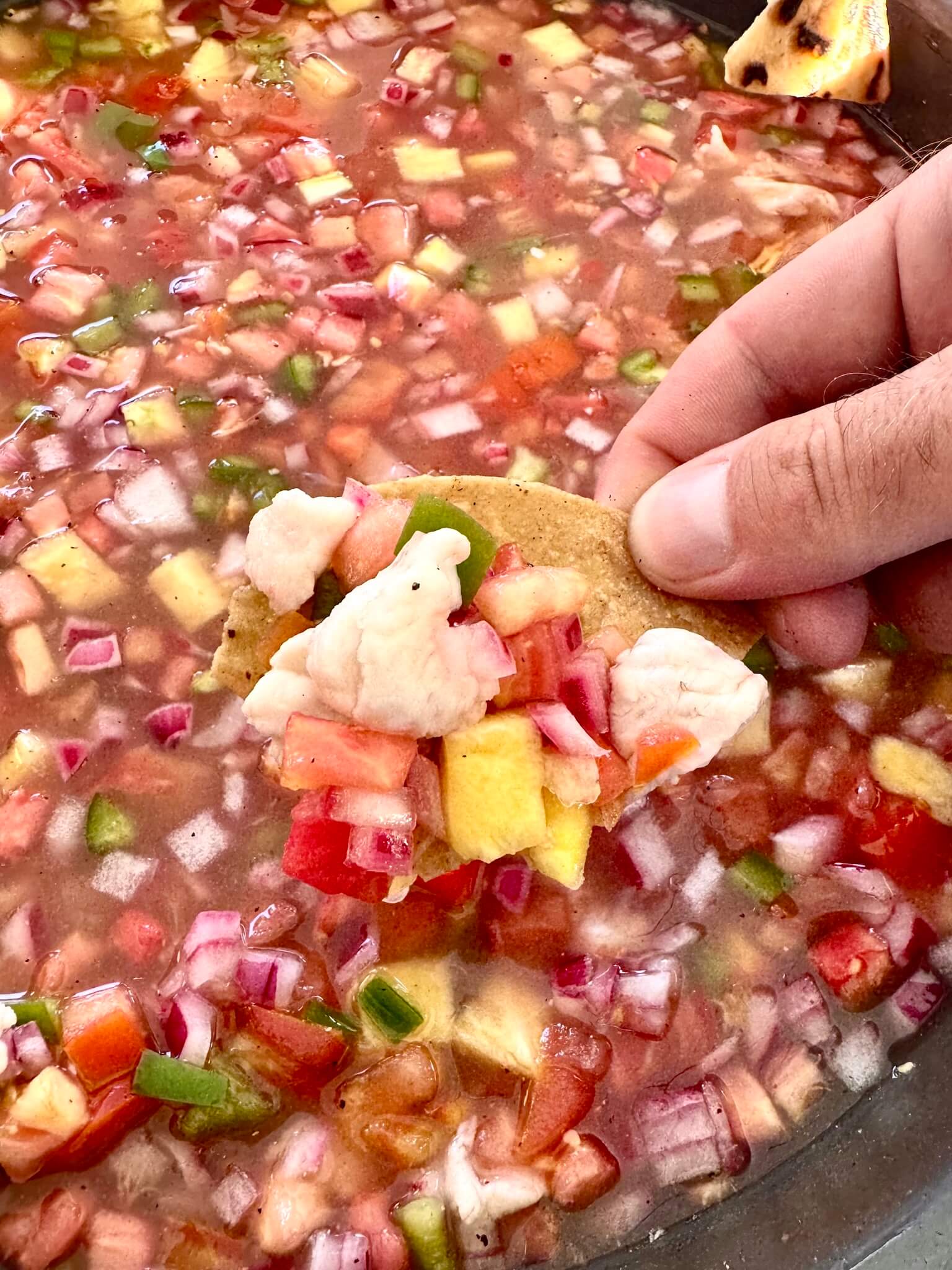
Lionfish make great ceviche. Or they can be cooked like any other white fish, although being a small fish, their filets don’t amount to much. Maybe I’ll try breaded fish fingers next time? (Fish too small to filet are de-spined and given to the dive shop cat.)
Lionfish hunting in Útila
Due to the popularity of lionfish hunting in Útila, the most popular dive sites are virtually devoid of lionfish at recreational depths. Some of the less visited sites on the north side of the island tend to have more lionfish, although the populations are being kept under control. Many dives return zero lionfish (and that’s a good thing!) while others may produce a few fish. Tec divers have more opportunities to find lionfish at depths greater than 40 metres where less hunting takes place.
Utila Dive Center and other dive shops around the island will organize regular Lionfish Derbies where teams will go out with the sole purpose of removing as many lionfish from the reef as possible. These do a massive service to the reef, and everybody benefits with a massive bowl of lionfish ceviche in the afternoon (bring your own chips!).
 Scuba Duo
Leave a comment