
Every scuba diver has a favourite underwater animal they hope to see on a dive. Common favourites tend to include sharks, dolphins, octopus and various fish like rays, frogfish or seahorses. But there’s a whole world of curious underwater creatures that deserve more attention. Many of these are so unusual that most divers don’t even notice them, let alone know what they really are. Let’s dive into some of my favourite unusual sea animals (and one algae).
All photos by me, taken while diving in Roatan and Belize.
- Long-spined sea urchin
- Christmas tree worm
- Feather duster worm
- Flamingo tongue snail
- Brittle star
- Basket star
- Crinoid
- Tunicates
- Anemone
- Sea pearl
Long-spined sea urchin
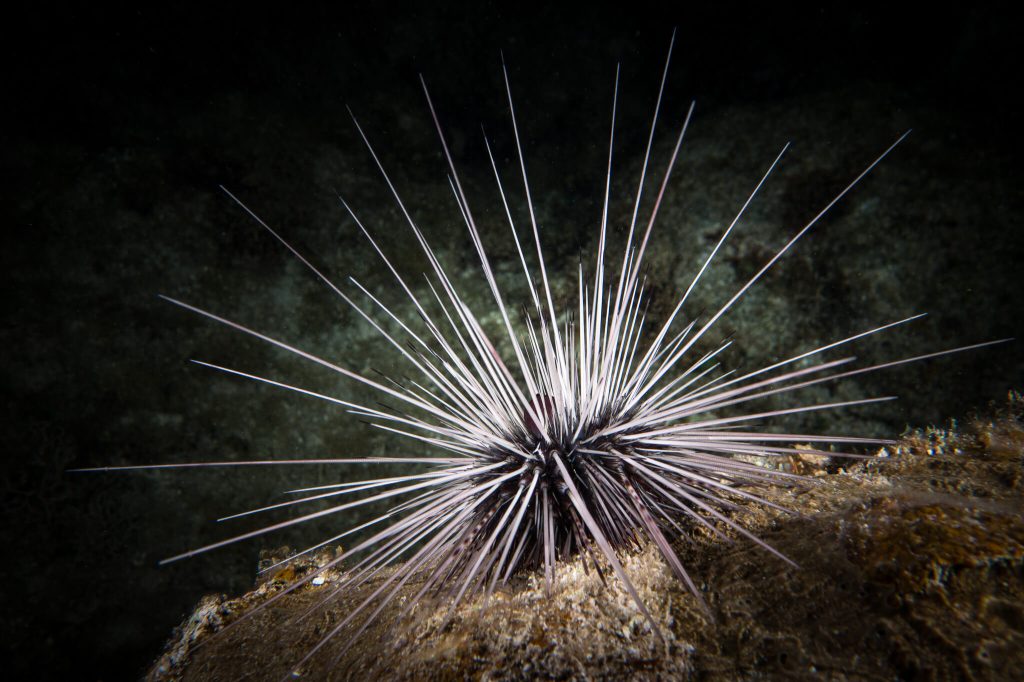
Sea urchins are a relatively common sight, found in all oceans, both in warm and cold waters. The long-spined sea urchin or black sea urchin (Diadema antillarum) is found throughout the Caribbean Sea and Western Atlantic Ocean. During the day, they’re typically tucked away inside coral crevices but can be very plentiful when they come out at night.
The long-spined sea urchin is unique for its namesake long spines, which can reach 30 cm in larger specimens. (Compared to other species which feature 1-3 cm spines.)
This urchin is also important for coral reef health, as the most prolific herbivore preventing algae overgrowth of the reef.
Christmas tree worm

Underwater worms are somehow much prettier than the worms we know on land. The Spirobranchus giganteus worm, commonly called the Christmas tree worm, is found throughout the world in tropical waters.
The worm is completely stationary, with its body embedded in hard coral like brain coral. The crown we see is 2 feather-like spirals that function both for filter-feeding and breathing. They come in all sorts of colours, from white to yellow, orange, red and blue. When disturbed, the crown retreats into its tubular body inside the coral.
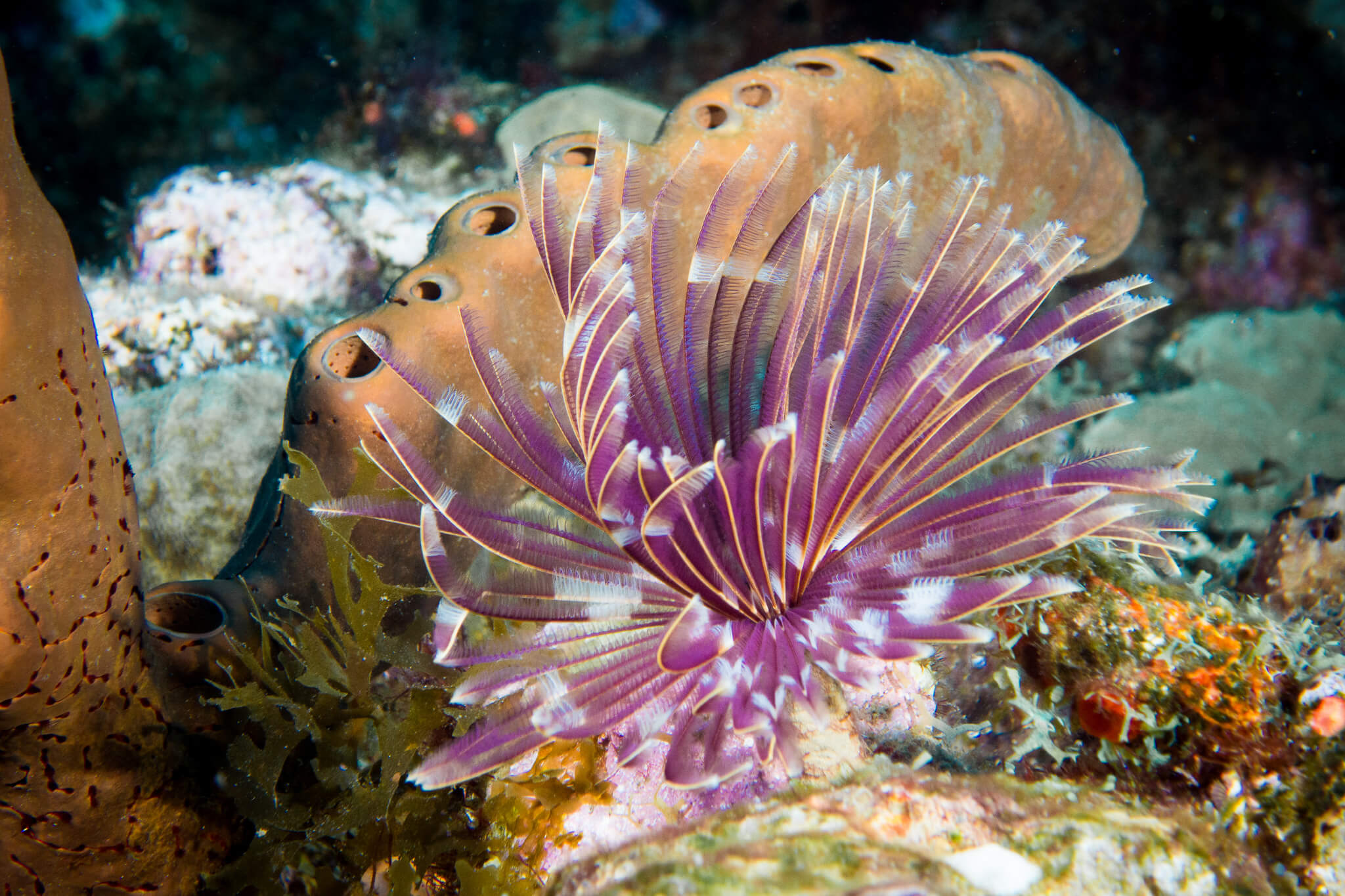
Feather duster worm
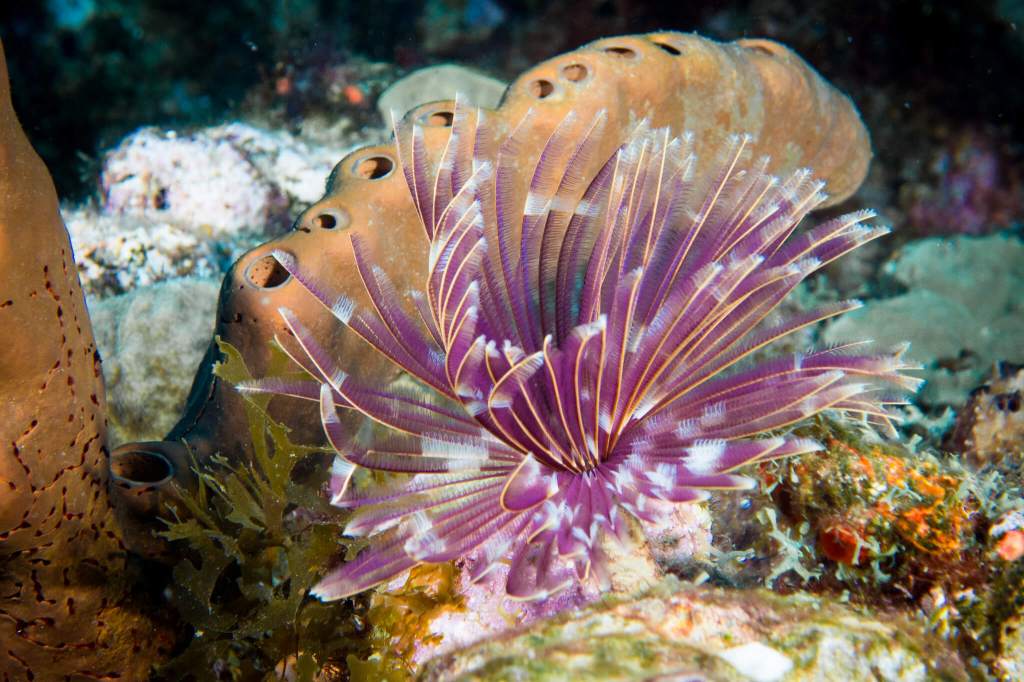
An even more spectacular worm is the feather duster worm (family Sabellidae). It features a feathery crown that can reach over 10 cm in length and billows elegantly in current, reminiscent of a feather duster.
Flamingo tongue snail
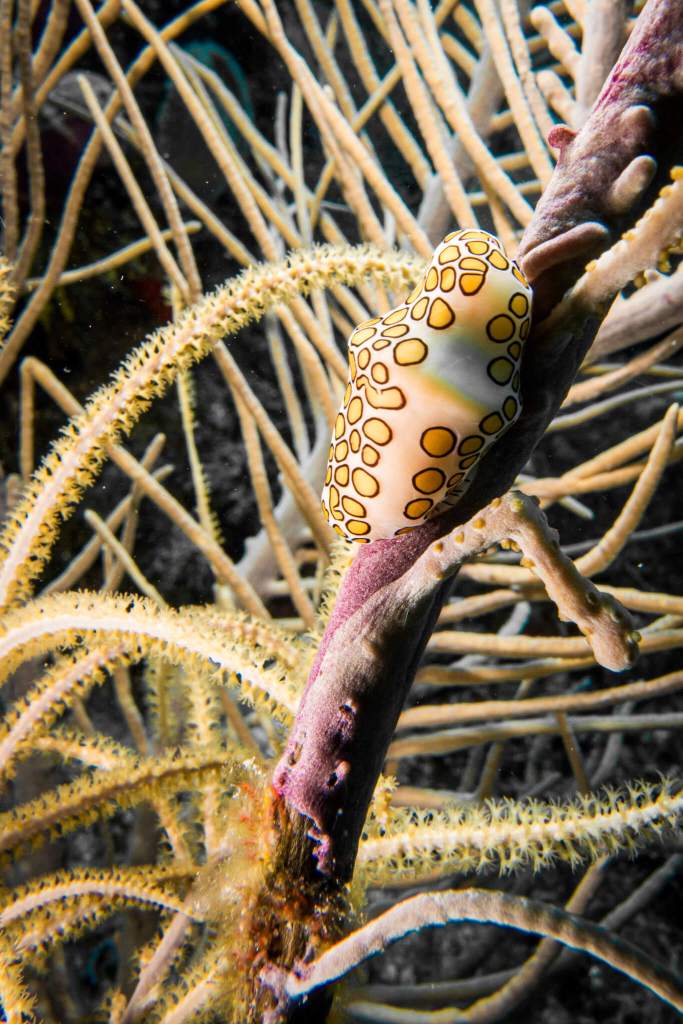
These curious snails are found in the tropical waters of the western Atlantic Ocean, usually in shallow water feeding on soft corals. Flamingo tongue snails (Cyphoma gibbosum) are pretty common in the Caribbean, with divers usually seeing a handful on most dives.
Flamingo tongues are a sort of inside-out snail, because the colourful markings we see are the mantle of the snail, hiding a cream-coloured shell underneath. They are about 2-2.5 cm in length, and their markings indicate they are toxic owing to the coral polyps they feed on.
They are indeed named after the tongues of flamingos (although the resemblance is questionable). However, I did learn that tongues of flamingos were a luxury delicacy for the wealthy of Ancient Rome.
Brittle star
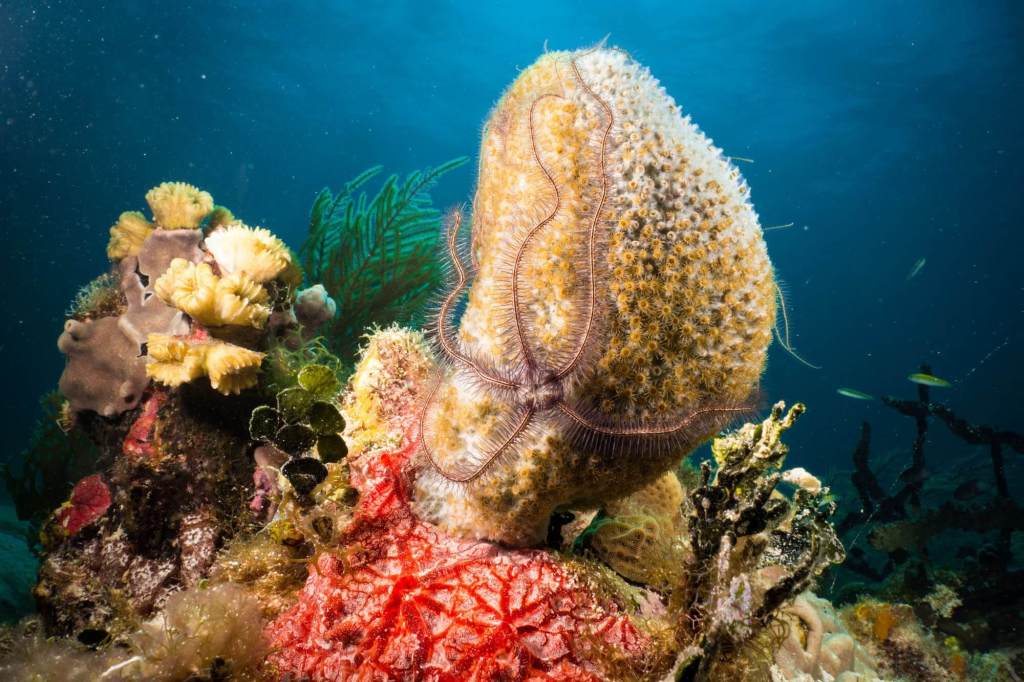
Brittle stars are a lesser known relative of the sea star. The resemblance is clear with five slender arms extending from a central body. Depending on the species, their arms can reach up to 60 cm in length. Their arms are used for locomotion, as well as to capture food (to feed one of its five jaws).
While they tend to come out at night, you an often find them during the day, hidden inside sponges or wrapped around branches of coral.
Basket star

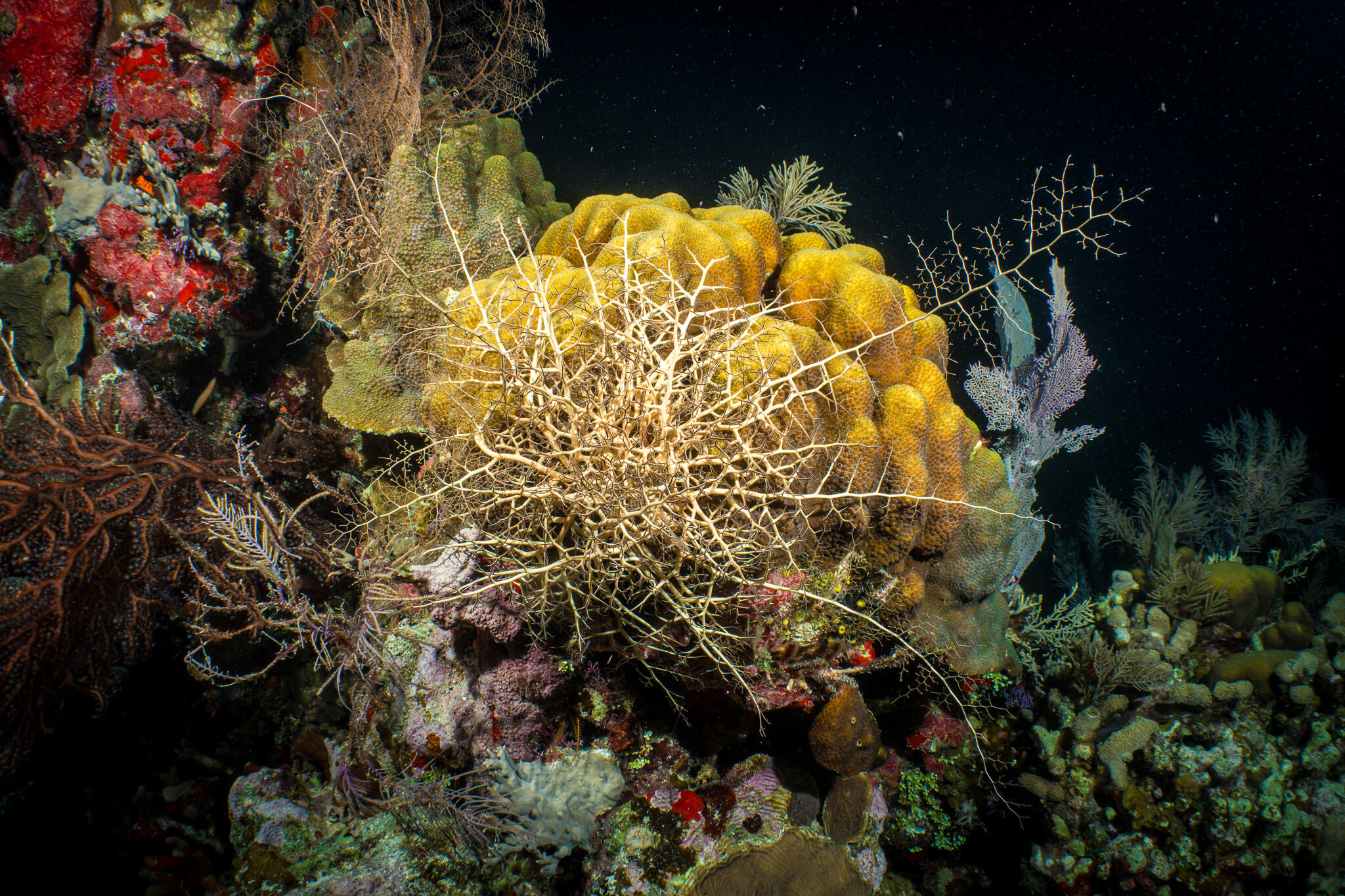
Basket stars are a specific type of brittle star, but even more curious. They curl up into a tight ball during the day and are generally impossible to find. They come out at night, uncurling their arms (which can extend up to 70 cm in length) to feed on zooplankton and other small organic particles in the water.
While they only have 5 arms, these arms branch out into a web of hundreds or thousands of smaller arms. They can be quite the sight on a night dive.
They can live up to 35 years in the wild and weigh up to 5 kg.
Crinoid
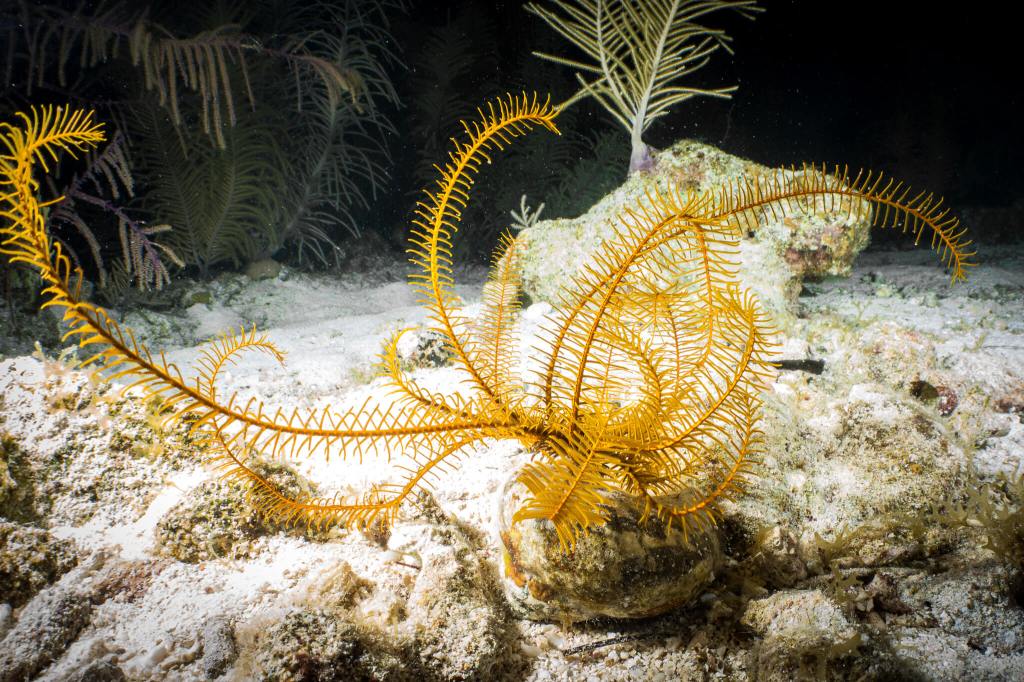
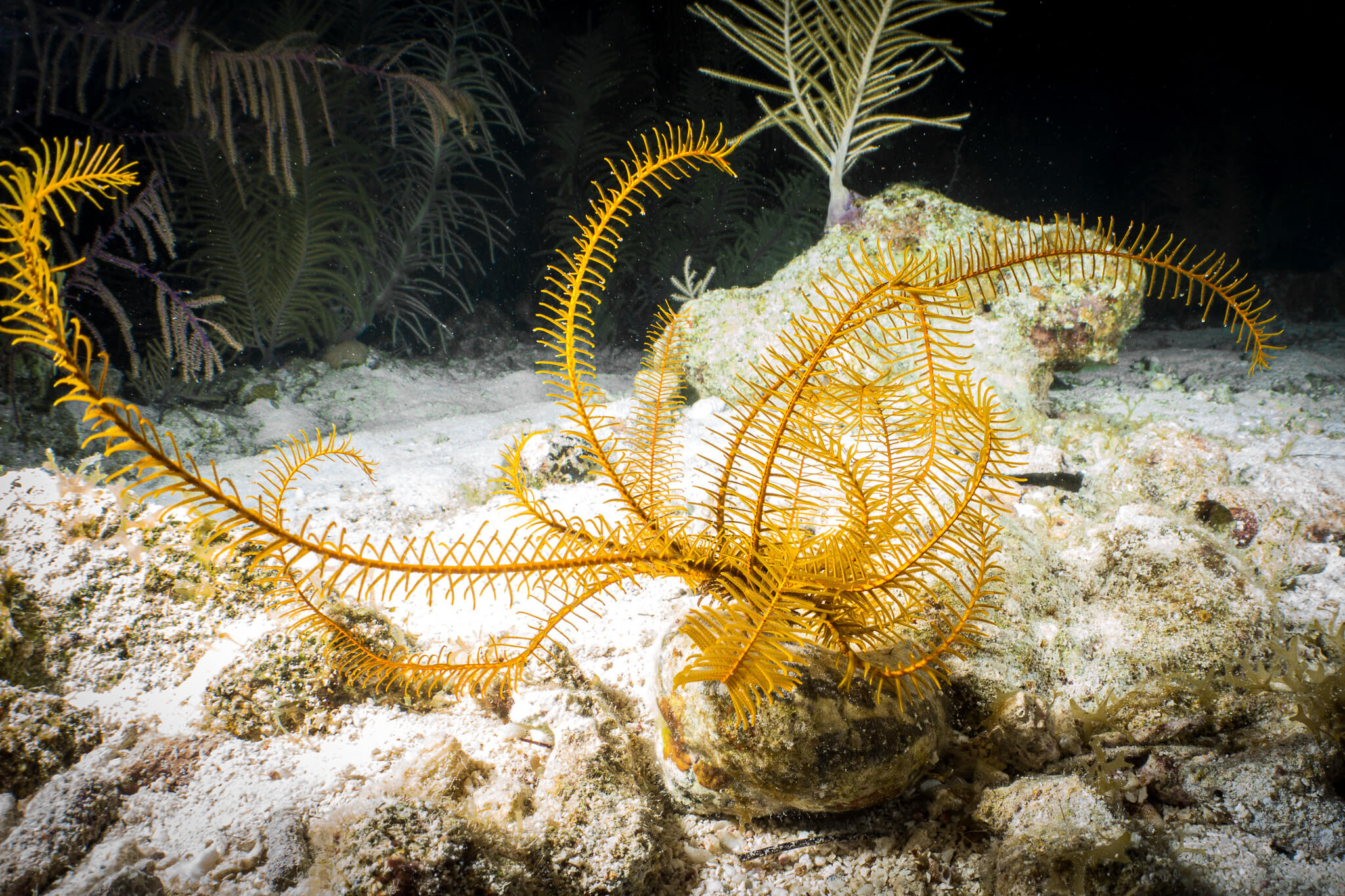
Crinoids are marine invertebrates with 5 arms that subdivide into 10 or more arms used for feeding. Unlike urchins, sea stars and brittle stars, the mouth of the crinoid is found on the upper side of its body.
Some species have a stalk that is fixed to the substrate, but most species (like the golden crinoid seen here) are stalkless and free-swimming. They’re usually somewhat hidden during the day (although the ends of their arms can sometimes be seen emerging from crevices) but will fully emerge to feed at night.
Tunicates
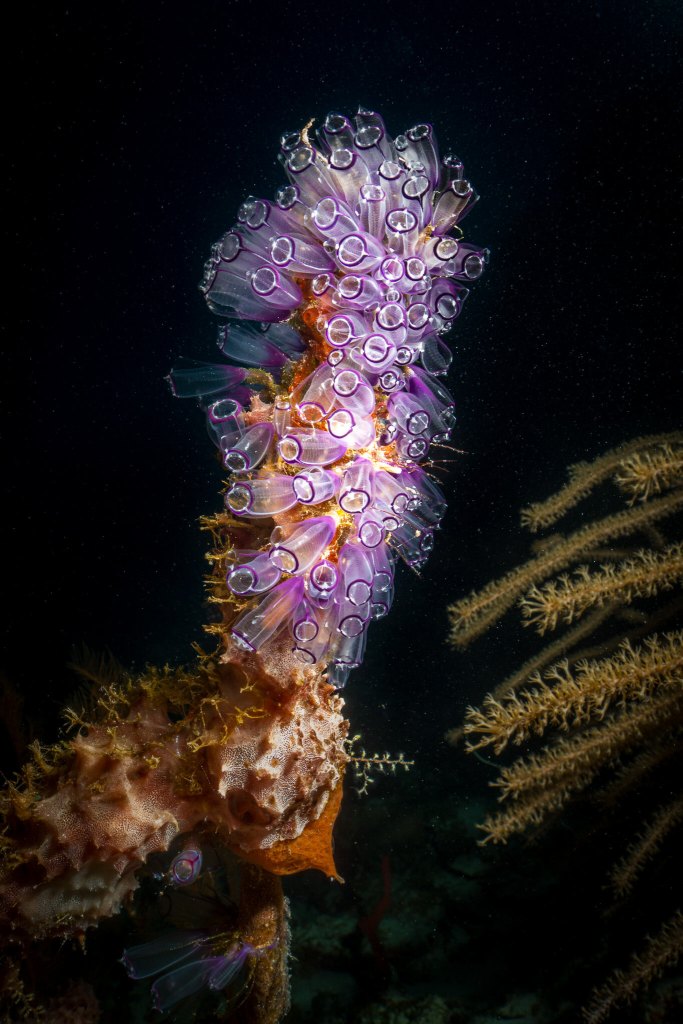
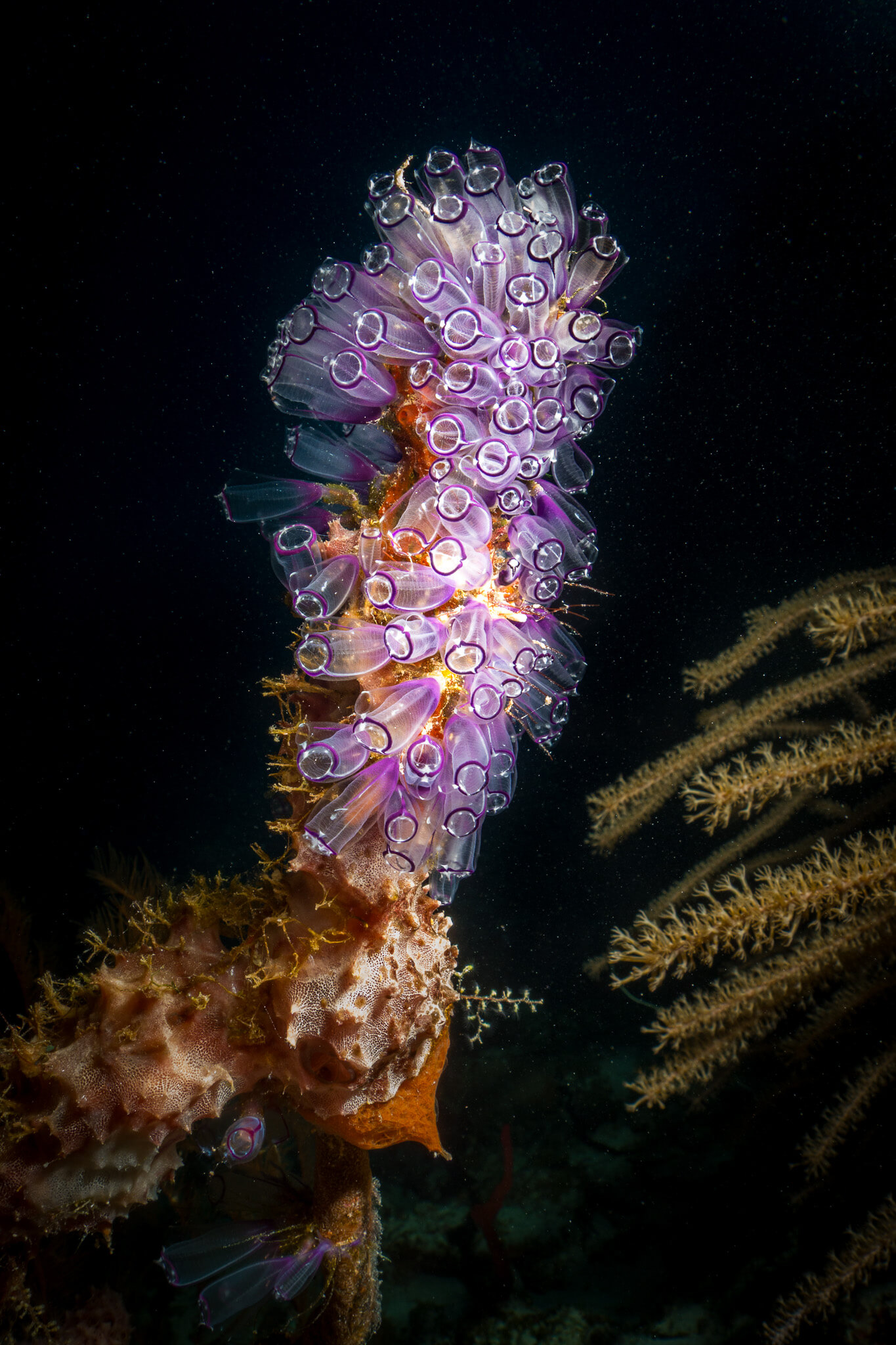
Tunicates are one of my absolute favourite creatures of the sea, and an important character in evolutionary history. In their adult form, they look like small, translucent sponges made of cellulose, forming colonies while fixed to a hard substrate. However, they start their life as a tadpole-like animal, swimming around (although in this stage, they do not eat).
In their tadpole-like larval stage, they have a rudimentary spinal cord, which means they share a common ancestor with modern humans.
While they lose this notochord in their adult stage, they do retain an esophagus, stomach, intestines and a rectum. They have 2 separate openings: an oral siphon that sucks in water, and an another syphon that expels waste water. (This is already more “evolved” than the brittle star whose mouth serves as its anus.) Some tunicates even have hearts that can reverse the direction of blood circulation.
Anemone
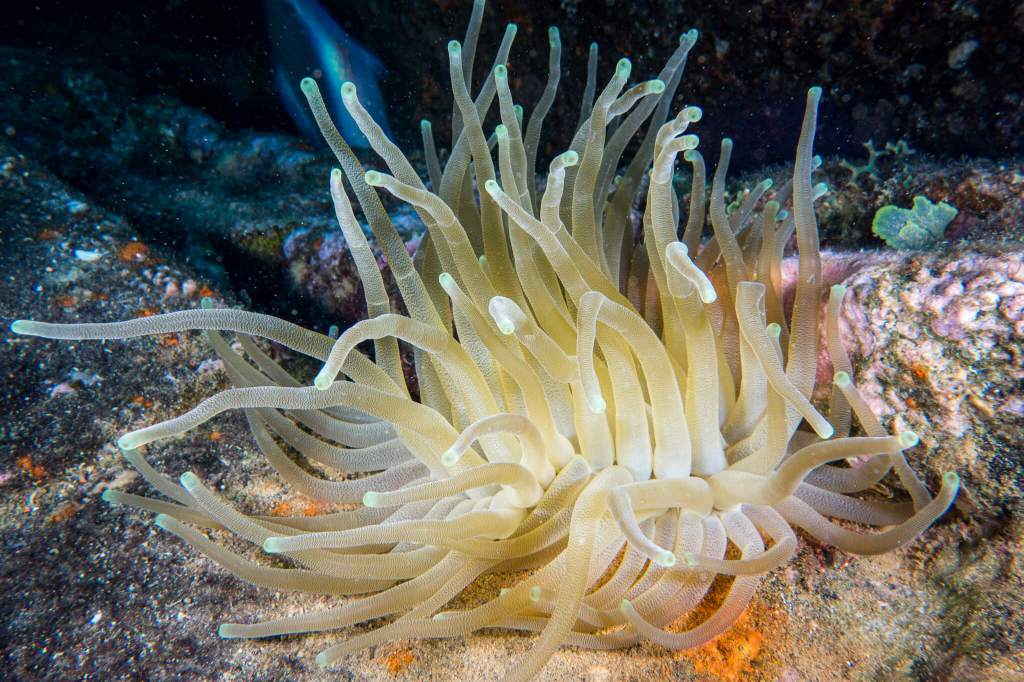
Finding anemone while scuba diving is always exciting because they often live in symbiosis with other creatures, such as shrimp, crabs and certain fish.
The giant Caribbean sea anemone is among the largest anemones in the Caribbean Sea. It can have 100 or more tentacles that extend about 15 cm high and 40 cm wide. Its base is firmly attached to the substrate, while its tentacles have stinging cells that quickly paralyze prey and draw them into its mouth.
Sea pearl
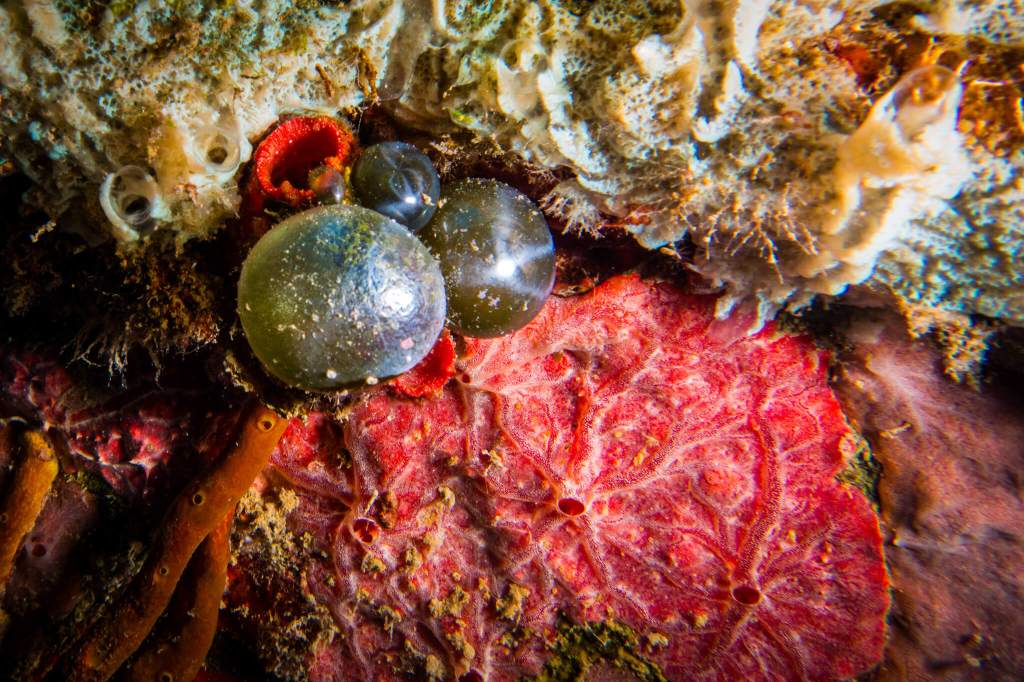
For this last one, we’re leaving the animal kingdom and looking at a species of algae. Commonly known as sea pearls (Valonia ventricosa), these are one of the largest unicellular organisms. Found globally in tropical oceans, usually nestled amongst the coral. They’re typically 1-4 cm in diameter, but can reach up to 5 cm. They’re a dull green colour with a bit of a sheen.
Do you enjoy scuba diving? What are your favourite unusual creatures to find during a dive? Share in the comments below!
 Scuba Duo
Leave a comment