
Purchasing your first scuba regulator is a daunting task. There are several great regulator brands, each with several models available, meaning there are dozens and dozens of individual options to consider.
You may go into your local dive shop and get their help navigating their inventory. But most shops will only have a few brands and models available, and you may wonder if they’re giving you knowledgable advice.
On the other hand, if you start researching online, you’ll easily get overwhelmed with choice and conflicting opinions.
As a diver who has owned two very different regulator models, and as a service technician who has literally taken apart and reassembled a couple dozen regulator models, I will try to provide some decision considerations to help narrow down the possibilities.
If budget wasn’t an issue, it would be easy to recommend 1 or 2 specific models. But that’s not the case, and that regulator would be overkill for many divers, so think about what you need and buy accordingly.
Buy quality, but don’t go overboard and don’t overcomplicate things
The regulator is your literal lifeline underwater, so you want to make sure you’re buying a quality regulator. Buying second-hand can save money, but is also very risky. I’ve seen more than one regulator purchased second-hand on Facebook Marketplace that is not serviceable and needs to be thrown out. I’ve serviced regulators older than students I certify—regulators that really should be retired in favour of a more modern model.
Features I would recommend for all divers buying their own regulator:
- Balanced first stage that includes:
- 2 HP ports (permits both an air transmitter and redundant gauge, if desired)
- 4 LP ports (for a second stage, octo, BCD inflator and drysuit inflator)
- Environmentally sealed
- Balanced second stages
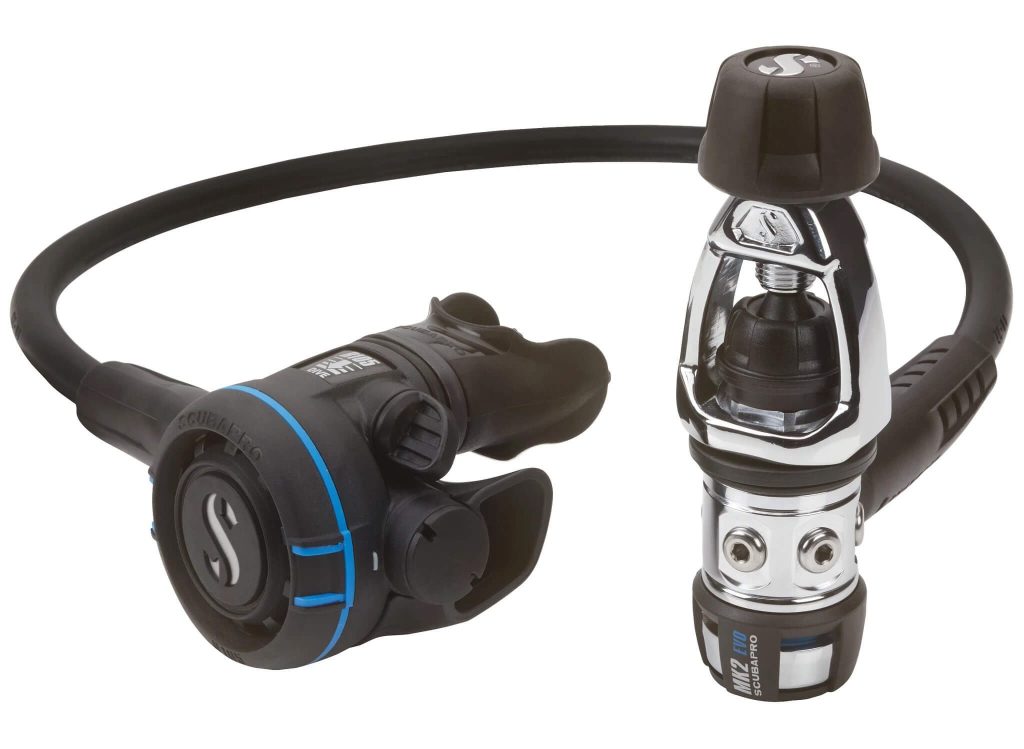
Features that I feel are gimmicks (that help with marketing but don’t offer any true value) or overkill for most divers include:
“Overbalanced” first stages: these don’t offer any real benefit over a true balanced regulator in any decent regulator at recreational depths, and I think they’re often an engineering quirk (flaw?) that companies are attempting to turn into a feature.
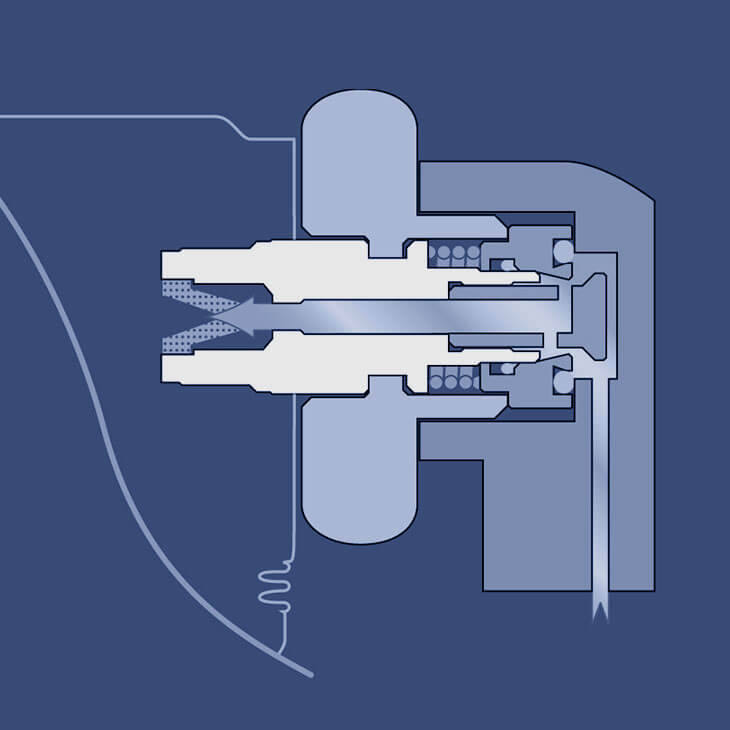
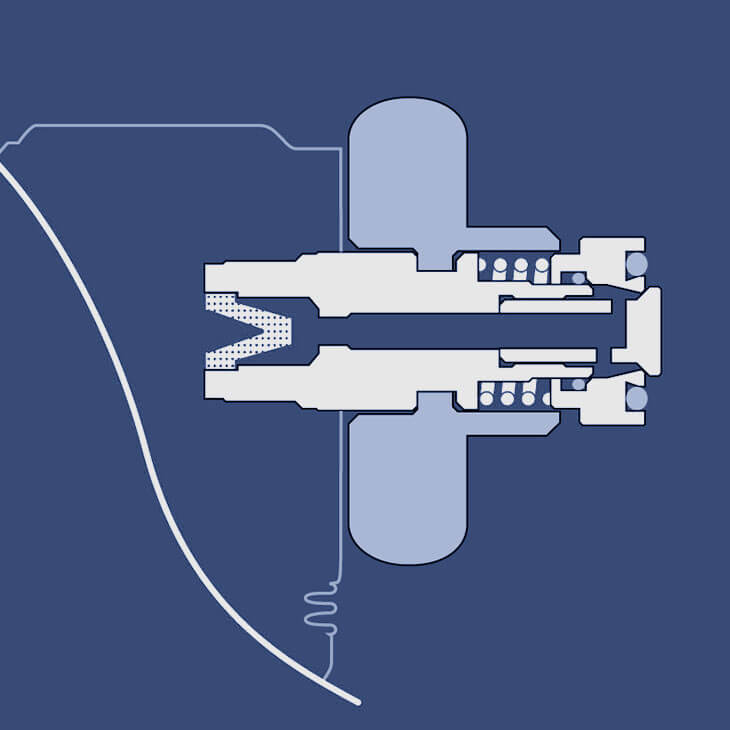
Auto-closure device on Aqualung first stages: this is a “solution” for lazy divers that adds way too much complexity to the regulator and potential points of failure, especially if a service technician isn’t familiar with this technology. See below for a schematic of this device, which in other regulators is a simple piece of metal with no moving parts or failure points.
First stages designed for extreme cold: unless you’re planning to go ice diving on a regular basis, you don’t need a first stage with massive heat sinks that add to the cost, weight and size of the regulator (e.g. Aqualung Legend). Most environmentally sealed regulators can easily handle water temperature in the single digits Celsius.
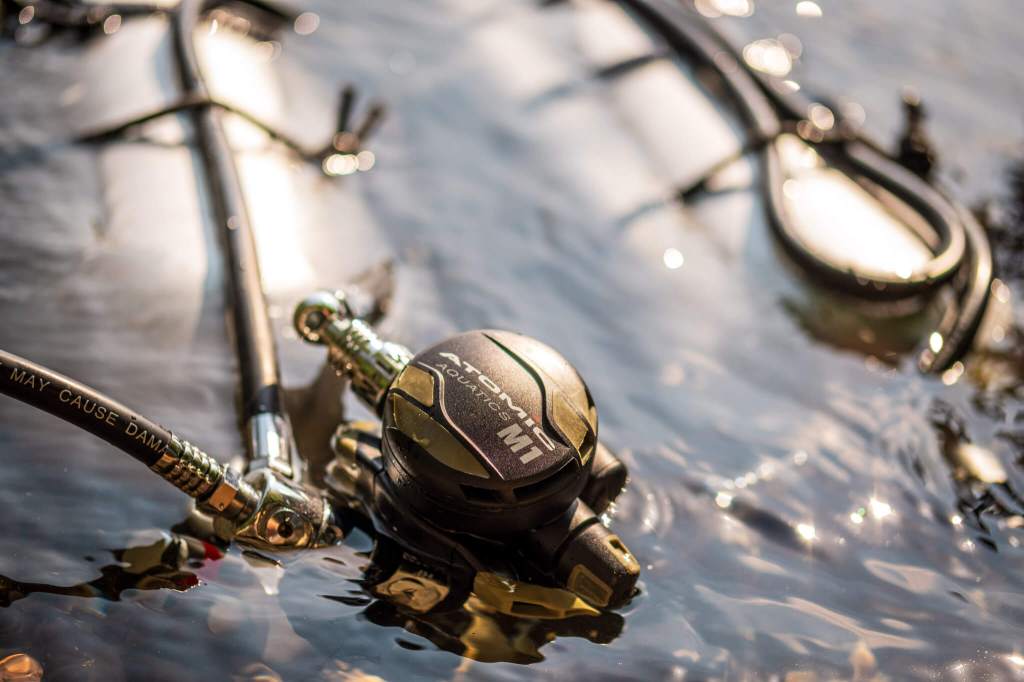
Swivel connectors on second stages: not a deal breaker, but you don’t need a swivel connector for a regulator to be comfortable, and these add additional potential failure points and make it harder to swap the hose for a generic third-party hose (e.g. some Atomic Aquatics models). I wouldn’t necessarily avoid these, but all else the same, they wouldn’t sway my decision.

Consider specific diving style and needs
Almost all regulators offer yoke and DIN variants. DIN is technically superior to yoke in every way, but yoke remains the standard in much of the Caribbean where North Americans do most of their diving. If you’re going to be diving locally with your own cylinders, DIN is a no-brainer. Or if you’ll be getting into technical diving, that also requires DIN. But if your focus will be Caribbean ocean dives, there’s really nothing wrong with yoke. And while you can request DIN cylinders at most places, it’s an extra step that I’m happy to avoid (and on island time, these requests easily get lost).
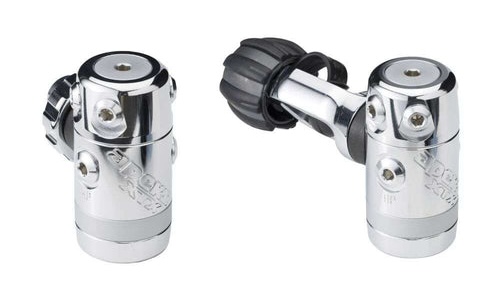
Do you think you’ll get into sidemount? Sidemount diving requires a DIN first stage with a swivel turret. So while you may not get into sidemount immediately, if you start with a sidemount-compatible regulator from the start, all you need to purchase is an additional first stage, gauge (or air transmitter) and some different hoses. It’s no extra investment from the start, and you’ll save several hundred dollars if/when you get into sidemount.
Service interval
All regulators need to be serviced on a regulator basis. More basic models require service annually, while better quality models require service every two years. I would definitely only recommend you purchase a regulator that can go at least two years between required service. As of writing this, here are the service intervals by brand:
- Apeks: at least once annually
- Aqua Lung: at least once every 2 years (with annual visual inspection)
- Atomic Aquatics (titanium models): 3 years or 300 dives (with annual safety inspection)
- Atomic Aquatics (other models): 2 years or 300 dives (with annual safety inspection)
- Mares: 2 years or 200 dives (with inspection every year or 100 dives)
- Oceanic: 2 years or 200 dives (with annual inspection)
- Zeagle: 2 years or 200 dives (with annual safety inspection)
Ability to service locally
You need to ensure there’s a dive shop in your area that can service your regulator. Not all dive shops carry all brands, and therefore can’t get service kits (or tools) for all brands.
If you buy a regulator from the dive shop, it’s safe to assume that they will service it. But if you buy a given brand online from somewhere else, you may not have a place to get it serviced locally. Double check first.
Access of replacement parts
Talk to a regulator service technician, and you’ll quickly learn there are some regulators they love to service and others they hate to service. There are two reasons that have a real impact on regulator owners, and I’d love for more divers to understand these.
All regulator manufacturers sell service kits that include all the replacement parts necessary when servicing regulators. Some brand have cleverly designed their various models to all use the same service kits. This means shops only need to stock a few kits to service all the regulators models for that brand. This means they’ll almost always have kits in stock, and therefore no delays when you need your regulator serviced. This includes (with a few exceptions I’ll discuss later) Atomic Aquatics, Apeks and Aqualung. Other brands have models that are so fundamentally different that they require different service kits, requiring shops to stock dozens of different service kits. For most shops, it’s not financially viable to stock kits for regulator models they don’t see often, so if you show up with one of these regulators, you may be waiting weeks or months for them to simply get the parts before they can start servicing. This is less convenient. The worst culprit is Mares, but also includes Cressi, Oceanic and Zeagle. To make matters worse for Mares, they don’t include all replacement parts in the service kits, requiring shops to stock a bevy of additional components. And if the manufacturers is out of stock, I’ve seen delays of 3-6 months (or more) before you can get your regulator serviced.
For this same reason, I would generally avoid purchasing a regulator that’s marketed as a travel or compact regulator. These often have miniaturized replacement parts that use specific service kits that not all shops stock in quantity, or are simply harder to service. This includes the Apeks Flight and the Mares MR42. The Apeks Flight also requires a special tool for disassembly that not all shops will have, since this is a relatively niche regulator in many markets.
Long-term durability
The other consideration that’s only obvious to service technicians is the quality of the internal components of the regulator. Regulators use a combination of metal and plastic parts. Each have their benefits. But the benefits are only applicable to specific applications within the regulator.
Some parts should absolutely be made of metal for durability, while others should be plastic for corrosion resistance and weight reduction. I much prefer second stage bodies be made of plastic because they’re lightweight which reduces jaw fatigue (some older Mares models use heavier metal bodies). The orifice, an internal part of the second stage, should absolutely be made of metal because this part needs to stay sharp and plastic is too easy to nick or dent when being serviced (again, Mares makes this from plastic in most models).
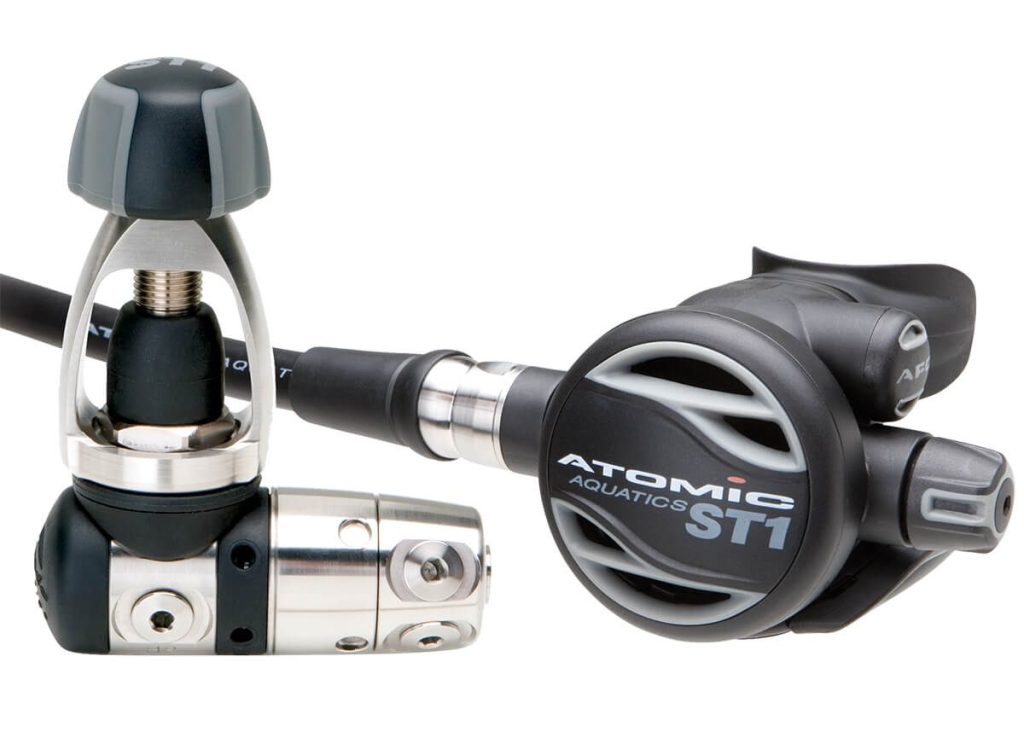
Most first stage bodies are made of chrome-plated brass. This is tried-and-true, but if you’re not careful, the chrome can get chipped, exposing the bare brass (or a copper mid-layer), which will start to corrode. Some brands like Atomic Aquatics make their ST1 first stage entirely from machined 316 stainless steel while their T3 and TFX first stages are machined out of titanium. These special metals command a price premium, but definitely increase the longevity of the regulator.
Don’t buy on brand name alone
Ask 10 divers to name the best regulator company, and you’ll likely get 10 different answers. It’s easy for people to get fanatical about specific brands in online forums. But brands come and go.
Aqualung, the company that traces back to Jacques Cousteau and the actual invention of the modern demand regulator, seems to completely over-engineer their high end regulators in an effort to make them stand out. They’re great regulators if these features are required for your diving, but overkill (and overpriced) for most divers, and too many unnecessary potential failure points. They’re also significantly heavier than other regulators.
Apeks was once one of the top names in regulators, but has recently been in financial trouble. Now owned by Aqualung Group, which has been sold twice in the last 10 years and undergoing major restructuring to stay afloat. Recent new indicates they may be purchased by the company that owns Mares. Their distribution and availability of parts has seriously suffered. And the new Apeks product design seems to take more cues from Aqualung than classic Apeks. I’m willing to say the classic Apeks is effectively dead.
Zeagle is a brand that is most famous for its BCDs. Before Apeks was purchased by Aqualung, Apeks and Zeagle manufactured products for each other. Zeagle now designs their own regulators, but they clearly take inspiration from the classic Apeks regulators, and many would argue have improved upon them.
Atomic Aquatics is a relatively new player in the game, founded in 1996. The founders have history with Scubapro, so there are similarities between Atomic and some Scubapro regulators. But add Atomic’s passion for metallurgy and the common balanced piston engineering design shared by all their regulators, and you get a very strong value proposition.
Conclusion
At the end of the day, there are only 2-3 fundamentally different regulator designs on the market. And these designs haven’t changed much in the last couple decades.
If a given regulator brand is made of quality parts, meets your needs, and can be serviced locally with a reliable availability of parts, brand is really secondary.
Hopefully this gives you some guidance as you shop for your first (or replacement) regulator. If you have questions, drop them in the comments below.
Curious to know what I dive with? Stay tuned for details in an upcoming post.
 Scuba Duo
Leave a comment